By Uroš Lipušcek, Consortium News, 10/9/26
The Protection of Swiss Neutrality referendum, which Swiss voters overwhelmingly rejected on Sept. 27, appeared, at first sight, to be a vote on a very specific Swiss question: whether the country’s traditional neutrality should be defined more precisely and strictly in the Constitution.
The referendum was an immediate effort to stop Switzerland from joining European Union sanctions against Russia, and honor only U.N. Sanctions, and to prevent the country from entering into cooperation with a military alliance unless Switzerland is attacked.
The broader question is whether Swiss neutrality has become so flexible that it risks losing its strategic meaning? What does the referendum’s defeat mean for neutrality as an element of a future European security architecture?
Despite deep historical roots, Swiss neutrality was not formalized in the 1848 Federal Constitution.
The initiators of the Sept. 27 referendum called for a much more precise constitutional definition of neutrality, intended to prevent the government’s current and highly flexible interpretation of neutrality, which allows Switzerland to move increasingly closer to NATO’s security doctrine.
The referendum raised a fundamental question that is important not only for Switzerland but for all European states: what does neutrality actually mean in 21st-century Europe?
Can a state be simultaneously neutral and closely integrated into Western security structures? Can neutrality be used selectively, à la carte — as a legal principle, a security strategy, an instrument of foreign policy and at the same time an element of national identity?
The result was very clear. 70.15 per cent of voters rejected the initiative, while 29.85 per cent supported it. All 26 cantons rejected the proposal.
Voter turnout was 47.07 per cent, meaning that approximately 33 per cent of all eligible voters actually voted against the initiative. Switzerland has no minimum turnout requirement for a federal referendum to be valid. According to the Swiss federal authorities, average turnout in referendums is around 46 per cent.
Turnout in this referendum was therefore slightly above the long-term average, although the relatively low level of participation may also reflect the repeated assurances by the government and the leading media that the referendum was not a vote on abolishing neutrality, but merely on whether a stricter and more restrictive form of neutrality should be written into the Constitution.
Neutrality as a Binding Principle

Latin copy of the Treaty of Fribourg or Treaty of Perpetual Peace bearing the seals of the cantons and their allies, preserved at the French National Archives. (Archives Nationales /Wikimedia Commons/ Public Domain)
Swiss neutrality has a tradition stretching back several centuries.
The Old Swiss Confederacy had been an expansionist power between 1470-1516 in which it fought the Habsburgs, the Burgundians in the 1470s, the Swabians in 1499 and the Italians, pushing into Lombardy, leading Machiavelli to compare the Swiss to the Romans leading Machiavelli to compare the Swiss to the Romans and a Macedonian Phalanx. The Italian campaign ended with the defeat at Marignano in 1515 and the 1516 Treaty of Perpetual Peace with France, which led to the origins of Swiss neutrality.
The first formal declaration that the confederacy was a “neutral estate” came in 1674 in a resolution of the Tagsatzung (a diet of envoys from the 13 cantons).
The Old Swiss Confederacy collapsed when Napoleon’s troops invaded and established the Helvetic Republic, a French-dominated centralised state. This episode demonstrated an essential fact: neutrality alone could not protect Switzerland if the European balance of power collapsed.
At the 1815 Congress of Vienna, the victorious European powers over Napoleon agreed that a permanently neutral Switzerland was in the interests of European stability and it was internationally recognized. This remains an important geopolitical fact even today. Switzerland became one of the principal examples of a permanently neutral state operating within this legal framework.
The First World War
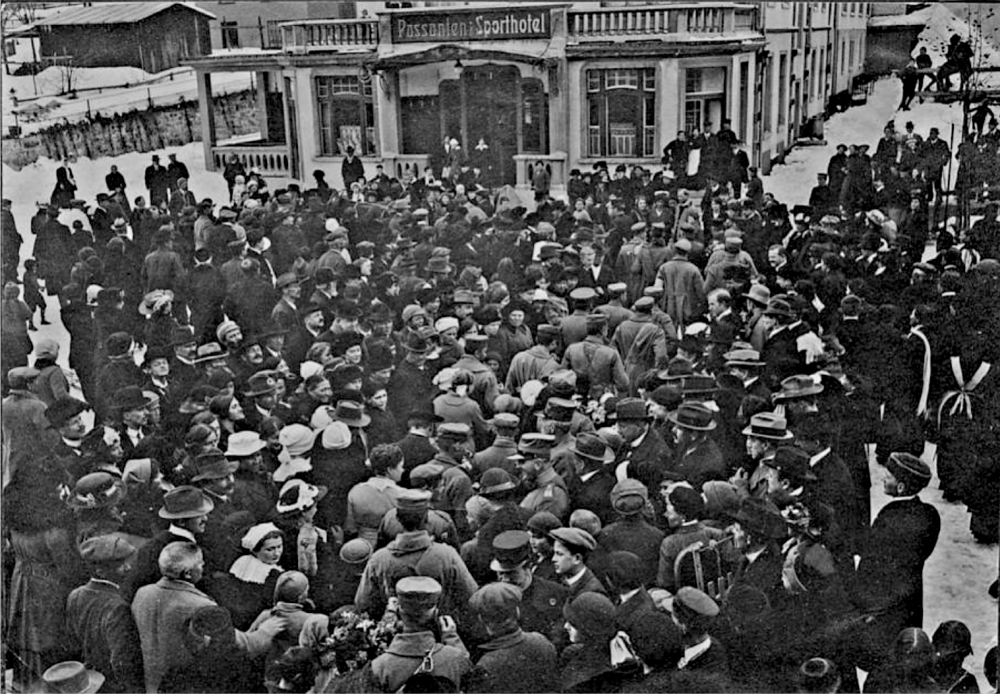
German prisoners of war arriving in Davos, Switzerland, 1916. (Unknown from Barton, Susan, Internment in Switzerland during the First World War, Bloomsbury Publishing, 2019.)
The First World War pitting France against Germany provided a dramatic test of Swiss neutrality. Joining one side could have threatened Switzerland’s internal cohesion among Swiss, French and German speakers.
Neutrality therefore became not only a foreign-policy principle but also a mechanism for holding together a multilingual and multi-confessional society.
The Second World War
The Second World War was the greatest test of Swiss neutrality to that time. Surrounded by Axis-controlled powers, Switzerland maintained formal neutrality. It mobilised its armed forces and developed defensive plans designed to make an invasion costly.
At the same time, the history of Swiss neutrality during the Second World War remains highly controversial. Switzerland maintained extensive economic and financial relations with both sides and made significant concessions to Nazi Germany. Its banking system and trade policy have subsequently been subjected to extensive historical investigation and criticism.
The Cold War
After 1945, Swiss neutrality entered a new phase. Switzerland remained outside both NATO and the Warsaw Pact. During the Cold War, neutrality gave Switzerland a distinctive diplomatic position.
Geneva became an important centre of international diplomacy and humanitarian activity. The International Committee of the Red Cross, the European headquarters of the United Nations and numerous international organisations developed a major presence in Switzerland. Neutrality therefore became an important diplomatic asset.
The Post-Cold War Period
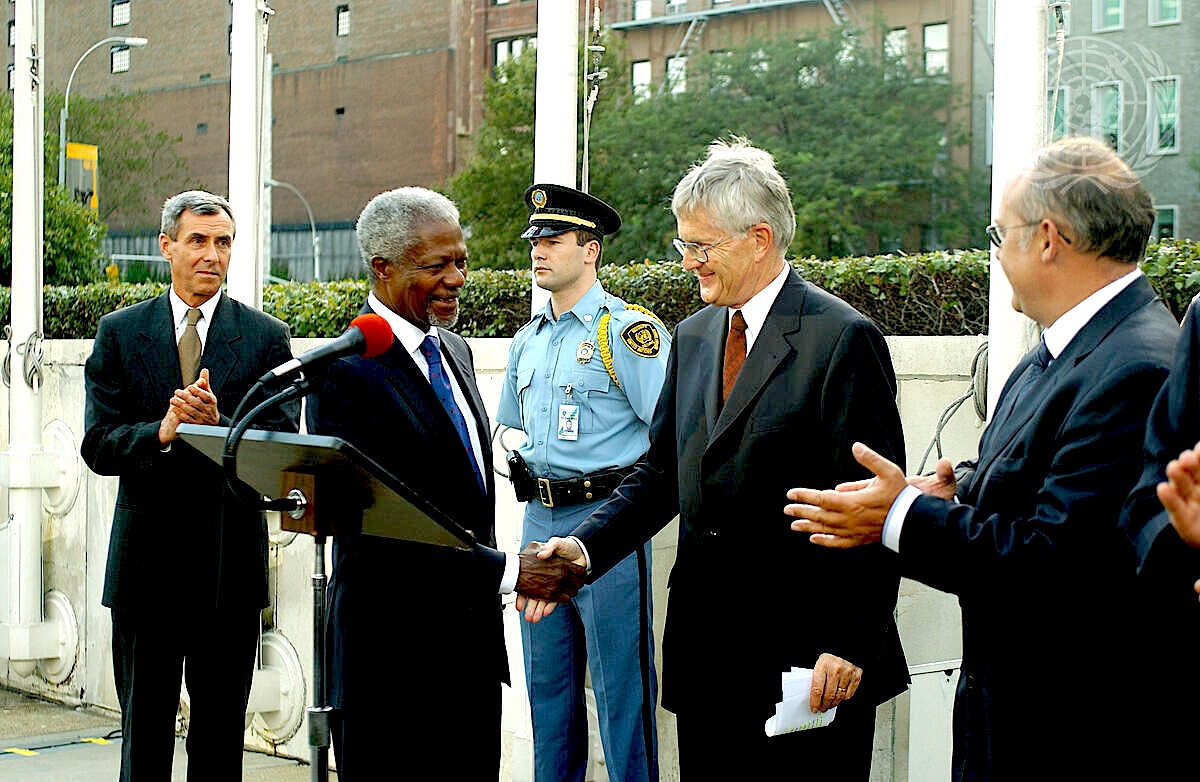
U.N. Secretary-General Kofi Annan center left, congratulating Swiss President Kaspar Villager as Switzerland became the 190th state to join the United Nations, Sept. 10, 2002. (UN Photo/Mark Garten)
After the end of the Cold War, Switzerland began to reconsider neutrality in a more flexible and pragmatic way.
In 1991, Switzerland participated in economic sanctions against Iraq. In 1996, it joined NATO’s Partnership for Peace, although it did not join NATO itself. In 1999, it sent unarmed personnel to support international peace-building efforts in Kosovo. In 2002, Switzerland joined the United Nations. In March 2025, it joined NATO’s Science and Technology Organization – Enhanced Partnership.
In December 2025, the Swiss government announced that Switzerland and NATO had established a cooperation programme for 2025–2028, aimed, among other things, at increasing the interoperability of the Swiss armed forces, including its air force and communications systems.
Switzerland has therefore repeatedly adjusted its interpretation of neutrality to changing international circumstances since the end of the Cold War.
The Referendum Proposal for Stricter Neutrality Criteria
The initiative, supported by the Swiss People’s Party (SVP) and organised by the group Pro Switzerland, demanded a considerably stricter constitutional definition of neutrality.
In its view, neutrality should be defined as “permanent and armed.” Switzerland should not join any military or defence alliance, nor cooperate with such an alliance, except if Switzerland itself were attacked or an attack against it were directly imminent.
Had the initiative succeeded, Switzerland would have been constitutionally committed to a much stricter interpretation of neutrality, under which the continuation of sanctions against Russia, for example, not authorised by the U.N. Security Council, would have become legally and politically far more difficult.
According to the initiators, Switzerland’s increasing rapprochement with NATO and its policy of confrontation with Russia have therefore moved the country away from strict neutrality.
What Does Neutrality Mean under International Law?

The official opening of the League of Nations, Nov. 5, 1920. (Frédéric Boissonnas, National Library of Norway, Wikipedia Commons, Public Domain)
International law determines how a neutral state must behave during a war between other states. The Hague Conventions of 1907 stipulate that neutral states must not allow foreign troops or weapons to cross their territory and must not provide military assistance to belligerent parties.
This does not mean, opponents of the initiative argued, that a neutral state must be politically or economically indifferent to every international conflict or violation of international law.
Even before the Second World War, Switzerland adopted what became known as “differential neutrality.” It remained exempt from military action but accepted certain economic sanctions imposed by the League of Nations.
Switzerland’s participation in League of Nations sanctions against Fascist Italy in 1935 became an important historical example of what was then called “differential neutrality.” The modern Swiss debate concerns whether such differentiated neutrality remains legitimate when sanctions are not collectively authorised by the U.N. Security Council.
The Confrontational Geopolitical Climate in Europe
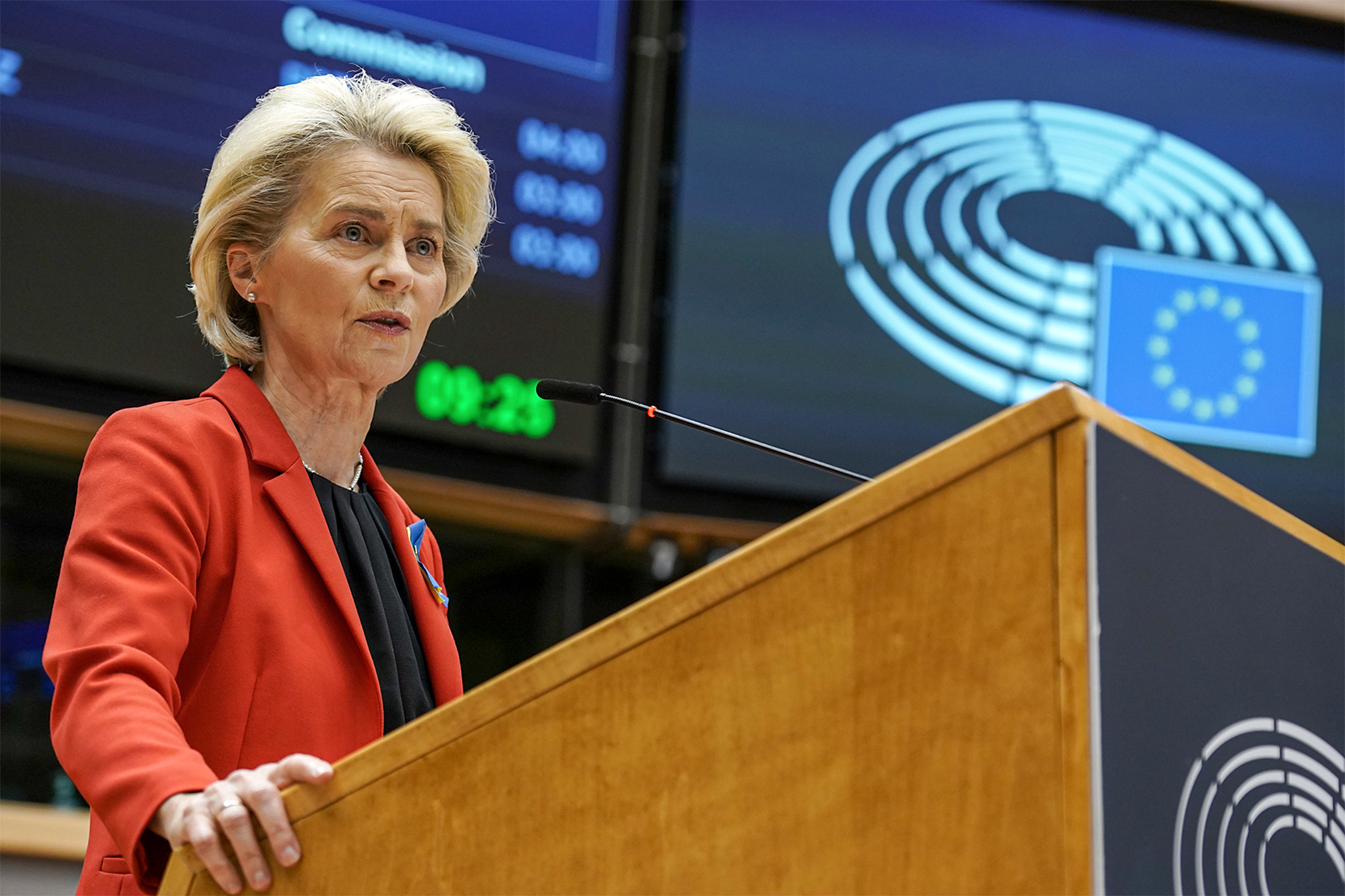
European Commission President Ursula von der Leyen on March 24, 2022, when MPs condemned Russia’s attack on Ukraine and urged further sanctions on Moscow to “protect the European economy.” (European Parliament, Flickr, CC-BY-4.0)
Because of the growth of a perceived Russian “threat“ to Europe, Switzerland has increased its military expenditure with the rest of Europe. By 2032, the military budget is expected to rise from approximately CHF 6.3 billion, or 0.7 per cent of GDP, to 1 per cent of GDP.
For 2028–2030, the Swiss government intends to earmark additional revenue generated by a 0.5 percentage-point increase in VAT specifically for defence spending. This is expected to generate approximately CHF 1.7 billion in additional funds annually during those three years.
In August this year, the Swiss government also approved an additional CHF 970 million for military expenditure, particularly for air defence and protection against drones. In addition, the Swiss government has estimated that another CHF 24 billion will be required exclusively for weapons procurement projects.
The combination of a higher regular military budget, additional VAT revenue and the extraordinary procurement programme represents a substantial increase in Swiss defence expenditure.
Despite this increase, Switzerland is not automatically following NATO’s new 2025 guideline calling for defence expenditure of 3.5 per cent of GDP, plus up to another 1.5 per cent for broader security-related expenditure by 2035.
Domestic Political Dimension of the Referendum
The referendum was also an important test of Swiss domestic politics.
On one side stood primarily the country’s largest political party, the SVP, which associates neutrality with national sovereignty, limiting external influence and preserving traditional Swiss identity, as well as several non-governmental organisations and prominent academics.
On the other side were the federal government and practically all the other major political parties, which argued that constitutionally locking neutrality into a rigid framework would reduce Switzerland’s room for maneuver. Most of the media took the same position.
Although Switzerland is not a NATO member, an important question remains: where is the boundary between cooperation with one side in a conflict and actual alignment with that side? How much substantive difference can there still be between a neutral state and a state politically aligned with one geopolitical bloc before neutrality becomes little more than a decorative legal label?
This fundamental question remains open after the referendum.
Factors Behind the Rejection of the Initiative
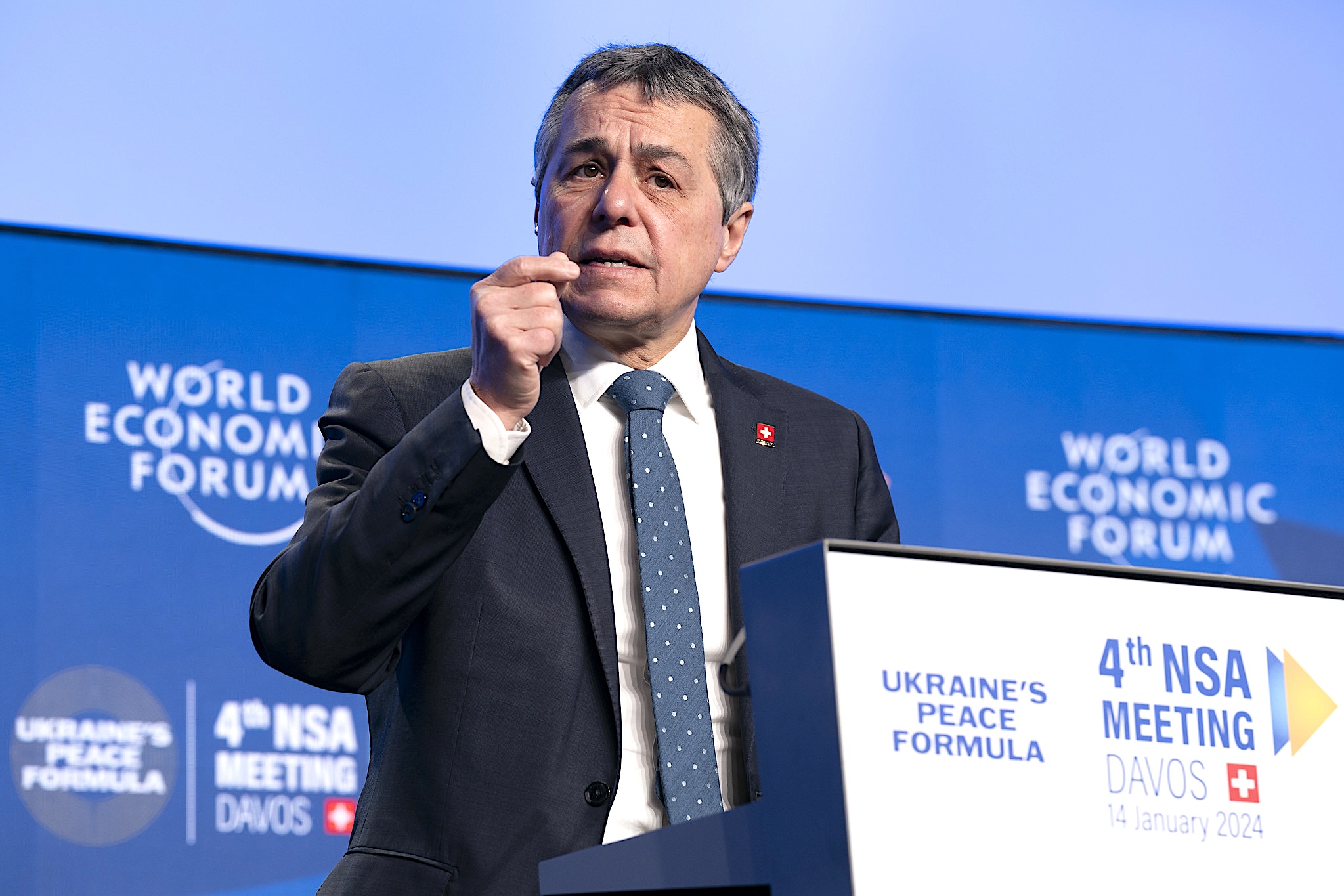
Swiss Foreign Minister Ignazio Cassis addressing a press conference on the Ukrainian peace process at the World Economic Forum in January 2024 in Davos-Klosters, Switzerland. (World Economic Forum/Pascal Bitz/
CC BY-NC-SA 2.0)
A particularly important factor was the almost complete political isolation of the referendum’s initiators.
Because the initiative was supported primarily by the SVP/UDC, while the federal government and almost all other major political parties opposed it, the average voter received a fairly strong political signal about how to vote.
Foreign Minister Ignazio Cassis formulated the central message very clearly: “Switzerland was and is neutral and will remain neutral.” The question, he argued, was merely whether Switzerland needed a “new neutrality.”
This was a politically, effective formulation because it allowed voters to reject the initiative while still feeling that they were defending Swiss neutrality.
Before the referendum, the government warned that stricter neutrality would hamper security cooperation, intelligence-sharing and participation in military exercises with NATO members.
It was therefore defending precisely the type of neutrality that permits continued cooperation with NATO.
This position was also reflected in the draft Swiss Security Strategy 2026, which argues that, because of the changed security environment – particularly the war in Ukraine and the increased risk of conflict between Russia and NATO – Switzerland should strengthen cooperation with its European partners.
The Swiss armed forces likewise published material in September, just over two weeks before the referendum, emphasising that the war in Ukraine demonstrated that it was in Switzerland’s interest to orient its security and defence policy more strongly towards cooperation with partners.
Leading media organisations and various research institutes adopted broadly similar positions.
A study by the University of Zurich’s Research Center for the Public Sphere and Society (Fög), which analysed 523 articles about the initiative in the German- and French-speaking parts of Switzerland, found that media coverage of the initiative was overwhelmingly negative.
The average tone was –22 on a scale ranging from –100 to +100. Fög explicitly concluded that the tone was negative in the large majority of the media outlets analysed.
The extensive system of public support for Swiss media raises a legitimate question about the structural relationship between government policy and media independence. It does not, by itself, prove editorial dependence, but it is relevant when assessing the broader political environment surrounding the referendum.
The Fög study also found that Russia was the most important reference point in media coverage. In most reports, Russia was presented as an aggressor and a threat, including to Switzerland.
Opponents of the initiative used Russia’s war in Ukraine to argue in favour of sanctions and closer security cooperation with European states. Switzerland is being gradually integrated into a broader European security architecture increasingly oriented towards preparing for a possible long-term confrontation with Russia.
Criticism of closer alignment with NATO consequently acquired the connotation of support for Russian President Vladimir Putin and was often portrayed as a “pro-Putin” initiative.
A similar tendency can be observed elsewhere in Europe, where criticism of NATO policies has regulary been dismissed as implicitly pro-Russian. In Slovenia, for example, the pro-NATO Trivelis Institute portrayed me, because of my criticism of excessive NATO-related military spending, as being almost a Russian spy. [The Institute later removed my name from its report but did not apologize.]
The fact is that media pluralism has declined across Europe, including in Switzerland. Arguments concerning Russian security concerns and interests are increasingly dismissed as “Putinism,” making serious discussion of these issues increasingly difficult.

Putin addressing a military parade on Red Square on May 9 to mark the 81th anniversary of victory for the eastern front in World War II. (President of Russia)
In Switzerland, there are many influential institutions and security research institutes that have systematically emphasised the need for closer security cooperation with NATO.
Leading think tanks argued that Switzerland should strengthen European security cooperation, reconsider the future form of its partnership with NATO, recognise that neutrality had become less important from a security-policy perspective and acknowledge that neutrality could restrict Switzerland’s room for maneuvre in certain circumstances.
But Prof. Pascal Lottaz, a scholar, host of the Neutrality Studies podcast, and a prominent advocate of a stricter and more conceptually rigorous understanding of neutrality rejected a flexible approach to neutrality. He treats neutrality as an independent field of study, rather than as a mere historical remnant.
Lottaz warns against thinking in categories of “good” and “bad” actors because such thinking reduces the space available to neutral states and neutral diplomacy.
His basic idea is highly relevant today: if the world is moving from a unipolar to a multipolar system, the need for neutrality will not necessarily decline. It may actually increase.
Lottaz’s approach opens the possibility of understanding neutrality as an element of a new European security architecture: a transformation of the European security system from a predominantly bloc-based logic towards a pan-European system in which NATO members, neutral states and Russia could all participate.
International Dimension of the Referendum

Ukraine’s President Volodymyr Zelensky at the meeting of the NATO-Ukraine Council on July 12, 2023. (NATO/Flickr, CC BY-NC-ND 2.0)
With the war in Ukraine, Europe has returned to an era of bloc politics. Russia, the United States, NATO, the E.U. and China are creating an increasingly complex system of geopolitical competition. Under such circumstances, neutrality means much more to a small state than a question of national identity.
It is a question of strategic autonomy. A neutral state must be capable of deciding, in a conflict between major powers, not to automatically follow one of them.
To make such a decision meaningful, however, a state must possess sufficient capabilities to implement it. If a country is heavily or completely dependent on another state for energy, food, finance, weapons, critical technologies or security guarantees, its formal neutrality can be severely constrained.
The general rule is simple: the greater a state’s strategic autonomy, the more credible its neutrality can be.
Switzerland is particularly interesting because it is a wealthy and highly developed country that has traditionally linked neutrality to its own defence capabilities, allowing it to maintain a relatively high degree of strategic autonomy.
Nevertheless, the referendum revealed a fundamental dilemma: is it possible to remain neutral while simultaneously becoming increasingly integrated into a Western security system?
Lesson for Neutral States
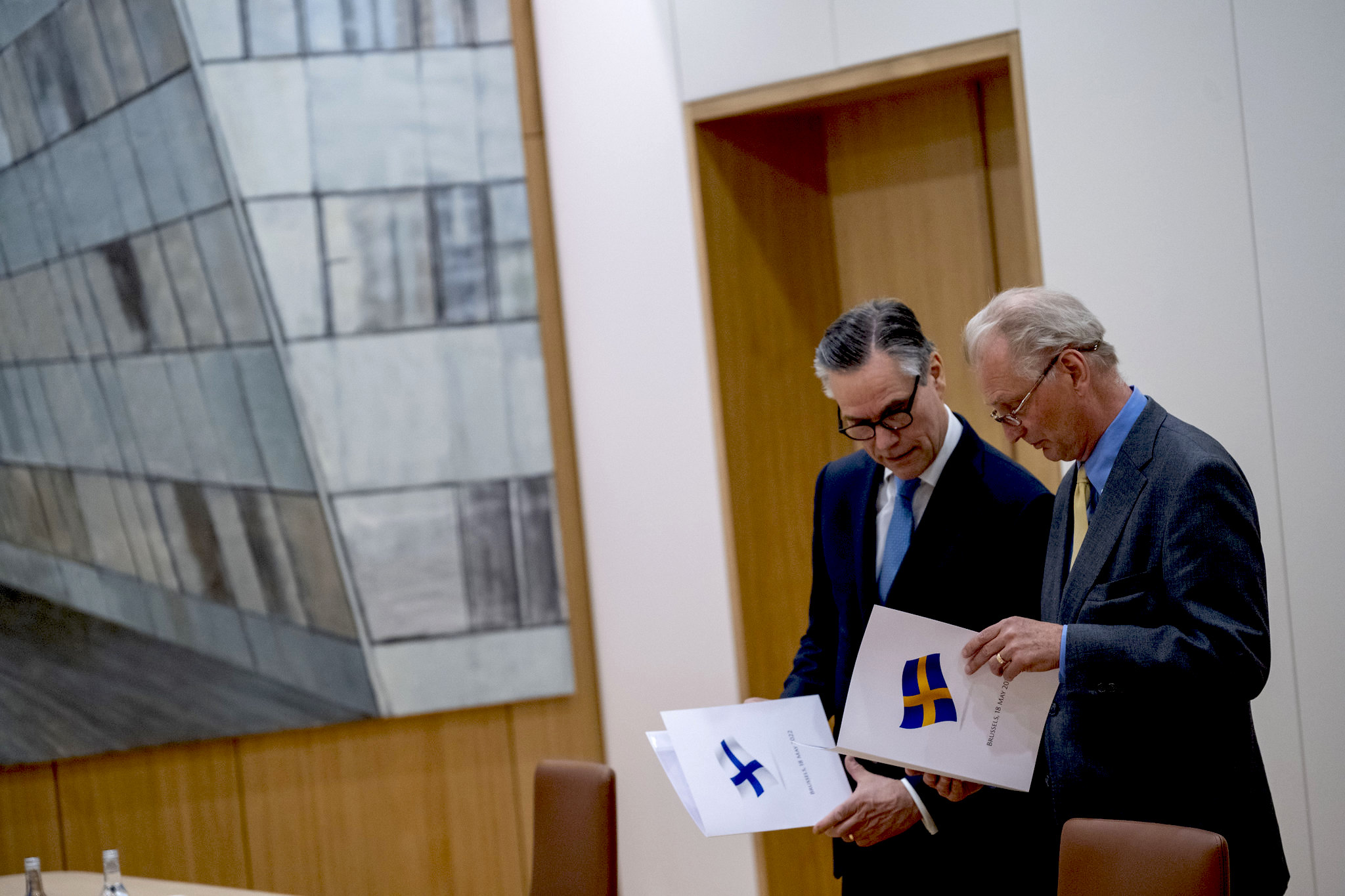
NATO ambassadors Klaus Korhonen of Finland and Axel Wernhoff of Sweden, with letters of application to the military alliance on May 18, 2022. (NATO/Flickr/CC BY-NC-ND 2.0)
The Swiss case is especially important for European countries considering strategic autonomy, particularly European states with established neutrality traditions: Austria, Ireland, Malta and Cyprus, as well as two special cases, Vatican City and Moldova.
In Asia, comparable or partially comparable cases include Turkmenistan, whose permanent neutrality was formally recognised by the U.N. General Assembly in 1995; India, which has oscillated between non-alignment and a form of flexible neutrality; and Indonesia.
Panama, Costa Rica and Mexico have also declared themselves neutral in different historical contexts. The members of the Non-Aligned Movement rejected membership in military blocs, although they did not formally declare themselves neutral states.
Neutrality, if it is not supported by strategic autonomy or an explicit security guarantee from major powers, cannot by itself guarantee a state’s security. On the other hand, membership in a military bloc is not an absolute security guarantee either.
Sweden and Finland, which abandoned their previous neutral or non-aligned status — a status that had brought them considerable economic advantages, particularly in Finland’s case — are today members of NATO.
Their accession to NATO did not make their security environment objectively safer; rather, it illustrates how dramatically the European security environment has deteriorated since 2022.
This is undoubtedly a warning that should be taken seriously. For example, the E.U. today speaks of “strategic autonomy,” but a large part of European security remains tied to NATO, whose strategic defence capabilities depend to a considerable extent on American military power.
It is therefore difficult to speak of complete European strategic autonomy as long as European security depends on American military power.
The Concept of Security Zones

U.S. President Gerald R. Ford signing the Helsinki Final Act or Helsinki Accords at the end of the Conference on Security and Cooperation in Europe, 1975, in Helsinki. (U.S. National Archives/ No known restrictions)
During the Cold War, both superpowers — the United States and the Soviet Union — recognised security interests in what they regarded as their respective spheres of influence: the United States in Western Europe and the Soviet Union in Eastern Europe.
The Swiss Confederation was unofficially part of the Western security sphere, partly because of its central geographical position in the middle of Europe. This was not the case with some other states in Eastern Europe during the Cold War.
One of the closest advisers to former U.S. Secretary of State Henry Kissinger, Helmut Sonnenfeldt, told American ambassadors in Western Europe at a meeting in Brussels in December 1975 that the United States had to accept the fact that the Soviet Union had special security interests in Eastern Europe, while at the same time seeking to transform the Soviet relationship with Eastern Europe gradually from a coercive relationship into a more “organic” one.
Sonnenfeldt’s argument was not intended as a formal recognition of Soviet sovereignty over Eastern Europe. He advocated an evolution of the relationship between Moscow and the countries of Eastern Europe, not formal recognition of Soviet sovereignty over them.
Opponents later interpreted his ideas as recognition of a permanent Soviet sphere of influence — hence the term “Sonnenfeldt Doctrine,” which he rejected.
As a Yugoslav correspondent in the United States, I had several extensive conversations with Sonnenfeldt about this doctrine in the late 1980s. The Yugoslav leadership believed that, under this doctrine, the United States would abandon non-aligned Yugoslavia to the Soviet Union.

Sonnenfeldt in 1974 accompanying U.S. President Gerald Ford to the Vladivostok arms control summit. (David Hume Kennerly /Gerald R. Ford Presidential Library/Wikimedia Commons/Public Domain)
Sonnenfeldt categorically denied this and claimed that such rumours were being spread by the Soviet secret service, the KGB.
The Sonnenfeldt Doctrine remains a fascinating and newly relevant Cold War concept, particularly in relation to the question of spheres of influence and “gray zones” between major powers as a means of preventing armed conflict between them.
Sonnenfeldt’s logic was based on the recognition that major powers have legitimate security interests in their respective neighbourhoods. This creates a need for compromise in order to prevent direct confrontation between great powers.
The Sonnenfeldt Doctrine was not a theory of neutrality, but an approach to managing spheres of influence and great-power security interests. A contemporary version of this logic can be found in the concept of “security zones” proposed by the influential American economist and peace advocate Professor Jeffrey Sachs.
Sachs has introduced an important conceptual shift into the theory of spheres of influence. According to him, major powers may have legitimate security interests along their borders, but they do not have the right to create spheres of influence or dictate the internal policies of smaller neighbouring states.
The Helsinki Final Act on security and cooperation expressed a related principle: the security of one state must not come at the expense of the security of another.
This insight was also incorporated into the thinking of George Kennan, one of the principal architects of the American policy of containment of the Soviet Union.
Kennan later became a prominent critic of the militarisation of the division of Europe, and of West Germany’s integration into NATO, warning that this could dangerously intensify the security dilemma with Moscow. (After German reunification he also opposed NATO’s eastward expansion.)
Kennan’s conclusion was remarkably close to the idea of “grey zones” as neutral spaces between two blocs. Kissinger was even more explicit. His approach was based on the balance of power, spheres of influence and the prevention of direct confrontation between the United States and the Soviet Union through détente and negotiations between the two superpowers.
He illustrated this policy in the case of Yugoslavia.
According to U.S. State Department documents, the United States wanted, within the framework of détente, to preserve non-aligned Yugoslavia’s “substantial independence” from the Soviet Union.
Yugoslavia was therefore an early example of a strategically autonomous European state outside both blocs – a kind of grey zone between the two geopolitical systems.
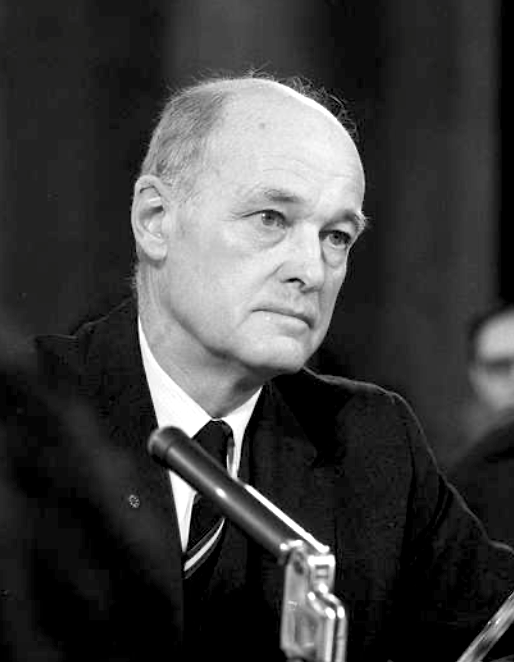
Kennan testifying before the Senate Foreign Relations Committee in 1966. (Warrren K. Leffler /Wikimedia Commons/Public Domain)
Today, a grey-zone state can be understood as a country that is not a formal member of a major military bloc, maintains security relations with several powers, is not completely subordinate to any one great power, occupies a geopolitical space between competing systems, and can use neutrality to reduce direct military confrontation.
Sachs’s theory of security zones, which would have neutral status, is particularly relevant to the debate over the current geopolitical position of Ukraine, Moldova and Georgia, as well as the European security architecture as a whole.
The neutrality of these zones is not merely a national legal status; it can become an institutional component of a European security architecture based on mutually recognised security interests.
The deeper question is therefore not whether neutrality belongs to the nineteenth century, but whether neutrality could become one of the institutional building blocks of a future European security system.
Former Secretary of State Kissinger formulated a similar proposal in 2014, following the political upheaval in Ukraine. Ukraine had the right to political and economic integration with Europe, he argued, but should not join NATO. It could cooperate with the West while maintaining a relationship with Russia comparable to that of neutral Finland at the time.
The failure to create a European security arrangement capable of accommodating Russian security concerns while preserving the sovereignty of smaller states remains one of the central unresolved questions behind the Ukraine conflict.
Whether a different application of the Sonnenfeldt, Kennan and Kissinger logic could have prevented the war remains a matter of historical debate.
In the End
The referendum did not end Swiss neutrality.
Switzerland remains neutral, but it will continue to adapt its neutrality to changing international circumstances.
The à-la-carte approach, however, raises an uncomfortable question: how much flexibility can neutrality tolerate before it becomes merely a political label?
A new European security system would be possible if NATO were gradually transformed into a pan-European security organisation within the framework of the Organisation for Security and Cooperation in Europe (O.S.C.E.) [It is worth noting here that the U.S. did not agree to Russia’s desire to join NATO].
Some prominent German intellectuals are speaking in terms of Entspannungspolitik, a European security architecture, non-alignment, arms control and the restoration of diplomatic dialogue with Russia.
There are, however, significant differences among academics dealing with these questions.
Some advocate classical military neutrality.
Others advocate European non-alignment.
A third group primarily advocates a new European security architecture in which Russia would be incorporated into a system of common security.
A fourth group believes that neutrality is no longer an appropriate response after Russia’s invasion of Ukraine.
The present Swiss model lies somewhere between classical neutrality and strategic partnership with the West.
Swiss neutrality is unlikely to disappear. The more important question is what kind of neutrality will survive.
If neutrality becomes sufficiently flexible to accommodate sanctions, military interoperability and increasingly close cooperation with one geopolitical bloc, it may remain a constitutional label only, while losing part of its strategic meaning.
If, on the other hand, neutrality is understood as a form of strategic autonomy, it could become not an outdated remnant of the past but one of the foundations of a future European security order.
For my native, Slovenia, the Swiss debate on neutrality raises a broader strategic question: whether a small European state can combine credible defence, strategic autonomy and military non-alignment while contributing to a European security system based on cooperation rather than permanent bloc confrontation.
Uroš Lipušcek Ph.D. is a Slovenian journalist and historian who was the long-time correspondent for RTV Slovenija from the U.N., U.S. and China. He was a candidate for the E.U. parliament in 2024. At present he is a professor at Emuni University (Euro-Mediterranean University) in Piran, Slovenia. He is the author of several books and analyses on history, among them Ave Wilson: USA and the Remaking of Slovenia in Versailles 1919–1920, (2003) and Sacro Egoismo: Slovenians in the Clutches of the Secret London Pact of 1915 (2012).
The views expressed are solely those of the author and may or may not reflect those of Consortium News.