All posts by natyliesb

Paul Robinson – Lenin: a centenary reflection

Monument to the Soviet Worker, Moscow, Russia; photo by Natylie S. Baldwin

By Prof. Paul Robinson, Canadian Dimension, 1/22/24

“Ленин жил. Ленин жив. Ленин будет жить.” “Lenin lived. Lenin lives. Lenin will keep on living.” This popular slogan reflected the central role in Soviet ideology of the Soviet Union’s first leader, Vladimir Lenin, who died one hundred years ago yesterday (January 21). As a Marxist, Lenin was committed to a theory that stressed the impersonal forces of history. Yet his own life proved how a single individual can redirect those forces in a new direction. Lenin did not cause the Russian Revolutions of 1917. But by the force of his own will, he turned them onto a new path, with enormous consequences both for Russia and the world.

Born Vladimir Ilyich Ulyanov in 1870 in the town of Simbirsk on the Volga River, Lenin was the son of a mid-ranking educational official whose position gave him the status of minor nobility. A turning point in Lenin’s life came in 1886, when his brother Alexander was executed for his role in a plot to assassinate Tsar Alexander III. This possibly induced a hatred of the imperial authorities that drove Lenin’s later behaviour. Before long, he too was involved in revolutionary activities, and by the early 1900s he was a committed Marxist, joining the predecessor of the Communist Party, the Russian Social Democratic Labour Party (RSDLP).

The primary revolutionary organization in Russia at this point was the Social Revolutionary Party (SRs), which looked to the peasantry (which made up 80 percent of the country’s population) to overthrow the Tsarist regime. The SRs were influenced by populist philosophy, which imagined that Russia could bypass the capitalist mode of development and build a stable socialist society on the model of the peasant commune.

By contrast, the RSDLP followed Marx in believing that capitalist industrial development was inevitable. This would create an urban working class (the proletariat), and it would be this proletariat, not the peasantry, that would lead the revolution, overthrow the Tsar, and establish a communist order in which the workers themselves would control the means of production.

It is here that we begin to confront the paradox of Lenin’s life. In principle, since the proletarian revolution is inevitable, one doesn’t have to do anything. It will happen of its own accord. Russian revolutionaries were never content to wait, however. As one of the first Russian Marxists, Georgy Plekhanov, argued, it was precisely the knowledge of where history was heading that made it possible for revolutionaries to accelerate change in that direction. “I am a worm, says the idealist. I am a worm when I am ignorant, retorts the dialectical materialist; but I am a God when I know,” wrote Plekhanov.

Lenin and his fellow Marxist revolutionaries knew with absolute certainty where history was heading and took upon themselves the role of God in bringing the end of history into being. At the heart of Lenin’s worldview, therefore, was a rigid ideological dogmatism that brooked no opposition. At the same time, he differed from many of his colleagues in being tactically flexible to the point that it could appear that he had no principles at all apart from a relentless desire to seize power. The ends so justified the means, that almost any tactics were permissible, even if they appeared to contradict Marxist theory and even if they were diametrically opposed to whatever Lenin had been proposing earlier.

This can be seen in Lenin’s 1917 book The State and Revolution. The first half was written between April and July 1917, when Lenin was hoping to take power by taking control of the workers’ and soldiers’ councils (Soviets). The second half was written after an abortive coup in July 1917, at a time when Lenin was on the run and his party’s prospects of gaining control of the Soviets briefly seemed quite weak. The book reflects these twists and turns. The first half talks of “All power to the Soviets.” The second half abandons that talk, and instead talks of “the dictatorship of the proletariat.” In short, slogans such as “All power to the Soviets” were just tactical ploys, to be promoted or discarded according to their temporary usefulness. What Lenin really wanted was all power to his own party.

This was a product of his unique way of thinking about the revolution. According to orthodox Marxist theory, the revolution takes place after the contradictions of capitalism have become acute and a large working class has come into existence. But capitalism was still quite young in Russia and the working class was very small. According to Marxist theory, therefore, Russia wasn’t ripe for revolution.

This fact helped cause a split in the RSDLP between two factions—the Mensheviks and the Bolsheviks—the latter of which was led by Lenin. The Mensheviks believed that communism would have to wait until Russia had passed through a long period of capitalism, and that in the meantime communists needed to build up support by means of a mass party open to all sympathizers. Lenin, in contrast, argued that Russia could have a communist revolution immediately, but in the absence of a large proletariat it would need a highly disciplined elite organization to lead the revolutionary movement. And thus was born the idea of the party as the centre of loyalty, and with that the idea that the interests of the party took precedence over all else. This had very little, if anything, to do with Marxism, but became the core of Marxism-Leninism.

In 1917, Lenin got his chance to put his ideas into action. The legitimacy of the Russian state was so connected to the person of the Tsar that once Nicholas II abdicated in March 1917, Russia began to fall apart. The question remained of who would pick up the pieces.

Lenin was determined that it should be the Bolsheviks, but on returning to Russia in April 1917 from exile in Switzerland, he found that most of his party disagreed. Bolshevik leaders in Russia were more in line with the Mensheviks. They felt that Russia would have to pass through the bourgeois revolution before it would be ready for communism. In the meantime, communists would have to support the bourgeois Provisional Government and protect the revolution by continuing the war against Germany. Lenin disagreed and made his case in his famous “April Theses.” The war was a “predatory imperialist” war, he said, and must be ended. Meanwhile, communists should not support the bourgeois revolution, but seek its immediate overthrow. Lenin’s fellow Bolsheviks were aghast. Lenin, they felt, had spent too long in exile abroad. He didn’t understand the reality of life in Russia. The April Theses were a mistake, they thought.

But such was Lenin’s personal authority within the tightly knit party he had built that before long he had won the doubters round to his point of view. It was at this point that one sees the importance of individuals in human history. Lenin didn’t create the conditions that led to growing chaos in Russia in 1917. These were indeed largely the product of impersonal forces. But Lenin moved these forces in a direction that another individual would not have. Had the Germans not given him the means to return to Russia from his exile in Switzerland, somebody else would have directed Bolshevik party policy in Russia, and history would have moved in a very different direction.

Lenin was interested in more than just overthrowing the Provisional Government. He wanted to ensure that the Bolsheviks dominated whatever system was created to replace it. And here once again, he ran into opposition from his colleagues. By late October 1917, it was clear power was falling from the Provisional Government’s grasp. It was just a matter of who picked it up. The majority of Lenin’s colleagues supported the idea of an armed insurrection, but argued that to give it legitimacy the overthrow of the government and the transfer of power to the Soviets should be announced by the forthcoming All-Russian Congress of Soviets. Once that announcement had taken place, the Soviet forces could then seize control.

Lenin disagreed. If the revolution followed that model, power would belong to the organization that declared the revolution, meaning the All-Russian Congress of Soviets. The result would be a coalition government appointed by the Congress, of which the Bolsheviks would be just one small part. That was unacceptable.

Lenin insisted on a different model. First, the Bolshevik-controlled Military Revolutionary Committee should forcibly overthrow the existing authorities and announce the formation of a new government, led by the Bolsheviks. The Committee would then present this to the Congress of Soviets as a fait accompli. This would ensure that the Bolsheviks would be in charge.

Once again, many of Lenin’s Bolshevik colleagues protested. Cutting the SRs and Mensheviks out of power would be bound to cause a reaction, they argued, and probably result in civil war. Lenin, though, was unconcerned. His plan would have the effect of making people choose sides—for the revolution or against—and identifying the revolution with the Bolsheviks would mean that anybody opposing the Bolsheviks would de facto be against revolution.

Lenin won the day. The Military Revolutionary Committee seized power and transferred it to the Bolshevik party. The SRs and Mensheviks protested, but to no avail. And so began 70 years of communist domination of Russia. This was not inevitable. Even many of Lenin’s Bolshevik colleagues at first didn’t want to go down that path. That they did was largely due to Lenin himself.

In this sense, the cult of personality that the Soviet authorities built around Lenin after his death was fully justified. The revolution of November 1917 really was Lenin’s revolution, and the communist system that ruled the Soviet Union for the next 70 years really was Lenin’s creation. Great impersonal forces matter. But so too does individual agency. The life of Vladimir Lenin proves the point. For good or evil, he changed the path of history.

Paul Robinson is a professor in the Graduate School of Public and International Affairs at the University of Ottawa and a Senior Fellow at the Institute for Peace and Diplomacy. He is the author of numerous works on Russian and Soviet history, including Russian Conservatism, published by Northern Illinois University Press in 2019.
Stephen Bryen: Biden’s emerging new Ukraine policy

By Stephen Bryen, Asia Times, 2/5/24

The Biden administration wants the Ukraine war to continue at least until after US presidential elections in November but there is a lurking danger that won’t be possible, especially if Russia mounts a really big offensive. For that reason, there is a new emerging plan, one that is not in writing but seen in politics.

An example: When Ukrainian President Volodymyr Zelensky decided to fire armed forces commander Valerii Zaluzhny, US Undersecretary of State for Political Affairs Victoria Nuland, who is directly responsible for US and NATO Ukraine policy, rushed to Kiev.

There are no photo ops with Nuland and Zelensky. She briefed the press standing outside in front of a hastily assembled table with some microphones on it.

Why did Nuland run to Kiev? Almost certainly the White House told her to get herself over there immediately in case things went south in Kiev. There was apparently real worry that Zaluzhny might turn the army around and use it to go after Zelensky.

So far, Zaluzhny has not made a move. He still can, of course, so one supposes that Nuland was in Kiev to talk more to Zaluzhny than to Zelensky. There is no public record of any meeting but it would seem that her job was to calm Zaluzhny down and offer him incentives to behave.

Washington is saying nothing officially about the changing of the military guard in Kiev. The White House says it is an “internal Ukrainian” issue, not one Washington would have anything to say about.

Certainly, this is pure nonsense. Washington has been manipulating Ukraine’s internal politics since before 2014, and Nuland was the sparkplug to get what Washington wanted.

Nor was there any surprise about cashiering Zaluzhny. Someone has to take the blame for the failure of Kiev’s so-called counteroffensive and the waste of billions of dollars in US equipment and supplies.

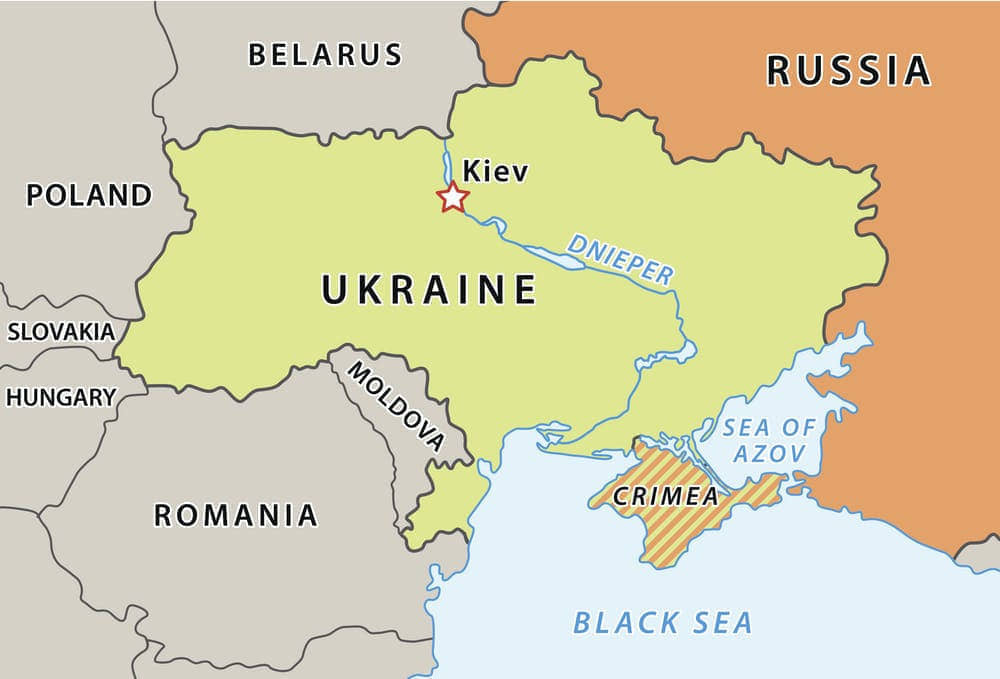
It also isn’t a surprise that things are getting worse now, as Ukraine will soon face the loss of Avdiivka and the Russian army, newly refurbished, will push toward the Dnieper River, aiming at Kiev.

As has been noted now ad nauseum, Kiev’s manpower situation is dire and its lack of weapons means it is limited in what it can hope to do. But the real kicker is that Kiev’s mounting casualties, more than 1,000 per week, are hitting hard on the public perception that the war has gone wrong.

To pull men and women into the army Kiev resorts to rough, unpopular measures, including threats and intimidation. Going to the front untrained is seen more and more as a certain death sentence (which it is).

Zelensky won’t negotiate with Russia because Washington is opposed to any negotiation, seeing it as a potential defeat for NATO. The result would be unnerving NATO and truncating Washington’s leadership of the alliance.

Politically, Zelensky is more and more aligned with Kraken and other military formations who are extremely anti-Russian (and anti a lot of other things). The Russians regard them as fascists and Nazis.

But how can Kiev hold on if Russia actually mounts a major new military action in Ukraine?

An offensive is likely mostly because Putin needs one to cement his next term as president. Elections are scheduled for March 17, and Putin’s reelection is likely because he has suppressed any real opposition. But even so, Putin needs a boost from the Russian public and a celebratory election would count for a lot.

This puts Kiev in a terrible bind. Once there is a real Russian breakthrough across the current line of contact, sending Ukrainian forces reeling backward, it will be nearly impossible for the Zelensky government to survive in Kiev.

Under such circumstances, there are already indications of planning to move the Ukrainian government westward, probably to Lviv (Lvov), which is near the Polish border. The Poles are already saying they might use their nearby air defenses to protect Lviv.

Why would they say this? The reason is that they are preparing a plan to hold off the Russians by use of Polish Patriot and other air defenses, and even to send Polish brigades reinforced by other NATO assets. The British are already preparing public opinion and openly talking about sending their Special Forces to Ukraine’s rescue.

Anyone who looks at a map must realize that the only way NATO can “invade” or “support” a Zelensky government is if it is done close to the border with Poland.

That’s far enough away from Russian missiles that it will be difficult for Russia to deal with that area, unless of course there is either a de facto or de jure breakup of Ukraine in which the western part stays somewhat independent while the rest is subject to whatever arrangements the Russians decide to impose.

Nothing will happen if the Russians stay with the plodding, slow grind-up of Ukraine’s army. But, as noted above, the Ukraine war is reaching an inflection point for both military and political reasons.

Shifting the Ukraine government to Lviv and gaining support from Poland and the UK (no others are likely to contribute anything) would buy time for Biden, although the end result either will be a war in part of Europe (Poland, the Baltic states) or a stalemate that Russia and NATO accept.

Biden gets off the hook for the time being if this scenario plays out but even in the medium term it is a strategic disaster. Biden, of course, is mindful he does not need and cannot survive another Afghanistan-like disaster.

British enthusiasm for war owes to pressure from Washington. It is well to remember that the British military is an unholy, underfunded and undermanned mess. The British forces lack materials, lift and cover to do much of anything, and it is foolish to think the Russians won’t retaliate.

That leaves the impression that British enthusiasm for war is simply fake news, intended to scare the Russians somehow. Most of Washington’s Ukraine policy has been based on the exaggeration of the value of American weapons and coordination capabilities, and on wishful thinking that Russia would back out of the conflict.

Any look at Russian history, dating back to Napoleon, should have suggested that Russia wasn’t going to back down. Moreover, taking into account British bombast, one is reminded of the outcome of the charge of the Light Brigade. Will we see another Balaclava in Ukraine?

Nuland has created a disaster with the full backing of the Biden-Obama team. As, so far, there is no counterweight in the United States or among the NATO states, the disaster will roll on. Washington will continue to risk a war in Europe, even a nuclear war, to try and salvage the disaster of its own making.

Washington and Nuland are effectively trying to rearrange the deck chairs on the Titanic.

Larry Johnson: WESTERN ACADEMICS DO NOT UNDERSTAND RUSSIA AND ITS MILITARY — THE FABIAN HOFFMANN EXAMPLE

By Larry Johnson, Substack, 1/15/24

Larry Johnson is Managing Partner of BERG Associates, former CIA Officer and State Department Counter Terrorism official.

A friend flagged this X-Twitter thread by Fabian Hoffman to me the other day because it attracted a lot of neo-con attention and cheerleading. Prior to this I had never heard of Hoffmann. I can’t tell if Hoffmann is Dutch, English or Norwegian. Here’s his bio, you tell me:

“Fabian Hoffmann is a PhD Research Fellow at the Oslo Nuclear Project. His PhD research focuses on the proliferation, deployment, and use of non-nuclear strategic weapons, in particular conventional precision-strike capabilities, and their implications on nuclear strategy and broader nuclear weapons policy (e.g., nuclear proliferation & disarmament). . . . Prior to joining the University of Oslo, Fabian Hoffmann worked as a research assistant at the International Institute for Strategic Studies (IISS). He holds an MA in War Studies from King’s College London, UK, and a BA in International Relations from the University of Groningen, The Netherlands.”

I am taking the time to focus on Hoffmann’s “analysis” of Russia as a military threat because it illustrates the ignorance predominant among Western scholars. This man’s critical thinking skills are quite weak and his lack of any military experience adds to his failure to grasp the real issues. I am reprinting the entire thread for your ease of reading. Here goes:

Fabian Hoffmann

@FRHoffmann1

“In this thread, I will explain why we are much closer to war with Russia than most people realize and why our time window for rearmament is shorter than many believe. In my opinion, we have at best 2-3 years to re-establish deterrence vis-à-vis . Here’s why 1/20

One common mistake in analyzing the threat posed by Russia is falling into the trap of ‘mirror-imaging’. This means assuming that Russia views a potential conflict with us in the same way we view a potential conflict with them. Nothing could be further from the truth. 2/20

In addition, it is important to be cautious about extrapolating too many lessons from Ukraine & assuming that a war with Russia would unfold in a similar manner, albeit on a larger scale. In reality, a war between NATO & Russia would likely take on a different form altogether. 3/20

Russia does not plan for the type of large-scale conventional war with NATO that we are currently seeing in Ukraine & for which we are primarily preparing. Already before taking substantial losses on the Ukrainian battlefield, Russia knew that it would be inferior in such a scenario. 4/20

Russian thinking on a war with NATO revolves around the concept of escalation control and escalation management. Russia’s primary objective in a war with NATO is to effectively manage escalation and bring the war to an early end on terms that are favorable to Russia. 5/20

Terminating hostilities early is necessary, given that Russia must secure a victorous outcome before NATO’s conventional superiority comes to bear, most notably that of the United States. Two key concepts play a crucial role: de-escalation strikes and aggressive sanctuarization. 6/20

Rather than comprehensively defeating NATO in a prolonged ground war, similar to what we see in Ukraine, Russian doctrine suggests that Russia would attempt to coerce NATO into submission by signaling the ability to inflict progressively greater amounts of damage. 7/20

This would entail, in particular, long-range strikes against critical civilian infrastructure across European NATO countries early on. The message to NATO governments: Don’t come to the support of your Eastern European allies, unless you want to see your population suffer. 8/20

Simultaneously, Russia would extend its nuclear umbrella over any NATO territory it managed to capture in an initial assault. This sends a second message: Any endeavor to retake that territory, particularly by external NATO forces (USA), will result in nuclear escalation. 9/20

The psychological fear of escalation, which may ultimately result in unacceptable damage, is supposed to open the door for negotiations about the future of NATO and the security architecture in Europe – of course, on Russia’s terms. 10/20

This type of warfighting scenario is not a contest of forces, but primarily a risk-taking competition. The question becomes: Who will be the first to back down when confronted with the prospect of largescale war, including potential exchanges of strategic nuclear warheads? 11/20

As Cold War historians know, the balance of military power is not deterministic of outcomes in risk-taking competitions. Instead, they are often determined by the balance of resolve; i.e., the relative willingness to remain steadfast even as risks are increasing. 12/20

This is why Russia pursues this type of strategy. Russia does not need to match NATO’s conventional power. As long as NATO gives in first amid mounting psychological pressure due to a lack of resolve, Russia can walk away with a victory. 13/20

Here’s the thing: The ongoing war in Ukraine is teaching Russia a crucial lesson – that the West lacks resolve. Domestic disunity and endless discussions about escalation only reinforce Russia’s belief that NATO will back down when push comes to shove. 14/20

This means Russia does not have to wait until its conventional power is reconstituted. Scenarios where we have 5-10 years to rearm following the end of the war are way too optimistic, in my opinion. 15/20

I am with the Eastern European states that we have at best 2-3 years from today to re-establish a credible deterrence posture vis-à-vis Russia. Otherwise, we run the grave risk that Russia is going to challenge us, sooner rather than later. 16/20

NATO must credibly deny Russia the ability to seize any substantial part of NATO territory or to threaten strikes against NATO critical infrastructure. This is needed to escape the coercive conundrum that aggressive sancturization and de-escalation strikes pose. 17/20

We must also have a serious discussion not only about how to deter a war with Russia but also about how to fight one. Are we prepared to retaliate against Russian critical civilian infrastructure in case Russia strikes ours first? How do we react to Russian nuclear first use? 18/20

Our lack of preparedness, both in the physcial space but also in terms of our cognitive ability to think through these scenarios, is encouraging Russia. Since 2014, Russian intellectuals have debated extensively and publicly how to win a war against NATO. Where is our debate? 19/20

What we need, especially in Europe, is whole-of-society effort to get our affairs in order. There’s no denying that this will come with a significant cost, but I fail to see any other viable option. Considering worst-case scenarios, as we should, time has already run out. 20/20″

Let me highlight some of the biggest flaws in Hoffmann’s analysis. Let’s start with Hoffmann’s claim that, “Russia does not plan for the type of large-scale conventional war with NATO . . . [because] Russia knew that it would be inferior in such a scenario.” This is ridiculous. Russia’s military already has demonstrated that it is three steps ahead of NATO planners. You know, the Western clowns who conjured up Ukraine’s sure-fire counter-offensive victory that ended up decimating the Ukrainian army?

Russia absolutely has planned for having to deal with a large-scale conventional war with NATO. It is NATO that has failed to properly plan for dealing with Russia. NATO leaders foolishly convinced themselves that Russia’s army is led by incompetent drunks and staffed by criminals snatched from prison. Big mistake.

Hoffmann’s next mistake is that he still believes NATO has a conventional force advantage over Russia. He insists that, “Terminating hostilities early is necessary, given that Russia must secure a victorious outcome before NATO’s conventional superiority comes to bear.”

Hoffmann has not been paying attention to what has unfolded on the ground in Ukraine since February 2022. Not a single NATO weapon system has proved to be superior to what Russia has fielded. Himars, Patriot batteries, Leopard and Challenger tanks, and Bradley fighting vehicles have been effectively neutered. NATO has no air defense system comparable to Russia’s 49 year old S-300. To add insult to injury Russia employs superior electronic warfare and has hyper-sonic missiles.

Apart from superior battlefield weapons, Russia has a manpower advantage. Russia is smaller in terms of population than the combined NATO countries, but it is providing standardized training to soldiers that share a common cause — i.e., defending the motherland. NATO? It is a hodgepodge of different nationalities who have no unifying cause other than a hatred of Russia, which is rooted in racism. On top of that, most of the major NATO countries are struggling to meet recruitment goals.

Almost forgot. The war in Ukraine has revealed that NATO countries no longer have the military industrial capability to produce the volumes of artillery shells and combat vehicles and air defense missiles needed to fight Russia. Russia’s industry is running on all cylinders and cranking out prodigious quantities of ammunition, tanks, aircraft, combat vehicles, missiles, rockets and drones.

Hoffman is not alone in believing that NATO represents a superior military force compared to Russia. He is a prime example of the delusion that pervades Western military leadership. The West is preoccupied with LGBTQ and pronouns. Russia is busy training and equipping warriors. Ask yourself, would you rather have a division of Chechen fighters or a unit cobbled together with Germans, Swedes, Finns, French and Spaniards? I rest my case.

Riley Waggaman: NEWS FROM RUSSIA

By Riley Waggaman, Substack, 2/4/24

Welcome to Edward Slavsquat’s weekly Russian media news roundup and open thread-thing.

The quote of the week:

The real physical assets are with us, these are mines, pipelines, factories—it’s all here [in Russia]. And abroad there is a mirror image of this property in the form of financial documents. That is, the guys in the West are running the Russian economy from offshore companies. Locally they are controlled by very obedient oligarchs who prefer to look into the mouths of the owners of the money. And Russia for them is just a territory where they can earn money on a rotational basis.

— Economist Valentin Katasonov, as quoted by Free Press in a February 3 op-ed about Russian capital flowing west.

And now for some news.

Society

  • Moscow will celebrate Chinese New Year for the first time in 2024. In honor of the holiday, the streets of Moscow will be decorated in a “traditional Chinese style”, and several festival sites will be set up in the city center. [fontanka.ru]
  • Russian President Vladimir Putin earned around 67.5 million rubles (approximately 740,000 USD) from 2017 to 2022, according to information about his income and property published on the website of the Central Election Commission of the Russian Federation. [Interfax]
  • Russia is planning to launch a group visa-free tourist exchange with India in 2024. [regnum.ru]
  • Moscow airports will begin to collect personal biometric data of foreigners arriving in the country, as part of a pilot program outlined in Rusisa’s migration policy for 2024-2025. [pnp.ru]
  • Speaking about Boris Yeltsin on his birthday, Kremlin Spokesman Dmitry Peskov said the first president of the Russian Federation was “an integral part of the history of our country, and, of course, we preserve the memory of Boris Nikolayevich Yeltsin”. [RIA Novosti]
  • 43% of Russians believe that their vote in elections has no affect on anything, according to a new survey released by sociological group Russian Field. [nakanune.ru]
  • American journalist Tucker Carlson was spotted in Moscow. A photo of Carlson at the Bolshoi Theater in Moscow went viral on social media. The purpose of the American journalist’s unannounced visit to Russia remains unknown. [regnum.ru]
  • The Ministry of Education of Belgorod Oblast wants to create “social maps” of all children and adolescents in the region in order to “comprehensively analyze and evaluate their personalities” based on an analysis of the introduced social risk map. This map will take into account the entire life activity of the child and his family, including personality, education, employment, peers, ideology, health, and criminal record. [katyusha.org]
  • Approximately 18 million Russians have connected their biometric data to the government’s State Services (Gosuslugi) portal, according to the head of the Ministry of Digital Development of the Russian Federation, Maksut Shadayev. In addition, 19 million citizens have digital copies of personal documents instead of paper ones, “which in the future can replace traditional identification, not only in digital, but also in offline interactions”. In total, 110 million Russians have a profile on Gosuslugi. [ixbt.com]
  • The exhibition-forum “Russia”, which opened at Moscow’s VDNKh on November 4 and will last until April 12, has been visited by 6 million people in three months. [bmf.ru]
  • MTS became the first mobile operator in Russia with state accreditation for working with biometric data. [RIA Novosti]

“Public Health”

  • Russia hopes to create a “universal vaccine” against flu and Covid-19, the composition of which does not need to be changed annually, Gamaleya Center Director Alexander Gintsburg said while speaking at the Russia International Exhibition and Forum on February 2. [Interfax]
  • More than 130 domestic drugs for the treatment of cancer were registered in 2023, and today more than 100 more drugs are undergoing clinical trials, according to Health Minister Mikhail Murashko. [bmf.ru]
  • Russia “has significantly relaxed its requirements for compulsory vaccination against Covid-19”, according to RT. “Under the new rules, [if an epidemiological threat is declared], only those that have never been vaccinated against Covid-19 or contracted the disease itself—as well as those suffering from chronic lung or heart diseases, HIV, or tuberculosis—and the elderly will have to take a mandatory shot.” [RT.com]
  • Russia’s Health Ministry will expand the country’s vaccination calendar in an effort to fulfill directives in President Vladimir Putin’s decree on supporting large families, Health Minister Mikhail Murashko told RIA Novosti on Saturday. [RIA Novosti]
  • Professional communication between Russian doctors and colleagues from other countries continue despite efforts by “politicized associations” to exclude Russian health authorities from global cooperation, Health Minister Mikhail Murashko said. Murashko added that Russia is actively cooperating with China on health issues, and that Chinese counterparts are actively monitoring what is happening in Russian healthcare. [spbdnevnik.ru]

Ukraine

  • The Ukrainian Armed Forces are attacking civilians and shooting at ambulances, effectively making them a “terrorist organization”, Russian President Vladimir Putin said during the “Everything for Victory!” forum on February 2. [Izvestia]
  • 72-year-old Evgenia Mayboroda was sentenced to five years and six months in prison for posting fakes about the Russian military, after sharing “information about the number of dead Russian military personnel” and an “emotional video.” Mayboroda admitted guilt but said she posted the material in an emotional state after her brother, who lived in Ukraine, was buried under the rubble of a building that collapsed as a result of shelling. However, a Rostov region court concluded she acted out of political hatred. [Kommersant]
  • Gazprom continues to supply gas to Europe via Ukraine in the amount of 42.4 million cubic meters per day, a Gazprom representative announced on February 3. [TASS]
  • Hungary will not veto an increase in the so-called European Peace Fund, which finances arms supplies to Ukraine, but will not itself take part in its work, Hungarian Foreign Minister Peter Szijjártó said on February 4. [regnum.ru]
  • A bill on raising the conscription age for those who have received Russian citizenship will be reintroduced after “comprehensive discussions” on the legislation’s language is finalized, according to one of the bill’s sponsors, State Duma deputy Mikhail Sheremet (United Russia). Last week, a bill was introduced to the State Duma proposing an increase in the conscription age to 50 years for men who have received Russian citizenship. However, the bill was quickly withdrawn. [Kommersant]
  • The Ukrainian army lost more than 23,000 people killed and wounded in January of this year, Russian Defense Minister Sergei Shoigu claimed during a conference call with Russia’s military leadership. [Interfax]
  • The shelling of DPR territory will stop if the Ukrainian army is pushed back 150 km, the head of the republic, Denis Pushilin, said during a recent media appearance. [regnum.ru]
  • Igor Strelkov’s lawyer said that if his appeal fails, the former defense minister of the DPR may request to be sent to fight in Ukraine, instead of serving his 4-year prison sentence. [ura.ru]
  • Russian Health Minister Mikhail Murashko said that 70 billion rubles will be allocated for the rehabilitation of those wounded during the special military operation. [vademec.ru]
  • Customs officers in Transbaikal discovered eight containers on a freight train containing uniforms for Ukrainian Armed Forces soldiers. The cargo, which came from China, was in transit to Poland. [life.ru]

Economy

  • Over the next 12 months, Russia plans to install 1,437 fast (50 or more kilowatts) electric charging stations for electric vehicles. [Vedomosti]
  • The share of borrowers in Russia with five or more existing loans reached 8.6% at the end of 2013. The figure has almost doubled over the past two years (at the end of 2021 it was 4.7%). [nakanune.ru]
  • In November, Russia became the main exporter of uranium to the United States for the first time since May, RIA Novosti calculated based on open data. [RIA Novosti]
  • Russia took 15th place in the ranking of European countries in terms of gasoline availability at the beginning of 2024. Residents of Luxembourg can purchase the largest amount of fuel with their average monthly salaries, while residents of Moldova can purchase the least, according to a RIA Novosti study. [RIA Novosti]
  • Dmitry Mezentsev, State Secretary of the Union State of the Russian Federation and Belarus, said the possibility of a single currency space within the framework of a supranational entity is not currently being discussed. [finobzor.ru]
  • Since the beginning of 2024, the wealth of Russia’s richest businessmen has grown by $7.953 billion, according to data from the Bloomberg Billionaires Index. This is approximately 717 billion rubles at the current exchange rate. [nakanune.ru]
  • Unlike other economies, the Russian economy is growing and has become the largest in Europe and fifth in the world, Russian President Vladimir Putin said at the “Everything for Victory” forum on February 2. [RIA Novosti]

The Nation: This Russian Opposition Leader Met With Putin to Discuss a Cease-Fire to Stop the Killing

The Nation, 1/17/24

Grigory Yavlinsky is the founder of Russia’s leading and oldest democratic opposition party, Yabloko, which is the only party in Russia calling for a cease-fire. The interview was conducted by The Nation’s longtime contributor Nadia Azhgikhina at Yabloko’s Moscow offices.

Q: At the end of 2023, the Russian media talked a lot about Yavlinsky’s “peace program” and about your midnight December 19 meeting in the Kremlin with Putin to discuss it. What is the essence of this program?

Right now, we need to reach a cease-fire agreement. That means talking about the disengagement of heavy weapons and troops, setting demarcation lines, ensuring international observation and control, and so on. Until the killing of people is stopped, it is impossible to talk about any positive prospects. I believe that the most important thing today is to stop the killing of people. Isn’t that clear? Over the past year, there have been no significant changes on the battlefield. The Ukrainian counteroffensive ended in nothing. But recently I read in the Western press that the number of people killed every day has increased significantly. That is, people on both sides are dying every day. For what?

I am amazed that there is not one major, influential politician in the world today who would put people’s lives first, before geopolitical projects. They talk about anything at all but people’s lives; that doesn’t matter. Yes, politicians seem to be sorry, but at the same time they speak directly about the necessity to continue the war until some “victorious end.” The preservation of human life is not the main criterion for them.

That is why people are dying every day. And on top of that, Ukraine is losing its prospects. I am a Russian politician, and Russia started this conflict, so it is not for me to talk about Ukraine’s problems. But personally, Russia and Ukraine are very dear to me, they are like my right and left hands. What is happening is incredibly painful for me. And I will do everything to stop the deaths of both Russians and Ukrainians. Cease-fire first and foremost.

A cease-fire is not a border treaty. There has been no peace treaty between North and South Korea for 70 years. There is no treaty between Russia and Japan, and no one has been bothered by it for years. The peculiarity of Russia’s conflict with Ukraine is that the situation is such that nothing else is possible. Everything else—other negotiations, discussions, truce—will be possible much later and only on the basis of a cease-fire agreement.

Q: With US involvement?

In one form or another, US participation is important. It can’t be done without the US. It would be good if China were not left out. Putin is explicitly saying that we are not interested in territories. He is interested in dialogue with the White House about Russia’s role, NATO, arms, etc.

Q: Your opponents say: You can’t have a cease-fire because Russia will then go farther. Let Russia first withdraw from Ukrainian territories. Putin cannot be trusted.

In such a situation and with such participants, it is not a matter of faith. It is necessary to make concrete decisions and in such a way as to minimize the possibility of their violation. This is politics. For example, we should realize that Russia has nuclear weapons, and the solution of territorial problems should be achieved through long and complex negotiations, not by force. In the meantime, people are just being killed.

I would say to my opponents: If you are in favor of continuing the war, go to the line of contact yourself and send your children there. It is easy to criticize from a cozy office or a European restaurant. You have to realize that Putin doesn’t really need any respite. He is actively exporting oil despite the sanctions. He can build any kind of factory. He doesn’t even need mobilization—he will promise contract workers the kind of pay they never dreamed of, and people will go on their own. What breathing space does he need? Ukraine objectively does not have as much strategic depth as Russia. It is organized differently, and the West’s help is not unlimited, especially since the Middle East has now become a serious problem for the West, a conflict that could escalate into a very dangerous one. In this context, what is happening in Ukraine has come to be perceived as a distant “local” conflict. Few American citizens actually care where exactly the border between Russia and Ukraine will be. People simply don’t want war, even though not a single American is officially fighting in Ukraine.

Q: Why do so many people today not want to talk about peace? Are they more afraid of talking about peace than they are of war?

Talking about peace is talking about official and mutual recognition of borders. So far there is no basis to talk about it. There are no prerequisites for a full-fledged peace now. That is why I am only talking about a cease-fire, i.e., that we should stop killing people. After that, they can take even 20 years to negotiate the terms of peace. Let me remind you about Finland. When, in 1939, the Red Army captured an important piece of Finnish territory, Marshal Mannerheim sat down at the table with the prime minister and the president and convinced them to stop in order to save the country and preserve the future. As a result, the country, its army, and its leadership were preserved. It is a difficult choice. But it is there for now. A peace treaty is a distant prospect. Two things are extremely important now. The first is to stop killing people immediately. The second is to preserve prospects, the opportunity to move into the future. Can’t 80 percent of Ukraine be oriented toward joining the EU?

Things will be very difficult in the returned territories. There is a lot of destruction and land mines. What will be done with the unfortunate population? Find out who sympathized with the Russians and punish them? This has already happened in liberated settlements and cities. What to do with people? Put them in jail? Is it not clear that there will be guerrilla warfare? An endless story… And Crimea? It’s no secret that today the majority of people there really support Russia.

Q: There was at least one moment when a cease-fire seemed to be possible.

Right. In November–December 2022, after the successful Ukrainian operation near Kharkiv and Kherson. Then there was a moment when both sides could have said something provisionally satisfactory to their peoples: Moscow something about the annexed territories, and Zelensky to declare that he had preserved the country, the sovereignty of the nation-state and was joining the EU. But this important moment was missed.

Q: What did Putin say in response to your proposal?

He was silent.

Q: But he listened to it?

Yes, he did. I told him I’m personally ready to negotiate an immediate cease-fire.

Q: You’re probably the only one everyone would talk to today, including in Ukraine and in the United States.

I am ready to do everything possible to stop the killing of people.

Q: Yabloko is the only party that openly calls for peace. You refused to participate in the presidential election, for the first time.

Actually, I refused for the first time in 2004—it was obvious then what was going on. There have been seven presidential elections in Russia since 1991. I participated three times. In 2000, I came third out of 11 candidates. Now it’s kind of a referendum, a plebiscite on Putin’s support, not a competitive election, and presidential spokesman Dmitri Peskov has already announced the results. Nevertheless, I still offered to informally collect signatures for my program, the peace program. We decided that if 10 million signatures were collected, that is, about 10 percent of voters who support my nomination, I would run despite all the difficulties. In two months, we collected about one and a half million signatures.

Q: Probably there were many voters afraid to leave their passport data on the signature sheets, I know such people.

That’s right, people are afraid to declare their opposition to the current government. Fear. It has enveloped the entire country in recent years. We live in a condition of fear.

Q: Why is it back? Why are the worst features of the Soviet past returning? During perestroika, there was confidence that we were free of the heavy legacy, that there was no return to it. How did this happen?

Because in the 1990s we carried out mistaken reforms, even criminal ones, and deceived people, deceived their hopes. It is well known what gross mistakes and crimes were committed. Mikhail Poltoranin, a Russian official close to Yeltsin, wrote in his memoirs how he tried to persuade Yeltsin in the fall of 1991 to appoint me as his deputy in charge of reforms. Yeltsin said: Yavlinsky will do what he thinks is necessary, but I need IMF loans, and they have a completely different reform plan. So, he appointed Gaidar [who pursued “shock therapy reform”]. And those were the wrong reforms. Of course, by and large it was not about the IMF. The problem was the lack of understanding of the essence of what had to be done, and the lack of political will of the Russian leadership in the first place.

On January 2, 1992, Russia announced “price liberalization”! This in a country without a single private enterprise at the time; there were only state monopolies. By the end of the year, hyperinflation reached 2,600 percent! That is, prices rose 26 times. Enterprises stopped, there was a gigantic decline in production, unemployment, crime. My 500 Days program provided for the use of people’s financial savings during the Soviet period for the privatization of small and medium-sized enterprises, the emergence of real private business, the creation of an inter-republic banking union, the implementation of an economic treaty between the former union republics, with which in the autumn of 1991, 13 republics out of 15 agreed in one way or another. All that was crossed out. In 1993, people protested the situation. The protest was crushed with the shooting and destruction of the Russian Federation parliament.

Q: People become disillusioned with democracy because of failed economic reforms.

Yes, you’re right. In addition, the government fraudulently transferred large state property to people close to them via the “loans for shares” program. This is how the oligarchs appeared, and corruption became the foundation of Russia’s economic system. A tiny group of oligarchs enriched themselves, merging power and property. The separation of powers, an independent court, a real parliament, an independent press, trade unions, real democracy were contraindicated and categorically unacceptable for the state corporate-criminal system.

The third circumstance is that during the 10 years of reforms after 1991, there was never an official state and legal assessment of Stalinism and the Soviet period in general. It is not surprising that the practices of that time have returned.

Under these conditions, in the 2000s the authorities imposed a formula on people, which many obeyed: “Mind your own business and do not interfere in politics. Nothing depends on you anyway. Democracy is just empty words.” High oil prices made it easier as people began to live better.

In my opinion, Russia has a lot of wonderful people, but as a result of all this there is no civil society. Today the country is experiencing the collapse of the failed post-Soviet modernization.

Q: Can there be a way out today?

We can talk about a way out when they stop killing people. Now the situation is worse than in December of last year. At that time, there were publications about the possibility of starting negotiations on a cease-fire. But Ukraine attacked a Russian warship. Russia responded with a missile attack. Then there was a strike on the Russian city of Belgorod. And so on since January first, almost every day. The situation is moving backward.

Q: What don’t Americans understand about Russia? What would be important to do to improve relations, to ease the dangerous confrontation?

We need to talk. Dialogue with Russia cannot be avoided. Sanctions have not worked because Russia is part of the world economy. The world economy cannot live without Russia. For example, all this time, gas from Russia continues to flow through Ukraine to Europe. There are many other examples. Russia is not going anywhere. This must be understood.

Second. We need to think about the future. I would not be surprised if an even more aggressive dictator emerges in the Russian political field, with a real claim to power.

And third. By the middle of the 21st century, the European Union will not be able to separate itself not only from Ukraine, but also from Russia and Belarus. It will have to look for some effective form of integration. This is an imperative, which must be met, otherwise Europe will not be able to become a serious center of economic power, competing with North America and Southeast Asia.

Q: Lately, the fear of the nuclear threat seems to have disappeared from the agenda, and war itself looks like a computer game to many. Is it the result of the war generation being gone? The generation of Khrushchev and Kennedy?

The digitalization of consciousness is hugely important. Thirty years ago, experts thought that digitalization would mean the free exchange of opinions and ideas, but that is not what has happened. Everything negative that was in people came out and became extremely loud, flooding social media. This digitally disordered and dangerous world is becoming a reality. That’s how populists and ignoramuses enter politics.

Q: But a living human voice, it seems to me, can stand up to hype and strong arm populism. I see how the voice of Yabloko is a sign of hope and a reference point for many people in Russia. Looking at you, some people are no longer afraid. What gives you hope? What do you see as the party’s main task today, and your own?

We are trying, doing everything possible and even seemingly impossible to create a civil society in Russia. We believe it is important that a real public opinion appears and that it becomes a factor influencing what is happening. We persistently talk to people and continue to insist that the most important thing today is to stop killing people. We believe that politics has only one main and indisputable goal—it must serve people, individuals, their interests.

I love my country, my people. What is happening today in Russia and Ukraine is a terrible tragedy for me. I want the killing to stop, and I want Ukraine and Russia to be preserved as modern states, to have a future.

Q: What gives you strength?

The memory of my comrades who gave their lives so that the country would be free.

Also, I am sure that at some point a window of opportunity will open. I vividly remember the feelings of a dead end in the early 1980s. What was there to hope for? But suddenly Gorbachev came and the modernization of the country began. The window of opportunity will definitely open. But you have to be ready for it.