All posts by natyliesb

75th Anniversary of Nazi Invasion of Soviet Union – Operation Barbarossa

Inline image 1

(http://mapssite.blogspot.com/2008/06/map-of-europe-and-russia.html)


Due to a lack of natural barriers, such as oceans and mountain ranges, Russia has a history of invasions from all different directions, particularly from the west.  Within the span of 25 years  in the first half of the 20th century, Russia was invaded twice by Germany.  The Soviet Union suffered up to 27 million deaths – 19 million of them civilians – in order to fight off the Nazis, according  to ethnographer Michelle Parsons, and a third of the country was destroyed.


For a sense of perspective, the U.S. suffered 400, 000 deaths and saw no fighting on its territory during WWII (except for the attack at Pearl Harbor).  The U.S. has a vast ocean on either side and relatively friendly neighbors to the north and south as well as possession of a nuclear arsenal since 1945.  This has all likely contributed to the fact that the U.S. has not experienced a war on its soil for over 150 years – and that did not involve a foreign invasion.  This, no doubt, has shaped a certain mentality about war in American culture, the fact that we have been pretty insulated from it.


On the other hand, Russia’s mentality has been shaped via a history of violation, destruction and loss of life on a level that would be difficult for the average American to wrap their mind around.


It was 75 years ago today that Adolph Hitler ordered Operation Barbarossa, the invasion of the Soviet Union, a move that would prove the extent of Hitler’s hubris, even going so far as to plan to celebrate the taking of Leningrad at the Astoria Hotel, having actually printed up the invitations.


Astoria Hotel, St. Petersburg; Photo by Natylie S. Baldwin, 2015


Irish professor of history, Geoffrey Roberts, described Operation Barbarossa as follows:


The aim of Barbarossa was to conquer Russia in the course of a single Blitzkrieg campaign. Hitler and and his generals thought that it would take only a few months to destroy the Red Army, capture Leningrad and Moscow and occupy the western half of the Soviet Union along a line from Archangel to Astrakhan.  “The world will hold its breath,” said Hitler as he reassured his generals that all they had to do was kick the door in and the whole rotten structure of the Soviet communist system would collapse.


Another history professor, Michael Jabara Carley, at the University of Montreal, adds that British and U.S. intelligence virtually agreed with Hitler’s assessment that the Soviet Union would fall quickly in the face of the Wehrmacht.   He also details how it was the Soviet Union that eventually, in British Prime Minister Winston Churchill’s words, “tore the guts out of the Wehrmacht,” despite the subsequent American narrative that it was the U.S. that primarily won WWII in Europe.


[Germany] made large territorial gains but at the loss of an estimated 7,000 casualties a day. This was a new experience for the Germans who until then had destroyed every adversary they faced with relatively little loss to themselves. Poland was essentially beaten in four days; France, in six. The British army was run out of Europe, first at Dunkirk, where it left all its arms, and then in Greece and Crete which were fresh British fiascos. There were also others later on in North Africa. The Wehrmacht was finally beaten at the battle of Moscow in December 1941, long after British and US intelligence said the war in the east would be over. It was the first time the Wehrmacht had suffered a strategic defeat….


1942 was another year of sorrow and sacrifice for the Soviet Union. Everyone knew that the Red Army was carrying the main burden of the war against Germany.


In the autumn Soviet forces fought with their backs against the Volga in Stalingrad. Someone said Stalingrad was Hell. «No, no», another replied, «it was ten times worse than Hell». The Red Army won this ferocious battle, and the last German soldiers surrendered on 3 February 1943, fifteen months before the Normandy landings in France. On that date there was not a single US or British division fighting on the ground in Europe, not one. In March 1943 the tally of German and Axis casualties was enormous: 68 German, 19 Romanian, 10 Hungarian and 10 Italian divisions were mauled or destroyed. That represented 43% of Axis forces in the east. Many historians and contemporaries from clerks in the British Foreign Office to President Franklin Roosevelt in Washington thought that Stalingrad marked the turning of the tide of war against Hitler.


February 2, 2015 — 72nd Anniversary of the Victory at Stalingrad | The Motherland Calls monument in Volgograd, raised for heroes of the Battle of Stalingrad

(The Motherland Calls, monument to Battle of Stalingrad, Volgograd, Russia; http://russia-insider.com/en/2015/02/03/3068)

Carley also challenges the oft-cited accusation against the Soviet Union that it freely chose to enter into the 1939 Non-Aggression pact with Hitler instead of negotiating with what became the Allied powers to oppose Germany.


In May 1939 [Soviet Foreign Minister Vyacheslav] Molotov even offered support to Poland, quickly rejected by Warsaw. Had the Poles lost their senses; did they ever have any? When British and French delegations arrived in Moscow in August to discuss an anti-Nazi alliance, you might think they would have been serious about getting down to business. War was expected to break out at any time. But no, not even then: British instructions were to «go very slowly». The delegations did too. It took them five days to get to Russia in an old, chartered merchantman, making a top speed of 13 knots. The British head of delegation did not have written powers giving him authority to conclude an agreement with his Soviet «partners». For Stalin, that must have been the camel breaking straw. The Nazi-Soviet non-aggression pact was signed on 23 August 1939. The failure of the negotiations with the British and French led to the non-aggression pact, rather than the other way around.


The Stories We Tell

(American Progress, an 1872 painting by John Gast, is an allegorical representation of the modernization of the new west. Here Columbia, a personification of the United States, leads civilization westward with American settlers; https://en.wikipedia.org/wiki/Manifest_destiny)


The Greater Good project at UC Berkeley recently published an article, The Science of the Story which discusses the science behind storytelling – how it affects humans on a biological level and its implications, both for forging empathy and for potentially exerting control. The article states:


Experiencing a story alters our neurochemical processes, and stories are a powerful force in shaping human behavior. In this way, stories are not just instruments of connection and entertainment but also of control.

This article naturally interested me as a fiction writer; but it interested me just as much as an analyst on Russia and U.S. foreign policy.  In terms of the stories we tell about the other and how that shapes policy and vice versa, potentially leading to a vicious circle with terrible ramifications, understanding the consequences of the narrative is critical.  My attempts, via articles and blog posts, to provide facts and information about Russia to counter the distortions we constantly hear from our politicians and media that paint that country in a bleak and ominous manner are an important part of that.


However, just as important as the story we tell about Russia (or any other country) is the story we tell about ourselves. As Stephen Kinzer discussed in the presentation I posted a few days ago, there has been a strong strain within our culture from its earliest days to view America as a shining city on a hill with a special God-given mission to remake the world in our image.  In the 19th century it was known as Manifest Destiny, in the 20th century we represented the Free World against the “Evil Empire” during the Cold War, and today it is Exceptionalism with a mission of spreading democracy and a “Responsibility to Protect.”


As David S. Foglesong, an historian at Rutgers University, points out in his 2007 book The American Mission and the “Evil Empire,” this self-righteous impulse to convert or reform in relation to Russia has existed to varying degrees since the late 19th century:


There was something about Russia that made it more persistently fascinating. Since Russia could be seen as both like and unlike America – both Christian and heathen, European and Asiatic, white and dark – gazing at Russia involved the strange fascination of looking into a skewed mirror.  The commonalities, such as youth, vast territory and frontier expansion that made Russia seem akin to the United States for much of the 19th century served to make Russia especially fitted for the role of “imaginary twin” or “dark double” that it assumed after the 1880’s and continued to play through the 20th century.  Soviet communism, as an atheist and universalist ideology, came to seem, more than any other rival creed, the antithesis of the American spirit.  Thus, more enduringly than any other country, Russia came to be seen as both an object of the American mission and the opposite of American virtues.  (page 6)

This dynamic of fascination and revulsion and the role of “dark double” are reminiscent of what Carl Jung referred to as the “shadow” – that part of one’s self that one doesn’t like and doesn’t even wish to acknowledge.  This denial inevitably leads to pathology in the individual.


Something similar can be seen in the earliest days of America’s messianic attitude toward Russia (and others) as Foglesong highlights how the height of the sanctimonious condemnations against the alleged sins of Tsarist Russia in the late 19th century coincided with the rise of domestic problems in America, which showed that all was far from perfect up on the hill. These included:


…declining religious faith, demoralizing materialism, dishonorable treatment of Native Americans, and the disenfranchisement and lynching of African-Americans.  Discomfort with such troubles inclined journalists, editors, ministers, and other opinion leaders to emphasize problems in Russia that made American imperfections pale in comparison.  Thus as Americans resolved uncertainties and conflicting notions about Russia, that country gradually came to serve as a “dark double” or “imaginary twin” for the United States….Treating Russia as both a whipping boy and a potential beneficiary of American philanthropy fostered in many Americans a heady sense of their country’s unique blessings, and reaffirmed their special role in the world. (pages 11-12)

This superior self-image and messianic tendency is rooted in the Puritan/Calvinist strain of Protestantism of the early European settlers.  Foglesong also documents that the journalists and activists who were most responsible for portraying Russia in the late 19th and early 20th century as unusually brutal, backward and repressive and consequently stirring up public opinion against the Tsarist government, had religious backgrounds.


A prime example is George Kennan, a journalist who actually began his career as a skeptic of Russia’s revolutionary movement.  But a sequence of events while on assignment investigating Russia’s exile system for Century magazine in 1884-85 resulted in a conversion of sorts.  Kennan had a religious upbringing but became disillusioned in terms of trying to reconcile his faith with science and his observations during his travels as a journalist.  After meetings with some of the revolutionaries, he began to sympathize with what he saw as their sophisticated western-style intellectualism.  This sympathy deepened after he got sick in the borderlands between Russia and Mongolia and he encountered Russian exiles whose courage and endurance inspired him.


Kennan soon took up the revolutionaries’ cause against the “evil” Tsarist government.  In his zeal, however, Kennan became less objective in his reporting and often disseminated embellished or even fabricated events and characterizations of the conditions in Russia, portraying the Tsarist government in the most simplistic and blackest terms.


As biographer Frederick Travis has shown, Kennan exaggerated conditions and invented episodes in order to paint Siberian prisons “in even blacker colors than the shade that some of them so richly deserved.”  Only a few years earlier Kennan had maintained that the exile system was no worse than western prisons, but now he rejected such comparisons and insisted upon absolutist moral condemnation of tsarist brutality.  (page 17)


Kennan also misrepresented how America was viewed by Russians, particularly Russian political dissidents who had largely been disabused of their idealistic notions of America and its capitalist system after visiting here in the 1870’s, subsequently exploring socialism as an alternative foundation for reform or revolution.    Foglesong also makes the point that Kennan and other crusaders for a “free Russia” showed little interest in what the majority of Russians actually thought about the prospect of being “saved” by these self-appointed forces of light, a glaring omission in the American discourse.


The similarities of these early writers and their agenda to the dynamics of the secular missionary writers of today, like Masha Gessen, Edward Lucas and Anne Applebaum, with their never-ending depictions of contemporary Russia as a nightmarish cesspit lorded over by a demonic Putin, who is preventing the Russian masses from realizing their profound desire to become Americans in furry hats, is striking.


Of course, a narrative in which one necessarily represents a paragon of goodness requires an evil other as a contrast to continually demonstrate that goodness.  And when one’s self-image is that of the righteous against an evil foe, it then justifies virtually any means to convert or vanquish the evil – coups, assassinations, massive bombing campaigns (“we had to destroy the village in order to save it”), perhaps even a nuclear first strike as some of president Kennedy’s military advisers had recommended in the early 1960’s – a possibility that some in Washington apparently have not taken off the table.  The recent installation of a missile shield in Romania aimed at undermining Russia’s capability for a retaliatory nuclear strike, despite Washington’s implausible denials, only feeds into this dangerous notion.


Even the 19th century advocates of Manifest Destiny in all its expansionist flavors had their ideological opponents, those who challenged the notion that American righteousness was a self-evident truth and that it justified imposing its way on other parts of the world.  Instead, they argued that the wisest path was for America to focus on solving its own problems, being the best country it could be and to, hence, serve as an example to others.

The story of being exceptional, with the implication that others are less and in need of reform, conversion or even destruction if they refuse American demands to figuratively “come to Jesus”, is a dangerous one.   Where are those today who can offer a valuable alternative narrative that is needed more than ever in a nuclear-armed world?


The Dulles Brothers: The Genesis of the National Security State Today

Image result for stephen kinzer public images

(Publisher: Times Books; 1st edition (October 1, 2013); http://www.amazon.com/Brothers-Foster-Dulles-Allen-Secret/dp/0805094970)

In this presentation, journalist Stephen Kinzer talks about his book, The Brothers, about Allen Dulles and John Foster Dulles.  Allen was the head of the CIA from its inception, pursuant to the National Security Act of 1947*, under president Truman, through Eisenhower’s administration and into Kennedy’s.  John Foster was Secretary of State for a good portion of his brother’s reign at the CIA (Dulles Airport is named after him).  Kennedy fired Allen Dulles in 1962 for the Bay of Pigs debacle in which the CIA tried to mousetrap the president into invading Cuba.  In this presentation, Kinzer discusses the three factors that influenced the Dulles brothers’ ideology and how it has carried over in our national security policy and philosophy.  (57 minutes)


https://www.youtube.com/watch?v=I6aV-fUnb1M&feature=share


*The creation of our current national security apparatus, including the CIA, can be traced back to the National Security Act (NSA) signed by President Harry Truman in 1947 designed to “contain” the Soviet Union, which Truman and his staunchly anti-Communist advisors had decided was going to be the next enemy after WWII.   Truman’s Secretary of State George Marshall had warned him at the time of the potential unaccountability and abuse of the agencies being created by this legislation, stating that it especially granted the CIA powers that were “almost unlimited.”  The particularly egregious sentence cited by most critics of the NSA of 1947 is one that allows a president to direct the CIA to “perform such other functions and duties related to intelligence affecting the national security….”

Russians’ Vital Statistics Show They’re Edging Closer to Europe (Infant Mortality, Suicide, Murder Rates)

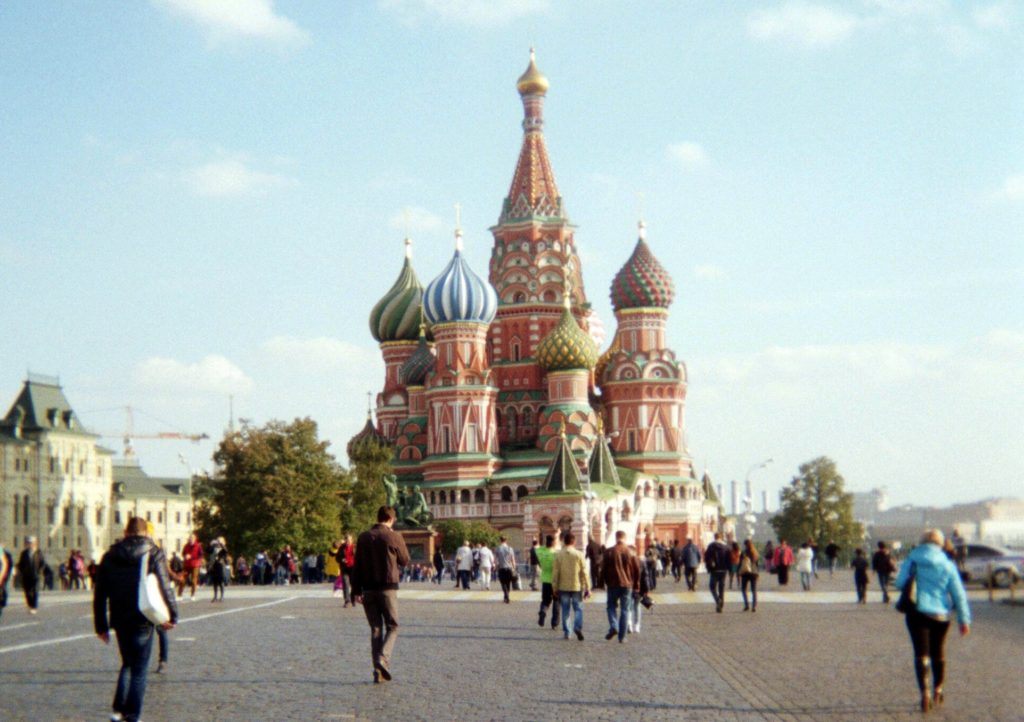
St. Basil's Cathedral, Red Square, Moscow; Photo by Natylie S. Baldwin, 2015
St. Basil’s Cathedral, Red Square, Moscow; Photo by Natylie S. Baldwin, 2015

As I’ve shown with other posts, Russia is doing a lot better than what a lot of western corporate media, and even some of our most senior politicians, claim.   As the below excerpt of an article by demographics expert Mark Adomanis shows, Russia still has a ways to go on some mortality and quality of life issues, but the progress that has been made in the Putin era in certain areas is remarkable and deserves to be acknowledged:


As I hope the graphs demonstrate, a decade or two ago Russians were living in a totally different universe. The rates of death from various kinds of social ills were so much higher as to be essentially incomparable. However, quietly and with little fanfare Russia has seen significant improvements, which have not abated since the start of the economic slowdown at the end of 2014. Indeed, in early 2016 the evidence suggests that improvements to Russian public health have actually accelerated, with overall mortality plunging by around 5%.


Yes, there is still a lot of work to be done. The murder rate, in particular, is still a lot higher than it is in Europe. But the differences are increasingly differences of degree, not of kind. The suicide rate, for example, is currently about 76% higher in Russia than in the EU. That sounds absolutely terrible until you consider that, back in 2001, the Russian suicide rate was 340% of the EU’s.


Full article with graphs and charts here:  http://www.intellinews.com/comment-russia-is-becoming-more-european-despite-the-politics-and-rhetoric-99883/


Harvard’s Belfer Center Concludes Russia is Not in Decline; Soft Power Increases; Poll Reveals Europeans Don’t See Russia as Major Threat

Monument of Peter the Great, St. Petersburg, Russia
Monument of Peter the Great, St. Petersburg, Russia; photo by Natylie S. Baldwin, 2015

Reports of Russia’s demise have been greatly exaggerated.

That’s the conclusion of Simon Saradzhyan,  a researcher with the Belfer Center at Harvard University, who analyzed Russia, from 1999 to the present, using several different models of performance.   These models take into consideration GDP, energy consumption, steel production, urban population density, and military strength.

[It should be noted that these models didn’t take into consideration other significant markers in which Russia rates well, such as levels of education and infrastructure – Natylie]

According to Saradzhyan:

Taken together, these measures suggest strongly that Russia has either risen or retained its position relative to its five competitors [U.S., U.K., France, Germany, and Italy] and the world as a whole so far in the 21st century.

It is well known that the Russian economy stopped growing in 2014 and started declining. The World Bank estimates that Russians GDP shrank by 3.7 per cent in 2015 and that it is poised to shrink by up 1.9 per cent in 2016, before starting to grow again next year. However, the losses of these three years will not erase the cumulative gain in Russia’s power as a nation since 1999.

Looking forward, Russia faces a number of long-term challenges, including an obsolete and inefficient economic model, poor quality of governance, pervasive corruption, demographic fragility, instability in neighbouring countries and separatist threats to Russia itself.

We don’t know yet whether and when these challenges may acquire such an acute character that they may reverse the resurgence of Putin’s Russia described above. One thing is certain, however: Russia’s size, resources and military might all ensure that it remains a global player that will continue to affect the western world and the global order as a whole in profound ways for years to come, and should be treated accordingly.


Note:  the original article, which appears at the Financial Times, is behind a pay wall, but you can read the full article here:


http://russia-insider.com/en/politics/no-russia-not-decline-least-not-any-more-and-not-yet/ri14211


The British PR firm Portland Communications has determined that Russia has increased its soft power and has now made it into their top 30 ranking of countries with respect to soft power, noting specifically:


The highest place that Russia took in an individual category was that of “engagement” (8th out of 30 countries), which primarily implies diplomacy and influence in the international arena. The study’s authors point out that, along with the U.S., Russia has played a key role in efforts to achieve a peaceful settlement in Syria.


….Listing the other strengths of Russia, the study’s authors noted the wide coverage of its state-owned media among international audiences and the preservation of some of its economic power in spite of the country’s financial crisis over the last few years.


Portland Communications placed a specific emphasis on Russia’s rich culture.


“Russia’s global cultural appeal draws in more than 29 million tourists annually,” it said. “Whether it’s history, art or literature, Russian culture is widely appreciated and studied.”

http://rbth.com/international/2016/06/15/russia-ranks-among-top-30-countries-worldwide-in-terms-of-soft-power_603091


Meanwhile, a poll conducted by Pew has revealed that, despite hysterical claims by some western politicians and corporate media, most Europeans do not consider Russia to be a major threat, citing instead ISIS, climate change, the influx of refugees and economic instability as far greater concerns, as reported by EU Observer:

More than half of Europeans said climate change, economic instability and cyber-attacks were “dire” threats. A little less than half also named the number of refugees coming from Iraq and Syria as a “major” challenge.


But just one in three EU nationals put “tensions with Russia” in the same category.


Pew interviewed 11,494 people in April and May from France, Germany, Greece, Hungary, Italy, the Netherlands, Poland, Spain, Sweden, the UK and the US.


The 10 European countries account for 80 percent of the EU population and 82 percent of its combined GDP.


The results indicated a divide between EU leaders and public opinion.


Full article can be read here:

https://euobserver.com/foreign/133815