Several days ago, the renowned, Pulitzer prize-winning investigative journalist Seymour Hersh published on his substack.com account an article entitled “General to General. A potential peace is being negotiated in Ukraine by military leaders.”
To be specific, Hersh said that secret talks about a possible peace are presently being conducted by Ukraine’s military commander-in-chief General Valery Zaluzhny and Russia’s highest military officer Valery Gerasimov.
The main attention grabbing paragraph in the article was the following:
“The driving force of those talks has not been Washington or Moscow, or Biden or Putin, but instead the two high-ranking generals who run the war, Valery Gerasimov of Russia and Valery Zaluzhny of Ukraine.”
The next most sensational point in the article was that part of the settlement foresees Russian acceptance of Ukraine joining NATO on condition that NATO formally commits ‘not to place NATO troops on Ukrainian soil’ or to put offensive weapons in Ukraine.
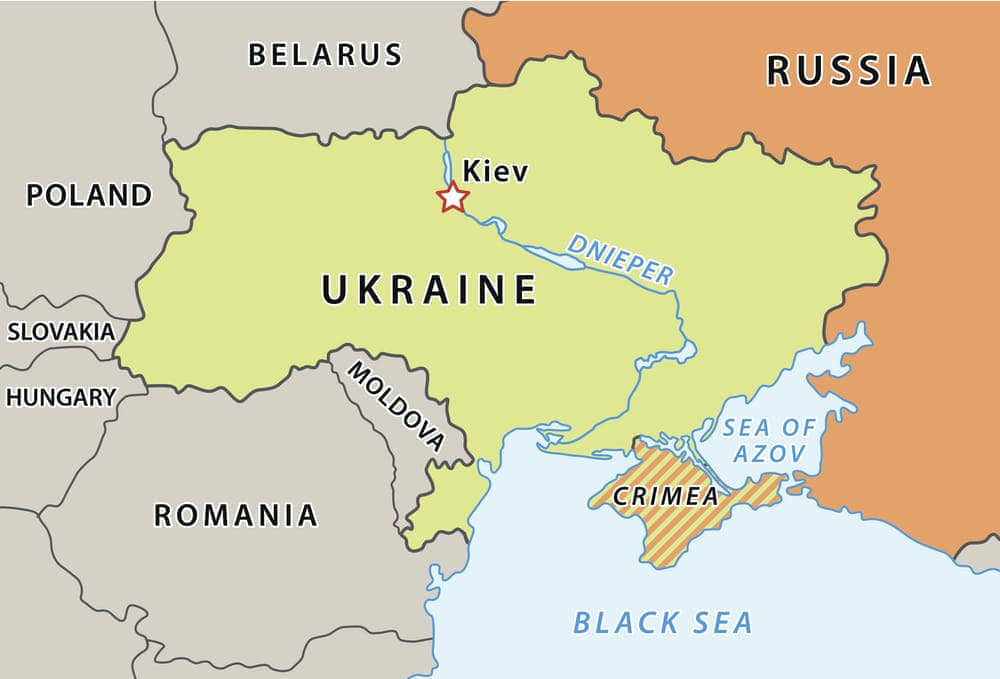
And the final key element in the settlement that would reward Russia for its acquiescence on NATO membership would be Ukraine’s recognition of Crimea as irrevocably Russian and the holding of a referendum in the Donbas and Novorossiya (Zaporozhie and Kherson) oblasts that were liberated by Russia and then joined the Russian Federation, a measure which in effect would be a fig-leaf for formal settlement of the fate of these territories as Russian once and for all.
This article has been widely commented upon in anti-establishment media outlets, which for the most part find Hersh’s revelations to be so incredible as to be unworthy of serious discussion. In a review article carried by the unofficial Chinese journal Asia Times, Stephen Bryen suggests that ‘Hersh has been sold a bill of goods, or duped…’ See “Is Hersh story on secret Ukraine peace talks true?”
In what follows, I will consider
1. why Seymour Hersh was the chosen vehicle of American intelligence operatives for bringing this remarkable story to the broad American and Western publics.
2. how elements in the story have been appearing in the writings of other more consciously (com)pliant journalists in recent weeks as a face saving ‘exit ramp’ from the failed Ukrainian adventure is being prepared by the White House
3. what from among the incredible elements exposed by Hersh may actually have some factual basis and give us a foretaste of the end-game in Ukraine as it is currently envisioned in Washington, and maybe even in Moscow
*****
After passing through a number of years in relative obscurity, after being blacklisted by all U.S. mainstream media outlets, Seymour Hersh emerged center-stage this past February when he published on his substack account a lengthy article which set out in great detail how the bombing of the Nordstream I pipeline was planned and carried out under instructions from the White House and Biden’s close advisers. Though Washington formally denied any involvement in what was arguably the biggest act of state terrorism in history, and though Germany and other interested states in Europe have since done their utmost to divert attention to a cock-and-bull story of Ukrainian responsibility for the bombing of Nord Stream I, Hersh’s account was an expose worthy of the journalistic exploits that once won him the Pulitzer and it remains highly persuasive.
Of course, at age 86 Hersh did not go out and track down the story he published in February. It was brought to him on a silver platter from unidentified sources, i.e. actors within the Administration whose motives remain unclear.
The unidentified sources who have now brought the story of secret negotiations between Russian and Ukrainian generals to end the war could count on Hersh’s profound ignorance of Russia and his desire to again win plaudits for a ‘scoop.’ Here the motives of the ‘leakers’ are not hard to find: Hersh was indeed being duped in an operation to condition Western publics for an end to the Ukraine war under conditions that present defeat as victory.
Let me be perfectly clear: the notion that Russia’s General Gerasimov could on his own volition enter into talks with his Ukrainian opposite number to end the hostilities is a notion that can be entertained only by someone who fails to comprehend what the ‘vertical of power’ in Russia is all about.
At the same time, presumably to illustrate the high standing of Gerasimov, Hersh has placed at the very start of his article a photo of Putin and Gerasimov seated face to face under which we read the following caption:
“Russian President Vladimir Putin meeting with General Valery Gerasimov at the headquarters of the Russian armed forces in Rostov-on-Don in October”
This photo is more interesting than Hersh and most readers of his article could imagine. Indeed, this very meeting in October was given video coverage on prime time Russian television on the day it occurred. We saw how Putin arrived by car well after dark following a flight to the Rostov headquarters by helicopter, how he shook hands with Gerasimov and with Defense Minister Shoigu who was also present; then we were shown how Putin departed. There was not a word about the content of these top level talks. Only a couple of days later in a dedicated television news segment did we learn that Russia had just carried out a full scale test of the battle readiness of all three arms of its strategic nuclear triad, which may be described as a direct message to Washington to proceed with great care in the Ukraine war and to think twice before authorizing any further escalation of its deliveries to Kiev of advanced offensive weapons.
A similar news report on Russian state television less than two weeks ago showed Putin, Gerasimov and Shoigu holding talks in secret at the Rostov-on-Don military headquarters. However, in the time since then no extraordinary event in the war or in overall military activities that could be matched with the talks in Rostov. I believe that Putin’s preparing Gerasimov for a meeting with Zaluzhny would fit that description.
At the same time, it is fantasy to think that Ukraine’s general Zaluzhny would risk accusations of treason if he were on his own, acting out of ambition or out of motives to save what is left of the Ukrainian armed forces, to defy President Zelensky and the standing decree prohibiting talks with the Russians so long as Putin remains in power. To suggest that he was doing so because he received backing from Washington as the Americans seek to bypass the obstinate or delusional Zelensky and find an escape path from the Ukrainian disaster is also to misunderstand how things work even in Ukraine, however dysfunctional the ruling elites may appear to be. Let us instead, turn things around: Zaluzhny would assume the role of savior of the nation only at the urging and with ironclad guarantees of protection coming from the Biden administration.
*****
The elements of a possible peace set out in the Hersh article have been circulating for weeks now in the publications and television appearances of mainstream U.S. journalists and academics. There are numerous variations in the combinations of compromises that both Ukrainian and Russian sides are called upon to make according to which academic or pundit is penning any given article.
Let us pause for a moment to look at what one widely read academic / journalist is saying. I have in mind Anatol Lieven and his latest article published on responsiblestatecraft.org: “Biden’s role in Ukraine peace is clear now.”
In popular estimation, Lieven is a middle of the road expert with great depth of experience reporting on Russia. In my estimation, he is a chameleon who speaks out of both sides of his mouth to win over the maximum number of fans. Lieven wallows in the celebrity he enjoys while saying what the bosses in the Administration want him to say.
Going back more than a year, Lieven was especially sympathetic to the Ukrainian side in the war, never more so than when he returned from a visit to Ukraine during which he landed in a hospital and soaked up the anti-Russian vitriol of his fellow patients. He was a longtime defender of Ukrainian resilience and moral strength in standing up to the Russian bully. He was a seeming believer in ultimate Ukrainian victory. Now he has shifted to a position acknowledging the failure of the Ukrainian counter-offensive and the hopelessness of the Ukrainian military prospects.
His message today has changed 180 degrees and yet he seeks to find a way to present defeat as victory, in keeping with the boys in the White House staff. I quote at length:
“A ceasefire and negotiations for a peace settlement are therefore becoming more and more necessary for Ukraine. Indeed, if the fighting stopped along the existing battle lines, more than 80 percent of Ukraine would be fully independent of (and bitterly hostile to) Russia and free to do its best to move towards membership of the European Union.
“Given the Kremlin’s original aims when it launched the invasion last year, and of the history of Russia’s domination of Ukraine over the past 300 years, this would be not a Ukrainian defeat, but, on the contrary, a tremendous Ukrainian victory. If, on the other hand, the war continues indefinitely, there is a real possibility that Ukrainian resistance may collapse, whether through the exhaustion of its manpower or because Russia’s additional forces allow it to reopen the fronts in northern Ukraine that it pulled back from last year and that Ukraine lacks the troops to defend.”
Following from this, Lieven argues for a settlement now, well in advance of the U.S. elections, when a Ukrainian collapse would be very damaging for any Democratic candidate.
He says that to bring the Russians around, Washington will have to make major concessions to the fundamental Russian demands from before the start of the war:
“[Russia] will need to be assured that Washington is prepared to discuss seriously a final settlement involving neutrality for Ukraine (of course, including international security guarantees), mutual force limitations in Europe, the lifting of sanctions, and some form of inclusive European security architecture to reduce the danger of more wars in the future.”
Lieven hopes that the Global South and China, in particular, can be induced “to issue a strong collective call for a ceasefire and peace talks.”
The elements in the concessions to Russia that Lieven proposes are somewhat vague. They are considerably more generous than what Seymour Hersh is proposing. No matter. Both gentlemen and dozens of their peers are being encouraged by the policy formulators in the Administration to prepare the Russians to enter into talks and to prepare the American and European publics for an end to the war that is a defeat dressed up as a victory.
*****
As I intimated above, it is entirely possible that there have been direct talks about ending the war between Gerasimov and Zaluzhny in the past couple of weeks, though neither would be an independent actor as Hersh mistakenly believes.
I will go one step further and say that it is entirely possible that the Russian side suggested that it could accept Ukraine’s entry into NATO if there was a public commitment never to post NATO forces on Ukrainian territory and not to deliver offensive weapons to Ukraine. Such things can be monitored and if there are violations they can lead directly to revocation of the agreement before any harm is done to Russian security interests.
The possible advantage to the Russian side would be to offer the Americans a face-saving exit ramp, thereby ending any possibility of dangerous escalation of American – NATO involvement on the ground should the Ukrainian forces collapse.
Vladimir Putin has been very cautious in conducting this war precisely because the Russians have a decidedly low opinion of the professionalism, and at times even of the sanity of their American counterparts. Putin is strong enough in his entourage of elites and in the broad Russian public to make a persuasive case for any settlement that ensures Russian security interests are served and that the sacrifices in men and fortune that this war has cost will be justified by the outcome.
Even in the less attractive peace terms set out by Hersh, the positive results for Russia would be the definitive liberation of most of the Russian speaking territories of Ukraine from rule by Kiev and their incorporation into the Russian Federation, the de facto demilitarization of Ukraine given its losses on the order of one million men dead or incapacitated, and the confidence that Ukraine can no longer be used as an advance attack platform of NATO against his country.
‘Agency’ might be the word of the decade so far. When applied to the Ukraine war, the term is usually taken to mean that we must follow the lead of Ukrainians themselves – keeping mum about peace talks, sending more weapons, and supporting the maximalist aims of the Kyiv government. John Feffer, director of Foreign Policy in Focus, has described those calling for diplomacy as ‘blinkered and arrogant’, urging them to ‘listen to our progressive brothers and sisters in Ukraine’ instead of ‘some set of abstract principles’. Writing in Foreign Policy, Alexey Kovalev has condemned the ‘twisted worldview’ of peace activists for whom ‘Ukrainians have no agency and Russia is the victim of a proxy war’. For such commentators, there is no need to untangle the knotted historical context or weigh up competing Ukrainian interests; we can simply switch our brains off and outsource all decision-making to those under attack. This discourse is prevalent across the ideological spectrum, including on the left. At best, it has served as an intellectual cheat code for eliding the conflict’s complexities; at worst, it has shut down debate and silenced dissent. What are its underlying assumptions? And does its image of Ukraine align with the reality?
Pro-war commentators tend to see ‘Ukrainian opinion’ as a monolithic entity, embodied by those who oppose negotiations with Moscow and favour fighting until the country’s borders are restored to their pre-2014 lines. This notion is particularly prominent in the US and UK, where martial political cultures have fed the public images of a unified Ukrainian people who ‘will never surrender’, regardless of the toll it takes. After a recent trip to military hospitals in Lviv and Kyiv, Boris Johnson wrote that wounded Ukrainians ‘don’t want any anthems for doomed youth or moaning about the pity of war. They want to get on with killing Russians and expelling the invader from their land.’ Any Westerner who contradicts them is accused of being condescending or aloof.
It is true that most surveys depict a Ukrainian public that overwhelmingly backs the continued war effort – which is hardly surprising in a nation that has suffered unjustifiable aggression from its neighbour. But such polling has often excluded those in Russian-occupied or separatist-controlled areas, along with the millions who have fled the country, many of them from Ukraine’s south and east. More comprehensive studies suggest that Ukrainians are, in fact, divided on the question of a ceasefire when these demographics are taken into account. Support for one is significant among the displaced population, and is reaching around 40% in regions that have been hit hardest by the war.
In Crimea, separatism – whether joining Russia or becoming an independent state – has fallen in and out of favour since the collapse of the Soviet Union. It may not have commanded a majority in 2014, when Putin used a dubious referendum to justify his seizure of the territory. Yet a series of polls since then show that most Crimeans are now content to remain part of Russia. This is likely connected to the post-2014 Ukrainian retaliation against the region, which included cutting off its water supply and creating chronic shortages for its residents. While the 2014 annexation was a naked act of aggression, it would be hard to argue that a military reincorporation of the region into Ukraine would be legitimate either. It would certainly be contrary to the people’s will, or ‘agency’. (According to Zelensky’s government, at least 200,000 Crimeans would face collaboration charges were the territory recaptured by Kyiv.)
The picture is more complicated in the Donbas – but even there, ‘listening’ to Ukrainians throws up certain difficulties. When I interviewed two communists in Donetsk last autumn, Svetlana and Katia, both told me that Ukrainian shelling, which their communities have suffered since the eruption of civil war in 2014, had worsened significantly since the start of the Russian invasion. ‘This is primarily due to Western arms deliveries to Ukraine’, said Katia. ‘There are no safe places left in Donetsk.’ Svetlana recalled an incident where shelling had killed a young girl and her grandmother in the city centre, and vented her frustrations at the city’s constantly ravaged infrastructure. When I spoke with her, Ukrainian forces had just bombed the local water supply. ‘Every time our workers fix something, the next day it’s totally destroyed.’
While neither had any love for Russia or for Putin’s invasion, they explained how events like these – along with what Katia described as a long-standing and worsening ‘Donbassophobia’ in the country’s west – had left them out of sync with the perceived national mood. They both favoured peace talks and an end to the fighting, even if they were pessimistic it would hold. There is good reason to think Svetlana and Katia’s views are not unique. Within the Donbas, public opinion on the most desirable political outcome – whether it’s autonomy within Ukraine, absorption by Russia or outright independence – is fluid. A majority appeared to favour some kind of secession from Ukraine in 2021; and the most recent major surveys, conducted in January 2022, found that just over 50% of respondents in both Kyiv-controlled and separatist areas agreed with the statement ‘It doesn’t matter to me in which country I live: all I want is a good salary and then a good pension.’ This sentiment may well have hardened over the subsequent months of bloody warfare.
*
There are also the many Ukrainians who do not wish to fight. Following the invasion, the government immediately barred men aged between 18 and 60 from leaving the country. Many of those who tried to flee were stopped by authorities, separated from their families and sent back to be conscripted. Since then, scores of Ukrainians have defied the order, resorting to elaborate schemes – often costly, sometimes life-threatening – to escape across the border. Thousands are facing criminal proceedings for doing so and hundreds have already been convicted. A Ukrainian official revealed in June that the Border Guard was detaining up to twenty men per day trying to make the illegal journey, while the BBC recently found that 20,000 men have fled to avoid conscription since the invasion.
Those still in Ukraine have gone to great lengths to not be drafted, staying off the streets, resorting to bribery and consulting Telegram channels set up to help people avoid military recruiters, some of which have more than 100,000 members. Reports suggest that recent conscripts are overwhelmingly poor, whereas those with money have increasingly been able to buy their way out. A petition opposing aggressive recruitment strategies received more than 25,000 signatures last year, above the threshold necessary to elicit an official response from the president. None of this paints a picture of, in the words of Condoleezza Rice and Robert Gates, a wholly ‘determined partner’ that is ‘willing to bear the consequences of war’, nor of a people who ‘do not fear a long war but an inconclusive one’, as one former CIA officer remarked. Nor does it indicate a population that uniformly views peace talks and concessions as greater evils than prolonged bloodshed.
There are, indeed, a considerable number of Ukrainians who believe that ‘even a “bad” peace is better than a “good” war’. After the invasion, prominent politicians and media figures called for negotiations and, in one case, outright surrender. Should we have listened to them simply because of their nationality? Or, indeed, to the minority of the population that actively support Russia? Left-wing Ukrainians who oppose diplomacy and a ceasefire are sometimes cited in the Western press and held up as a paradigm for their Western comrades; but their views are hardly unanimous. Volodymyr Chemerys, the respected human rights advocate who played a leading role in multiple Ukrainian revolutions and staunchly opposed Moscow’s invasion, has called on Zelensky to negotiate since the start of the invasion. When I interviewed him last year, he complained ‘that several small groups that call or called themselves “left”, in fact, have become personnel serving the Kyiv authorities, supporting imperialism and war, denying the existence of Nazism in Ukraine, rejoicing about repressions against left-wing activists and the banning of left-wing parties.’ Marxist groups like the Workers’ Front of Ukraine, and prominent activists like the Kononovich brothers, have taken similar anti-war positions. Listening to Ukrainian voices, given their diversity, is more complicated than Western pro-war commentators suggest. It is inevitably selective, and it requires an exercise of political judgement to decide between contradictory viewpoints. How could it not?
There is also the obvious fact that a population’s ‘agency’, or what we might usually call public opinion, is not static. It is influenced by a variety of factors and subject to external manipulation. Ukrainian views on the war have emerged in a climate of intense patriotism and heightened government repression, with pacifists and leftists facing prosecution, imprisonment and even torture for their political views. Opposition parties have been banned en masse and media outlets shut down or placed under government control, with the Ukrainian parliament recently voting to strengthen the system of state censorship.
As peace activist Ruslan Kotsaba – now in the US after being persecuted for his anti-war views – told me, ‘All opposition figures previously promoting the peaceful resolution of conflict with Russia have either fled or are in prison’, giving peace talks the air of ‘playing for Putin’ or being ‘the work of enemy agents’. When he visited Ukraine in March, Anatol Lieven found that Ukrainians open to conceding Crimea as part of a negotiated settlement dared not make their views known on the record. The bellicose ‘consensus’ in the country reflects these dynamics. With nonconforming positions marginalized by the media and political class, mass opinion is shaped by officials in Kyiv.
Such malleability is perhaps best illustrated by Ukrainian attitudes toward NATO – another issue frequently cited by Western hawks who defend the country’s ‘sovereign right’ to join the alliance. Until 2014, only a minority of the population expressed support for membership (more have favoured a military alliance with Russia at various points since the breakup of the USSR). Historically, a plurality of Ukrainians have viewed NATO as a threat. George W. Bush’s attempt to draw the country into the military compact was met with angry protests that saw American flags set aflame on the streets of Kyiv. Diplomatic cables published by WikiLeaks revealed that Ukrainian officials, rattled by the scale of opposition, joined their American and NATO counterparts in stressing the need for ‘public education campaigns’ to persuade the Ukrainian population. This was as clear a violation of Ukrainian agency as you could get – yet you’ll be hard pressed to find establishment commentators, then or since, who objected to it on those grounds.
*
Throughout the war, Ukrainian ‘agency’ has only been invoked by Western governments when it happens to align with their geopolitical interests, and steadfastly ignored when it doesn’t. NATO states and their client media have, on various occasions, been more than willing to defy the Ukrainian leadership. For months after the invasion, Zelensky called, both publicly and privately, for Western support in negotiations with Moscow, to no avail. Even after the discovery of the war crimes committed in Bucha, he insisted that ‘we have no other choice’ but diplomacy. In May 2022, a majority of Ukrainians polled by the National Democratic Institute – a quasi-governmental entity connected to the US Democratic Party – favoured peace talks. Yet, curiously, those insisting that the West defer to Ukrainian wishes did not amplify Zelensky’s pleas. They expressed no outrage at this denial of his agency and ignored the well-corroborated fact that the US and British governments worked to scuttle a tentative peace deal he was negotiating. Instead, they spent months arguingagainst a negotiated settlement and in favour of a total military victory. They proved willing to overlook both the Ukrainian president and people in pursuit of this goal, regardless of the risks involved.
For almost two years, Ukrainian agency has only counted when it means prolonging the war – not when it might mean ending it. Nor does it apply to the designs of Western multinationals on Ukraine’s natural resources, nor to EU plans to use the country’s ballooning national debt and reconstruction costs – which grow with every week the war continues – to impose neoliberal shock therapy. Few invoked national sovereignty and agency when the US and Europe pressured Ukrainian leaders to enforce brutal austerity on their own people and open their farmland to foreign ownership. Today, reports suggest that Washington may finally be nudging Kyiv toward peace talks, only now against the wishes of Zelensky, whose vehement opposition to compromise no longer aligns with Washington’s evolving view of the war as a lost cause that is siphoning resources from a future showdown with China. In each case, the Western commentariat has had zero qualms about overriding Ukraine’s hallowed autonomy. It appears that certain forms of external interference – namely, those that come from the world hegemon and its relays – are considered entirely legitimate.
In a long–divided country like Ukraine, whose fault lines have deepened after years of civil war, public opinion is complex and differentiated. That Western war enthusiasts refuse to acknowledge this, and display no interest in the views of Ukrainians like Svetlana and Katia, is not especially surprising. Like other concepts that have migrated from liberal identitarian politics into the international arena, such as ‘Westsplaining’ and standpoint epistemology, the selective invocation of ‘agency’ was never really meant to reflect the nuances of Ukrainian thought. More often than not, these buzzwords are used to flatten them out. The result is a stifled political discourse and a rigidly conformist outlook the war, from opinionators spanning right and left.
The stakes are larger than Ukraine, as great as those already are. Before this war is even over, another great power conflict is brewing between the US and China. Once again, the ‘agency’ and ‘voices’ of those caught in the middle – this time on the island of Taiwan – are being wielded to whip well-meaning Westerners behind Washington’s aggressive foreign policy, even though it is those same people who will suffer most from its recklessness.
Here, we should pause to consider whether ‘public opinion’ – mutable, unstable, subject to ideological and circumstantial pressures – can be a reliable touchstone for the left. We should also question the wisdom of grounding our political positions in certain identities or experiences that are said to hold particular epistemic authority. In matters of war and peace, our political judgment ought to be informed by the ‘public’; but as in the domestic sphere, this can only be done by recognizing its heterogeneity, and by interrogating the complex factors that give rise to the ‘majority view’. Asking us to follow the latter uncritically may simply be a matter of political expedience for Washington and its subsidiaries, but coming from leftists, it’s a demand for intellectual cowardice.
Ukrainians are almost evenly split on how to proceed in the conflict with Russia, local media reported on Sunday, citing a survey conducted in November by the Rating group.
According to the results of the poll, 44% of respondents said it was important to look for compromise in negotiations with Russia and that other countries should be brought into the process.
At the same time, 48% of those polled were opposed to any negotiations with Moscow, and insisted on continuing hostilities until Kiev retakes full control of the territories it has lost.
The results indicated a marked downturn in the number of Ukrainians who support prolonging the fighting with Moscow. In similar polls conducted in July and February, negotiations were backed by just 35% of respondents, while 60% were in favor of prolonging the conflict.
In the latest survey, a compromise was mostly supported by people between the ages of 18 and 35 from the eastern part of Ukraine. Most of those who supported continuing the fighting were between the ages of 36 and 50, and live in the western half of the country.
A similar poll cited by Bloomberg last month also suggested there was a “growing minority” of Ukrainians who believe territorial concessions to Russia are inevitable in exchange for peace.
The poll results come after Kiev’s much-touted summer counteroffensive failed to result in any meaningful territorial gains. According to the latest estimates reported by Russian Defense Minister Sergey Shoigu, as of early December, the campaign had cost Ukraine over 125,000 troops and more than 16,000 heavy weapons units.
Concerns have also increased in Kiev that financial and military support from its Western backers could soon dry up as they grow weary of the conflict and shift their focus towards the recent escalation between Israel and Hamas militants in Gaza.
Despite these factors, Ukrainian President Vladimir Zelensky has insisted Kiev will not accept any compromise with Russia and will continue fighting until it recaptures all the territories within its 1991 borders. He has also legally banned negotiations with Moscow while President Vladimir Putin remains in power.
Russian Deputy Foreign Minister Sergey Ryabkov admitted last week that a ceasefire was unlikely in 2024, as Kiev and the US continue to push Zelensky’s peace formula as the only possible solution to the conflict.
The Ukrainian leader’s proposal involves Kiev reassuming control over its 1991 territories, while Moscow would be ordered to pay reparations and Russian officials would face a war crimes tribunal. Russia has repeatedly dismissed the proposal as being detached from reality.
By Michael Shellenberger, Alex Gutentag, and Matt Taibbi, Public, 11/28/23
A whistleblower has come forward with an explosive new trove of documents, rivaling or exceeding the Twitter Files and Facebook Files in scale and importance. They describe the activities of an “anti-disinformation” group called the Cyber Threat Intelligence League, or CTIL, that officially began as the volunteer project of data scientists and defense and intelligence veterans but whose tactics over time appear to have been absorbed into multiple official projects, including those of the Department of Homeland Security (DHS).
The CTI League documents offer the missing link answers to key questions not addressed in the Twitter Files and Facebook Files. Combined, they offer a comprehensive picture of the birth of the “anti-disinformation” sector, or what we have called the Censorship Industrial Complex.
The whistleblower’s documents describe everything from the genesis of modern digital censorship programs to the role of the military and intelligence agencies, partnerships with civil society organizations and commercial media, and the use of sock puppet accounts and other offensive techniques.
“Lock your shit down,” explains one document about creating “your spy disguise.”
Another explains that while such activities overseas are “typically” done by “the CIA and NSA and the Department of Defense,” censorship efforts “against Americans” have to be done using private partners because the government doesn’t have the “legal authority.”
The whistleblower alleges that a leader of CTI League, a “former” British intelligence analyst, was “in the room” at the Obama White House in 2017 when she received the instructions to create a counter-disinformation project to stop a “repeat of 2016.”
Over the last year, Public, Racket, congressional investigators, and others have documented the rise of the Censorship Industrial Complex, a network of over 100 government agencies and nongovernmental organizations that work together to urge censorship by social media platforms and spread propaganda about disfavored individuals, topics, and whole narratives.
The US Department of Homeland Security’s Cybersecurity and Information Security Agency (CISA) has been the center of gravity for much of the censorship, with the National Science Foundation financing the development of censorship and disinformation tools and other federal government agencies playing a supportive role.
Emails from CISA’s NGO and social media partners show that CISA created the Election Integrity Partnership (EIP) in 2020, which involved the Stanford Internet Observatory (SIO) and other US government contractors. EIP and its successor, the Virality Project (VP), urged Twitter, Facebook and other platforms to censor social media posts by ordinary citizens and elected officials alike.
Despite the overwhelming evidence of government-sponsored censorship, it had yet to be determined where the idea for such mass censorship came from. In 2018, an SIO official and former CIA fellow, Renee DiResta, generated national headlines before and after testifying to the US Senate about Russian government interference in the 2016 election.
But what happened between 2018 and Spring 2020? The year 2019 has been a black hole in the research of the Censorship Industrial Complex to date. When one of us, Michael, testified to the U.S. House of Representatives about the Censorship Industrial Complex in March of this year, the entire year was missing from his timeline.
An Earlier Start Date for Censorship Industrial Complex
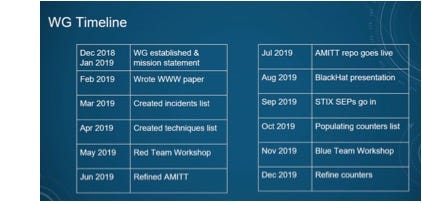
Now, a large trove of new documents, including strategy documents, training videos, presentations, and internal messages, reveal that, in 2019, US and UK military and intelligence contractors led by a former UK defense researcher, Sara-Jayne “SJ” Terp, developed the sweeping censorship framework. These contractors co-led CTIL, which partnered with CISA in the spring of 2020.
In truth, the building of the Censorship Industrial Complex began even earlier — in 2018.
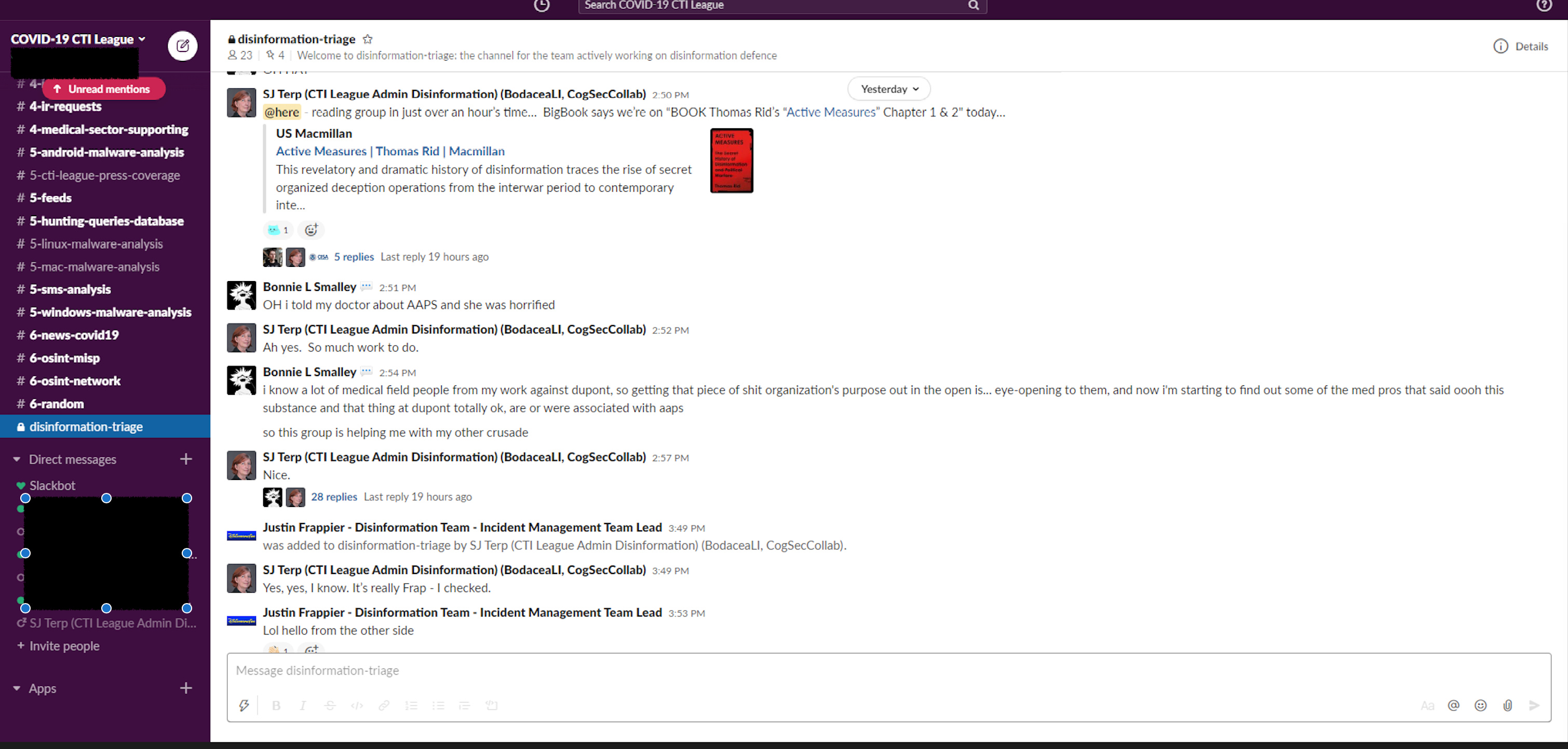
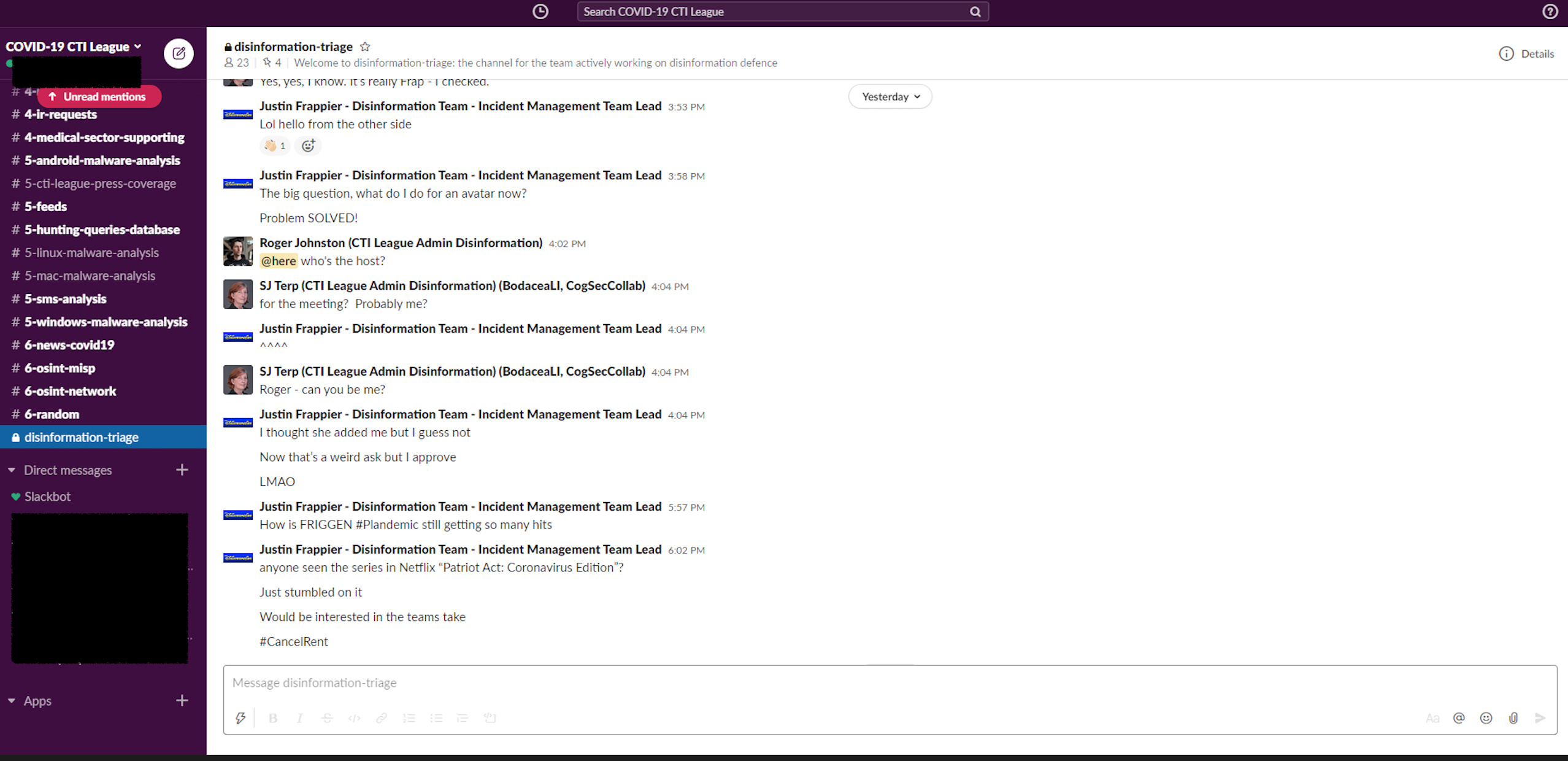
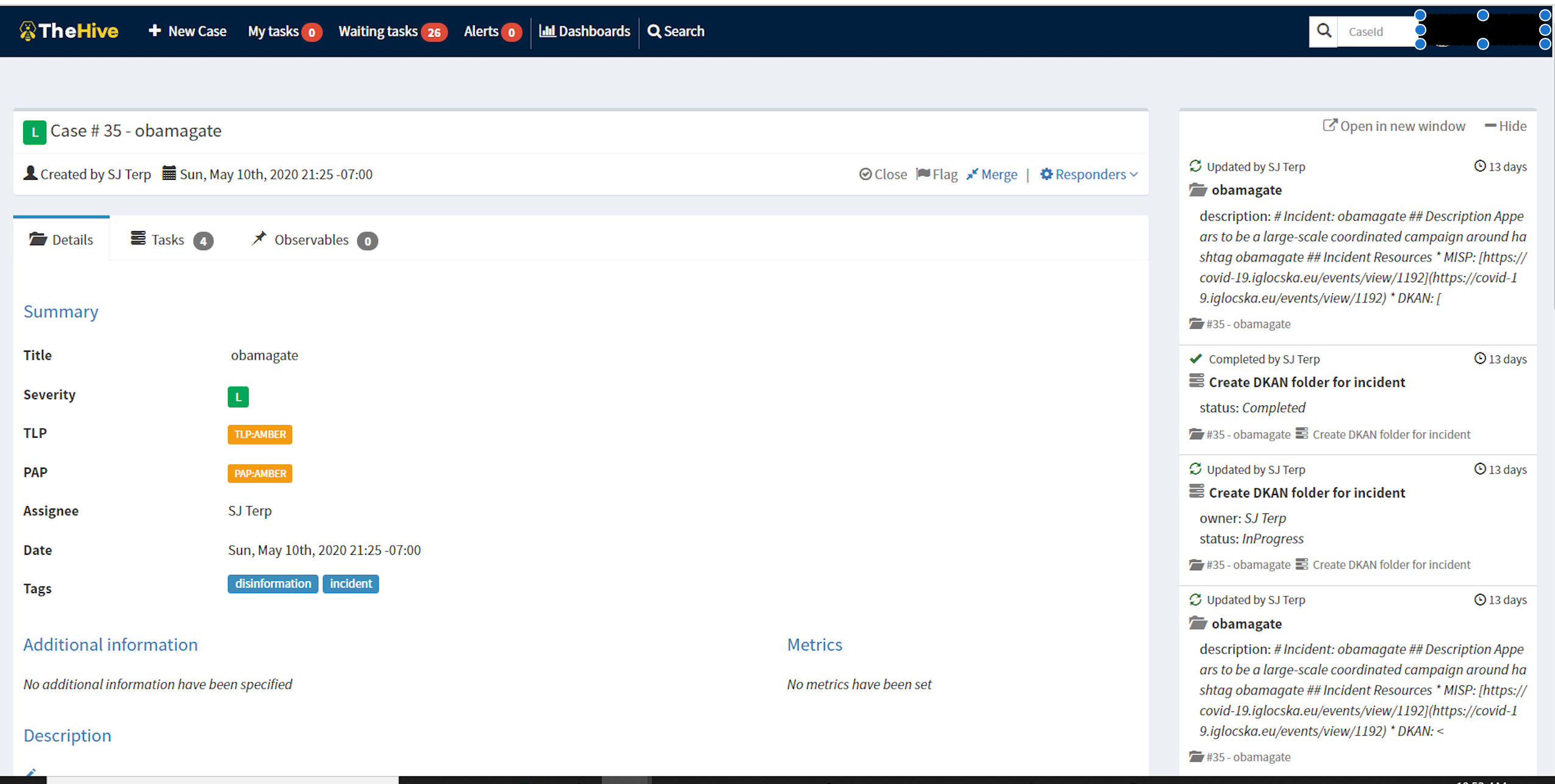
Internal CTIL Slack messages show Terp, her colleagues, and officials from DHS and Facebook all working closely together in the censorship process.
The CTIL framework and the public-private model are the seeds of what both the US and UK would put into place in 2020 and 2021, including masking censorship within cybersecurity institutions and counter-disinformation agendas; a heavy focus on stopping disfavored narratives, not just wrong facts; and pressuring social media platforms to take down information or take other actions to prevent content from going viral.
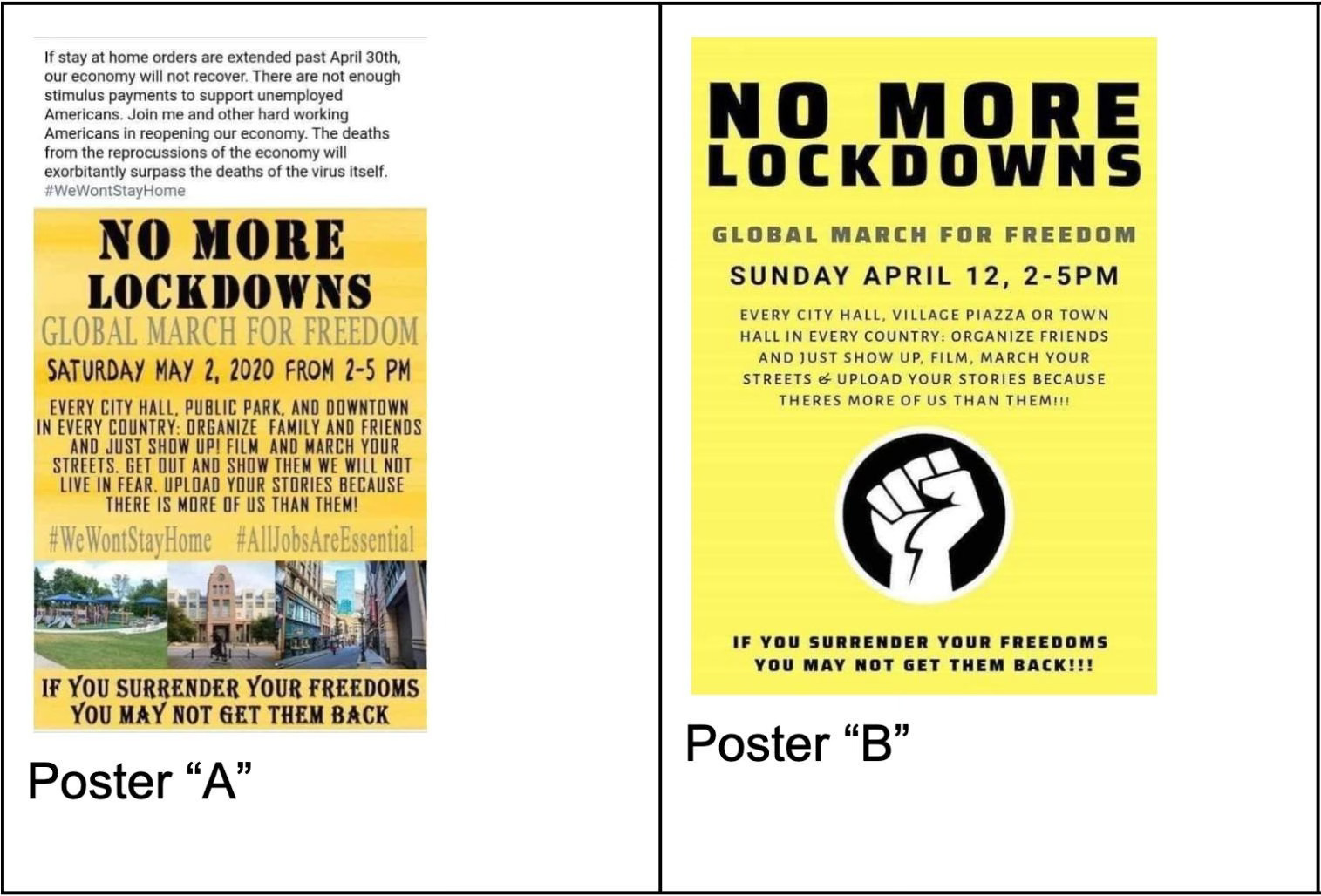
In the spring of 2020, CTIL began tracking and reporting disfavored content on social media, such as anti-lockdown narratives like “all jobs are essential,” “we won’t stay home,” and “open America now.” CTIL created a law enforcement channel for reporting content as part of these efforts. The organization also did research on individuals posting anti-lockdown hashtags like #freeCA and kept a spreadsheet with details from their Twitter bios. The group also discussed requesting “takedowns” and reporting website domains to registrars.
CTIL’s approach to “disinformation” went far beyond censorship. The documents show that the group engaged in offensive operations to influence public opinion, discussing ways to promote “counter-messaging,” co-opt hashtags, dilute disfavored messaging, create sock puppet accounts, and infiltrate private invite-only groups.
In one suggested list of survey questions, CTIL proposed asking members or potential members, “Have you worked with influence operations (e.g. disinformation, hate speech, other digital harms etc) previously?” The survey then asked whether these influence operations included “active measures” and “psyops.”
These documents came to us via a highly credible whistleblower. We were able to independently verify their legitimacy through extensive cross-checking of information to publicly available sources. The whistleblower said they were recruited to participate in CTIL through monthly cybersecurity meetings hosted by DHS.
The FBI declined to comment. CISA did not respond to our request for comment. And Terp and the other key CTIL leaders also did not respond to our requests for comment.
But one person involved, Bonnie Smalley, replied over LinkedIn, saying, “all i can comment on is that i joined cti league which is unaffiliated with any govt orgs because i wanted to combat the inject bleach nonsense online during covid…. i can assure you that we had nothing to do with the govt though.”
Yet the documents suggest that government employees were engaged members of CTIL. One individual who worked for DHS, Justin Frappier, was extremely active in CTIL, participating in regular meetings and leading trainings.
CTIL’s ultimate goal, said the whistleblower, ”was to become part of the federal government. In our weekly meetings, they made it clear that they were building these organizations within the federal government, and if you built the first iteration, we could secure a job for you.”
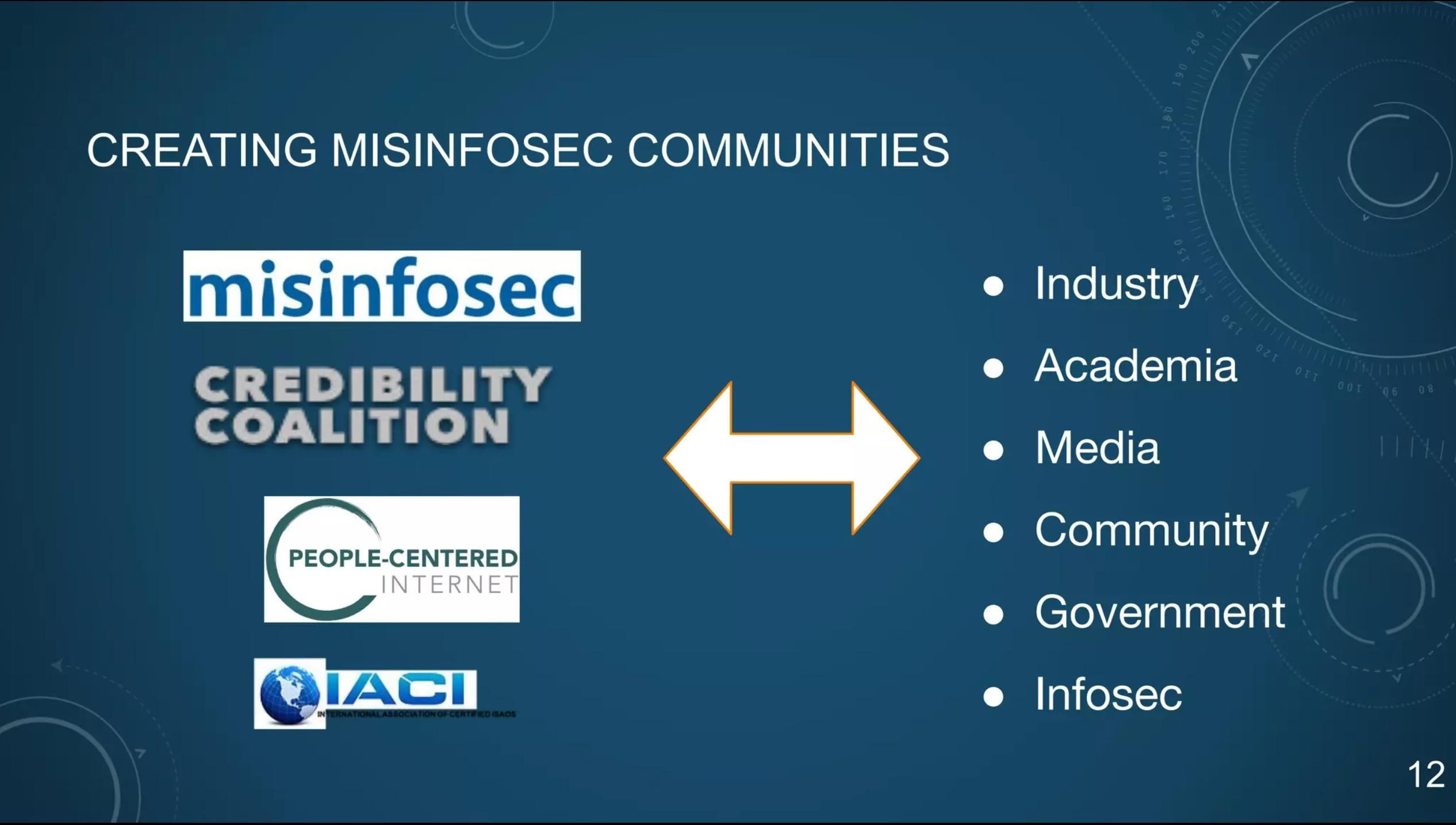
Terp’s plan, which she shared in presentations to information security and cybersecurity groups in 2019, was to create “Misinfosec communities” that would include government.
Both public records and the whistleblower’s documents suggest that she achieved this. In April 2020, Chris Krebs, then-Director of CISA, announced on Twitter and in multiplearticles, that CISA was partnering with CTIL. “It’s really an information exchange,” said Krebs.
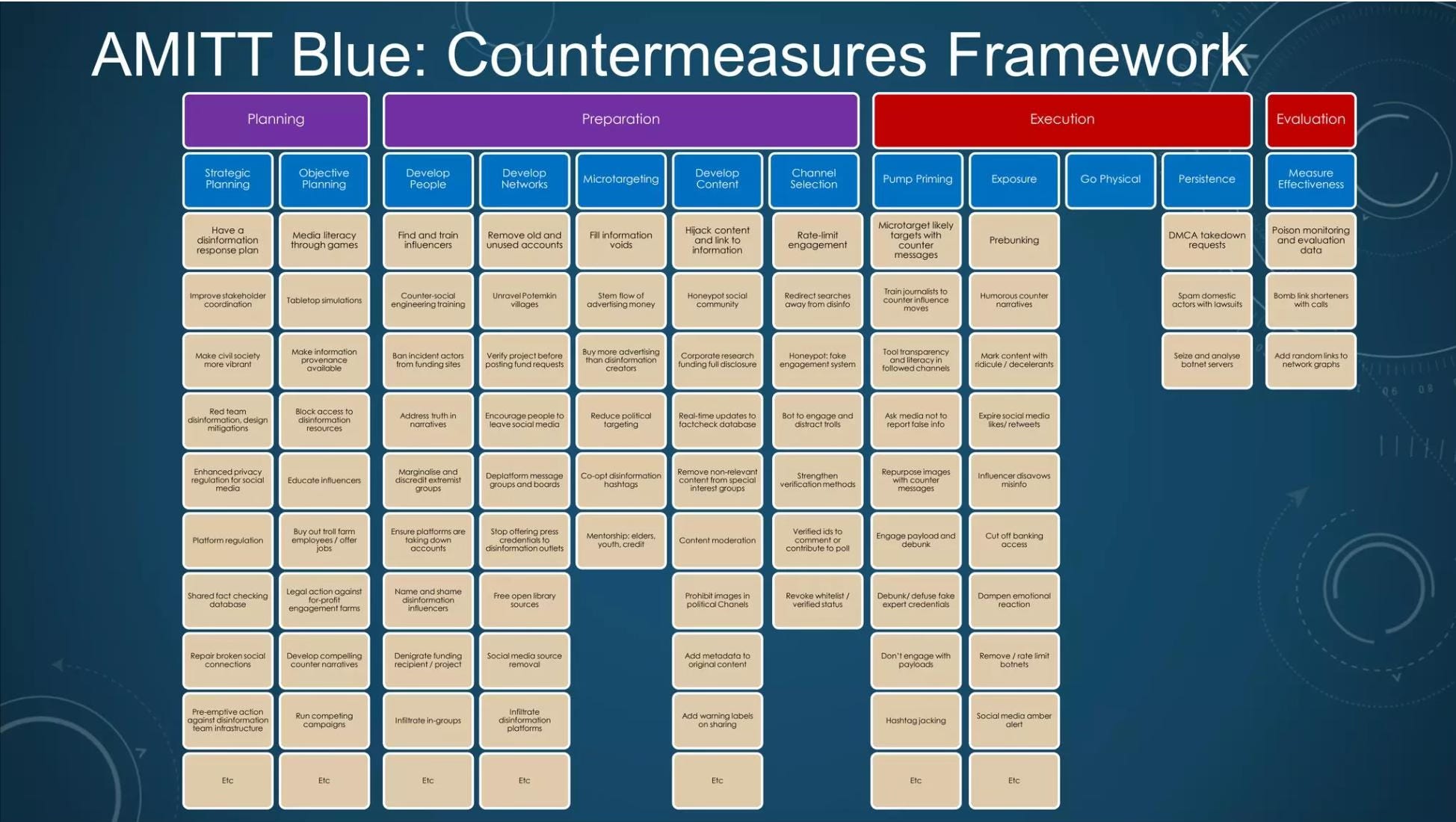
The documents also show that Terp and her colleagues, through a group called MisinfoSec Working Group, which included DiResta, created a censorship, influence, and anti-disinformation strategy called Adversarial Misinformation and Influence Tactics and Techniques (AMITT). They wrote AMITT by adapting a cybersecurity framework developed by MITRE, a major defense and intelligence contractor that has an annual budget of $1 to $2 billion in government funding.
A key component of Terp’s work through CTIL, MisinfoSec, and AMITT was to insert the concept of “cognitive security” into the fields of cybersecurity and information security.
The sum total of the documents is a clear picture of a highly coordinated and sophisticated effort by the US and UK governments to build a domestic censorship effort and influence operations similar to the ones they have used in foreign countries. At one point, Terp openly referenced her work “in the background” on social media issues related to the Arab Spring. Another time, the whistleblower said, she expressed her own apparent surprise that she would ever use such tactics, developed for foreign nationals, against American citizens.
According to the whistleblower, roughly 12-20 active people involved in CTIL worked at the FBI or CISA. “For a while, they had their agency seals — FBI, CISA, whatever — next to your name,” on the Slack messaging service, said the whistleblower. Terp “had a CISA badge that went away at some point,” the whistleblower said.
The ambitions of the 2020 pioneers of the Censorship Industrial Complex went far beyond simply urging Twitter to slap a warning label on Tweets, or to put individuals on blacklists. The AMITT framework calls for discrediting individuals as a necessary prerequisite of demanding censorship against them. It calls for training influencers to spread messages. And it calls for trying to get banks to cut off financial services to individuals who organize rallies or events.
The timeline of CISA’s work with CTIL leading up to its work with EIP and VP strongly suggests that the model for public-private censorship operations may have originated from a framework originally created by military contractors. What’s more, the techniques and materials outlined by CTIL closely resemble materials later created by CISA’s Countering Foreign Intelligence Task Force and Mis-, Dis-, and Maliformation team.
Over the next several days and weeks, we intend to present these documents to Congressional investigators, and will make public all of the documents we can while also protecting the identity of the whistleblower and other individuals who are not senior leaders or public figures.
But for now, we need to take a closer look at what happened in 2018 and 2019, leading up to the creation of CTIL, as well as this group’s key role in the formation and growth of the Censorship Industrial Complex.
“Volunteer” and “Former” Government Agents
Bloomberg, Washington Post and others published credulous stories in the spring of 2020 claiming that the CTI League was simply a group of volunteer cybersecurity experts. Its founders were: a “former” Israeli intelligence official, Ohad Zaidenberg; a Microsoft “security manager,” Nate Warfield; and the head of sec ops for DEF CON, a hackers convention, Marc Rogers. The articles claimed that those highly skilled cybercrime professionals had decided to help billion-dollar hospitals, on their own time and without pay, for strictly altruistic motives.
In just one month, from mid-March to mid-April, the supposedly all-volunteer CTIL had grown to “1,400 vetted members in 76 countries spanning 45 different sectors,” had “helped to lawfully take down 2,833 cybercriminal assets on the internet, including 17 designed to impersonate government organizations, the United Nations, and the World Health Organization,” and had “identified more than 2,000 vulnerabilities in healthcare institutions in more than 80 countries.”
At every opportunity the men stressed that they were simply volunteers motivated by altruism. “I knew I had to do something to help,” said Zaidenberg. ”There is a really strong appetite for doing good in the community,” Rogers said during an Aspen Institute webinar.
And yet a clear goal of CTIL’s leaders was to build support for censorship among national security and cybersecurity institutions. Toward that end, they sought to promote the idea of “cognitive security” as a rationale for government involvement in censorship activities. “Cognitive security is the thing you want to have,” said Terp on a 2019 podcast. “You want to protect that cognitive layer. It basically, it’s about pollution. Misinformation, disinformation, is a form of pollution across the Internet.”
Terp and Pablo Breuer, another CTIL leader, like Zaidenberg, had backgrounds in the military and were former military contractors. Both have worked for SOFWERX, “a collaborative project of the U.S. Special Forces Command and Doolittle Institute.” The latter transfers Air Force technology, through the Air Force Resource Lab, to the private sector.
According to Terp’s bio on the website of a consulting firm she created with Breuer, “She’s taught data science at Columbia University, was CTO of the UN’s big data team, designed machine learning algorithms and unmanned vehicle systems at the UK Ministry of Defence.
Breuer is a former US Navy commander. According to his bio, he was “military director of US Special Operations Command Donovan Group and senior military advisor and innovation officer to SOFWERX, the National Security Agency, and U.S. Cyber Command as well as being the Director of C4 at U.S. Naval Forces Central Command.” Breuer is listed as having been in the Navy during the creation of CTIL on his LinkedIn page.
In June, 2018, Terp attended a ten-day military exercise organized by the US Special Operations Command, where she says she first met Breuer and discussed modern disinformation campaigns on social media. Wired summed up the conclusions they drew from their meeting: “Misinformation, they realized, could be treated the same way: as a cybersecurity problem.” And so they created CogSec with David Perlman and another colleague, Thaddeus Grugq, at the lead. In 2019, Terp co-chaired the Misinfosec Working Group within CogSec.
Breuer admitted in a podcast that his aim was to bring military tactics to use on social media platforms in the U.S. “I wear two hats,” he explained. “The military director of the Donovan Group, and one of two innovation officers at Sofwerx, which is a completely unclassified 501c3 nonprofit that’s funded by U. S. Special Operations Command.”
Breuer went on to describe how they thought they were getting around the First Amendment. His work with Terp, he explained, was a way to get “nontraditional partners into one room,” including “maybe somebody from one of the social media companies, maybe a few special forces operators, and some folks from Department of Homeland Security… to talk in a non-attribution, open environment in an unclassified way so that we can collaborate better, more freely and really start to change the way that we address some of these issues.”
The Misinfosec report advocated for sweeping government censorship and counter-misinformation. During the first six months of 2019, the authors say, they analyzed “incidents,” developed a reporting system, and shared their censorship vision with “numerous state, treaty and NGOs.”
In every incident mentioned, the victims of misinformation were on the political Left, and they included Barack Obama, John Podesta, Hillary Clinton, and Emmanuel Macron. The report was open about the fact that its motivation for counter-misinformation were the twin political earthquakes of 2016: Brexit and the election of Trump.
“A study of the antecedents to these events lead us to the realization that there’s something off kilter with our information landscape,” wrote Terp and her co-authors. “The usual useful idiots and fifth columnists—now augmented by automated bots, cyborgs and human trolls—are busily engineering public opinion, stoking up outrage, sowing doubt and chipping away at trust in our institutions. And now it’s our brains that are being hacked.”
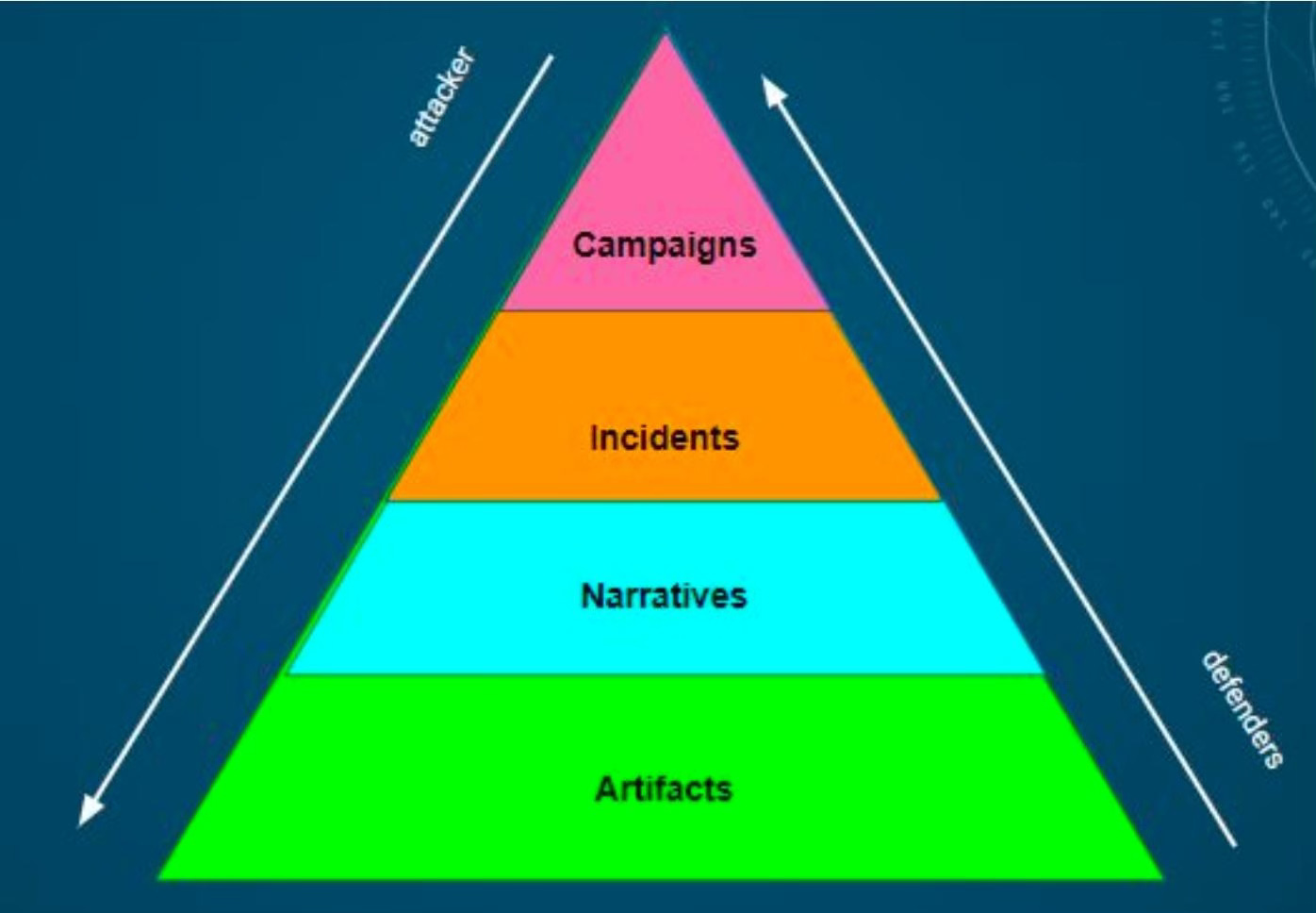
The Misinfosec report focused on information that “changes beliefs” through “narratives,” and recommended a way to counter misinformation by attacking specific links in a “kill chain” or influence chain from the misinfo “incident” before it becomes a full-blown narrative.
The report laments that governments and corporate media no longer have full control of information. “For a long time, the ability to reach mass audiences belonged to the nation-state (e.g. in the USA via broadcast licensing through ABC, CBS and NBC). Now, however, control of informational instruments has been allowed to devolve to large technology companies who have been blissfully complacent and complicit in facilitating access to the public for information operators at a fraction of what it would have cost them by other means.”
The authors advocated for police, military, and intelligence involvement in censorship, across Five Eyes nations, and even suggested that Interpol should be involved.
The report proposed a plan for AMITT and for security, intelligence, and law enforcement collaboration and argued for immediate implementation. “We do not need, nor can we afford, to wait 27 years for the AMITT (Adversarial Misinformation and Influence Tactics and Techniques) framework to go into use.”
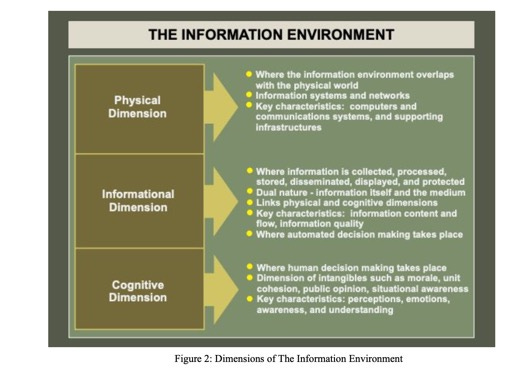
The authors called for placing censorship efforts inside of “cybersecurity” even while acknowledging that “misinformation security” is utterly different from cybersecurity. They wrote that the third pillar of “The information environment” after physical and cybersecurity should be “The Cognitive Dimension.”
The report flagged the need for a kind of pre-bunking to “preemptively inoculate a vulnerable population against messaging.” The report also pointed to the opportunity to use the DHS-funded Information Sharing and Analysis Centers (ISACs) as the homes for orchestrating public-private censorship, and argued that these ISACs should be used to promote confidence in government.
It is here that we see the idea for the EIP and VP: “While social media is not identified as a critical sector, and therefore doesn’t qualify for an ISAC, a misinformation ISAC could and should feed indications and warnings into ISACs.”
Terp’s view of “disinformation” was overtly political. “Most misinformation is actually true,” noted Terp in the 2019 podcast, “but set in the wrong context.” Terp is an eloquent explainer of the strategy of using “anti-disinformation” efforts to conduct influence operations. “You’re not trying to get people to believe lies most of the time. Most of the time, you’re trying to change their belief sets. And in fact, really, uh, deeper than that, you’re trying to change, to shift their internal narratives… the set of stories that are your baseline for your culture. So that might be the baseline for your culture as an American.”
In the fall, Terp and others sought to promote their report. The podcast Terp did with Breuer in 2019 was one example of this effort. Together Terp and Breuer described the “public-private” model of censorship laundering that DHS, EIP, and VP would go on to embrace.
Breuer spoke freely, openly stating that the information and narrative control he had in mind was comparable to that implemented by the Chinese government, only made more palatable for Americans. “If you talk to the average Chinese citizen, they absolutely believe that the Great Firewall of China is not there for censorship. They believe that it’s there because the Chinese Communist Party wants to protect the citizenry and they absolutely believe that’s a good thing. If the US government tried to sell that narrative, we would absolutely lose our minds and say, ‘No, no, this is a violation of our First Amendment rights.’ So the in-group and out-group messaging have to be often different.”
“Hogwarts School of Misinformation”
“SJ called us the ‘Hogwarts school for misinformation and disinformation,’” said the whistleblower. “They were superheroes in their own story. And to that effect you could still find comic books on the CISA site.”
CTIL, the whistleblower said, “needed programmers to pull apart information from Twitter, Facebook, and YouTube. For Twitter they created Python code to scrape.”
The CTIL records provided by the whistleblower illustrate exactly how CTIL operated and tracked “incidents,” as well as what it considered to be “disinformation.” About the “we won’t stay home” narrative, CTIL members wrote, “Do we have enough to ask for the groups and/or accounts to be taken down or at a minimum reported and checked?” and “Can we get all troll on their bums if not?”
They tracked posters calling for anti-lockdown protests as disinformation artifacts.
“We should have seen this one coming,” they wrote about the protests. “Bottom line: can we stop the spread, do we have enough evidence to stop superspreaders, and are there other things we can do (are there countermessagers we can ping etc).”
CTIL also worked to brainstorm counter-messaging for things like encouraging people to wear masks and discussed building an amplification network. “Repetition is truth,” said a CTIL member in one training.
CTIL worked with other figures and groups in the Censorship Industrial Complex. Meeting notes indicate that Graphika’s team looked into adopting AMITT and that CTIL wanted to consult DiResta about getting platforms to remove content more quickly.
When asked whether Terp or other CTIL leaders discussed their potential violation of the First Amendment, the whistleblower said, “They did not… The ethos was that if we get away with it, it’s legal, and there were no First Amendment concerns because we have a ‘public-private partnership’ — that’s the word they used to disguise those concerns. ‘Private people can do things public servants can’t do, and public servants can provide the leadership and coordination.’”
Despite their confidence in the legality of their activities, some CTIL members may have taken extreme measures to keep their identities a secret. The group’s handbook recommends using burner phones, creating pseudonymous identities, and generating fake AI faces using the “This person does not exist” website.
In June 2020, the whistleblower says, the secretive group took actions to conceal their activities even more.
One month later, In July 2020, SIO’s Director, Alex Stamos emailed Kate Starbird from the University of Washington’s Center for an Informed Public, writing, “We are working on some election monitoring ideas with CISA and I would love your informal feedback before we go too far down this road . . . . [T]hings that should have been assembled a year ago are coming together quickly this week.”
That summer CISA also created the Countering Foreign Influence Task Force which has measures that reflect CTIL/AMITT methods and includes a “real fake” graphic novel the whistleblower said was first pitched within CTIL.
The “DISARM” framework, which AMITT inspired, has been formally adopted by the European Union and the United States as part of a “common standard for exchanging structured threat information on Foreign Information Manipulation and Interference.”
Until now, the details of CTIL’s activities have received little attention even though the group received publicity in 2020. In September 2020, Wired published an article about CTIL that reads like a company press release. The article, like the Bloomberg and Washington Post stories that spring, accepts unquestioningly that the CTIL was truly a “volunteer” network of “former” intelligence officials from around the world.
But unlike the Bloomberg and Washington Post stories, Wired also describes CTIL’s “anti-misinformation” work. The Wired reporter does not quote any critic of the CTIL activities, but suggests that some might see something wrong with them. “I ask him [CTIL co-founder Marc Rogers] about the notion of viewing misinformation as a cyber threat. “All of these bad actors are trying to do the same thing, Rogers says.”
In other words, the connection between preventing cyber crimes, and “fighting misinformation,” are basically the same because they both involve fighting what the DHS and CTI League alike call “malicious actors,” which is synonymous with “bad guys.”
“Like Terp, Rogers takes a holistic approach to cybersecurity,” the Wired article explains. “First there’s physical security, like stealing data from a computer onto a USB drive. Then there’s what we typically think of as cybersecurity—securing networks and devices from unwanted intrusions. And finally, you have what Rogers and Terp call cognitive security, which essentially is hacking people, using information, or more often, misinformation.”
CTIL appears to have generated publicity about itself in the Spring and Fall of 2020 for the same reason EIP did: to claim later that its work was all out in the open and that anybody who suggested it was secretive was engaging in a conspiracy theory.
“The Election Integrity Partnership has always operated openly and transparently,” EIP claimed in October 2022. “We published multiple public blog posts in the run-up to the 2020 election, hosted daily webinars immediately before and after the election, and published our results in a 290-page final report and multiple peer-reviewed academic journals. Any insinuation that information about our operations or findings were secret up to this point is disproven by the two years of free, public content we have created.”
But as internal messages have revealed, much of what EIP did was secret, as well as partisan, and demanding of censorship by social media platforms, contrary to its claims.
EIP and VP, ostensibly, ended, but CTIL is apparently still active, based on the LinkedIn pages of its members.
Note: the question mark in the title was added by me. – Natylie
Henry Kissinger, recognized by many as one of the most influential practitioners of American foreign policy ever, died on Wednesday at the age of 100.
Much is being written about the former national security advisor and secretary of state over the next days and weeks, some of it glowing, much of it condemning. I will leave it up to others to decide how they want to characterize the man and his life. As for me, I will focus on the brief moments of intersection I had with Secretary Kissinger, and how those impacted my life and my work.
My first brush with Henry Kissinger was as a child living in Hawaii. My father was a career Air Force officer, and in the early 1970s he was assigned to the Headquarters, Pacific Air Force, where he was involved with a variety of logistics-related assignments, including helping facilitate the transfer of U.S. military equipment to the Vietnamese Air Force as part of the Nixon administration’s “Vietnamization” program, which sought to transfer responsibility for the defense of South Vietnam from the U.S. military to Vietnamese armed forces.
In this regard, my father made several trips to South Vietnam. Two things stood out from these experiences: one was my father’s disgust at the lies being told by senior U.S. military officers who would issue glowing reports about the progress being made after spending less than 48 hours in South Vietnam, most of that time being spent in bars and nightclubs.
My father had been deployed to Vietnam in 1965-66 as part of the 10th Air Commando Squadron — the “Skoshi Tigers” — responsible for bringing the F-5 fighter to Vietnam, testing it out as a combat platform, and transitioning the F-5 to the South Vietnamese Air Force. He knew more than a little about the realities of turning over modern weapons systems to a military culture unaccustomed to such complexity.
While the U.S. Air Force was able to employ the F-5 in both an air-to-air and air-to-ground role in South Vietnam, the South Vietnamese never really grasped how to properly use the capabilities inherent in the airframe. This was true in 1966, when my father left South Vietnam for the first time, and it remained the case in 1973-74, when he was involved in implementing “Vietnamization.”
But I remember his anger when speaking of the numerous cables that would come in from Washington, D.C., and in particular from National Security Advisor Henry Kissinger, directing things to be done. “Kissinger Sends,” the cables would read. “Who the hell is Henry Kissinger?” my father would say. “And why the hell are we listening to him? He’s not in our chain of command.” (Scott Ritter discusses this article on Ep. 118 of Ask the Inspector.)
Later, from February through April 1975, as the South Vietnamese military crumbled before the North Vietnamese armed forces advancing on Saigon, the absolute failure of the “Vietnamization” program —which Kissinger championed — became manifest.
That summer my family played host to a South Vietnamese refugee family that had fled for their lives during the fall of Saigon. We were good hosts, but my father could barely look the family in the eyes given the shame he felt at having been a part of a system that had betrayed them so much.
Godfather of U.S.-Soviet Arms Control
Over the years, I would read much about Kissinger and his work. While a senior in college, I devoured Seymour Hersh’s The Price of Power, a devastating exposé of the dark realities associated with the Nixon administration’s formulation and implementation of national security and foreign policy.
In my mind, the name Henry Kissinger became synonymous with the illegal bombing of Cambodia, the assassination of Salvadore Allende, and the degree to which a nation’s reputation could be sullied by the actions of one man.
To be honest, as I entered the U.S. Marines after graduating college in 1984, I didn’t give Kissinger much thought — he was, from my perspective, a relic of the past, a bad national nightmare who, like his boss, Richard Nixon, was fading into the pages of historical irrelevance.
And then, in early 1988, everything changed. I was taken from the deserts of southern California, where I had been perfecting skills associated with the Marine Corps mission of destroying the enemy through firepower and maneuver., I was dispatched to Washington, D.C., where I was made part of a team that would implement inspection tasks associated with the implementation of the Intermediate Nuclear Forces (INF) treaty.
As I learned more about the treaty, and its relationship to the history of U.S.-Soviet arms control, the name Henry Kissinger kept popping up. Kissinger, it turns out, was the Godfather of U.S.-Soviet arms control, the man who crafted the anti-ballistic missile treaty, considered one of the foundational agreements that defined the strategic relationship between the U.S. and Soviet Union.
He was also the driving force behind the policy of détente between the U.S. and Soviet Union, which led to an end to the nuclear arms race and heralded in the Strategic Arms Limitation Talks (SALT) which eventually turned into the Strategic Arms Reduction Treaty (START).
The INF treaty was a byproduct of the vision set forth by Kissinger. I often speak of the importance of the INF treaty in preventing nuclear war, and remain convinced that without it, a nuclear conflict between the U.S. and Soviet Union was inevitable.
‘Foreign Policy Expert’ Reappears
It turns out that without Henry Kissinger, there probably would have been no INF treaty, no START treaty, no SALT agreements, no ABM treaty — no arms control.
Without Henry Kissinger, there would very likely have been a nuclear war.
Following my assignment as an arms inspector in the Soviet Union, I returned to the Marine Corps, where, from August 1990 until August 1998, my life was defined by Iraq — first through Operation Desert Shield/Desert Storm, and then later, as a weapons inspector with the United Nations tasked with overseeing the disarmament of Iraq’s weapons of mass destruction programs.
Once again, Kissinger disappeared into the background, only to reappear in the summer of 1998 as one of the “foreign policy experts” who articulated openly about the need to remove Saddam Hussein from power.
Following my resignation from the United Nations in August 1998, I received an invitation from Teddy Forstmann, one of the founders of the private equity corporation Forstmann & Little, to fly to Aspen, Colorado, to speak as part of an annual policy discussion forum that brought together the “best and the brightest” in the world under a single roof where the issues of the day would be addressed. Among the notable people present was none other than Kissinger.
I had the opportunity to rub elbows with him on several occasions during the Aspen forum. We talked, of course, about Iraq — this was pre-9/11, pre-WMD fabrication, where the issues revolved primarily around Saddam Hussein and the threat he posed to regional peace and security.
But most of all we talked about arms control and the importance of preserving the legacy of disarmament that had been started under the Nixon administration, but which seemed to be slipping away under Bill Clinton’s watch.
I last saw Henry Kissinger in May 1999, at the White House Correspondent’s Dinner. He was attended to by a retired Secret Service officer whom I had met at the Aspen event. After the dinner and speeches, he approached my table and told me Mr. Kissinger wanted to speak with me. I was ushered to a side room, where the famous former diplomat was waiting. “I wanted to continue our conversation,” Kissinger said. And we did.
The details of what we talked about, filled with the nuances of science, technology, and how they interface with the human condition, are unimportant at this juncture. The point being made here is that for a solid 30 minutes, I had the undivided attention of one of the foremost thinkers of our time when it came to diplomacy and arms control. We talked about the past, we talked about the present, and we both worried about the future.
I have been in the presence of great men, and the one thing that strikes me about most of them is that they love to hear themselves talk. Don’t get me wrong — Henry Kissinger, too, was in love with the sound of his own voice — he had more than earned the right.
I was deeply impressed with the intelligence of this man. But what impressed me the most was his willingness to listen, and to carefully weigh his words when responding to what I had to say. While I was clearly the junior partner in this discussion, I was not made to feel irrelevant.
Far too soon, the Secret Service man appeared, and gestured to the door, where a long line of illuminati was waiting to have an audience with the Dean of American Diplomacy. My time was up. We shook hands. “We will talk again,” Henry Kissinger said in parting.
“He likes you,” the Secret Service agent told me as we exited the room. “You were the first person he wanted to speak to tonight.”
Kissinger’s Complex Legacy
I was honored and looked forward to our next conversation. I even bought a copy of his 1994 masterpiece, Diplomacy, and put it on my bookshelf in anticipation of getting the author to sign it one day.
That day never came. Henry Kissinger passed away on Nov, 29, 2023, at the age of 100.
One of his last official acts was to travel to China, where he used the good reputation he had built from his orchestration of Nixon’s historic outreach in 1972 to try and find some common ground between the U.S. and China today that could be used to repair a very strained relationship.
There will be those who, with reason, choose to remember Henry Kissinger harshly because of policies he formulated and implemented that could, with just cause, be characterized as crimes against humanity. Kissinger once joked, “The illegal we do immediately. The unconstitutional takes a little longer.”
It wasn’t funny because it was true.
“Who the hell is Henry Kissinger?” my father used to angrily ask. The answer, it turns out, is not so simple.
There is much to be critical of the man, and nothing he did should be kept secret from the people he ostensibly served.
But I will always remember the intelligence and kindness of the man, and the fact that the policies he shaped helped save the world from nuclear annihilation. Next week there will be a gathering of veterans from the INF treaty in Washington, D.C. We will toast those who have gone before us — including, just this past month, Roland Lajoie, the first director of the On-Site Inspection Agency and the man who made verification of the INF treaty possible.
I will offer a separate toast, in silence, to Henry Kissinger, because I know, in my heart of hearts, that for all his many faults, if it weren’t for him, none of us would be here today.
Scott Ritter is a former U.S. Marine Corps intelligence officer who served in the former Soviet Union implementing arms control treaties, in the Persian Gulf during Operation Desert Storm and in Iraq overseeing the disarmament of WMD. His most recent book is Disarmament in the Time of Perestroika, published by Clarity Press.