By Gilbert Doctorow, Website, 10/16/23
In the past week, I have been interviewed several times by Indian television and asked about the present situation and immediate path ahead in the Israeli-Hamas war. I have replied on air, though I felt uncomfortable going outside my area of core competence. I do not present myself as an expert on the Near East. My added value is specifically in the following: to take readings of Russian governmental and public thinking about the most important international events of our times, of which the Mideast war is today number one. And that is what I offer in the essay below.
What I am about to say first is drawn from last night’s Vladimir Solovyov show, which gave the microphone to some of the most capable panelists in his stable of regulars. The key issue was how Russians view the concept of collective responsibility applied to whole nations or ethnic groups as the Israeli government is now doing in its approach to Gaza by proceeding on a mission to root out and destroy Hamas. Solovyov put on the screen the latest speech by Israeli president Isaac Herzog which reflected the doctrine of collective responsibility in no uncertain terms.
“It is an entire nation out there that is responsible,” Herzog said at a press conference on Friday. “It is not true this rhetoric about civilians not being aware, not involved. It’s absolutely not true. They could have risen up. They could have fought against that evil regime which took over Gaza in a coup d’etat.”
Solovyov also showed the Israeli Defense Minister Yoav Gallant saying that Israel is fighting against “human animals.”
Solovyov himself condemned unreservedly the brutal murders perpetrated by Hamas militants on 7 October just as he condemned any attempts to justify the brutal Israeli heavy bombardment of Gaza and their planned horrific land invasion of Gaza in the immediate future.
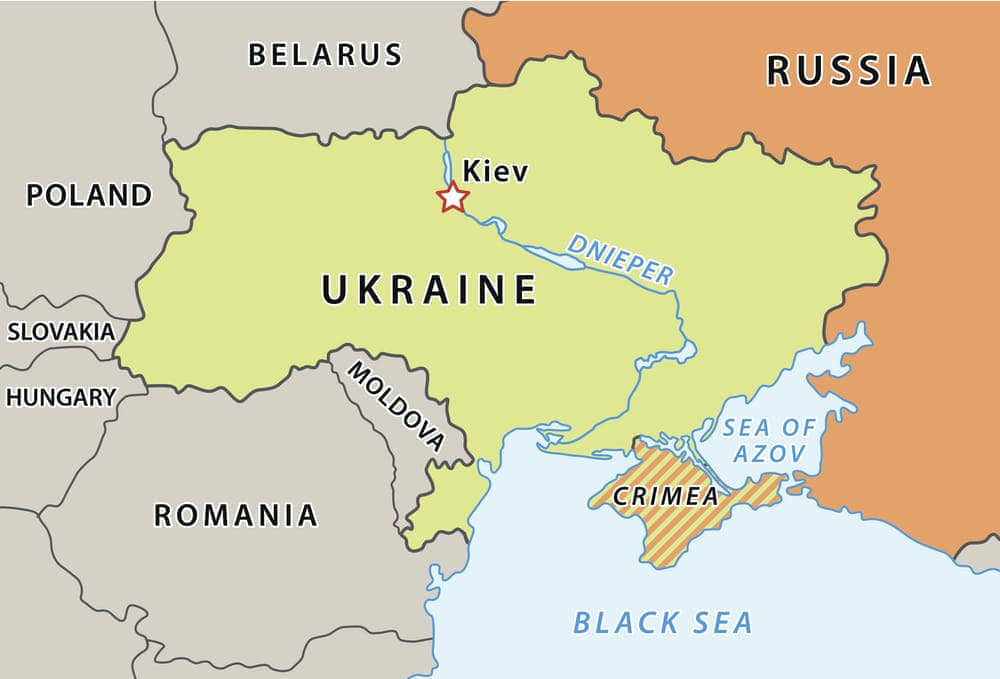
For his part, Solovyov used the issue to highlight the difference between the Russian way of war, as seen in the ongoing Special Military Operation in Ukraine, and the Israeli way of war which we are now witnessing 24/7 on television. Russians could have smashed Kiev, bombed the main boulevard downtown, the Kreshchatik, but did not. They were/are not targeting residential districts.
Surely some readers will disagree and say that the distinction is more blurry, but please note this is the Russian self image. Said Solovyov to further drive home his point: during our Chechen wars in the 1990s we only denounced the terrorist groups, not the entire Chechnya nation.
In fact, the whole issue of applying collective responsibility to peoples has a special meaning in Russia which the Western public would not necessarily know. And this came out in the eloquent, uninterrupted 10 minute speech of RT directress Margarita Simonyan.
I have in the past criticized Simonyan for the concept behind RT programming, for its hiring has-been Western journalists to hold up a mirror to American society instead of presenting the much more sophisticated and interesting domestic Russian news programming in English translation for global audiences. However, as she made clear last night, Margarita Simonyan, the journalist is a top quality intellectual as well as a Russian patriot. Her lengthy quotations from the poetry of Anna Akhmatova on how you should stay in the country of your birth and make the best of it were entirely germane to the discussion of Russians who left the country at the time of the mobilization of reservists last autumn. I will get to the subject of these “relocants” as they have been dubbed in Russian social networks further on.
But first I point to the bit of Simonyan family history that she shared with the audience last night. She said that she understood very well the terrible side of collective responsibility as reflected in the various expulsions of ethnic groups from one or another region of the Soviet Union during Stalin’s reign. Her own family was based in Crimea until Stalin ordered the deportation of all Armenians there. Still more obnoxious was Stalin’s deportation of Crimean Tatars, the native population, which was only reversed after the fall of the USSR.
The uniform condemnation of what Israel is doing in Gaza on the Solovyov show last night was contradicted by one panelist, Yaakov Kedmi, who was brought in by remote from Jerusalem. Kedmi is a former Soviet citizen, a ‘refusenik’ who long ago emigrated to Israel and made a career in the intelligence services. Retired, he has for several years appeared in the Moscow studios of the Solovyov show, where he often presented himself as a super patriot for Russia, recommending a very aggressive posture abroad, to the point that I thought at times he was an agent provocateur.
Appearing last night on the Solovyov show, Kedmi looked fatigued, distressed and made a weak case for Israel’s right to self-defense, whatever action against Gaza that it entailed because Hamas had to be torn up by the roots. As for collective responsibility, Kedmi at first denied that the Israeli president had ever spoken in terms of applying the principle against Palestinian civilians for the Hamas atrocities, then relented and said that the president had acted stupidly and did not represent the views of the broad Israeli public. He went on longer than the program host wished defending the noble behavior of the Israeli Defense Force. Kedmi insisted that the IDF was engaged in precision, not wanton bombing; that it telephoned the residents of apartment buildings twenty minutes before a planned raid to give them time to get out. This sweet story strained credulity as you could see on the faces of other panelists.
I have in the past called attention to the former military officer, present day Duma member Andrei Gurulyov who appears fairly often on the Solovyov show. Last night he had a lot to say about both the situation in Israel and about President Putin’s remarks earlier in the day that the Russians had now entered a phase of “active defense,” meaning the daily incremental capture of land in Ukraine-occupied Donbas at the line of confrontation so as to get control of commanding heights and other tactically important positions. However, his most important remarks last night were with respect to Iran. Russian television had reported on the meeting of the Iranian foreign minister with Hamas leaders in Qatar on Saturday, during which the Iranian spoke of their “red line,” meaning that Iran will not stand idly by if Israel proceeds with its planned full invasion of Gaza. I add that today the Iranian parliament issued a declaration to the same effect. Said Gurulyov, the Iranians are not loquacious; when they speak, they mean what they say. Moreover, the Iranian armed forces are, in his estimation, very capable and they are equipped with fully modern weapons.
The subject of “relocants” has been highly topical on Russian television and social media this past week. It arose in connection with the arrival back in Moscow of some highly visible scoundrels who had been living in Israel and departed hastily after the Hamas attacks. The question became very hot after Vyacheslav Volodin, Speaker of the Duma, the lower house in Russia’s bicameral legislature, told reporters that upon their return to Russia, such people should be sent directly to Magadan, a port city in the Russian Far East that was a notorious transit point of Gulag internees in the Stalinist years.
That really sent tongues wagging and the question popped up in a press conference that Putin gave during his Central Asian travels later in the week. Putin said directly that everyone holding a Russian passport has the right to leave the country and take up residence in any destination of his or her choosing; moreover, they all have the right of return. The only issue which could subject them to legal investigation is if they used their time abroad to defame Russia.
In her ten minutes at the microphone, Margarita Simonyan gave a more detailed answer, saying that indeed many men who left Russia a year ago following the mobilization orders did so because the mobilization was not conducted with uniform professionalism. In some cases, the local mobilization personnel ignored the legal exemptions from service that reservists may have had for reasons of their profession, for reasons of health or family circumstances. As far as the Russian government is concerned, it stood ready to leave in place IT specialists who were more useful to the nation sitting at home by their computers with a latte at their side than if they were sent to the front. However, there were also those who had left Russia after the start of the SMO who never had any affection for Russia and Russians, but covered it up in the past by a fig leaf of pacifism or reproaches over authoritarianism. Now these same fine folks, from their perches in Israel or elsewhere abroad, are posting on social networks their expressions of full support for “our boys,” meaning the IDF. Such people will indeed get a fast track to Magadan if they return.
*****
Before closing, I note that Russian news programs yesterday and today have broadcast a considerable amount of information that you should know to better understand our chances of surviving the Middle East conflict but will not hear about in major Western media.
For example, the arrival in Berlin of the Qatari emir for talks with Chancellor Scholz on Thursday was indeed mentioned in our media. The content of their talks was not. However, per Russian news the emir told Scholz openly that if the Europeans persist in giving unqualified support to Israel for its pending land invasion of Gaza then the emirate will halt all further deliveries of natural gas to Europe. It bears mention that Qatar accounts for 13% of global LNG sales and its planned deliveries to Europe are critical for the Old Continent to maintain energy security this winter under conditions of the sanctions applied to the traditional supplier, Russia.
Another important news item was released by the Russian Ministry of Defense today, namely that Russian deaths in the Ukraine war are in 1:8 ratio to Ukrainian deaths. This may sound fine, but if Ukraine has lost 400,000 soldiers so far in the war, that means the Russians have lost 50,000. Remember that the United States lost 58,000 solidiers in the five most active years of the Vietnam war ending in 1973. Also consider that the Russian population today is approximately one half of the U.S. population during the Vietnam war. These simple facts should make it manifestly clear why Russia will reject any U.S. attempt now to “freeze the conflict” and buy time for a future continuation at America’s choosing. No, the Special Military Operation will likely continue until the objectives are reached or the Ukrainians capitulate, whichever comes first.
Finally, I call attention to Vladimir Putin’s arrival in Beijing this morning for his meeting with President Xi and participation in the celebration of the 10th anniversary of the Belt and Road Initiative. I fully expect the two leaders to issue a joint declaration demanding that the parties to the Israeli-Hamas war immediately agree to a cease-fire and allow humanitarian aid to be delivered to the residents of Gaza. There is still time for these powers to provide mediation which the United States is patently incapable of delivering. Failing that, should the situation cross Iran’s red lines, all hell may break out. All hell also means chaos in energy markets that will immediately sting the whole developed world.