Category Archives: Uncategorized

Ana Palacio: A BRICS Revival?

By Ana Palacio, Project Syndicate, 5/12/23

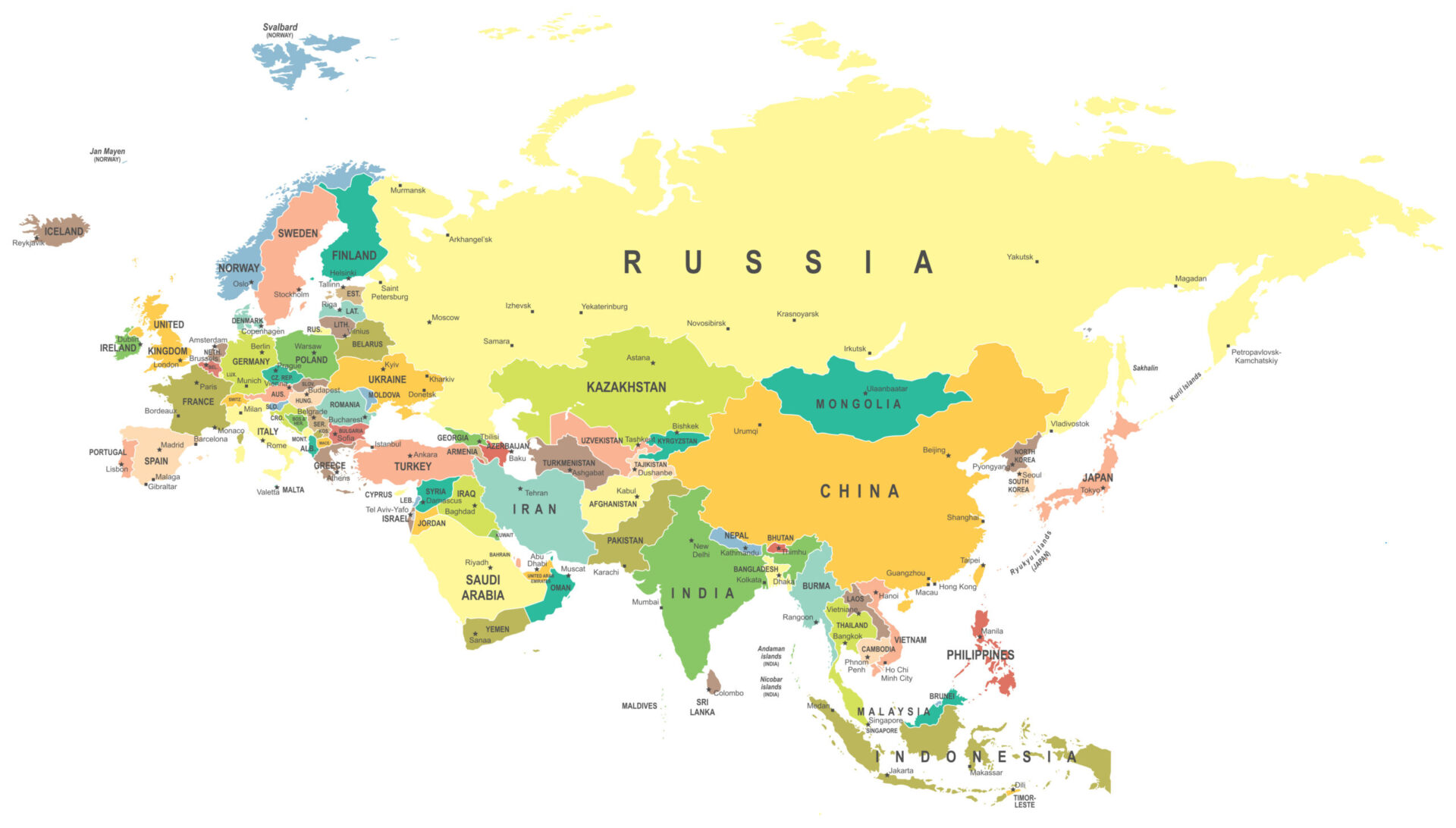
WASHINGTON, DC – There was a time when everyone was talking about a group of fast-growing emerging economies with huge potential. But the BRICS – Brazil, Russia, India, China, and South Africa – struggled to transform themselves from a promising asset class into a unified real-world diplomatic and financial player. Is this finally changing?

The story of the BRICS begins with a November 2001 paper by Jim O’Neill, then the head of global economic research at Goldman Sachs Asset Management, called “The World Needs Better Economic BRICs” (the original grouping did not include South Africa). At a time when the world was dealing with the fallout of the dot-com bust and the September 11, 2001, terrorist attacks, O’Neill highlighted the BRICs’ vast potential, noting that their GDP growth was likely to accelerate considerably in the ensuing decades.

At the time, China and India were experiencing rapid economic growth, and Russia, aided by booming commodity prices, was recovering from the post-Soviet meltdown of the 1990s. Growth in the BRICs was outpacing that of the advanced economies so significantly that O’Neill predicted in 2003 that their collective GDP could overtake the then-Group of 6 largest developed economies by 2040.

While the world expected the BRICs to thrive economically, few expected them to form a united grouping. After all, they represent a mix of unsteady democracies and outright autocracies, each with its own distinctive economic structure. And two of them – China and India – have long been locked in a border dispute, with no sign of resolution.

But the BRICS saw their economic alignment as an opportunity to expand their global influence by creating an alternative to West-led international institutions. And, for a while, they seemed to be making progress.

The addition of South Africa – then Africa’s largest economy – in 2010 lent the grouping greater heft. By 2014, the BRICS Development Bank – now the New Development Bank – was formed as an alternative to the World Bank. The next year, the BRICS created the Contingent Reserve Arrangement, in order to support members experiencing short-term balance-of-payments pressures.

Economically, the BRICS continued to thrive, at least in the aggregate. Though China is the only BRICS economy that has sustained solid growth, the group has surpassed the G7 in terms of relative contribution to global GDP (based on purchasing power parity). Moreover, bilateral trade among its members is rising rapidly. But progress toward the BRICS’ broader ambitions seemed to stall.

Recent developments suggest renewed momentum. Lately, members have been talking of “de-dollarizing” trade, with some raising the prospect of a new shared BRICS currency. While calls for de-dollarization are nothing new, some experts believe that a BRICS currency “has the potential to usurp” the US dollar, or at least “shake [its] place on the throne.”

Moreover, the BRICS seem to be making a comeback as a platform for cooperation on a range of issues, including climate change, global governance, and development. In fact, 19 countries, including Argentina, Turkey, and Saudi Arabia, have expressed interest in joining the BRICS – bids that will be discussed at the group’s August summit in South Africa.

Though the group’s institutional framework remains underdeveloped, the motivations that led to its creation have not diminished – and are unlikely to any time soon. In fact, the BRICS and their supplicants appear to be both united and driven by one thing: grievance.

Developing economies are angry about the burdensome conditionality that has been imposed on them by Western-dominated institutions. They are sick of what they perceive as double standards on vital policy matters, such as the green transition. They are unwilling to tolerate efforts to “constrain” their economies through conservation demands or limits on technology sharing. Perhaps most important, they regard Western norms and values with suspicion as a fig leaf for Western countries’ self-interested behavior.

The West’s inability – or unwillingness – to reform global governance so that emerging economies like China and India have greater influence has compounded these grievances. Calls for reform have, after all, been growing louder for decades – since around 1999, when the G20 was formed. In the aftermath of the 1997-98 Asian financial crisis, finance ministers and central-bank governors began holding regular high-level meetings, and non-Western representatives wanted to be heard.

With the West’s pledges to pursue reform having come to nothing, potential alternatives – from development banks to currencies – look increasingly attractive to those who feel left out. The BRICS are attempting to build a new world order, “bric by bric,” and the appeal of their cause among other disgruntled countries is growing.

One must wonder what would happen if countries like Argentina or Saudi Arabia joined this project. Even the “BRICS-Plus” embraced by China could go a long way toward advancing an alternative worldview and institutional system – goals that China is also pursuing with its massive transnational Belt and Road Initiative (BRI).

To be sure, the BRICS’ ability to realize its ambitions remains far from certain. None of its members is going to stop putting national interests first, though that is precisely what has long held the BRICS back. Even China’s BRI has been likened to a “new form of imperialism” – hardly the best way to win long-term friends.

But the resurgence of the BRICS is disquieting, not least because the grouping has not demonstrated a capacity for genuine global leadership. Shared grievances about the West – legitimate or not – cannot support a rules-based world order. A coherent narrative for global governance, underpinned by clearly articulated values, is essential. And the BRICS have offered no such thing.

For the West, the BRICS’ growing influence holds an important lesson. If the current international order is to remain relevant, the institutions that comprise it will have to change.

Racket News – Report on the Censorship-Industrial Complex: The Top 50 Organizations to Know

internet writing technology computer
Photo by Markus Winkler on Pexels.com

By Susan Schmidt, Andrew Lowenthal, Tom Wyatt, Techno Fog, et al., Racket News, 5/10/23

Introduction by Matt Taibbi

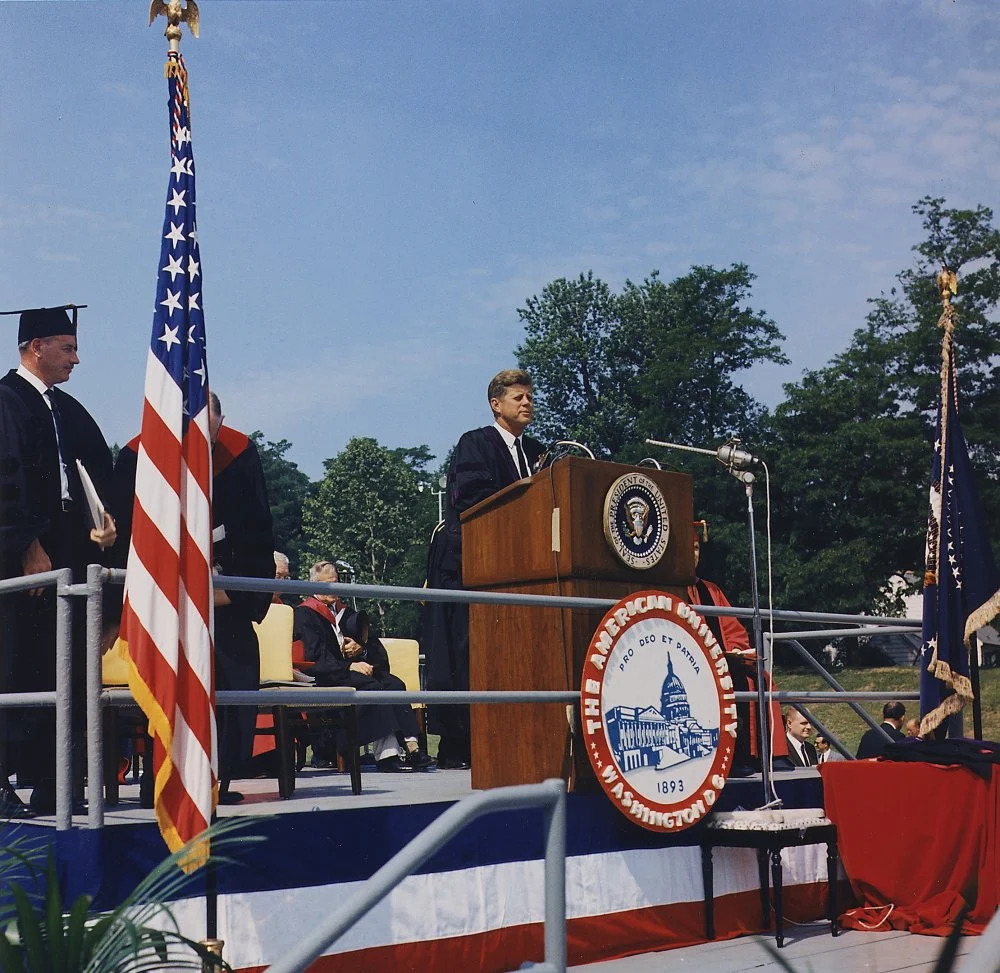
On January 17, 1961, outgoing President and former Supreme Allied Commander Dwight D. Eisenhower gave one of the most consequential speeches in American history. Eisenhower for eight years had been a popular president, whose appeal drew upon a reputation as a person of great personal fortitude, who’d guided the United States to victory in an existential fight for survival in World War II. Nonetheless, as he prepared to vacate the Oval Office for handsome young John F. Kennedy, he warned the country it was now at the mercy of a power even he could not overcome. 

Until World War II, America had no permanent arms manufacturing industry. Now it did, and this new sector, Eisenhower said, was building up around itself a cultural, financial, and political support system accruing enormous power. This “conjunction of an immense military establishment and a large arms industry is new in the American experience,” he said, adding:

In the councils of government, we must guard against the acquisition of unwarranted influence, whether sought or unsought, by the military-industrial complex. The potential for the disastrous rise of misplaced power exists and will persist. 

We must never let the weight of this combination endanger our liberties or democratic processes… Only an alert and knowledgeable citizenry can compel the proper meshing of the huge industrial and military machinery of defense with our peaceful methods and goals, so that security and liberty may prosper together. 

This was the direst of warnings, but the address has tended in the popular press to be ignored. After sixty-plus years, most of America – including most of the American left, which traditionally focused the most on this issue – has lost its fear that our arms industry might conquer democracy from within. 

Now, however, we’ve unfortunately found cause to reconsider Eisenhower’s warning.

While the civilian population only in recent years began haggling over “de-platforming” incidents involving figures like Alex Jones and Milo Yiannopoulos, government agencies had already long been advancing a new theory of international conflict, in which the informational landscape is more importantly understood as a battlefield than a forum for exchanging ideas. In this view, “spammy” ads, “junk” news, and the sharing of work from “disinformation agents” like Jones aren’t inevitable features of a free Internet, but sorties in a new form of conflict called “hybrid warfare.” 

In 1996, just as the Internet was becoming part of daily life in America, the U.S. Army published “Field Manual 100-6,” which spoke of “an expanding information domain termed the Global Information Environment” that contains “information processes and systems that are beyond the direct influence of the military.” Military commanders needed to understand that “information dominance” in the “GIE” would henceforth be a crucial element for “operating effectively.”

You’ll often see it implied that “information operations” are only practiced by America’s enemies, because only America’s enemies are low enough, and deprived enough of real firepower, to require the use of such tactics, needing as they do to “overcome military limitations.” We rarely hear about America’s own lengthy history with “active measures” and “information operations,” but popular media gives us space to read about the desperate tactics of the Asiatic enemy, perennially described as something like an incurable trans-continental golf cheat.

Indeed, part of the new mania surrounding “hybrid warfare” is the idea that while the American human being is accustomed to living in clear states of “war” or “peace,” the Russian, Chinese, or Iranian citizen is born into a state of constant conflict, where war is always ongoing, whether declared or not. In the face of such adversaries, America’s “open” information landscape is little more than military weakness.

In March of 2017, in a hearing of the House Armed Services Committee on hybrid war, chairman Mac Thornberry opened the session with ominous remarks, suggesting that in the wider context of history, an America built on constitutional principles of decentralized power might have been badly designed:

Americans are used to thinking of a binary state of either war or peace. That is the way our organizations, doctrine, and approaches are geared. Other countries, including Russia, China, and Iran, use a wider array of centrally controlled, or at least centrally directed, instruments of national power and influence to achieve their objectives…

Whether it is contributing to foreign political parties, targeted assassinations of opponents, infiltrating non-uniformed personnel such as the little green men, traditional media and social media, influence operations, or cyber-connected activity, all of these tactics and more are used to advance their national interests and most often to damage American national interests… 

The historical records suggest that hybrid warfare in one form or another may well be the norm for human conflict, rather than the exception.

Around that same time, i.e. shortly after the election of Donald Trump, it was becoming gospel among the future leaders of the “Censorship-Industrial Complex” that interference by “malign foreign threat actors” and the vicissitudes of Western domestic politics must be linked. Everything, from John Podesta’s emails to Trump’s Rust Belt primary victories to Brexit, were to be understood first and foremost as hybrid war events.

This is why the Trump-Russia scandal in the United States will likely be remembered as a crucial moment in 21st-century history, even though the investigation superficially ended a non-story, fake news in itself. What the Mueller investigation didn’t accomplish in ousting Trump from office, it did accomplish in birthing a vast new public-private bureaucracy devoted to stopping “mis-, dis-, and malinformation,” while smoothing public acquiescence to the emergence of a spate of new government agencies with “information warfare” missions. 

The “Censorship-Industrial Complex” is just the Military-Industrial Complex reborn for the “hybrid warfare” age.

Much like the war industry, pleased to call itself the “defense” sector, the “anti-disinformation” complex markets itself as merely defensive, designed to fend off the hostile attacks of foreign cyber-adversaries who unlike us have “military limitations.” The CIC, however, is neither wholly about defense, nor even mostly focused on foreign “disinformation.” It’s become instead a relentless, unified messaging system aimed primarily at domestic populations, who are told that political discord at home aids the enemy’s undeclared hybrid assault on democracy

They suggest we must rethink old conceptions about rights, and give ourselves over to new surveillance techniques like “toxicity monitoring,” replace the musty old free press with editors claiming a “nose for news” with an updated model that uses automated assignment tools like “newsworthy claim extraction,” and submit to frank thought-policing mechanisms like the “redirect method,” which sends ads at online browsers of dangerous content, pushing them toward “constructive alternative messages.”

Binding all this is a commitment to a new homogeneous politics, which the complex of public and private agencies listed below seeks to capture in something like a Unified Field Theory of neoliberal narrative, which can be perpetually tweaked and amplified online via algorithm and machine learning. This is what some of the organizations on this list mean when they talk about coming up with a “shared vocabulary” of information disorder, or “credibility,” or “media literacy.”

Anti-disinformation groups talk endlessly about building “resilience” to disinformation (which in practice means making sure the public hears approved narratives so often that anything else seems frightening or repellent), and audiences are trained to question not only the need for checks and balances, but competition. Competition is increasingly frowned upon not just in the “marketplace of ideas” (an idea itself more and more often described as outdated), but in the traditional capitalist sense. In the Twitter Files we repeatedly find documents like this unsigned “Sphere of Influence” review circulated by the Carnegie Endowment that wonders aloud if tech companies really need to be competing to “get it right”:

In place of competition, the groups we’ve been tracking favor the concept of the “shared endeavor” (one British group has even started a “Shared Endeavour” program), in which key “stakeholders” hash out their disagreements in private, but present a unified front.

Who are the leaders of these messaging campaigns? If you care to ask, the groups below are a good place to start. 

“The Top 50 List” is intended as a resource for reporters and researchers beginning their journey toward learning the scale and ambition of the “Censorship-Industrial Complex.” Written like a magazine feature, it tries to answer a few basic questions about funding, organization type, history, and especially, methodology. Many anti-disinformation groups adhere to the same formulaic approach to research, often using the same “hate-mapping,” guilt-by-association-type analysis to identify wrong-thinkers and suppressive persons. There is even a tendency to use what one Twitter Files source described as the same “hairball” graphs.

Where they compete, often, is in the area of gibberish verbiage describing their respective analytical methods. My favorite came from the Public Good Projects, which in a display of predictive skills reminiscent of the “unsinkable Titanic” described itself as the “Buzzfeed of public health.” 

Together, these groups are fast achieving what Eisenhower feared: the elimination of “balance” between the democratic need for liberalizing laws and institutions, and the vigilance required for military preparation. Democratic society requires the nourishment of free debate, disagreement, and intellectual tension, but the groups below seek instead that “shared vocabulary” to deploy on the hybrid battlefield. They propose to serve as the guardians of that “vocabulary,” which sounds very like the scenario Ike outlined in 1961, in which “public policy could itself become the captive of a scientific and technological elite.”

Without further ado, an introduction to the main players in this “CIC”:

Continue reading here.

Alexander Rubinstein: Ukrainian media asks ‘who should be next’ after car bombing of Russian writer

Photo: Dariya Dugina, victim of Ukrainian terrorist attack in 2022

By Alexander Rubinstein, The Grayzone, 5/9/23

A Ukrainian media group partnered with BBC, Der Spiegel and other Western outlets polled readers on which Russian intellectual should be assassinated following a car bomb attack on writer Zakhar Prilepin. The Biden administration has greenlit Kiev’s campaign of terror.

Hours after Russian writer and activist Zakhar Prilepin was nearly killed in a targeted car bomb, a popular Ukrainian news agency submitted a poll that asked its readers, “Who do you think should be next in the Russian pantheon of scum propagandists?”

It’s open season on Russian intellectuals supportive of the government’s war effort, according to Ukrainian news agency UNIAN. Following a car bomb intended to kill Russian novelist Zakhar Prilepin in the Nizhny Novgorod region of Russia, the outlet polled its audience on Telegram, providing a list of names of prominent Russians that could be assassinated.

Excluding the two reported assassination attempts on Russian President Vladimir Putin, Prilepin is the third high-profile Russian to be targeted for assassination by Ukrainian agents. His maiming follows the car bombing that killed Dariya Dugina, which was intended for her father, the Russian nationalist philosopher Alexander Dugin, and the bombing of a public event featuring Vladlen Tatarsky, who ran a popular Telegram channel. The Telegram post by UNIAN explicitly references Dugin, Tatarsky, and Prilepin.

Among the list of potential targets were the operators of other Telegram channels, RT editor-in-chief Margarita Simonyan (crudely referred to in the post as “beaver eater”), Russian TV news hosts Dmitry Kiselyov and Sergey Mardan, and others. Some 50,000 Telegram users have voted in the poll at the time of this article’s publication.

According to UNIAN’s About page, the outlet “partners in information dissemination and exchange” with American outlets Reuters and Bloomberg while its clients include prominent foreign outlets like the BBC and Der Spiegel.

UNIAN is owned by the 1+1 Media Group belonging to Ukrainian oligarch Ihor Kolomoisky, a long time backer of Ukrainian President Vlodomyr Zelensky and the neo-Nazi Azov Battalion. The conglomerate is also the parent company of TSN, the TV News program that recently put out a bounty for drone terror attacks on Red Square during Moscow’s annual May 9 celebration of the defeat of Nazism.

The assassination attempt against Russian novelist Zakhar Prilepin coincided with raids inside Ukraine that swept up 11 war commentators including Gonzalo Lira, an American citizen. Ukraine’s SBU intelligence

agency announced on May 4 that they had arrested “another network of enemy internet agitators.”

American journalists with ties to US intelligence have sought to justify the targeting of online influencers. Christo Grozev, the lead Russia investigator at the US government-funded outlet Bellingcat, justified the bombing of a public event at a cafe in St. Petersburg on the grounds that the target was a “propagandist.”

Similarly, Sarah Ashton-Cirillo, an American journalist and former Democratic Party operative who enlisted in Ukraine’s armed forces, filmed a phantasmagorical defense of the arrest of American Gonzalo Lira by Ukrainian intelligence agents on the same grounds. While the SBU had only publicly released images of Lira with his face blurred, Ashton-Cirllo was somehow able to produce uncensored versions.

Meanwhile, the Biden administration has provided a green light for Ukraine’s campaign of terror inside Russia. Following the second assassination attempt on Russian President Vladimir Putin, Secretary of State Antony Blinken was asked about the US view on attacks inside Russian territory. “These are decisions for Ukraine to make about how it’s going to defend itself,” Blinken responded.

Among the trove of top secret documents leaked by National Guardsman Jack Teixeira and now likely slowly decomposing in file cabinets at top American newsrooms, is a document detailing the US’s dismal projections for a Ukrainian counteroffensive. As its hopes for recapturing the whole of its pre-2014 territory dim, Ukraine is resorting to a campaign of targeted assassinations against its most vocal critics in Russia, and disappearing those who remain within its realm.

Poll: 67% of Ukrainians are against any compromises with Russia; 82% say Putin new Hitler

Kyiv Post, 5/8/23

A survey published by the Democratic Initiatives Foundation on May 8 shows that over 67% of Ukrainians say the war with Russia can end only after the Ukrainian victory.

They say that no compromises with Russia are acceptable, the poll shows. 22% of respondents say that some compromises are possible.

Over 5% of those asked say that any compromises are acceptable as long as they end the war.

According to the same poll, 82% of Ukrainians say that there’s no difference between Russian President Vladimir Putin and Adolf Hitler, leader of Nazi Germany. 11% of respondents say they “probably agree” with this statement.

Ukrainians also see Poland (68%), the U.S. (67%), and the U.K. (45%) as the most supportive, while Polish President Andrzej Duda, U.S. President Joe Biden, and former U.K. Prime Minister Boris Johnson as Ukraine’s most important backers.

The two most popular people in Ukraine are President Volodymyr Zelensky and Commander-in-Chief Valerii Zaluzhnyi.

Additionally, 40% of Ukrainians think the Moscow-controlled Ukrainian Orthodox Church helped Russia in its war against Ukraine. 26% say they “probably agree” with this statement.

Fred Weir: Russia’s top mercenary leader turns on Kremlin. What’s behind rift?

By Fred Weir (in Russia), Christian Science Monitor, 5/16/23

Russia’s most successful military leader in the Ukraine war so far is not a soldier at all.

Yevgeny Prigozhin is a former convict and Kremlin-connected entrepreneur whose private army, the Wagner Group, has borne the brunt of the long, grinding, and incredibly costly battle that has raged since last summer amid the ruins of Bakhmut, once a quiet Donbas mining town.

And over the past 10 days, he has publicly threatened to pull his forces out of Bakhmut, appearing in a video with a field of dead Wagner troops he claimed were victims of Defense Ministry negligence. A week ago he accused Russian troops of “fleeing” the battlefield near Bakhmut, leaving his men exposed. “Soldiers should not die because of the absolute stupidity of their leadership,” he said.

This extraordinary spectacle has led to speculation about a rift in Moscow’s upper echelons of power, an imminent collapse of Russian lines around Bakhmut, or perhaps even a political challenge to the Kremlin by Mr. Prigozhin and the right-wing nationalist hawks who revere him.

Russian experts say there is indeed a struggle for influence and resources between Mr. Prigozhin and the Russian military bureaucracy, which clearly hates the private contractor. But they say he is not so much challenging the powers that be in Moscow, as he is jockeying for his own post-war position in what is anything but a monolithic Putin-era Russian establishment.

“Prigozhin is trying to act like a politician, and Putin may not be ready to tolerate too much independence,” says Andrei Kolesnikov, a senior fellow at the Carnegie Russia Eurasia Center who continues living and working in Moscow. “But this is a strong authoritarian state which is ready to use all sorts of people to achieve goals that look very strange for the 21st century. For Putin, right now, it’s extremely important to fight and win this war. He needs men who can get things done, and that’s why he tolerates Prigozhin.”

A construct of Mr. Putin’s system?

Mr. Prigozhin, who served a decade in prison for robbery and fraud in the 1980s, began with small-scale businesses in post-Soviet St. Petersburg, mainly in the food catering field. After Russian President Vladimir Putin came to power, Russia’s wealthy elites had a choice between accepting political obedience or leaving the country, and Mr. Prigozhin, by then a successful grocer and restaurateur, chose the former.

Mr. Prigozhin became close enough to the Kremlin that he earned the sobriquet “Putin’s chef.” He grew wealthy on official catering contracts and began to branch out. Among other things, he started the Internet Research Agency, a cyber-trolling outfit that became notorious in the United States for allegedly interfering in the 2016 elections.

Although Mr. Prigozhin publicly denied it until last September, he’s best known for founding the Wagner Group, a private military contractor he says was modeled on U.S. examples like Blackwater, in 2014. The group was reportedly named for the call sign of its first commander, Dmitry Utkin, and its goal was to assist Ukrainian separatists in the Donbas without leaving official Russian fingerprints. The Wagners extended operations to Syria and several countries in Africa, where they were able to support Russian foreign policy goals in various ways, yet enable Moscow to maintain official deniability. Estimates of the size of the Wagner forces vary, but they generally seem to be somewhere in the tens of thousands of troops.

Andrei Soldatov, a specialist in Russian secret services who is now with the Center for European Policy Analysis, argues in a recent piece for Foreign Affairs that, far from being a wild card or a threat to Russia’s power structure, Mr. Prigozhin’s entry into private military operations was probably sponsored by Russian military intelligence, the GRU, and is very much in line with the traditional Kremlin style of creating different forces to pursue various goals and to play against each other.

“The GRU was instrumental in the emergence of the Wagner group, and the agency established a special department to supervise it,” says Mr. Soldatov. “Lately it looks as though Prigozhin is desperate to preserve the reputation of Wagner as the only force that’s capable of going on the offensive,” hence his strange public antics. “But this doesn’t necessarily mean that he’s a loose cannon” or a threat to the Kremlin, he adds.

Many argue that Mr. Prigozhin and his private army are ultimately a construct of the system created by Mr. Putin and that he serves at the pleasure of the Kremlin.

“The Wagners are an outsourcing model, who are able to do things that the state might not be able to openly carry out, such as recruiting prisoners straight out of jail and sending them into battle,” says Mr. Kolesnikov, the Carnegie expert. But “Yevgeny Prigozhin is simply a state hireling.”

“He wants to build his brand”

After Russia invaded Ukraine last year, the Wagner role grew immensely. Already involved in the Donbas conflict for several years, the group honed its skills at assaulting heavily defended Ukrainian positions, especially around Bakhmut. Mr. Prigozhin made the rounds of Russian prisons last September, offering freedom for any convict who would volunteer and serve six months on the Ukrainian front. It’s not known how many signed up, but Mr. Prigozhin recently noted that about 5,000 men have completed that service and returned to normal life.

Unlike the Defense Ministry, he has also been fairly honest about the casualties his men have suffered in the grueling attritional fighting around Bakhmut, putting losses at about 90 soldiers per day – which, he insisted, was far less than Ukrainian casualties. The ministry may also envy his relative success as the leader of the only Russian force that has consistently moved forward, however slowly and painfully, over the past several months.

In fact, Mr. Prigozhin has been in a constant squabble with the Russian military brass. He has cited them for allegedly failing to supply his Wagner stormtroopers with enough ammunition to blast through the rows of high-rise buildings in western Bakhmut, where Ukrainian troops still hold on. He has also accused the regular Russian troops who are meant to be securing the Wagners’ flanks of poor performance.

Not being a professional soldier – or even part of the chain of command – enables Mr. Prigozhin to take his complaints directly to the public via social media and sympathetic Russian journalists. Though he gets very little coverage in mainstream Russian media, everyone knows his name, and polls suggest that Wagner forces are more popular than the official Russian army. Hence, Mr. Prigozhin’s social media appeals get enormous traction.

Major public opinion agencies, like mainstream Russian media, have conspicuously avoided polling the public about Mr. Prigozhin and the Wagners. But one less formal survey carried out by the “Myusli Lavrov” Telegram channel found that 80% of its respondents would sooner sign a contract with Wagner than with the official Russian army. And at least one Russian military unit has posted a video appeal asking to be transferred to the Wagners.

“Prigozhin is something like a Russian version of Elon Musk, and his relationship with the Defense Ministry is like that of a huge, successful corporation struggling with government bureaucracy,” says Sergei Markov, a former Kremlin adviser. “Private corporations can be very effective, though perhaps it’s dangerous to give them too much power. But Prigozhin has been moving forward, street by street, in Bakhmut because he’s an effective leader, he has an excellent team whom he pays very well, he’s innovative. He rewards success and punishes failure. …

“The Russian army’s problems are mainly the burden of bureaucracy. Communications on the battlefield take hours for them, whereas the Wagners do it in minutes,” he says.

Mr. Markov argues that Western analysts are mistaken to view Mr. Prigozhin as a potential political challenger to the Kremlin.

“Prigozhin’s popularity may be a threat to the military bureaucracy, but not to Putin,” he says. “Prigozhin doesn’t want to be president. He wants to build his brand, to become the most powerful private army in the world. He wants to have projects in many countries and become very rich. Right now, he needs to win in Bakhmut.”