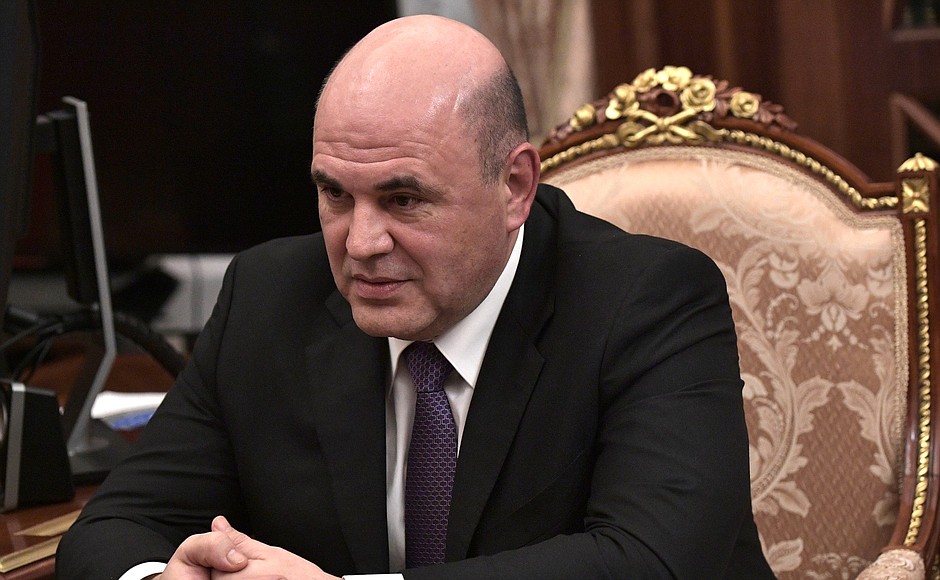
Russian Foreign Minister Sergey Lavrov is attending the fourth ministerial conference of Afghanistan’s neighbouring countries on April 13 in the Uzbek city of Samarkand to try to find a solution to the Afghan problem.
Russia and the Central Asian states are seeking to uncork the southern trade route out of Central Asia that is currently blocked by instability in Afghanistan.
Since extreme sanctions were imposed on Russia it has entered into a process of re-orientating its trade to the South and East. In theory it could redirect some of its oil and gas exports to the huge markets of South Asia, starting with Pakistan and India, by running pipelines and improving rail and road links, but the infrastructure has to run via Afghanistan, which has been in chaos since the Taliban took back control of the country last year.
The Central Asian states are very interested in the same idea, but have made little progress. Uzbekistan has taken a lead on the Afghan question with President Shavkat Mirziyoyev calling on the UN to set up a special group to deal with the problem during his inaugural UN speech in September 2020. The Uzbek president had identified an unstable Afghanistan as Central Asia’s most pressing security issue long before the Taliban retook control in August 2021 and the war in Ukraine changed the geopolitical landscape in Eurasia from February 2022.
Uzbekistan has been trying to help its neighbour improve its economy. For instance, it signed an electricity transition deal to provide the country with power. There are other even more ambitious projects for a transmission line that would transit Afghanistan and provide power to northern Pakistan, where there is an electricity deficit. There are also plans for a trans-Afghan railway line from the northern Afghan city of Mazar-i-Sharif, near the border with Uzbekistan, to Pakistan. The railway line could even be extended to ports on the Indian Ocean.
However, more recently relations between Kabul and Tashkent have soured. One sore point with the Afghans is that Uzbekistan shut down power exports to Afghanistan when it was hit by severe winter cold and a shortage of generation capacity early this year.
China is also interested in opening up transit via Afghanistan as part of its Belt and Road Initiative (BRI) to build transport links between Asia and Europe and other continents. Beijing recently signed off on the first large mineral extraction project in Afghanistan to tap that country’s significant mineral resources. A US report a few years ago identified over $1 trillion worth of mineral deposits in the country, including large amounts of lithium, essential for making electric vehicle (EV) batteries.
Russia was also quick to cosy up to the new Taliban leadership and signed off on deals to provide the embattled country with oil, gas and wheat in September last year to help stabilise the crisis-pressured government.
Work to bring Afghanistan into the fold is ongoing as Russia starts to reform the Eurasian Economic Union (EAEU). Previously the idea of the EAEU was to provide a partner to the EU in creating President Vladimir Putin’s long-standing foreign policy goal of forming a single market that would stretch “from Lisbon to Vladivostok.” Since the war in Ukraine has led to a breaking of relations and trade with Europe, the EAEU has been retasked with building up trade ties with the Global South, making transit via Central Asia key.
Likewise, China is already moving on to its second phase of developing its foreign relations by building up the Shanghai Cooperation Organisation (SCO) in Eurasia, which overlaps with the EAEU, by improving trade, economic and cultural ties. That makes the EAEU, SCO, Russia, China and the states surrounding Afghanistan natural partners.
Lavrov’s meetings in Samarkand on April 13 will include representatives from Russia, Iran, China, Pakistan, Tajikistan, Turkmenistan and Uzbekistan. The agenda will focus on discussing steps to facilitate the political settlement process in Afghanistan, and stabilise the humanitarian, social and economic situation in the country.
Russia has suggested creating a five-party “G5” platform to resolve Afghan’s problems, bringing together Russia, China, India, Iran and Pakistan. President Putin has expressed concern that the situation in Afghanistan has not improved since the withdrawal of US troops in the summer of 2021, and “international terrorist organisations are increasing their activities in the country.”
Russia and the Central Asian states, especially Uzbekistan and Kyrgyzstan, have suffered from terrorist attacks originating in Afghanistan. The heroin trade flowing from the Afghan poppy fields is also a problem for all the countries along the path of its export to Europe, largely via Kyrgyzstan, Kazakhstan and Russia.
Putin also said that Russia is worried about “non-regional countries” building and expanding infrastructure facilities under the guise of fighting international terrorism, in a reference to US meddling in the region, “without doing anything required for a genuine fight against global terrorism.”
The ministerial conference will also focus on regional economic integration and the implementation of transport and energy projects with Kabul, based on previous agreements. Last year, the Taliban’s interim government, which Russia still officially designates as a “terrorist organisation banned in Russia,” said it would provide security and push hard to get the trans-Afghan railway project completed.
The parties may also discuss gas supplies, with Russian Deputy Prime Minister Alexander Novak stating last December that Russia might send its natural gas to Afghanistan and Pakistan.
After the US announced its plans for a troop pullout from Afghanistan in 2021, the Taliban rapidly took control of the country, easily defeating the US-backed Afghan national army, which scattered to the wind. In August 2021, Taliban fighters captured Kabul without any resistance, and Afghan President Ashraf Ghani stepped down and fled the country. The US completed its troop withdrawal in September 2021, ending its almost 20-year presence in the country.
The national flag of Finland was raised for the first time at the headquarters of the North Atlantic Treaty Organisation in Brussels on Tuesday, which also marked the 74th anniversary of the western alliance. It signifies for Finland a historic abandonment of its policy of neutrality.
Not even propagandistically, anyone can say Finland has encountered a security threat from Russia. This is an act of motiveless malignity toward Russia on the part of the NATO, which of course invariably carries the imprimatur of the US, while being projected to the world audience as a sovereign choice by Finland against the backdrop of Russia’s intervention in Ukraine.
Quintessentially, this can only be regarded as yet another move by the US, after the sabotage of the Nord Stream gas pipelines last September, with the deliberate intent to complicate Russia’s relations with Europe and render it intractable for the foreseeable future.
On the other hand, suffice it to say, this will also make Europe’s security landscape landscape even more precarious and make it even more dependent on the US as the provider of security. The general expectation is that Sweden’s accession to NATO will now follow, possibly in time for the alliance’s summit in Vilnius in July.
In effect, the US has ensured that the core issue behind the standoff between Russia and the West — viz., the expansion of the NATO to Russia’s borders — is a fait accompli no matter the failure of its proxy war in Ukraine against Russia.
Responding to the development, Kremlin spokesman Dmitry Peskov warned on Tuesday that Finland’s NATO membership will force Russia “to take countermeasures to ensure our own tactical and strategic security,” as Helsinki’s military alignment is an “escalation of the situation” and an “encroachment on Russia’s security.”
On April 4, the Russian Foreign Ministry stated that Moscow “will be forced to take retaliatory measures of both military-technical and other nature in order to stop threats to our national security.”
Finland’s NATO membership would extend NATO’s frontline with Russia by 1,300 kilometers (length of border Finland shares with Russia), which will put more pressure on Russia’s northwestern regions. Don’t be surprised if NATO missiles are deployed to Finland at some point, leaving Russia no option but to deploy its nuclear weapons close to the Baltic region and Scandinavia.
Suffice to say, the military confrontation between NATO and Russia is set to deteriorate further and the possibility of a nuclear conflict is on the rise. It is hard to see Russia failing to preserve its second strike capability at any cost or prevent the US from gaining nuclear superiority, and maintain the global strategic balance.
The focus will be on the upgrade of defensive nuclear capabilities rather than on conventional forces, compelling Russia to demonstrate its nuclear strength. Russia has already front-loaded its deterrent by deploying tactical nuclear weapons in Belarus in response to the UK’s irresponsible decision to provide depleted uranium munition to Ukraine. It is all but certain that Russia will also double down in the Ukraine conflict.
Meanwhile, the US has for long deployed tactical nuclear weapons in European countries, including Belgium, Germany, Italy, the Netherlands and Turkey, which means the US has long deployed its tactical nuclear weapons at Russia’s doorstep, posing a significant threat to Russia’s national security. Russia’s deployment in Belarus is aimed at deterring the US’ potential provocations, anticipating what is about to happen.
Belarus’ geographical location is such that if Russian tactical nuclear weapons are deployed there, it will have a huge strategic deterrent effect on several NATO countries such Poland, Germany, the Baltic states and even the Nordic countries. A vicious cycle is developing, escalating the nuclear arms race and ultimately developing into a doomsday situation that no one wants to see.
The big picture is that knowing fully well that the situation could become extremely dangerous, the US is nonetheless relentlessly piling pressure on Russia with the objective of perpetuating its hegemonic system. Ronald Reagan’s strategy to use extreme pressure tactic to weaken the former Soviet Union and ultimately drag it down, is once again at work.
In immediate terms, all this would have negative consequences for the conflict in Ukraine. It is plain to see that Washington no longer seeks peace in Ukraine. In the Biden Administration’s strategic calculus, if Russia wins in Ukraine, it means NATO loses, which would permanently damage the US’ transatlantic leadership and global hegemony — simply unthinkable for the Washington establishment.
Without doubt, the US-NATO move to persuade Finland (and Sweden) to become NATO members also has a dimension in terms of geoeconomics. The alliance’s secretary-general Jens Stoltenberg recently stated, “if Finland and Sweden join the alliance, NATO will have more opportunities to control the situation in the Far North.” He explained that “both of these countries have modern armed forces that are able to operate precisely in the harsh conditions of the Far North.”
The US hopes that the “expertise” to operate in the Arctic and sub-Arctic conditions that Sweden and Finland can bring into the alliance is invaluable as a potential game changer when a grim struggle is unfolding for the control of the vast mineral resources that lie in the Far North, where Russia has stolen a march so far.
As polar ice melts at unprecedented speed in the Arctic, the world’s biggest players are eyeing the region as a new “no man’s land” that is up for grabs. Some recent reports have mentioned that moves are afoot for the integration of the air forces of four Nordic countries — Denmark, Norway, Finland and Sweden — undertaken with an undisguised anti-Russian orientation.
In military terms, Russia is being forced into sustaining the heavy financial burden of a 360 degree appraisal of its national security agenda. Russia has no alliance system supplementing its military resources. In an important announcement in February, paying heed to the straws in the wind, the Kremlin removed from its Arctic policy all mentions of the so-called Arctic Council, stressing the need to prioritise Russian Arctic interests, and striving for greater self-reliance for its Arctic industrial projects.
The revised Arctic policy calls for the “development of relations with foreign states on a bilateral basis,… taking into account the national interests of the Russian Federation in the Arctic.” This came days after a US state department official stated that cooperation with Russia in the Arctic was now virtually impossible.
The Ukraine tragedy is a twofold thing. First, most obviously, there is the tragedy of the people killed or displaced, the damage to an already fragile economy and the widespread destruction of Ukraine’s physical infrastructure. Second, there is the tragic fact that it could all have been prevented.
This latter is an unfashionable point of view, to say the least. Inevitably, understandably, the daily diet of news in the Western press serves up images and reports of a grim, attritional struggle for ruined towns and territory, with back-and-forth “success”, a prevailing narrative of the heroic David (Ukraine) stoutly resisting the invading Goliath (Russia). The incremental nature of the war’s progress and the weapons with which it is fought suggest nothing less than the trench warfare of World War One.
For those of us who raise the tattered flag of the Minsk Agreements of 2014-15, who try to argue that had the drumbeat of diplomacy been heard instead the drums of war, there is the routine countervailing argument that Russia’s behavior in its former sphere of influence is incorrigible, its appetite insatiable. There is also a collective retreat from Minsk, including by one of its architects, Angela Merkel, who admitted that these substantive proposals to end the conflict were nothing more than a ruse to buy time for Ukraine to gird its loins for battle—with massive NATO support, of course.
This generic indictment of Russia was recently advanced in an opinion piece by Robert Kaplan in the April 3rd edition of The Wall Street Journal. Titled, “Putin’s Shakespearean Demons”, Kaplan argument may be summarized thus, through the following series of quotes from his article:
1. “Ukraine is engulfed by Russia on the north and east, its history and language entwined with its neighbors.”
2. “The geopolitical argument that Mr. Putin invaded Ukraine because the North Atlantic Treaty Organization was expanding completely disregards the Russian leader’s Shakespearean demons” [Othello’s jealousy? Macbeth’s overweening ambition? Lear’s folly? Kaplan does not fully explain the Bard’s “Demons” trope.]
3. “Given Putin’s paranoia, isolation and delusions of grandeur, the question arises: would Europe today be at peace with Putin’s Russia had NATO not expanded East after the Cold War and had there been a Western guarantee of recognizing Russian interests in Ukraine? Certainly not”.
4. Instead, Eastern Europe would be “vulnerable to Mr. Putin’s mischief”….. [he] would be “breathing down the neck of every country between Berlin and Moscow”.
5. “NATO and the EU have created many durable bureaucratic states with reliable militaries in Central and Eastern Europe able to do their part to withstand Russian aggression. The West has grown in both economic and political might. Thus the business of World War II and the Cold War has been closed.”
6. “NATO expansion throughout Central Europe was virtually inevitable because of the decisive and one-sided way the Cold War ended.”
Kaplan’s narrative is worthy of John Le Carre, but it is one that simply doesn’t hold up to scrutiny. First, there is the accusation that Putin’s Russia is an omnivorous beast, with “a belt of democratic states” from the Baltics to Ukraine as its prey. The fact is that Vladimir Putin has been [de jure or de facto] calling the shots in Moscow for more than twenty years, and, until Russia’s negotiated lease on the Sevastopol naval base was threatened by the Ukrainian Rada in 2014, it showed no imperial, neo-Soviet, expansionist ambitions toward Ukraine or anywhere else. Russia’s one foreign intervention–in Georgia’s Russian-majority South Ossetia in 2008–came after an attack on the region by Georgian government forces, documented by an EU report on the conflict. The early 90s-era warnings of Russian adventurism in the Baltics were spurious and continue to be so.
Second, Kaplan is absolutely correct in describing the “entwining” of Russian and Ukrainian history, language and culture. It is precisely because of this fact that the proposal at the 2008 NATO summit to extend invitations for membership to Ukraine and Georgia was so incendiary [although, as already noted, Russia took no preventive action, even though such expert voices as the former U.S. ambassador to Moscow and current CIA director, William F. Burns, warned that Ukraine in NATO was a “red line” for Russia.]
Third, and building on the unique bond between Russia and Ukraine [undervalued by us because we have nothing approaching this attachment to any other country on the planet] one asks: We in the United States have what we see as a legitimate sphere of interest [since 1823, no less]; is Russia as a great power to be denied one? The question is all the more salient when one considers both history and geography: The USA has to its north and south friendly neighbors, and to its east and west vast expanses of water. From North Korea in the East to the proximity of the greater Middle East on its Western flank, Russia borders some pretty rough neighborhoods. Throw in the odd invasion or two in modern history from the West, and we might begin to understand what Kaplan describes as Russian/Putin “paranoia”.
Fourth—and I believe most telling in countering Kaplan’s argument—if Putin was so dead set in swallowing Eastern Europe whole, why did he—circa 2010—raise the question of Russia’s application for membership of both NATO and EU? Similar requests came from both his immediate predecessors, President Yeltsin and Secretary Gorbachev; all three were, of course, summarily rebuffed. And if, as Kaplan says, “NATO expansion throughout Central Europe was virtually inevitable because of the decisive and one-sided way the Cold War ended”, why did the George H. W. Bush administration and its German ally reassure Gorbachev otherwise?
Fifth, Kaplan’s view of the current state of affairs is roseate. Quite apart from the ghastly consequences for Ukraine of standing up to Russia rather than following through on Minsk [and there have been proposals for returning to the negotiating table, such as that offered by Turkey’s Erdogan a year ago], Kaplan overstates two points: One, the notion that what were once described as “old” and “new” Europe had been living in perfect, democratic, rule-of-law comity. He does cite the exceptions of Hungary and Bulgaria, but Poland too deserves an asterisk for its recent actions concerning the judiciary. Second is his interpretation of the West’s economic and political ascent (“Thus the business of World War II and the Cold War has been closed” is echoic of the premature “End of History”). Challenges abound to the U.S.-led articulation of a global conflict between a democracy “good” and a dictatorship “evil”—just consider recent developments in the greater Middle East, a China-brokered handshake between Iran and the Saudis; Saudi Arabia possibly joining the BRICS group; and the rise of the Shanghai Cooperation Organization. Russia, China and Iran we may see as intractable adversaries to varying degrees; but in the Wall Street Journal of April 4, Walter Russell Mead offers a lengthy list of states that we must engage constructively in countering these opponents, and whose democratic credentials are flimsy, in some cases nonexistent.
Finally, to return to Kaplan’s image of a Ukraine “engulfed” by Russia. Turn the clock back a year, before a tragic and preventable war. Mr. Kaplan, I’ll see your Ukraine surrounded by Russia and raise you Russia surrounded by NATO-armed states from the Baltics to Turkey [and, if we had our way, Ukraine and Georgia.] And now, of course, we can add Finland. To repeat: the war is a humanitarian tragedy, and Russia’s invasion is to be deplored.
The Russians took an immediate interest in the intelligence leak scandal in the USA because so many of the documents deal with the readiness of their own and Ukrainian military forces for the long awaited “counterattack” by Kiev which may be decisive in the outcome of the war. They were instantly asking whether there was not some intrigue here, an attempt to loll them into overconfidence given that the situation of the Ukrainian side was portrayed in these documents as unpromising to dire, especially as regards air defense and supply of munitions. However, on close examination, the intelligence experts who have appeared on Russian state television now are saying they have no doubt the documents are genuine and there was no reason to believe they were issued as disinformation for Moscow. Now they have redirected their attention to other aspects of the leak.
The first among these questions being asked in Moscow is: what was the intent of the leakers who are assumed by consensus to be Americans from within the 1,000 or so persons who had access to these top secret documents online, on specially programmed computers. In this matter, I was particularly impressed by one explanation that was set out at length by a panelist on yesterday’s Evening with Vladimir Solovyov show. The leak is viewed as an attempt to discredit Joe Biden. To discredit the biological Joe Biden and also what the Russians are calling the “collective Joe Biden,” meaning the team of assistants who do the thinking for Joe and feed him his lines to read.
The documents leaked show that the Biden Administration, through Lloyd Austin, through Antony Blinken is lying day after day about the real situation of the Ukrainian military. Even yesterday Austin spoke on camera after talking to his Ukrainian counterpart Reznikov and insisted that everything is just fine in Ukraine, that they have received the assistance they need and are ready to proceed with the counter-offensive.
The next level of analysis of the documents that I hear from the Russian intelligence experts and also from their counterpart in Israel Yakov Kedmi, who appears regularly on the Solovyov show, is that the documents demonstrate the vast flow of information coming in to the CIA every day from their illegal espionage, wiretapping and the like. They also demonstrate the low level of analytical competence of the CIA and other US intelligence analysts who are poring over this information flow. This comes out from the uncritical acceptance by the American intelligence reports of casualty figures and other highly relevant statistics they are receiving solely from one source, Kiev, and are passing on to the top leadership at face value.
The normal, historical and universal problem with intelligence is that the sources and summaries are good but they are wasted on incompetent political leaders who pay no attention or do not comprehend what they are being told by their subordinates responsible for intelligence. The American situation seems still more damaging: not only are the political bosses who are receiving the intelligence dimwits but the information being handed to them is of poor quality.
The Russians are not at all pleased with this situation. It strengthens the argument on their side by those who say that insanity rules in the USA, that you have to be prepared for every eventuality in escalation of the war.
Gilbert Doctorow is a Brussels-based political analyst. His latest book is Does Russia Have a Future? Reprinted with permission from his blog.
Author’s Note: I had been intending to publish an article on Soviet operational art this week, but the emergence of the leaks diverted my attention and led to this article instead. We’ll return to military history shortly.
Another winter has ended, and spring has again arisen on the war in Ukraine. Amid the thaw and attendant mud, Russian forces – including the indominable Wagner Group – have pushed the Ukrainian grouping in Bakhmut to the brink, with the AFU now clinging its last defensive toehold in the city. Bakhmut has become the largest battle of the 21st century, and is now entering its climactic phase.
Nevertheless, battlefield developments have been upstaged to some extent by the apparent leak of classified US military intelligence documents which provide a sweeping view into the inner workings of the Pentagon’s war.
I am not entirely clear on Substack’s content policies as it relates to such documents. It is certainly too late for the US Government to contain the leak, as the images have by this point been shared, screenshotted, and downloaded countless times, but that does not preclude an attempt to limit its circulation via a whac-a-mole campaign of content deletion. In any case, desiring neither to violate US law nor run afoul of Substack’s content rules, prudence dictates that I ought not embed the images directly in this post, but they are not hard to find – the “Rus Fleet” Telegram channel has them up at the moment, for example. Use your own discretion.
While I will not be posting the leaked documents either here or on twitter, I would like to talk about them. If they are indeed authentic (and it appears that they are), they offer important insight into force generation and combat power in Ukraine – and perhaps even more importantly, into the intelligence framework that the Pentagon is working with. None of the items adduced paint a particularly rosy picture for either the AFU or its benefactors on the Atlantic seaboard.
A Brief History of the Leaks
Let’s briefly indulge in an overview of the leaked documents as such before we think about their contents. They take the form of photographs of physical pieces of paper from an American intelligence briefing. This implies that the particular nature of the breach is a leak (personnel with legitimate access to the documents illegally disseminating them to the public) rather than a hack (someone gaining illegitimate access through intrusion of one form or another). The pages have visible creases on them, and a hunting magazine can be seen on a table in the background. Many of the pages are marked for sharing with NATO allies, but some stipulate US eyes only.
The general impression is that an American folded the briefing documents up, put them in his/her/their/xer/xem/plur pocket (the American military is a Diverse and Inclusive institution, and the leaker could have any, all, or no gender), took the pages home and photographed them. It was almost certainly not a Russian asset – if the documents had been acquired by Russian intelligence, they would have kept it internal.
Now, the obvious question is whether the documents are real. There’s probably at least some rational basis to suspect a misinformation operation. All militaries engage in a range of intermingling intelligence (seeing what the enemy is doing), counterintelligence (hiding what you are doing), and misinformation (lying about what you are doing). Perhaps, one may muse, these documents were not leaked at all, but indelibly planted on the internet to mislead.
I was originally rather agnostic about the documents’ authenticity, but I have come to the view that they are genuine (let’s rate it a 90% likelihood of authenticity and a 10% likelihood of forgery or misinformation). My reasons are essentially as follows:
-The timeline of events suggests an authentic leak. While the documents only started to circulate widely in the last week or so, they were actually first posted to the internet (as best as I can tell) on March 1st – but nobody noticed, apparently. The documents didn’t attract mass attention until a pro-Russian telegram channel found them and reposted them after badly photoshopping the casualty estimates to show much lower Russian losses. Ironically, it was these falsified edits that sparked mass interest in the documents. To me, this suggests that the documents are not part of some sort of Pentagon misinformation campaign, because they essentially sat idle in the remote corners of a Minecraft Discord server for an entire month. If American intelligence wanted to circulate fake documents, one suspects they would have actually circulated them, rather than dropping them in an obscure corner of the information space and leaving them to languish.
-The documents have perfect internal consistency. The full leak includes dozens and dozens of pages which are totally consistent down to the level of delivery dates, inventory listings, and arcane unit identification. This goes even above and beyond the perfect use of acronyms and military symbiology. Creating these documents would be a colossal undertaking and would require both precise subject matter expertise and a mammoth amount of cross-referencing to prevent contradictions – unless, of course, the documents are genuine, in which case the material would be consistent because it is real.
-The documents are relatively low on actionable intelligence. They contain no planning details of Ukraine’s coming offensive operations and only hazy outlines of Ukrainian force dispositions. A ruse intended to deceive the Russians would be expected to contain highly actionable (but false) intelligence.
-Finally, both the government and the media are proceeding as if the documents and the associated security breach are real, and they are attempting to both limit the spread of the documents online and track down the source of the leak.
All of this to me suggests that these documents offer a genuine look into the Pentagon’s handling of the war. We can retain some measure of caution and doubt, but let us proceed on the presumption of their authenticity and think on what we can learn from them.
Ukrainian Force Generation
The most significant implication of the documents is simple: Ukraine’s combat power is significantly degraded, and in particular their mechanized units and artillery forces are in very rough shape.
The relevant material here in particular is a page entitled “US Allied & Partner UAF Combat Power Build”, which details the force generation, training, and equipment tranches that will create the mechanized package which Ukraine will use in its spring offensive. The plan calls for a force of twelve nominal brigades, nine of which will be equipped by NATO and three internally generated by the Ukrainians. The leak does not offer insight into the three Ukrainian brigades, but the intended complement of the nine NATO brigades is meticulously listed).
All told, the combat power build calls for these brigades to field a total of 253 tanks, 381 Infantry Fighting Vehicles, 480 Armored Personnel Carriers, and 147 artillery pieces. This implies that these will be brigades in name only, and will in fact be far understrength. Parceling these systems out across nine brigades will give an average strength of a mere 28 tanks per brigade, along with some 95 IFVs/APCs and 16 artillery tubes. Compare this to a US Army Armored Brigade Combat Team, which would have almost 90 tanks and almost 200 IFVs/APCs. An American Stryker Brigade (a lighter, rapidly deployable formation) would have about 300 Strykers – the Ukrainian 82nd Brigade is listed to receive only 90.
In combat power terms, therefore, these new brigades are going to be far understrength. Their tank strength, far from being full brigade level, amounts to less than an American armored battalion.
Another key aspect of the force build document is the training schedules. This document dates from the beginning of March, at which point five of the nine brigades were listed at “Training 0% Complete”. Only one of the brigades was more than halfway trained, rated at 60% complete. Despite this, six out of nine were scheduled to be ready by the end of March and the remainders by the end of April. This can only be achieved with significantly truncated training times, and these are detailed in the document. Leopard tank training, for example, is listed at only six weeks. Just for context, American tankers can pencil in 22 weeks of training for the Abrams.
The overall picture, therefore, is rather foreboding for Ukraine. The leaked documents do not give us insight into the three brigades that Ukraine is expected to generate with their indigenous assets, but the nine NATO trained and equipped brigades are slated to be significantly understrength and manned by personnel who are receiving a hugely accelerated training course. These brigades will almost certainly need to be deployed in groupings to be capable of the requisite combat tasks.
An ancillary but important note at this point is the fact that, as best we can tell from these documents, Ukraine’s prewar tank park is almost completely gone. Ukraine went to war with about 800 of its workhorse T-64, but the NATO combat power build notes only 43 now on hand. There are others, of course, that are currently being operated by Ukrainian frontline units, but the build plan indicates that Ukraine has virtually none in reserve to equip this vital attack package, on which all their hopes will depend.
Meanwhile, a separate element of the leak paints a similarly dismal picture of Ukraine’s ranged fires. Buried on a page marked “NOFORN” – which means No Foreign Nationals, even allies, are supposed to see it, is a logistics table showing 155mm shell deliveries and expenditures. This bit is rather shocking.
We have known for quite some time that Ukraine is facing a critical shell shortage, but the leaked documents reveal just how acute this issue is. Ukraine’s usage rate is very low right now – the report claims only 1,104 shells had been expended in the previous 24 hours – compare this to the 20,000 or so shells that the Russian army is firing on a daily basis. Even more alarming for Ukraine is the note that they have only 9,788 shells on hand.
Even with a low burn rate that leaves the AFU massively outgunned, they have enough on hand to sustain combat for a little over a week, and they rely on a trickle of deliveries from the USA to keep these stocks stable. The report noted a shipment of 1,840 shells departing in the next 24 hours. Batches of this size are obviously insufficient for Ukraine to build up its stocks, and can only serve to backstop and replenish daily expenditure. There is no possibility of America quickly ramping up the size of these deliveries, because a mere 14,000 shells are produced per month. US officials hope to get this number up to 20,000 this year, but this is still below Ukraine’s current burn rate.
The implication is pretty straightforward. Ukraine is on a shell ration that leaves it unable to offer more than token fire, and it will likely have to live with this shell ration for the duration of the war.
The overall picture of Ukrainian combat power is atrocious. Their overall combat effectiveness faces a hard ceiling due to systemic shell shortages, and the mechanized package slated for the spring offensive is going to be far less potent than advertised. Those nine NATO-created brigades will have the striking power equivalent of (if we are being generous) perhaps four genuine full strength brigades, augmented by three internally generated Ukrainian brigades of dubious quality. Ukraine’s hopes for a glorious assault on the Russian land bridge to Crimea will rest on, at most, 400 tanks and perhaps 30,000 men.
Should this force dash itself to pieces against the well prepared Russian forces in the south, an important question would present itself. If this was the best force that NATO could generate for Ukraine, what will the second team look like? Will there even be another force? This understrength and undertrained mechanized package may be Ukraine’s last serious roll of the iron dice.
The American Analytic Framework
While the leaked documents certainly do not paint an encouraging picture of Ukraine’s force generation, they also offer a similarly shocking glimpse into the state of American military intelligence.
One of the things that immediately jumps out when one looks at the operational reports (the pages showing detailed situation maps) is that the Pentagon apparently has far more information on Russian dispositions than on Ukrainians units. Russian units are strongly accounted for – their locations are precisely marked, unit designations are identified, there are assessments as to which Russian units are combat capable or not, and there are very specific estimates of Russian frontline strength (IE, 23,250 men on the Zaporizhzhia axis and 15,650 men on the Kherson axis).
In contrast, Ukrainian units are not given combat capability designations, their locations are more generally indicated, and there are huge ranges on the assessed manpower (10,000 to 20,000 men on the Donetsk axis – an enormous margin of error!) This, incidentally, is another reason why I think the documents are genuine. If the intent was to put forth disinformation to confuse or deceive the Russians, one would expect actionable (but fake) intelligence about Ukrainian deployments – yet there is no such thing here. Ukrainian strengths and dispositions are presented vaguely and inconclusively, so the only thing the Russian army might extrapolate from this report is that the Americans don’t really know what’s going on with Ukrainian forces.
Indeed, this is the inescapable conclusion. The Pentagon does not seem to have a strong sense of Ukrainian unit strength, location, or activities. They also list their assessed Ukrainian KIA at a mere 16k-17.5k. This is an absurdly low number – where could they have gotten it? In fact, it is a direct copy-paste of the casualty numbers reported publicly by the Ukrainian Ministry of Defense.
The fact that the Pentagon does not seem to have any independently generated intelligence about the Ukrainian army is shocking. They seem to have be relying on Ukrainian propaganda numbers and publicly available deployments data, like the open source Deployment Map. For the record, this is not a knock on the Deployment Map site – I use this resource frequently and find it very useful. The point, of course, is that the Pentagon, with its nearly unlimited resources, does not seem to have any unique insight or intelligence streams of its own in this regard. They gesture vaguely at the map and mutter, “there’s probably a brigade or two in this area, maybe 8,000 men. Or 4,000. We don’t really know.” In fact, all of their axis strength assessments for Ukraine have a 100% margin of error (that is, the upper limit of the range is double the lower limit).
One can only conclude that the tail is wagging the dog. The Ukrainians are able to extract material, training, and cash from the west, but there is little accountability or honest information flow in return. There were hints of this earlier in the war – that Ukraine is a sort of black box which sucks in resources but does not communicate honestly in return; American officials have complained (and Ukrainian leaders have confirmed) that Kiev simply does not tell DC all that much. Apparently this remains an issue well over a year into the conflict. One particularly alarming footnote in the leaked documents states:
“We have low confidence in Russian (RUS) And Ukrainian (UKR) attrition rates and inventories because of information gaps, OPSEC and IO efforts, and potential bias in UKR information sharing.”
Good grief.
One other issue is the Pentagon’s estimate of Russian vehicle losses. It seems that here too they are copy-pasting external estimates. In this case, they appear to be using the “documented” vehicle losses from the Oryx project. Oryx is… interesting. In theory, they are tabulating visually documented equipment losses, which sounds very scientific and hard to dispute. Furthermore, the sheer mass of pictures they have accumulated is something of a verification deterrent – nobody really wants to sort through thousands of pictures and keep score.
However, Oryx has been audited and found wanting. There are a variety of issues that cause them to overcount Russian losses, in some cases drastically. These include double counting (multiple pictures of the same vehicle), wrongly identifying Ukrainian vehicles as Russian losses, counting as lost vehicles that have no apparent damage, accepting images that have obviously been photoshopped, and so on. In one particularly egregious case, a picture of a Ukrainian Msta howitzer had its crew photoshopped out and was marked as destroyed Russian artillery piece. I mean, look at this:
According to Oryx this is a destroyed Russian howitzer, and not a very badly photoshopped Ukrainian gun. Please ignore the conspicuous shadow.
The issue is essentially that Oryx gathers data passively, by having people on social media send them pictures, which they then look at and mark as verified losses. Social media, however, has a pro-Ukrainian bias which leads to a flood of allegedly destroyed Russian vehicles coming in, and Oryx seems to have a weak filter that uncritically verifies almost all of these claims. As a result, Russian losses are drastically overcounted, and Ukrainian losses are undercounted.
Okay, so what? Let Oryx run their little counting project, no harm done – right? Apparently not. The Pentagon’s leaked documents claim 6,000 assessed vehicle losses as of March 1, which lines up with Oryx’s claims (now up to 6,486 destroyed vehicles as of April 10). This is a strong data point confirming suspicions that the American Defense Department is increasingly outsourcing intelligence to OSINT (Open Source Intelligence). It is fairly clear at this point that there is an incestuous amplification between OSINT and the American defense and political establishment. When Oryx counts absurd photoshop hack jobs as destroyed Russian hardware, this becomes a meaningful data point feeding the Pentagon’s battlefield assessments.
It would seem that, much like in the case of Ukrainian force generation and losses, the Pentagon simply does not have any sort of robust or meaningful insight of its own. There would seem to be no independent intelligence streams at work here – only a mindless regurgitation of Ukrainian MOD propaganda numbers and dubious open source projects like Oryx. The American military increasingly seems to be a hollowed out simulacrum of its past glories, decaying behind a façade of shiny machines and bloated budgets – a trillion dollar technobureaucratic jobs program coasting on the residual patriotic fumes of red state American boys.
It has long been apparent that the Kiev regime has no real plan, no firm path to victory, and only a tenuous and unfriendly relationship with reality. Far more terrifying is the thought that the Pentagon is much the same.
Air Defense at the Brink
One last major revelation from the leak is the greatly degraded state of Ukrainian air defense. Very simply, Ukraine is quickly running out of munitions, especially for its critical S-300 and BUK systems, and it can only endure two or three more wave strikes before breaking completely.
Air defense systems can be complicated to talk about for people who aren’t familiar with the nomenclature. This is because there are a large number of different systems required for a modern air defense, which must be “layered” with different systems that intercept targets at various altitudes, phases of flight, and trajectories. The conversation can quickly become even more muddled because the launch systems have both a Russian designation and a NATO designation, and their munitions have different designations still – just for example, the air defense system which the Russians call the S-300 is designated the SA-10 by NATO, and it fires a variety of different interceptor missiles which have their own names, like the 9M83. Multiply this by the many different types of air defense systems currently in use in Ukraine, and you can see how it can easily decay into a morass of acronyms and serial numbers.
In any case, the key thing to understand about air defense systems is the layering aspect – if one node in the layer fails, not only does one lose full spectrum coverage, but the burn rate on the remaining systems increases because they are now bearing an undue load. Ukraine is now almost completely out of interceptors for the S-300 and BUK systems, which comprise almost all of its medium to long range defense. At the current burn rate, they are projected to run out by the first week of May and have had to make hard choices about where and what to defend. There is no prospect of acquiring more interceptors for these systems because they are manufactured in Russia.
To backstop these capabilities, NATO has been rushing its own systems to Ukraine and providing crash course training. What is notable, however, is that NATO is opting to send Ukraine new systems. Germany, for example, sent Ukraine four brand new IRIS-T systems in October. This was a cutting edge weapon in its first run out of the factory. The downside, of course, is that because it is new, there are no deep stockpiles of munitions from past production runs to call on – therefore, surprise surprise, the leaked Pentagon documents claim that Ukraine is already out of IRIS-T interceptors.
The leak furthermore revealed that Ukraine will be outfitted with two newer NATO systems – the American-made Patriot PAC-3 and the Aster 30-SAMP/T (I apologize for this horridly long designation, but I didn’t name the blasted thing) which is a joint Italian-French creation.
Here’s the issue. The US Department of Defense only purchases 230 PAC-3 interceptors per year, and the new procurement schedule does not ramp this number up at all. The Aster system is just now coming online, and Italy and France have contracted to have 700 missiles delivered in the coming years.
What all of this means is fairly straightforward: the Pentagon’s plan to shore up Ukrainian air defense will force NATO to dip into its own stocks very soon, and we will see the artillery situation repeated with air defense interceptors. There simply is no surplus or large scale production to tap into to supply Ukraine; they can only be propped up by directly eating away NATO’s own stocks. All of this occurs at the same time the Russian Air Force is becoming more and more assertive, using new glide bomb conversion kits to deliver colossal FAB bombs from safe distances.
Conclusion: Asleep at the Wheel
At first glance, the worst thing about this remarkable leak is the fact that it happened. This is a bewildering and embarrassing breach; an American citizen seems to have simply walked out with highly classified documents, which were then permitted to sit on a Minecraft Discord server for a month without anyone being the wiser. One must wonder how, and perhaps even more importantly why someone would do this.
Yet the leak as an act of subterfuge or treason is less significant than what the documents show. They show a conspicuous lack of alertness or long-range planning on the part of the Pentagon. American leadership seemingly has to contend with Ukraine as a black hole which sucks in money and munitions and gives nothing back; there is no strong sense of Ukrainian frontline strength, losses, or planning, and the Pentagon seems to lack any sort of independent intelligence streams.
Meanwhile, the material situation in Ukraine is degrading rapidly. Their artillery arm is running on fumes, with a miniscule shell ration and no reserve stocks to speak of, fed by a trickle of deliveries from the USA. Air defense is similarly worn thin, and the plan to repair this crucial umbrella threatens to quickly become vampiric and drain NATO interceptor stocks. The entire strategic logic of Ukraine has reversed. Rather than becoming a cheap way to drain the Russian military, NATO finds itself drawing down its own stocks to prop up the hemorrhaging Ukrainian state, with no clear endgame in sight. The proxy has become a parasite.
There does not seem to be any long term plan to sustain Ukraine’s war. The Pentagon’s procurement plans do not indicate any real intent to ramp up production of key systems. For FY2024, they have ordered a modest 5,016 GMLRS – the missiles launched by the famous HIMARS system. Ukraine has already fired nearly 10,000 GMLRS, making this yet another system where Ukrainian expenditures vastly exceed supply.
To salvage the situation, Kiev must place its hopes on one desperate dice roll with a mechanized attack package comprised of half-strength brigades wielding a disparate inventory of different vehicles and systems. This Frankenstein’s monster of armies – sewn together with a bevy of different tanks, IFVs, APCs, and artillery systems drawn from all corners of the NATO alliance, will likely be asked to smash through the heavily fortified and robustly manned Russian lines in the south, where it will be pulverized and become only so much more mulch for the Pontic Steppe.