Link here.
Glenn Greenwald: Durham Report Obliterates FBI for Russiagate Misconduct
Link here.
Link here.
By Ben Aris, Intellinews, 5/11/23
Russian President Vladimir Putin has introduced a bill to the Russian parliament that will pull Russia out of the Conventional Armed Forces in Europe Treaty (CFE), a key Cold War security deal that will heighten military tensions with the West further.
The document was made publicly available in the Duma’s database on May 10 and is the latest in a string of security deals to collapse. In December Putin suspended the new START missile treaty that he renewed in January 2021 in the first week of US President Joe Biden’s presidency. Last month Putin released a more aggressive foreign policy concept that does away with the idea of “co-operation” with the West and replaced it with a focus on Russia’s “national interests” and building tighter relationships with the non-aligned countries of Eurasia and the Global South.
The signing of the new START agreement was taken as a breakthrough at the time and a reversal of decades of the US policy of unilaterally withdrawing from the Cold War-era security deals. The process began under former President George W Bush, who unilaterally withdrew from the Anti-Ballistic Missile Treaty (ABM) in 2002. Subsequently the US withdrew from several other key missile control and mutual inspection treaties that contributed to Putin’s paranoia that Nato was preparing to attack Russia.
As a senator at the time, Biden was opposed to the US withdrawal from the ABM treaty, which he said would be “destabilising.” His decision to renew the START deal reversed the US policy of withdrawing from these deals and was warmly welcomed by the Kremlin, who immediately suggested that work begin on restarting the Intermediate-Range Nuclear Forces Treaty (INS) that prevents the placement of nuclear capable missiles near the mutual borders.
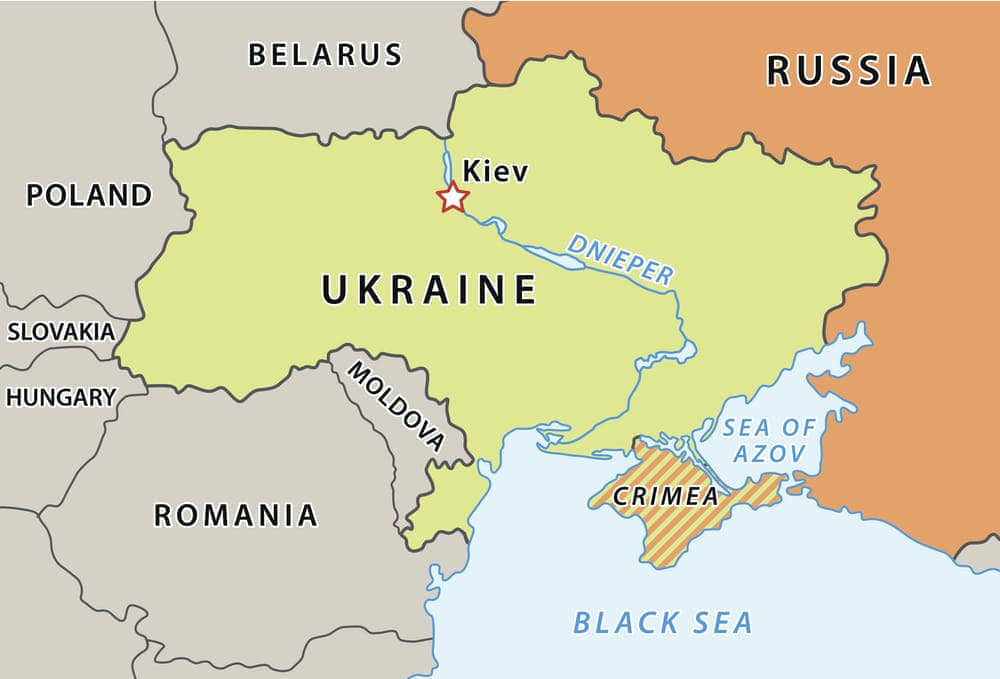
The CFE treaty is arguably the most important treaty of all, as while most of the other Cold War treaties govern the placement and use of missiles, the CFE treaty prevents the build-up of conventional forces at or near mutual borders. Russia already has hundreds of thousands of troops in Ukraine, which shares a border with EU and Nato members Hungary, Poland, Romania and Slovakia.
“Europe” is defined as including all the Russian territory up to the Ural mountains, which lie some 400 km to the east of Moscow. The treaty prevents Russia from building up conventional forces in the European part of Russia, but withdrawing from it would in theory allow Russia to amass large forces in its military bases in places like Rostov-on-Don in the south right on the Ukrainian border and in the Northern Military District that faces Poland and the Baltic States or the Crimea peninsula.
Sergey Ryabkov, Russian Deputy Foreign Minister, was previously appointed as Putin’s official representative for the consideration of the CFE treaty denunciation in Parliament. Ryabkov also played the lead role in the negotiations with the US in January 2021, together with his boss, Russian Foreign Minister Sergei Lavrov, in insisting on a “legally binding guarantee” from the West that Ukraine would not be allowed to join Nato. When those talks failed at the end of February Russia immediately invaded Ukraine.
According to the bill’s explanatory note, the treaty “was a sufficiently efficient and effective tool for the early 1990s to strengthen European security.” However, it has since become “largely outdated and out of touch with reality,” due to significant military-political changes, particularly those associated with Nato’s enlargement, Tass reports.
The note also highlights that the treaty has been suspended to “encourage a change in attitude from Western countries towards European security.”
The explanatory note claims that the situation surrounding conventional arms in Europe has deteriorated since 2007, when Putin made his famous speech at the Munich Security Conference warning Russia would “push back” if Nato’s eastward expansion was not curtailed. The note also accuses the United States and its allies of pursuing a policy of military confrontation with Russia, which “could have disastrous repercussions.”
Since its start over a year ago, the clash between Ukraine and Russia has steadily escalated, with Ukraine’s Nato allies providing increasingly powerful weapons. Initially reluctant to send any offensive weapons that could be constituted by the Kremlin as an attack on Russia via the proxy of Ukraine, those foibles have been steadily eroded. Earlier this year the West collectively agreed to send some 400 modern German-made Leopard II tanks to Ukraine; these are ostentatiously offensive weapons that can outgun any tanks Russia has.
Most recently, the UK crossed another line by announcing this week that it would provide Ukraine with long-range missiles with a range of some 300 km – an offensive weapon that can reach into Russia proper and take out targets like airfields and fuel and ammo dumps deep inside Russian territory.
The US has noticeably refrained from providing Ukraine with this type of missile so far and repeated this week that it has no plans to supply them. The highly accurate and deadly HIMARS missile system the US has provided to date includes rockets with a maximum range of 80 km, but the US has refrained from providing Kyiv with a more advanced version of the rockets with a range of more than 300 km.
In addition to nixing the CFE treaty, the bill states that Russia will terminate any related international agreements immediately. These include agreements on maximum conventional arms levels, signed in Budapest in 1990, and the document agreed among the State Parties to the CFE Treaty of November 19, 1990, in relation to the final document of the First Conference to Review the Operation of the Treaty on Conventional Armed Forces in Europe.
The CFE Treaty was signed in 1990 in the dying days of the Soviet Union and as part of the rapprochement between the USSR under Mikhail Gorbachev and his counterpart George Bush senior. It was further adapted in 1997 by Boris Yeltsin as relations continued to improve.
However, Nato countries did not ratify the adapted version and continued to abide by the 1990 provisions, resulting in Russia declaring a moratorium on implementing the terms of the treaty in 2007. On March 11, 2015, Russia suspended its participation in meetings of the Joint Consultative Group on the CFE Treaty, effectively ending its membership, with Belarus representing Russia’s interests since then, Tass reports.
Link here.
Lt. Col. Daniel Davis, 1945, 5/11/23
Ukraine has a complex reality it must face: U.S., UK, and EU senior leaders have voiced over the past few days strong support for Ukraine and their widely reported upcoming offensive. Reading some of the off-headline comments they’ve made, however, exposes the growing realization in the West that the hope of Zelensky accomplishing his stated objectives of driving Russia entirely out of Ukraine has a low probability of success.
A change in Western policy, therefore, is urgently needed – before Kyiv suffers more combat losses that are unlikely to alter the fact that the war will most likely end with a negotiated settlement.
Recent Developments in Ukraine War
In just the past few days, a bevy of senior Western political leaders have made strong declarations of support for Ukraine and the embattled country’s looming offensive. U.S. Secretary of State Antony Blinken, UK Foreign Secretary James Cleaverly, and NATO Secretary General Jens Stoltenberg have all issued strongly worded statements of support for Ukraine. The question, however, is whether the West can make good on its claims.
There is growing evidence that for the remainder of 2023, the West in general and the U.S. in particular likely do not have sufficient on-hand stocks of key weapons and ammunition to match what has been provided to Ukraine over the first 14 months of the war. On Tuesday, the United States announced yet another tranche of military support to Ukraine, this time in the form of a $1.2 billion package.
What is key about this promised support is that it was not given under the Presidential Drawdown Authority, but the Ukraine Security Assistance Initiative. The difference in the two programs is significant and has ominous implications for Ukrainian Armed Forces (UAF) operations through the rest of this year, especially following the outcome – win, lose, or draw – of the upcoming Ukrainian offensive.
Policy and Timing
The drawdown authority means Biden can order the immediate delivery of existing U.S. weapons and ammunition, meaning they can, in theory, be delivered to the battlefield within weeks. The security assistance initiative, on the other hand, means contracts must be written, publicized, undergo a bidding process, and then defense contracting companies that win bids must produce the ammunition or military gear, sometimes taking years to complete. This means Ukraine will not see the primary benefits of this latest round of U.S. support until at least 2024.
In an interview on May 5 with Euronews, EU Foreign Policy Chief Josep Borrell admitted “If I stop supporting Ukraine, certainly the war will finish soon,” because Ukraine would be “unable to defend itself” and would “fall in a matter of days.”
Cleaverly optimistically added that since the war’s start, the Ukrainian Armed Forces have “outperformed expectations.” However, he concluded in a sober word of caution, “We have to be realistic. This is the real world. This is not a Hollywood movie.” And it is here that Western leaders would be wise to consider the ramifications of this accurate statement.
It is clear and understandable that those in the West would be against Russia’s violent invasion of Ukraine and would desire to see Kyiv recover all its territories. If we were writing the script of a movie, that’s exactly how this story would end. But, as the British Foreign Secretary points out with painful accuracy, we have to make policy based on the most accurate, realistic, and sober recognition of ground truth and a lot less on our emotionally-charged preferences.
First, we must understand the enormity of the task facing the UAF on the eve of launching its offensive. As one who has fought in a large-scale offensive tank battle and trained over many years to conduct defensive operations in armored units, I can conclusively state that the defensive is the far less challenging and difficult form of war, and a combined arms offensive is the most difficult and complex.
Ukraine Strategy Evolves
Ukraine has suffered massive casualties over the first 14 months of this war. It is currently staffed with soldiers and leaders who have limited experience in war and only surface-level training in combined arms operations. One must not underestimate the challenge facing the UAF troops in a theater-level offensive that requires tight coordination of every unit over hundreds of kilometers, especially when no soldier, officer, or general in Ukraine has performed such a task of this magnitude.
Second, Russia has been preparing extensive defensive positions for more than half a year almost across the entire 1,000km front. According to some U.S. analysts, the Russians have designed and built an impressive series of defensive belts that would be difficult to breach even for fully-trained Western armies. To succeed, Zelensky’s troops will have to attack this elaborate defense with limited offensive air power, limited air defense, insufficient quantities of artillery shells, and a force that is equipped with a hodge-podge of modern and antiquated armor – staffed by a mix of conscripts with no combat experience and some officers and men with basic training by NATO instructors.
Some Ukrainian leaders are aware of the magnitude of the challenge. Ukrainian Defense Minister Oleksii Reznikov told the Washington Post last week that he was concerned that the “expectation from our counteroffensive campaign is overestimated in the world,” which he fears may lead to “emotional disappointment.” The level of success, he warned, could be as few as “ten kilometers.” What the Defense Minister didn’t address, however, is what would come next.
Even if Ukraine again exceeded Western expectations and captured 50 or 100km of territory, the number of casualties they will have suffered would be high under any scenario, leaving the Ukrainian Armed Forces weaker then than they are today. As described above, it is very unlikely the West could replace lost equipment or provide enough ammunition to sustain the Ukrainians for the rest of this year, and according to the Washington Post, in addition to the 300,000 troops Russia presently has in Ukraine, there are another 200,000 poised just across the border.
Once the Ukrainian offensive has played out – regardless of how successful they may or may not have been – a Russian counterattack would almost certainly follow. Ukraine would then be vulnerable, for many months, to such an attack as they would have even fewer artillery shells, air defense missiles, and troops. As this sober analysis makes plain, these are towering challenges that stand in the way of a victorious and decisive Ukrainian spring offensive.
If that is the case, then the chances of Zelensky ever accomplishing his objectives of forcing Russia out of Ukraine are highly improbable. The most likely outcome is that the war will continue on regardless of this offensive, but over time the conditions will continue tilting in Russia’s direction. Eventually, Kyiv will likely be compelled to seek a negotiated end to the fighting. The West should recognize this probability – now – and begin privately supporting such an outcome with Ukrainian officials. Refusing to take such actions in the hope that Ukraine produces a major battlefield victory could condemn Kyiv to a much worse deal later.
Sputnik, 5/14/23
Over 100 senior Western defense and foreign policy officials and experts gathered in Tallinn, Estonia May 12-14 to discuss the crisis in Ukraine. Giving Sputnik an exclusive inside look at the event, academic Joseph Siracusa said that with few exceptions, decision makers expressed support for a further dangerous escalation of tensions with Russia.
The Lennart Meri Conference in Tallinn wrapped up Sunday after three days of discussions on NATO-Russia proxy war in Ukraine, maritime security, cyber threats, the push to continue the expansion of NATO and the EU, sanctions, and the threat of a nuclear war.
The conference featured multiple big names, including US European Command and NATO Supreme Allied Commander Europe Christopher Cavoli, David Cattler, NATO’s assistant secretary general for intelligence and security, former US Deputy Secretary of State Stephen Biegun, European Council on Foreign Relations Co-Chairman Carl Bildt, former US Ambassador to Russia Michael McFaul, French presidential advisor Xavier Chatel, and the prime ministers of Estonia, Latvia, and Lithuania. A keynote lecture was provided by former US National Security Council director and presidential advisor Fiona Hill, a prominent Russia hawk in the Trump administration.
The event was also attended by Dr. Joseph M. Siracusa, a renowned US professor of history and international diplomacy who serves as dean of Global Futures at Curtin University, and is the author of more than 30 books on diplomacy and international security. Dr. Siracusa provided Sputnik with detailed impressions on the event, saying that from his vantage point, it consisted mostly of “hardline anti-Russian types” not in the mood for any sort of dialogue with Moscow or any desire to put a stop to the bleeding wound that is modern-day Ukraine.
“I was hoping that when I came here, there would be a number of sessions on how peace might be achieved – that is, how a ceasefire might be achieved and what can be done about it,” the scholar said.
Unfortunately, the academic, who spoke at the conference’s session on nuclear risks, said the event proved unforgivingly and unrelentingly anti-Russia, with most speakers operating under a “Ukraine can do no bad, Russia can do no good,” “Russia is…the total aggressor” principle, and “pouring gasoline” on the conflict by cheerleading its continuation and calling for an expansion of the US military footprint in Eastern Europe.
“They have intellectuals here from Oxford University, [Professor of European Studies] Timothy Ash, who is for retribution. He said that Russia must be defeated, Putin must be taken down, and the Russian nation should be subjected to the same kind of treatment as Nazi Germany after World War Two ‘so that it could never conduct aggression again,’” Siracusa said. “No one is interested in dialogue with Russia. No one is interested in a peaceful solution…They all endorse Zelensky’s 10-point ‘peace program,’ which includes the removal of Russian troops from Crimea and the Donbass. And of course, that is just a fantasy, that’s never going to happen.”
“If they adhere to Zelensky’s ceasefire, the war in Ukraine will go on for years,” the scholar warned. Even if the conflict continues for just six more months, that’s going to mean thousands more dead, the academic said. “I regard the loss of Russian lives as equal to the loss of Ukrainian lives. When you start losing lives over something that could have been solved diplomatically, what we have here is criminal negligence,” he added.
Drang nach Osten 2.0?
“There are very few people here who are looking to the future. They have entire sessions on expanding NATO. They see the next expansion of NATO to include Georgia, Moldova and Ukraine, and they believe that it’s very necessary. And as I say, no one’s looking for the way out of this,” Siracusa said.
The academic agreed with Sputnik’s assessment of the Tallinn conference being a kind of preview of the upcoming NATO Summit in Vilnius, Lithuania scheduled for July, and said that unfortunately, there is “unanimity” of support for the alliance’s expansion, “of bringing in more American troops in this part of the world,” and for bringing Ukraine in as a formal member after years of de facto, “invisible member” status.
The alliance’s attitude is very dangerous, Siracusa said, since the conflict in Ukraine started in the first place “because of the failure of the United States and the Russian Federation to have a serious discussion about the expansion of NATO.”
“I think it was a failure in diplomacy which caused the crisis. It’s a failure in diplomacy that’s prolonging the crisis. And nobody’s really looking for a way out here. They see Ukrainian victory as very important and inevitable. Now, that’s not going to happen. So they have sort of an unrealistic expectation about what Ukraine could do,” the academic believes.
Pointing to “delusional” notions expressed at the Tallinn conference about Kiev being “on the cusp of victory,” Siracusa warned that Kiev today is not in such a position, and that the only thing a continuation of the conflict will do is result in more death and destruction.
“Zelensky’s policy – and I regard him as a failed politician – the idea that they’re ‘holding out for a victory’ just means more deaths both on the Ukrainian side and on the Russian side. And I decry all these people who are dying for things that could have been solved last year [through diplomacy, ed.]. It seems to me that this is a profound, unnecessary waste of lives. I do not like the idea that people are more interested in further conflict than in resolving the problem. They live in a world of make-believe. They don’t know when it’s going to end or how it’s going to end. But what they’re dreaming about is a Russian defeat and a regime change and crushing rearrangement of Russian society,” the scholar said.
Conflict Rooted in Anachronism
Siracusa, a veteran historian who has studied the Cold War of the 20th century extensively, says the Ukraine crisis is tragic and nonsensical because the US failed to learn the lessons of the Cuban Missile Crisis of 1962 – a textbook case of how a conflict between nuclear superpowers can be resolved without going to war.
“The Cuban Missile Crisis was resolved by President John F. Kennedy and General Secretary [Nikita] Khrushchev. Khrushchev decided to withdraw the missiles and the United States pledged not to invade Cuba. My argument to these people is that President Biden never had an important discussion with President Putin before these hostilities began,” he said. “This war could have been avoided if Joe Biden had told [the Russian] president that NATO was not going into Ukraine, that there would be no advanced weapons systems on [Russia’s] borders,” Siracusa said.
From the academic’s perspective, the tensions between Washington and Moscow over NATO are tensions over an anachronism, because the alliance should have dissolved after the Cold War ended and the USSR and the Warsaw Pact alliance disappeared as potential threats to the West.
Siracusa was also struck by the willful ignorance of conference attendees regarding the Russia-Ukraine crisis and Russia’s role in the history of Eastern Europe in general.
“I would like to point out to these people that one of [the] greatest [Soviet] general secretaries, Leonid Brezhnev, was Ukrainian. It’s not as if these people discovered what it means to be in the Russian orbit. I believe that Russia has a right to friendly borders, because it is a large power and is entitled to neutrality on its borders, the same way the United States insists that Mexico and Canada have no major relationships with China or Russia today,” the academic said.
Russia and Ukraine have a shared heritage, Siracusa stressed, “but these people act like Russia came, you know, came from the dark side of the Moon. Like there’s no connection between Eastern Europe, Ukraine and Russia, when in fact, you’re all part of a shared history.”
The academic laments that Western policymakers and experts have made almost no attempt “to understand the motivation or the psychology of the Russian side of this conflict,” with Washington’s regional allies more concerned about the 2024 presidential elections and hoping that “America is going to come to the rescue.”
Siracusa could recall only one panel member at the Tallinn conference, President Emmanuel Macron’s military advisor Xavier Chatel, who seemed to share any recognition that Russia’s security interests should be taken into consideration. Chatel “thinks that Russia should not be humiliated, it should be invited back into Europe, etc. But he was kind of the odd man out. I think France is trying to take an equal view of what’s going on. But he is kind of an outsider here,” the scholar said.
Orwellian Language
Another detail of the conference that Siracusa found interesting was the use of the term “proxy war” in reference to the Ukrainian crisis – a term used extensively by Russian officials, including Putin and Foreign Minister Sergey Lavrov, and increasingly by some Western media. The term was used in Tallinn, but its meaning flipped on its head, according to the observer.
“What they[have said] here, what their lead speakers [have said] here is that Putin is using the war in Ukraine as a proxy war against NATO – that the war in Ukraine is designed to reshuffle the architecture of Europe and to drive a wedge between the Americans and the Europeans. So they turned the proxy war from the American proxy war in Russia to the Russian proxy war against Ukraine. This takes a great deal of imagination. And it’s also dead wrong,” Siracusa said.
Nuclear Bombshell
The most significant thing that stood out to Siracusa at the event in Tallinn was the casual way in which the potential use of nuclear weapons was discussed. In one of the talks, featuring Chatham House Rules (which prevent Siracusa from explicitly naming or identifying the speaker), a senior former US official was asked how the US might respond if Russia used a tactical nuclear weapon in Ukraine.
“He said, and I think he didn’t mean to say this, [that] ‘the American response, which has been delivered to Russia through back channels, is that there would be a major conventional attack on Crimea and the Russian Fleet,” Siracusa said.
“That would be to me not only a major escalation, but it would be one that cannot be called back. It would create far more problems and prepare the road to World War III,” Siracusa summed up.