Category Archives: Uncategorized

John Helmer: BLINKEN CONCEDES WAR IS LOST – OFFERS KREMLIN UKRAINIAN DEMILITARIZATION; CRIMEA, DONBASS, ZAPOROZHE; AND RESTRICTION OF NEW TANKS TO WESTERN UKRAINE IF THERE IS NO RUSSIAN OFFENSIVE

By John Helmer, Blog, 1/25/23

David Ignatius has been a career-long mouthpiece for the US State Department. He has just been called in by the current Secretary of State Antony Blinken to convey an urgent new message to President Vladimir Putin, the Security Council, and the General Staff in Moscow.

For the first time since the special military operation began last year, the war party in Washington is offering terms of concession to Russia’s security objectives explicitly and directly, without the Ukrainians in the way.

The terms Blinken has told Ignatius to print appeared in the January 25 edition of the Washington Post [2]. The paywall can be avoided by reading on. 

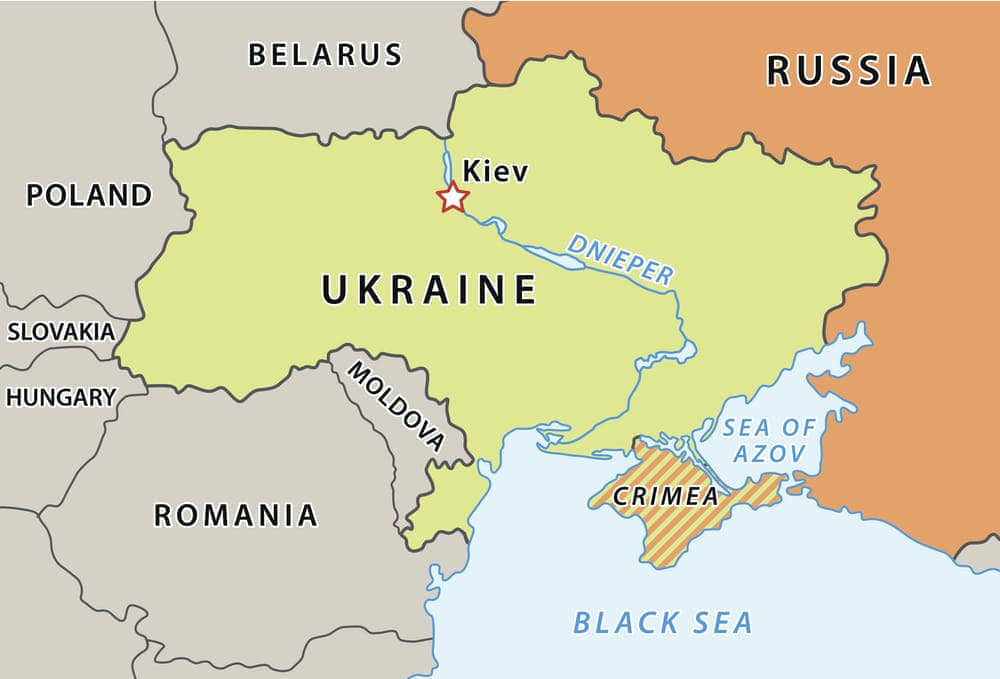
The territorial concessions Blinken is tabling include Crimea, the Donbass, and the Zaporozhe, Kherson “land bridge that connects Crimea and Russia”. West of the Dnieper River, north around Kharkov, and south around Odessa and Nikolaev, Blinken has tabled for the first time US acceptance of “a demilitarized status” for the Ukraine. Also, US agreement to restrict the deployment of HIMARS, US and NATO infantry fighting vehicles, and the Abrams and Leopard tanks to a point in western Ukraine from which they can “manoeuvre…as a deterrent against future Russian attacks.”

This is an offer for a tradeoff – partition through a demilitarized zone (DMZ) in the east of the Ukraine in exchange for a halt to the planned Russian offensive destroying the fortifications, rail hubs, troop cantonments, and airfields in the west, between the Polish and Romanian borders, Kiev and Lvov, and an outcome Blinken proposes for both sides to call “a just and durable peace that upholds Ukraine’s territorial integrity”.

Also in the proposed Blinken deal there is the offer of a direct US-Russian agreement on “an eventual postwar military balance”; “no World War III”; and no Ukrainian membership of NATO with “security guarantees similar to NATO’s Article 5.”

Blinken has also told the Washington Post to announce the US will respect “Putin’s tripwire for nuclear escalation”, and accept the Russian “reserve force includ[ing] strategic bombers, certain precision-guided weapons and, of course, tactical and strategic nuclear weapons.”

President Putin has offered a hint of the Russian reply he discussed with the Stavka [3] and the Security Council [4] last week. 

Putin told a meeting with university students on Wednesday, hours after Blinken’s publication.  “I think that people like you,” the president said [5],   “most clearly and most accurately understand the need for what Russia is now doing to support our citizens in these territories, including Lugansk, Donetsk, the Donbass area as a whole, and Kherson and Zaporozhye. The goal, as I have explained many times, is primarily to protect the people and Russia from the threats that they are trying to create for us in our own historical territories that are adjacent to us. We cannot allow this. So, it is extremely important when young people like you defend the interests of their small and large Motherland with arms in their hands and do so consciously.”

Read on, very carefully, understanding that nothing a US official says, least of all through the mouths of Blinken, Ignatius, and the Washington Post is trusted by the Russians; and understanding that what Putin and the Stavka say they mean by Russia’s “adjacent historical territories” and the “small and large Motherland” has been quite clear. 

Follow what Blinken told Ignatius to print, before Putin issued his reply. The propaganda terms have been highlighted in bold to mean the opposite — the public positions from which Blinken is trying to retreat and keep face.

The Biden administration, convinced that Vladimir Putin has failed in his attempt to erase Ukraine, has begun planning for an eventual postwar military balance that will help Kyiv deter any repetition of Russia’s brutal invasion.

Secretary of State Antony Blinken outlined his strategy for the Ukrainian endgame and postwar deterrence during an interview on Monday at the State Department. The conversation offered an unusual exploration of some of the trickiest issues surrounding resolution of a Ukraine conflict that has threatened the global order.

Blinken explicitly commended Germany’s military backing for Ukraine at a time when Berlin is getting hammered by some other NATO allies for not providing Leopard tanks quickly to Kyiv. “Nobody would have predicted the extent of Germany’s military support” when the war began, Blinken said. “This is a sea change we should recognize.”

He also underlined President Biden’s determination to avoid direct military conflict with Russia, even as U.S. weapons help pulverize Putin’s invasion force. “Biden has always been emphatic that one of his requirements in Ukraine is that there be no World War III,” Blinken said.

Russia’s colossal failure to achieve its military goals, Blinken believes, should now spur the United States and its allies to begin thinking about the shape of postwar Ukraine — and how to create a just and durable peace that upholds Ukraine’s territorial integrity and allows it to deter and, if necessary, defend against any future aggression. In other words, Russia should not be able to rest, regroup and reattack.

Blinken’s deterrence framework is somewhat different from last year’s discussions with Kyiv about security guarantees similar to NATO’s Article 5. Rather than such a formal treaty pledge, some U.S. officials increasingly believe the key is to give Ukraine the tools it needs to defend itself. Security will be ensured by potent weapons systems — especially armor and air defense — along with a strong, noncorrupt economy and membership in the European Union.

The Pentagon’s current stress on providing Kyiv with weapons and training for maneuver warfare reflects this long-term goal of deterrence. “The importance of maneuver weapons isn’t just to give Ukraine strength now to regain territory but as a deterrent against future Russian attacks,” explained a State Department official familiar with Blinken’s thinking. “Maneuver is the future.”

The conversation with Blinken offered some hints about the intense discussions that have gone on for months within the administration about how the war in Ukraine can be ended and future peace maintained. The administration’s standard formula is that all decisions must ultimately be made by Ukraine, and Blinken reiterated that line. He also backs Ukraine’s desire for significant battlefield gains this year. But the State Department, Pentagon and National Security Council are also thinking ahead.

Crimea is a particular point of discussion. There is a widespread view in Washington and Kyiv that regaining Crimea by military force may be impossible. Any Ukrainian military advances this year in Zaporizhzhia oblast, the land bridge that connects Crimea and Russia, could threaten Russian control. But an all-out Ukrainian campaign to seize the Crimean Peninsula is unrealistic, many U.S. and Ukrainian officials believe. That’s partly because Putin has indicated that an assault on Crimea would be a tripwire for nuclear escalation.

The administration shares Ukraine’s insistence that Crimea, which was seized by Russia in 2014, must eventually be returned. But in the short run, what’s crucial for Kyiv is that Crimea no longer serve as a base for attacks against Ukraine. One formula that interests me would be a demilitarized status, with questions of final political control deferred. Ukrainian officials told me last year that they had discussed such possibilities with the administration.

As Blinken weighs options in Ukraine, he has been less worried about escalation risks than some observers. That’s partly because he believes Russia is checked by NATO’s overwhelming power. “Putin continues to hold some things in reserve because of his misplaced fear that NATO might attack Russia,” explained the official familiar with Blinken’s thinking. This Russian reserve force includes strategic bombers, certain precision-guided weapons and, of course, tactical and strategic nuclear weapons.

Blinken’s refusal to criticize Germany on the issue of releasing Leopard tanks illustrates what has been more than a year of alliance management to keep the pro-Ukraine coalition from fracturing. Blinken has logged hundreds of hours — on the phone, in video meetings and in trips abroad — to keep this coalition intact.

This cohesiveness will become even more important as the Ukraine war moves toward an endgame. This year, Ukraine and its allies will keep fighting to expel Russian invaders. But as in the final years of World War II, planning has already begun for the postwar order — and construction of a system of military and political alliances that can restore and maintain the peace that Russia shattered.

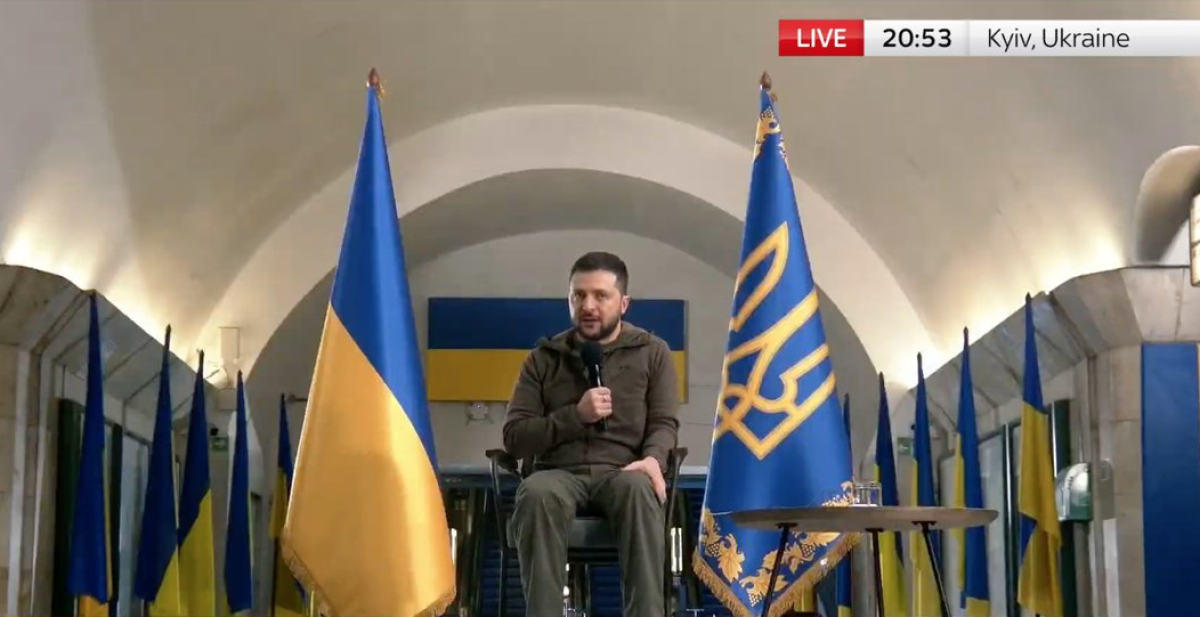
Highlighted in bold type in Blinken’s text is the phrase, “a strong, noncorrupt economy and membership in the European Union”. This is Blinken’s message to the Kremlin that the US wants to preserve Ukraine’s agricultural economy, its grain export ports, and the trade terms agreed with the European Union before the war. It is also Blinken’s acknowledgement [6] that Vladimir Zelensky’s move early this week to force the resignations and dismissals of senior officials means the US is calling the shots in Kiev and Lvov.

Nothing is revealed in Blinken’s offer “for the Ukrainian endgame and postwar deterrence” of how, and who on the US and Russian sides, to negotiate directly on the particulars. Instead, there is the hint that if the Russians agree to trust the Americans and delay the planned offensive, and if they allow the rail lines to remain open between Poland and Lvov, the Americans will reciprocate by keeping the Abrams and Leopard tank deliveries in verifiable laagers west of Kiev.

As Russian officials have been making clear for months, no US terms of agreement can be trusted on paper, and nothing at all which Blinken says. A well-informed independent military analyst comments on the Russian options: “The best response is continue the special military operation, destroy the Ukrainian military in their present pockets, complete de-electrification and destruction of the logistics, then either take everything east of the Dnieper or establish a de facto DMZ, including Kharkov. Blinken and the others cannot be trusted to follow through if they think they have a chance to stall for time. The Ukrainian Nazis are conspicuously absent from this proposal – and they remain to be dealt with. We know there will be no end to trouble if the Russian de-nazification objective against them stops now.”

Ted Snider: War in Ukraine: When International Laws Collide

By Ted Snider, Antiwar.com, 1/19/22

The war in Ukraine is a tangled mess of causes. As Nicolai Petro has argued, it is at once a conflict between Russia and the US, a conflict between Russia and Ukraine and a conflict within Ukraine. But at its core there are two conflicts: the conflict over whether NATO should have an open door for Ukraine and the conflict over whether the Donbas should be part of Ukraine, an autonomous region or even a part of Russia.

And at the core of each of those two conflicts is a pair of competing international laws: one for the NATO conflict, one for the Donbas conflict. In each case, each law is legitimate; in each case, the US subscribed to one, and Russia subscribed to the other. To a great extent, as Richard Sakwa has argued, “[t]he tension between these two logics . . . contained the seeds of later conflicts.”

At the core of the conflict over Ukraine membership in NATO is the subscription of the US and Russia to legitimate but incompatible international laws. This argument has been set out by Professor of Russian and European Politics at the University of Kent Richard Sakwa in at least two places: in his essay “The March of Folly resumed: Russia, Ukraine and the West” and, with Andrej Krickovic, in “War in Ukraine: The Clash of Norms and Ontologies.”

On the question of NATO expansion, the US cites the principle of the free and sovereign right of states to choose their own security alignments. At the same time, Russia cites the principle of the indivisibility of security: the assurance that the security of one state should not be bought at the expense of the security of another. Both principles are enshrined in international law and in international agreements. Both are legitimate, but the two are contradictory. Hence the conflict.

The US has insisted on the right of states to choose their own security alignments as a justification for NATO’s open door to Ukraine. If every state can choose its alignments, then Ukraine has the sovereign right to choose membership in NATO. Russia has insisted on the indivisibility of security as a justification for opposing NATO’s expansion to its borders and the flooding of Ukraine with lethal offensive weapons. Both principles are right. But, as Sakwa points out, “they proved to be contradictory and ultimately undermined the two sides’ ability to peacefully co-exist.”

Russia holds that peace can be attained by a balance of powers in which the interests of all nations are respected. A hegemon cannot ensure its security while ignoring the security interests of another country. The US holds that the spread of a system of trade and democracy, with the US as the hegemon, will create a common sphere where peace can be preserved. The US argument implies that that spread cannot be a threat to other states.

The West is very familiar with the concept of freedom of choice and the right to choose alliances. Russia has attempted, at various times, to place that freedom within a context. Russian foreign minister Sergei Lavrov has frequently insisted, including in comments to the press on January 27, 2022, that all the relevant international agreements commit nations “to indivisible security and their pledge to honor it without fail.” He points out the legal implication that the sovereign right of nations to choose their own alliances is balanced by the “obligation not to strengthen their security at the expense of the security of other states.”

In a conversation with Biden on December 7, 2021, Putin said that “Every country is entitled to choose the most acceptable way to ensure its security, but this should be done so as not to encroach on the interests of other parties and not undermine the security of other countries. . . . We believe that ensuring security must be global and cover everyone equally.” On December 30, Putin again spoke with Biden and stressed that “the security of any nation cannot be ensured unless the principle of indivisible security is strictly observed.”

Days before the invasion, on February 1, Putin expressed the same principle at a press conference, saying that “We need to find a way to ensure the interests and security of all parties to this process: Ukraine, the other European countries and Russia.”

In a December 30, 2021 essay, Russian ambassador to the US Anatoly Antonov wrote that “Military exploration of Ukraine by NATO member states is an existential threat for Russia. . . . The principle of equal and indivisible security must be restored. This means that no single state has the right to strengthen its security at the expense of others.”

Sakwa reports that Russia has also pointed out that the US insistence on Ukraine’s right to choose its alliances is inconsistent with NATO’s own principles that “at its foreign ministers’ meeting in Copenhagen on 6-7 June 1991 resolved ‘not to gain one-sided advantage from the changing situation in Europe’, not to ‘threaten the legitimate interests’ of other states or ‘isolate’ them, and not to ‘draw new dividing lines in the continent.’”

As with the conflict over NATO’s open door policy for Ukraine, the U.S. and Russia cite legitimate but incompatible principles when it comes to the crisis in Donbas.

On September 27, referendums on joining Russia in the Donbas republics of Donetsk and Luhansk and in the Kherson and Zaporizhzhia oblasts were completed. Citing the UN Charter’s principle of the territorial integrity of existing states, the US rejected the referendums; citing the UN Charter’s principle of people’s right of self-determination, Russia recognized them.

Richard Falk, professor emeritus of international law at Princeton University, has said that “Each conflict of this character, stressing the rights of aggrieved distinct peoples within the borders of an internationally recognized state, raises a general issue of the integrity of sovereign states versus the scope of rights of self-determination.” Falk told me that “the practice of states and the UN is inconsistent, being driven more by power and geopolitical priorities than law, morality, and the UN.”

On October 4, Lavrov in his remarks on the absorption of the new territories into Russia, invoked the self-determination principle. Arguing that the decision of the eastern regions was “based on the free expression of will by their people made during the referendums,” Lavrov claimed that “[t]he citizens of these republics and regions made a conscious choice based on the right to self-determination.”

As he had done with the conflicting NATO principles, Lavrov again argued that the principle of territorial integrity needs to be consistent with, and balanced by, the principle of self-determination. He argued that the 1970 UN Declaration “seals the duty of states to respect the territorial integrity of states” on the condition that they are “conducting themselves in compliance with the principle of equal rights and self-determination of peoples… and thus possessed of a government representing the whole people belonging to the territory.” Lavrov then argued both that territorial integrity does not respect the self-determination exercised in the referendums.

Part of the inability of the US and Russia to see each other’s perspective or to resolve their differences is grounded in their commitment to equally legitimate but incompatible international laws.

Ted Snider has a graduate degree in philosophy and writes on analyzing patterns in US foreign policy and history.

TASS: Medvedchuk publishes first article in Russian daily on situation in Ukraine after swap

Map of Russia and Eurasia

TASS, 1/16/22

KIEV, January 16. /TASS/. Ukrainian politician Viktor Medvedchuk has written his first article for the Russian media after arriving in Russia from Ukraine as a result of a detainee exchange. Medvedchuk previously held the position of the head of the political council of the Opposition Platform – For Life party, now banned in Ukraine. On April 12, 2022, Ukrainian President Vladimir Zelensky announced Medvedchuk’s detention and arrest on charges of high treason and violation of the laws of warfare. At the end of September, Medvedchuk left Ukraine for Russia.

In an article published on January 16 in the daily Izvestia, Medvedchuk discusses the military confrontation in Ukraine, examines its genesis and offers a forecast of how the situation may develop.

Conflict development forecast

According to Medvedchuk, in order to defuse the situation in Ukraine, it is crucial to recognize Russia’s interests.

“The Cold War ended with a political decision to build a new world where there will be no wars. It is clear that such a world has not been built, that the current world politics has returned back to square one – the point where the policy of d·tente began. Now there are only two ways out: a further slide towards a world war and a nuclear conflict or renewed efforts to ease tensions again, for which it is necessary to take into account the interests of all parties. But for this, it is crucial to politically recognize that Russia has its own interests to be taken into account,” Medvedchuk believes.

In his opinion, the conflict will either grow to eventually spill over into Europe and other countries, or it will be localized. However, for the latter option to materialize “it is essential that the party of peace be heard.” For the time being, the Western countries actively supporting military operations in Ukraine refuse to let this happen.

Political movement for peace in Ukraine crucial

Medvedchuk points out that many Ukrainians are peace-minded and do not support Zelensky in his pursuit of military triumphs. For these people to be heard, a political movement is needed without the participation of Western countries.

“If a party that seeks peace and civil dialogue does not fit into some kind of democracy, then is it real democracy? It is necessary to create a political movement of those who have not given up, who have not renounced their convictions on pain of death and prison, who do not want their country to become a scene of geopolitical skirmishes,” he wrote.

Medvedchuk noted that Ukraine had spent most of its history with Russia and is connected with it culturally and mentally. The economy is an unambiguous imperative for integration with Russia. Anti-Russian sentiment has brought nothing but grief and poverty to Ukraine,” Medvedchuk stressed.

Role of Ukraine’s southeast

In his opinion, Russia began to integrate into the European market faster than Ukraine thanks to its energy resources. “Ukraine’s independence could well have ended in economic collapse, had it not been for the southeast, currently a scene of fierce battles. In the 1990s, it was the Russian-speaking southeast that saved the economic, and with it, political independence of Ukraine,” Medvedchuk believes. “The business of the southeast is largely pegged to Russia and its interests, because the conflict has ceased to be an exclusively internal affair. Russia is faced with the need for protecting not only its economic interests, but also its international honor and dignity.”

Genesis of conflict

As for the genesis of the current conflict, according to Medvedchuk, the West and Russia perceived the end of the Cold War differently. The West unambiguously claimed its victory, considering Moscow as the loser.

“And since Russia, in its scheme of things is the loser, then the territories of the former Soviet Union and the Socialist block are legitimate spoils of war of the United States and NATO, which, in accordance to the ‘woe to the vanquished’ rule fall under the control of the West. Hence Ukraine is to be seen as a domain of the US and NATO, and by no means of Russia,” he explains.

Medvedchuk believes that the way out of the military confrontation between the East and the West, which could end in a nuclear catastrophe, was at a certain point jointly found by Moscow and Washington. It did not at all imply that the West would absorb the East.

“It was about equitable cooperation and joint construction of a new political and economic reality. We can clearly see two approaches to ending the Cold War: the triumph of the winners, on the one hand, and the construction of a new world and civilization, on the other. Future events will follow a scenario based on these two approaches,” Medvedchuk concluded.

Link to original article by Medvedchuk here.

Stephen Bryen: All is not well for Ukraine

By Stephen Bryen, Asia Times, 1/24/23

The delivery of tanks, advanced air defense systems and potentially long-range ground-launched bombs may be a response to Ukraine’s dire requests, but it also brings with it a new load of problems.

These hastily and urgently provided supplies indicate that all is not well in Kiev and that it is closer than ever to losing the war with Russia. These are not one-to-one replacements for equipment lost: Most of the delivered supplies aim to shift the fortunes of the war in favor of Ukraine.

At least one of the projected weapons, a 100-mile ground-launched long-range bomb known as ATACMS, also would shift the war from Ukrainian to Russian territory.

There is little doubt that putting this sort of weapon in Ukrainian hands will result in a bigger war in Europe. Russia will try to attack the transit centers for these supplies, most likely Poland, although retaliation could also conceivably include attacks on railroads and roadways in Germany.

The US decision to ship upgraded nuclear bombs to Europe also will convince the Russians that tactical nuclear war may be NATO’s response if Ukraine collapses. Compared with the US and NATO, Russia has a massive arsenal of tactical and strategic nuclear weapons.

Ukraine’s forces are falling back in the Donbas region and, if the retreat continues, will soon lose the strategic town of Bakhmut. The Russian wave, in the Pentagon’s view, is a sure thing and the US has asked Ukraine to abandon the area.

However, Ukraine’s military and political leaders can’t pull back because doing so would open the center of the country to the Russian army. That, in turn, could light off a long-suppressed clamor for political change in Ukraine with unknown and unknowable consequences.

President Volodymyr Zelensky knows full well he has arrested most of his political opponents and silenced the media he dislikes, including some instances where his opponents have allegedly been liquidated by Ukraine’s secret police, the SBU.

But that won’t protect him or his colleagues if people in Kiev start to understand that Ukrainian defenses are folding.

Despite claims to be a democracy, Ukraine is actually an authoritarian country that has blocked out real news and throttled any opposition. But because of social media, the messages will get through anyway and Zelensky and his team have a lot to fear.

It appears the US is placing its hope of reversing the battlefield situation on the new armor systems being sent to Ukraine. The US has put huge pressure on Germany to deliver its creaky Leopard II tanks and to allow Poland to ship the Leopards it has.

Poland has an inventory of 569 tanks, of which 398 are active. Most of the active tanks in Poland’s army are Leopard IIs (250). Poland is planning to replace the Leopards with 180 Korean K-2 Black Panther tanks, the first ten of which were delivered in December 2022. The K2 is an advanced tank featuring netcentric capabilities.

No one can say how effective Leopard tanks will be on the modern battlefield. In December 2016, numerous Leopard 2s were destroyed in fighting over the ISIS-held Al-Bab area near Aleppo, Syria. Ten Leopards were destroyed including five by anti-tank missiles (Russian origin), two by IEDs, and one by rocket fire.

The Russian wire-guided anti-tank missiles, 9k115 Metis and 9M113 Konkurs, are vintage 1970s weapons. This leads to the suspicion that the Leopards won’t turn out to be any more effective than the Russian-origin armor Ukraine already has, which could help explain why Poland is eager to unload them.

The US has made clear that it will not deliver the Abrams M-1 tank to Ukraine. This is the US main battle tank that is vital to NATO defense. Reluctance to send them to Ukraine could also represent a Pentagon view that the M-1s might not fare well on the modern battlefield against Russian forces because they control most of Ukraine’s airspace, meaning that tanks can be destroyed by air attack.

Psychologically, the loss of US tanks to Russian weapons would be a negative message about America’s ability to uphold security in Europe. (It certainly would unnerve the Baltic States and Germany.)

One of the key dangers in the Ukraine war is that it will spill over to other European countries, particularly Poland. Another Russian “option” may be to counter US support for Ukraine by attacking one or more of the Baltic states, namely Estonia, Latvia and Lithuania.

Tension is rising between the Baltics and Russia, as seen most recently by Russia’s decision to expel Estonia’s ambassador in Moscow.

Estonia is crucial because of its location on the Gulf of Finland and its sensitive border with Russia, close to St Petersburg. Estonia is setting up an “adjacent” zone giving it the right to inspect Russian civilian and military ships.

It is unlikely Estonia can carry out any inspections given that it only has two patrol vessels (EML-Roland and EML-Risto) and no other warships except some mine layers. But if Estonia even tried, it would create another friction point that Russia could exploit if it chose.

There is also a strategic element. With Finland joining NATO and already a de facto member, the Gulf of Finland becomes significantly more hostile for Russia and there will be growing pressure on Russian political leaders to take action against a rising threat to Russian security.

While Ukraine is far away, the Russians see NATO’s “ganging up” on Russia as a key issue for Russian security and stability. This brings the Baltic region into sharper focus because Russians see NATO trying to surround them and undercut their economic and military advantages.

The Biden administration, at least on the surface, appears to have little concern about the threat of a widening war or the possibility that Ukraine might be defeated by Russia. In fact, the administration and its allies keep claiming they are close to driving the Russians out of Ukraine – the latest such claim having come from Ukraine war supporter Boris Johnson.

If this claim were true, then all of the additional weapons slated for delivery to Ukraine would not be such an urgent need.

One of the problems is that war news is generated primarily by Ukrainian propaganda, which is endlessly parrotted in the Western media. Anytime there is contradictory information – for example, mention of Ukraine’s high casualties – Kiev pushes back so hard that Western leaders go silent.

Even so, accurate information does periodically leak. The latest example is a German report citing Berlin’s BND foreign intelligence service saying that Ukrainian casualties are very high in the Bakhmut area, estimated in the hundreds per day.

Washington could thus soon be faced with some dangerous choices. Should it commit US forces or US air power to Ukraine? If it did so, how quickly would the war spread in Europe?

Would NATO, always far more boisterous than can be justified by reality, support sending NATO forces to Ukraine? Or would NATO’s knees finally buckle?

The alternative – and more likely – scenario is that Washington will push for a peace settlement, something it has strictly opposed in the past. Will Russia be willing to sit down and discuss a deal? Of course, but only if the price is right.