Category Archives: Uncategorized

TJ Coles: A New Generation of US-trained Extremists Is Fighting Russia. Are We Prepared for the Blowback?

Ceremonial Sickle of the 'Fieldworker of Amun' Amunemhat
A boomerang.

By TJ Coles, Global Research, 6/8/22

US agencies have directly and indirectly trained and empowered Nazis and ultra-nationalists at home and abroad to fight Russians in Ukraine. This program follows the blueprint established by Western intelligence agencies in Afghanistan and Syria.

From 1978 (not ’79 as many believe), the administration of Jimmy Carter decided to “draw the Russians into the Afghan trap,” in the words of the President’s National Security Advisor, Zbigniew Brzezinski. US intelligence called on its British counterparts to activate networks of Afghan fighters. New generations of extremists joined the fight. Aid, arms, and training poured into Afghanistan. Support increased following the Soviet invasion in December 1979.

Throughout the 1980s, tens of thousands of jihadis from dozens of Muslim-majority countries were flown into the US, Britain, and Pakistan to receive training from the CIA, Green Berets, US Marines, and British SAS and MI6. The foreign extremists later rebranded themselves “al-Qaeda” and launched a series of spectacularly bloody attacks on strategically significant targets that provided justification for a global “war on terror” that continues to serve as ideological cover for contemporary US hegemony.

The multi-billion dollar CIA operation to arm and train the so-called freedom fighters, or Afghan mujahedin, was known as Operation Cyclone. Successive administrations repeated the pattern in the 2010s, initiating Operation Timber Sycamore in a failed effort to depose Bashar al-Assad in Syria and Operation Mermaid Dawn before it in a successful effort to remove Muammar Gaddafi and destabilize Libya.

Today, the CIA, US Special Forces, and other branches of government are training regular units in Ukraine. With US support, far-right elements of those units go on to train and recruit for Nazi paramilitary units and gangs. White nationalist Americans are allowed to travel to Ukraine and train paramilitaries and/or receive training, depending on the individual or group. State-corporate media have confirmed the existence of a major CIA training program involving “irregular” (i.e., terrorist) warfare, but we do not yet know the name of the operation.

As Alex Rubinstein reported for The Grayzone, corporate US media has promoted known US white nationalists fighting in Ukraine as heroes, while whitewashing their records of murder and political violence. And while the Department of Homeland Security expresses “concern” over potential blowback when these openly fascist combat veterans return to the US, the administration of Joseph Biden appears to be doing nothing to stop them from making their way to the battlefield.

The US program in Ukraine bears such striking similarities to Operation Cyclone it could be dubbed “Cyclone 2.0”. The nature of the proxy war has all but been admitted by former US Secretary of State, Hillary Clinton, and the endgame of regime change in nuclear-armed Russia has been acknowledged by President Joe Biden.

In pursuing these objectives, US and British elites are taking a nuclear gamble. As even the DHS has warned, their empowerment of neo-Nazis could open a new chapter in the “war on terror” in which civilians will suffer blowback from battle-hardened extremists – imagine the Buffalo shooter with advanced tactical training. Millions will be considered by authorities to be potential white supremacists, ultranationalists, and Nazis. And under the pretext of fighting white extremism, a new phase of total surveillance and foreign “intervention” might begin in the Caucasus and Baltic regions.

Running the ratline to Ukraine behind volunteer non-profit cover

Typical of the kind of operations taking place, former US Marine Benjamin Busch, ex-Infantry Officer Adrian Bonenberger, and Iraq War veteran Matt Gallagher, traveled to Lviv in Western Ukraine to train dozens of what are described by US media as Ukrainian civilians. Gallagher revealed that US intelligence agents were facilitating travel. Border and justice agencies were not obstructing departures and returns.

“(I reached out to) some friends who work in various government jobs, not so much asking them for permission in any kind of official capacity,” Gallagher stated, “but just wanting to know if there were any potential consequences. The almost universal response to that was, as long as they (the people he was training) are actual citizens, as long as this is focused on self-defense, as long as this is not some covert military, paramilitary operation, you’ll be fine. Some fellow Wake Forest [University] graduates [in North Carolina], who I won’t name because they do work for Uncle Sam, were very helpful in collecting information.”

Operations of this sort laid the groundwork for a mass “volunteer” scheme. The creation of an international volunteer force reflects the interests of the Azov Battalion — the Nazi-linked paramilitary unit that has undergone through several name changes (e.g., Azov Movement, Azov Regiment), reportedly de-Nazified, and has supposedly integrated into regular Ukrainian armed units. In reality, the Azov’s political wing, the National Corps (formerly the Patriots of Ukraine), is described as neo-Nazi by contemporary Western experts and even the US Department of Justice.

In February 2018, Azov stated on Discord: “[We] will have the foreign legion set up within the next 18 months or so.” Chiding the Ukrainian government for blocking their efforts, the National Corps’ young leader, Olena Semenyakasaid: “we hope to create a foreign legion. There we could announce loud and clear when we seek volunteers.” If the far-right Ukrainian puppet government was too soft, Azov leadership did not need to worry because Uncle Sam was there to facilitate the creation of an international volunteer league.

Describing itself as a 501(C)3 non-profit pending (hence no info shows up on the IRS website at the time of writing), Volunteers for Ukraine (VFU) has no overt connections to Azov. It was founded in February 2022 as “United Peacekeepers for Ukraine.” The original website was an extension of the Ukrainian Ministry of Foreign Affairs’ International Legion of Ukraine website.

The public relations-minded operatives behind the site evidently decided that the dovish name of the organization (“Peacekeepers”) was not likely to encourage anti-Russian fighters to volunteer, so they changed it to Volunteers for Ukraine. At the time of writing, the VFU website features images of protestors holding signs that include “Kill Putin…” and “Putin = Hitler”—a rather stark departure from peacekeeping.

The new site puts names and faces to the organization, including the professed founder, David Ribardo; a former US Infantry Officer and Afghanistan War veteran. Despite the imagery and recent references to combat, Ribardo claims that VFU is a “humanitarian aid organization.”

VFU’s Chief Operations Officer is combat veteran Phillip Chatham, a former Diplomatic Security Missions leader for numerous US lawmakers. “As an In-Country Operations Manager he maintained facility clearances with multiple intelligence agencies,” says the site. The organization is also run by numerous veterans and PR specialists. Promoting VFU on CNN, another veteran, “Seth,” described working with refugees in Poland thanks to “some very gracious donations from some sponsors.”

This offers insight into how such operations are run: anonymous major donors operate veteran pipelines to Ukraine in neighboring countries. Ribardo says that his job includes vetting volunteers to weed out fantasists, “combat tourists,” and extremists, ensuring that only well-trained US veterans enlist.

The number of veterans who have volunteered is not disclosed, but Ribardo says that the figures are unlike anything seen “since World War Two.”

Extremists and accelerationists: “We’re gonna send home a lot of bodybags”

Other Americans fighting in Ukraine’s regular units included: Dalton Kennedy, a member of North Carolina’s branch of the white supremacist Patriot Front; David Kleman of Georgia who has been photographed sporting Nazi imagery; and Army veteran David Plaster of Missouri. According to British press reports, Plaster has trained “thousands of Ukrainians in tactical medicine,” and headed a team that included even elderly veterans, like former Marine Dave Eggen, who said of Russians: “We are going to send home a lot of bodybags.”US Military Supports Ukraine’s Neo-Nazi National Guard. Are US Forces Involved in Combat Operations?

One such figure told Buzzfeed that they were questioned by federal agencies but still allowed to travel. “I tell them I don’t have anything to hide. Then they let me go. Every time.” In addition to the above fighters, known fascists are signing up to fight.

By March this year, at least 3000 US citizens were allegedly on the Ukrainian battlefield. In April, John T. Godfrey, the State Department’s Acting Coordinator for Counterterrorism, said of American extremists going to fight: “when they return, they have skill – they typically come back more radicalized than when they left … [T]hey do have hard skills that they are able to, in some cases, use in attacking targets domestically.” In intelligence circles, this is called “blowback.”

In April, I filed a freedom of information request with the Department of Homeland Security (DHS) to obtain documents on travelers to Ukraine and its neighbors, including Georgia and Poland, from 2014 to the present. The aim was to measure the size of “Cyclone 2.” From logs and incident reports that had come to the attention of the DHS, I wanted to know how many people had been stopped and questioned about their trips by federal or local authorities. The DHS unlawfully ignored my request, as they have a habit of doing: no acknowledgement, no delayed response, nothing.

Had the department answered, it might have confirmed the story of people like “Alex”: a US armed forces veteran who was connected to Ukraine by an anonymous online account. “Alex” ended up in the extremist-heavy Shyrokyne (near Mariupol), fought with Ukraine’s openly fascist party the Right Sector, and ended up recruiting other Americans for the Azov Battalion. (The source is the US and British intelligence cut-out, Bellingcat.)

Newsweek encountered similar obstructions. It noted that Azov’s political wing, the National Corps, has been connected to the US white supremacist Rise Above Movement, Germany’s Third Path, Italy’s Casa Pound, and other extremist groups. In their efforts to assess the scale of such connections in the US, Newsweek reporters approached the Department of Justice, FBI, and DHS for comment. Silence was the answer.

Newsweek pointed to Cossack House in Kiev as the main Azov recruiting center. Loaned to the Azov Battalion by the Ukrainian Ministry of Defense, the center’s library includes Nazi literature and is described by the Azov National Corps leader Semenyaka as “a small state within a state.” The number of Americans currently there is not known.

In addition to white supremacists, members of accelerationist groups — those that want to hasten society’s collapse in order to remold it in their image — are also present in Ukraine.

Former Marine Mike Dunn from Virginia is an informant and once-influential figure in the politically fluid Boogaloo Bois, having commanded its Last Sons of Liberty Faction. “There hasn’t been much activity in the Boogaloo movement since I walked away,” he says. After being exposed as an informant, Dunn disappeared from the scene only to reappear in February this year announcing his intention to fight in Ukraine via Poland by signing up to an undisclosed recruiting station.

“I wouldn’t say that I am necessarily trying to advance the cause of the Boogaloo movement … But I will say that the Boogaloo movement is going to be represented over there.”

But this makes little sense. Who would follow a fink to Ukraine, except for mercenaries and fellow feds? Also, didn’t Dunn leave the movement, so how could he represent it in Ukraine? “I have a few that are following me there, I have one going with me there,” he says.

Henry Hoeft, a former US Army Infantryman and Boogaloo Boy from Ohio, was cautioned by the FBI against fighting in Ukraine, but was simultaneously advised by the Bureau to call the US Embassy if he got into trouble. Hoeft says:

“I get it. They don’t want to be implicated if Russia harms any of us, and they don’t want to escalate the conflict by saying that they’re sending American soldiers over.” (See also Hoeft’s Grayzone interview.)

Dunn, the Boogaloo former leader and informant, confirmed his presence in Washington DC during the January 6 “Stop the Steal” rally, but claims that he arrived late and did not participate in storming the Capitol. The Ukrainian Right Sector’s Serhiy Dubynin, an influential media figure working for the major Ukrainian channel, Inter, was also at the Capitol that day, signifying that the DHS-FBI “open-door” policy included Ukrainian extremists who would network in the US and vice versa. Dubynin was photographed with Jake Chansley; the highly-decorated US Navy veteran and self-styled “QAnon Shaman.” Dubynin was heard urging the Stop the Steal demonstrators to escalate from peaceful protest to violence: “Come on! … Do it!”

Fascists and Satanists bring their “fetish for death” to Ukraine

Between 2015 and ‘16, several American extremists went to Ukraine to enlist in regular units. Others formed a Right Sector paramilitary spinoff which according to colleagues “had a fetish for death and torture.” Pluto being the Roman god of hell. Their unit was called Task Force Pluto (TFP), named for the Roman god of death, and was led by a US Army deserter-turned-mercenary, Craig Lang, who had also worked as a contractor for the Ukrainian military. Lang operated alongside Brian Boyenger, an Iraq War veteran who served as a sniper in Ukraine. Lang recruited Americans for Ukraine and Boyenger vetted them.

Other TFP members included former Marines Quinn Rickert and Santi Pirtle. The two compiled video evidence of Lang torturing and murdering a local man as well as beating and drowning a young female (age unknown), as an Austrian called Benjamin Fischer — nicknamed “Bin Laden” — allegedly administered adrenaline injections to keep her conscious during the torture. The Department of Justice requested the evidence from their Ukrainian counterparts.

By 2017, a US military deserter, Alex Zwiefelhofer, had joined Lang via the Right Sector in Ukraine. The pair had planned to fight al-Shabaab in Sudan and the Venezuelan military. Upon questioning Zwiefelhofer, North Carolinian authorities discovered child porn on his phone. (The UK-based satanic group, the Order of Nine Angles and its Tempel ov Blood (sic, ToB) offshoot in the US infiltrate secular far-right groups and encourage child rape, possibly as a honeytrap on behalf of the security services).

Influenced by the SIEGE philosophies of the elderly Nazi pedophile James Mason (not to be confused with the late actor), the Atomwaffen Division (AWD, now called the National Socialist Order) was an apocalyptic-accelerationist group founded in 2015 and disbanded five years later. Mason bragged of there being “a lot of action in Ukraine … That’s pretty impressive.”

Private First Class Jarrett Smith, stationed at Fort Riley, Kansas, was a fan of Atomwaffen and a member of the Feuerkrieg Division, founded in the Baltics in late-2018. Smith was also a self-proclaimed satanist, likely connected to the ToB. That group’s leader, Joshua Caleb Sutter, was an FBI informant whose seemed determined to infiltrate and “satanize” Nazi groups with the aim of destroying them from within.

Before joining the Army, Smith was planning to go to Ukraine to fight with the Azov Battalion via his connections to Craig Lang. Before he could go, Smith was set up by an undercover FBI agent and a third party (either an informant or another agent) who put them in touch. The undercover agent contacted Smith through chat forums to ask how to make bombs. In an illustration of how the feds set up fanatical dupes, the agent also said: “Got a liberal texas mayor in my sights (sic)! Boom with that IED [improvised explosive device] and that dude’s dead.”

Via a far-right entity called the Military Order of Centuria, the newly rebranded Azov Movement has been trained by the militaries of America, Britain, Canada, and France.

DHS incident logs note that in December 2018, AWD member Kaleb Cole returned from London with fellow neo-Nazis, Aidan Bruce Umbaugh and Edie Allison Moore. They had visited, among other countries, Ukraine. The DHS log is heavily redacted. Andrew Dymock (alias Blitz), the leader of Britain’s Sonnenkrieg Division (a unit of the AWD), was a member of the occultist Order of Nine Angles and has been pictured wearing an Azov Battalion t-shirt.

Neo-Nazi Andrew Dymock (left), sporting an Azov Battalion t-shirt, with a fellow member of Atomwaffen’s UK chapter

The Rise Above Movement (RAM) is a network of American fascists, some of whom have been convicted of using violence against leftist demonstrators. In 2018, a leading Azov fascist and killer, Sergey Korotkikh, hosted RAM members in Kyiv. National Corps leader Semenyaka also hosted RAM members Michael Miselis of Lawndale, Benjamin Drake Daley of Redondo Beach, and Robert Rundo of Huntington (Calif.). Later that year as RAM members were charged with violence in the US. FBI Special Agent Scott J. Bierwirth said: “the Azov Battalion … is believed to have participated in training and radicalizing United States-based white supremacy organizations.”

According to Time magazine, after the white supremacist Brenton Tarrant murdered 51 people in Christchurch, NZ in 2019, “an arm of the Azov movement helped distribute the terrorist’s raving manifesto.” Among the many countries he reportedly visited was Ukraine.

Today, the neo-Nazi Wotanjugend (Wotan Youth) praises Tarrant as a hero and has distributed his manifesto. Indicative of their sympathies, in April 2020 the Azov National Militia leader Cherkas Mykhailenko conducted an interview with Wotanjugend’s Alexei Levkin. The Azov’s Nazi recruiting station, Cossack House, has also sold Wotanjugend merchandise.

Dire predictions of Ukraine blowback

US intelligence agencies have allowed an open-door policy for veterans, militia, and fascists to travel to Ukraine and its neighbors to kill as many Russian soldiers as possible. The FBI monitors some of the combatants, intervenes in some cases, but typically does nothing. The DHS allows the foreign fighters to travel and return with minimal obstruction. The US charity, Volunteers for Ukraine, is one of the organizations that provides a veneer of legitimacy for the operations that otherwise include extremists.

In Ukraine, meanwhile, US Special Forces are training the National Guard and other regular units, thereby providing a further layer of professional cover. However, with US training, some of these regulars go on to train far-right and Nazi paramilitaries; some Ukrainian, some American. The American fascists return home with the potential to use that training against domestic targets.

Former FBI agent turned consultant, Ali Soufan, notes that in the 1990s, the Afghan Taliban took advantage of constant conflict in the Central Asian country. “Pretty soon the extremists took over. The Taliban was in charge. And we did not wake up until 9/11. This is the parallel now with Ukraine,” Soufan said.

A 2021 report by the Military Academy West Point’s Combating Terrorism Center reinforced his point, stating that the Ukraine conflict “served as a powerful accelerator” for global white supremacy.

Also that year, Elissa Slotkin, chair of the Subcommittee on Intelligence and Counterterrorism declared: “As a former CIA officer who has looked at foreign terrorist organizations in the Middle East most of my career, I was struck by the threat these white supremacist groups pose, the amount of contact they have with extremists in the U.S., the minimal intelligence and diplomatic reporting we have on these groups, and the relative lack of review taken by the U.S. Government.”

Slotkin recommended thirteen white supremacist-extremist organizations including the Azov Battalion be banned. Today, Azov earns gushing praise in Western media and Slotkin is an ardent proponent of massive arms shipments to the Ukrainian military that hosts it.

T.J. Coles is a postdoctoral researcher at Plymouth University’s Cognition Institute and the author of several books, the latest being We’ll Tell You What to Think: Wikipedia, Propaganda and the Making of Liberal Consensus.

Featured image is from The Grayzone

The original source of this article is The Grayzone

Copyright © T.J. ColesThe Grayzone, 2022

Ted Snider – The Dangers of Regime Change: After Putin

By Ted Snider, Antiwar.com, 6/9/22

The comparison between the crisis in Ukraine and the Cuban missile crisis has occasionally been made. With an honest look at that crisis, history has two lessons to offer for the crisis of today.

The first is that the Cuban missile crisis demonstrates clearly how the US would respond to Russia encroaching on its sphere of influence and how it would respond to Russian weapons on its borders. The response is enshrined in the two century old Monroe Doctrine that bars the door from any European power encroaching on the American continents and that declares “any attempt on their part to extend their system to any portion of this hemisphere” to be “dangerous to our peace and safety.” It promises that any alliance between a European nation and a nation in the Western hemisphere would be seen as “the manifestation of an unfriendly disposition toward the United States.”

Kennedy specifically invoked the Monroe Doctrine to justify intervening in Cuba, saying that “The Monroe Doctrine means . . . that we would oppose a foreign power extending its power to the Western Hemisphere.” At around the same time, in April 1961, he would invoke the doctrine more generally. While acknowledging that “any unilateral American intervention, in the absence of an external attack upon ourselves or an ally, would be contrary to . . . our international obligations,” he, nonetheless, said that “If the nations of this hemisphere should fail to meet their commitments against outside Communist penetration then I want it clearly understood that this government will not hesitate in meeting its primary obligations which are to the security of our nation.”

Given its own commitment to the Monroe Doctrine, the US might have anticipated and understood Russian concerns and warnings not to encroach on its borders by moving weapons into Ukraine and Ukraine into NATO.

The second lesson is that the Cuban missile crisis demonstrates how such a crisis can be solved and war avoided. Though American mythology tells a story of the Cuban missile crisis being resolved by Kennedy coldly staring down Khrushchev and forcing a withdrawal, the historical record shows something different. The crisis was resolved when Kennedy negotiated with Khrushchev and promised to remove the US Jupiter missiles that were threatening Russia from their positions in Turkey – and possibly Italy – if Khrushchev would remove the Russian missiles that were threatening the US from Cuba.

It was a quid pro quo agreement that brought the crisis in Cuba under control. Upon Khrushchev’s offer, Kennedy knew that the US would be in an “insupportable position” were he not to accept because “to any man at the United Nations or any other rational man, it will look like a very fair trade.”

The historical lesson was clear as Russian troops moved into Ukraine from the east, and the US and NATO moved into Ukraine from the west.

But there is another crisis from the same period that also offers important historical lessons. In the early days of the Vietnam War, US officials were talking about, as they are hopefully talking about now, “frustrating Soviet ambitions without provoking conflict.” Those were the words of CIA Station Chief in Saigon William Colby. US planners at the time were very cognizant, in the words of Lindsey O’Rourke in Covert Regime Change, that actions could be “potentially costly – especially if [they] escalated to involve the USSR or China.”

In those early days of the Vietnam conflict, the US actively considered solving its problem with North Korea by removing Ho Chi Minh by covert regime change. President Johnson eventually backed away from those coup plans because of the risk of bringing China into the war but also because, as US ambassador to Vietnam Henry Cabot Lodge Jr. warned, “I do not think it profitable to try to overthrow Ho Chi Minh, as his successor would undoubtedly be tougher than he is.”

The US faced a similar problem in the south. As confidence in President Diem waned, US officials began to talk about a coup. Secretary of State Dulles worried, however, that “no substitute for him has yet been proposed.” A fact finding mission led by Secretary of Defense McNamara similarly warned that “The prospects that a replacement regime would be an improvement appear to be about 50-50.”

The US would, eventually, cooperate in a coup against Diem. It backfired by destabilizing Vietnam even more and, ultimately, contributed to bringing America into war in Vietnam.

In both North and South Vietnam, before engaging in regime change, the US considered the alternative leader that could follow the removal of the regime. Though the US has too many times failed in its care or its calculations, it has long been a crucial part of the coup calculus to identify an acceptable alternative to the government you are taking out.

Though the calls are growing for a coup in Moscow, it is not clear that US planners have careful done their calculations.

On March 26, President Joe Biden clearly called for a coup in Russia. Before he ended a speech delivered in Poland, Biden added the call that “For God’s sake, this man cannot remain in power.”

Biden’s fixers struggled to retranslate the potentially dangerous comment. He “was not discussing Putin’s power in Russia, or regime change,” the White House translated. “The President’s point was that Putin cannot be allowed to exercise power over his neighbors or the region.” But Biden spurned their awkward attempt to walk back his call for a coup. While saying that he wasn’t “articulating a policy change,” Biden insisted, “I’m not walking anything back.  The fact of the matter is I was expressing the moral outrage I felt toward the way Putin is dealing, and the actions of this man – just – just the brutality of it.” Two months later, in an opinion piece in The New York Times, Biden did walk it back, saying “the United States will not try to bring about his ouster in Moscow.”

But if Biden’s two month call for a coup was off the official script, then it was an unofficial script that was widely distributed. On May 11, British Prime Minister Boris Johnson, the US’s most loyal Western European ally, would repeat the call. Following discussions in Sweden with Swedish Prime Minister Magdalena Andersson, a spokesperson for Johnson said that “relations with Putin could never be normalized.” Andersson, whose country is applying for membership in NATO, joined Johnson in his statement.

Canada’s Deputy Prime Minister, Chrystia Freeland, also seemed to call for regime change when she said in a speech that “Putin’s assault has been so vicious that we all now understand that the world’s democracies – including our own – can be safe only once the Russian tyrant and his armies are entirely vanquished.”

The call for regime change in Moscow has been heard in Eastern Europe as well. On May 9, Lithuanian Foreign Minister Gabrielius Landsbergis said “From our standpoint, up until the point the current regime is not in power, the countries surrounding it will be, to some extent, in danger. Not just Putin but the whole regime because, you know, one might change Putin and might change his inner circle but another Putin might rise into his place.”

Of course, Zelensky has also hinted at regime change, hoping that, before the eventual peace process and the eventual talks, “we would be discussing the issues of who Ukraine will negotiate, with what president of the Russia Federation,” adding that, “I hope that will be a different president in the Russian Federation.”

But in the calculus of coups, there are many ways in which removing Putin could lead to a worse alternative for the West. A little discussed one is that the removal of Putin could lead to an alternative with a more hardline foreign policy toward the West.

Richard Sakwa, Professor of Russian and European Politics at Kent, who has written extensively on Putin, says that Putin has never subscribed to a “virulent anti-Westernism.” He has called Putin “the most European leader Russia has ever had.” During his first several years in office, Sakwa says Putin attempted “to forge a closer relationship with the European Union” and that he “envisaged Russia joining NATO” to form a “greater West” and “even suggested membership [in] NATO.” Putin did not formally ally with the West, not because of a lack of willingness, but because Washington vetoed the idea of Russia’s membership in NATO.

Stephen Cohen, who was Professor Emeritus of Russian studies and politics at Princeton, has pointed out that Putin “long pursued negotiations with the West over the objections of his own hardliners.” Though the West has portrayed Putin’s foreign policy as aggressive toward the West, Cohen says that the historical record points more to a past of US instigations and provocations to which Putin did not react until compelled to. “As a result of this history,” Cohen says, “Putin is often seen in Russia as a belatedly reactive leader abroad, as a not sufficiently ‘aggressive’ one.”

These are the forces that could fill the void left by Western removal of the Putin regime. These forces, this “influential faction in Kremlin politics,” as Cohen calls them “has long insisted . . . that the US-led West is preparing an actual hot war against Russia, and that Putin has not prepared the country adequately,” a warning that may sound more real than it did when first articulated.

Though Putin has now surely given up on relations with the West and has moved to a position of extreme hostility, that was not always so. As recently as the Minsk agreements, and even as late as December, 2021, when Putin sent the US a proposal on mutual security guarantees and requested immediate negotiations, he was still willing to work with the West.

Putin began his presidential career pursuing, like Gorbachev and Yeltsin, partnership with the US, holding back harder line forces in Russia that could be the alternative after regime change. Alexander Lukin, Professor of International Relations at HSE University in Moscow, has argued that the West has had “a fundamentally incorrect understanding” of Putin’s foreign policy. The “main driving force” behind Putin’s foreign policy is domestic policy, “namely, a desire to maintain stability.” For that reason, Putin has avoided expansionism in order to avoid confrontation with the West until Russia “was forced to respond” to the “strategic threat” of “Western encroachments on its traditional sphere of influence and threats to its security.” Hence the hardline criticism that Putin is “belatedly reactive.”

But Putin has been a restrainer not only on expansionism and foreign policy. He has also restrained the Russian nationalists who “believe in creating the ‘Russian world’ by annexing the territories of the neighboring countries populated by ethnic Russians.” Like the political forces that are less reactive and more aggressive, Putin restrains these political forces because they, too, risk confrontation with the West and threaten hard won domestic stability, reacting only when forced to respond with the aim of “neutralizing Western encroachments on its traditional sphere of influence and threats to its security.”

The hardliners in line behind Putin have been critical of this reluctance to confront the West and annex ethnic Russian territories in neighboring countries when they have requested it. Russian hardliners today blame Putin for not going further than the annexation of Crimea following the coup in 2014 by annexing the Donbas as well. Anatol Lieven, senior research fellow on Russia and Europe at the Quincy Institute for Responsible Statecraft, told me that the hardliners criticize Putin for trusting Germany and France’s promise to ensure the implementation of the Minsk Agreement. The Minsk agreement met Putin’s goal of autonomy for the Donbas. But Minks never happened because Germany and France failed to keep their promise, refusing to break with the US or pressure Ukraine into implementing the agreement. Putin had the cases belli and the military ability at the time to annex the Donbas, and Russian hardliners are angry with Putin for his restraint.

Still today, there are, according to Sakwa, “domestic pressures” on Putin to respond more assertively to Western efforts to isolate Russia economically and politically, by, for example, nationalizing Western assets in Russia. “So far,” Sakwa says, consistent with concerns about regime change, “Putin is holding the line, but he is being pushed to be more radical.”

Western calls for regime change in Russia ignore the coup calculus of the “plausible domestic political alternative.” The only other interpretation is even more reckless. The other possible alternative, Lieven suggests, is that the US is willing to allow hardliners to fill the void left by the removal of Putin both because of the weakened Russia that the coup would escort in and because a new hardline government, more manifestly hostile to the West, would provide the justification for the isolation and subordination of Russia that the US seeks.

Either way, the risk is great and ominous. Removal of Putin through regime change could at last open the door for the hardliners in Russia who are willing to prepare for and to risk greater confrontation with the West. And it is dangerous to assume, history has shown, that a post regime change Russia would remain weak.

Ted Snider has a graduate degree in philosophy and writes on analyzing patterns in US foreign policy and history.

Partial Transcript of Kremlin Meeting on Economic Issues, June 7th

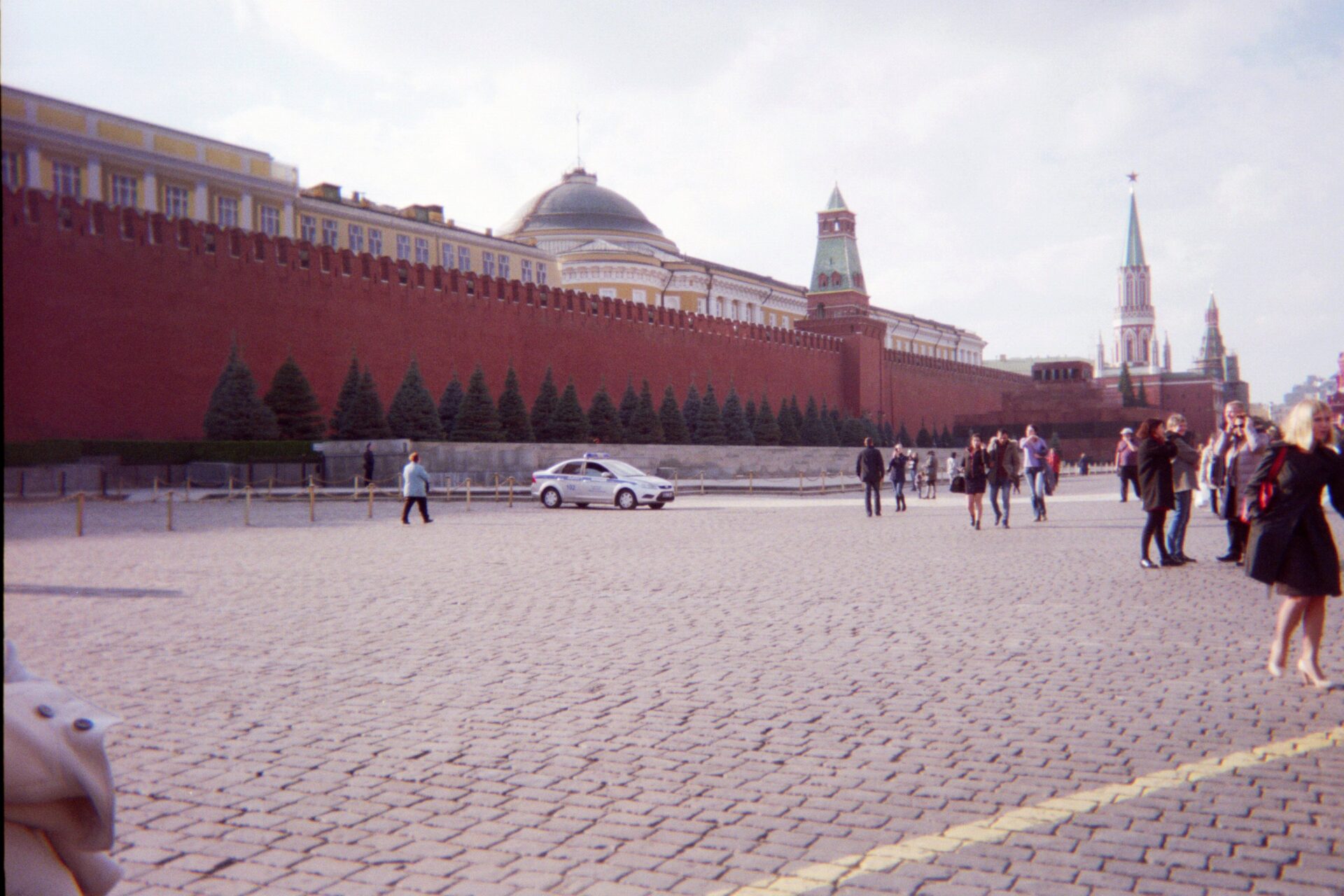
Kremlin Wall, Red Square, Moscow; photo by Natylie S. Baldwin

Transcript available here.

Taking part in the meeting were Prime Minister Mikhail Mishustin, Chief of Staff of the Presidential Executive Office Anton Vaino, First Deputy Prime Minister Andrei Belousov, First Deputy Chief of Staff of the Presidential Executive Office Sergei Kiriyenko, Deputy Prime Minister Marat Khusnullin, Presidential Aide Maxim Oreshkin, Minister of Economic Development Maxim Reshetnikov, Finance Minister Anton Siluanov, and Central Bank Governor Elvira Nabiullina.

The President’s opening remarks at the meeting on economic issues

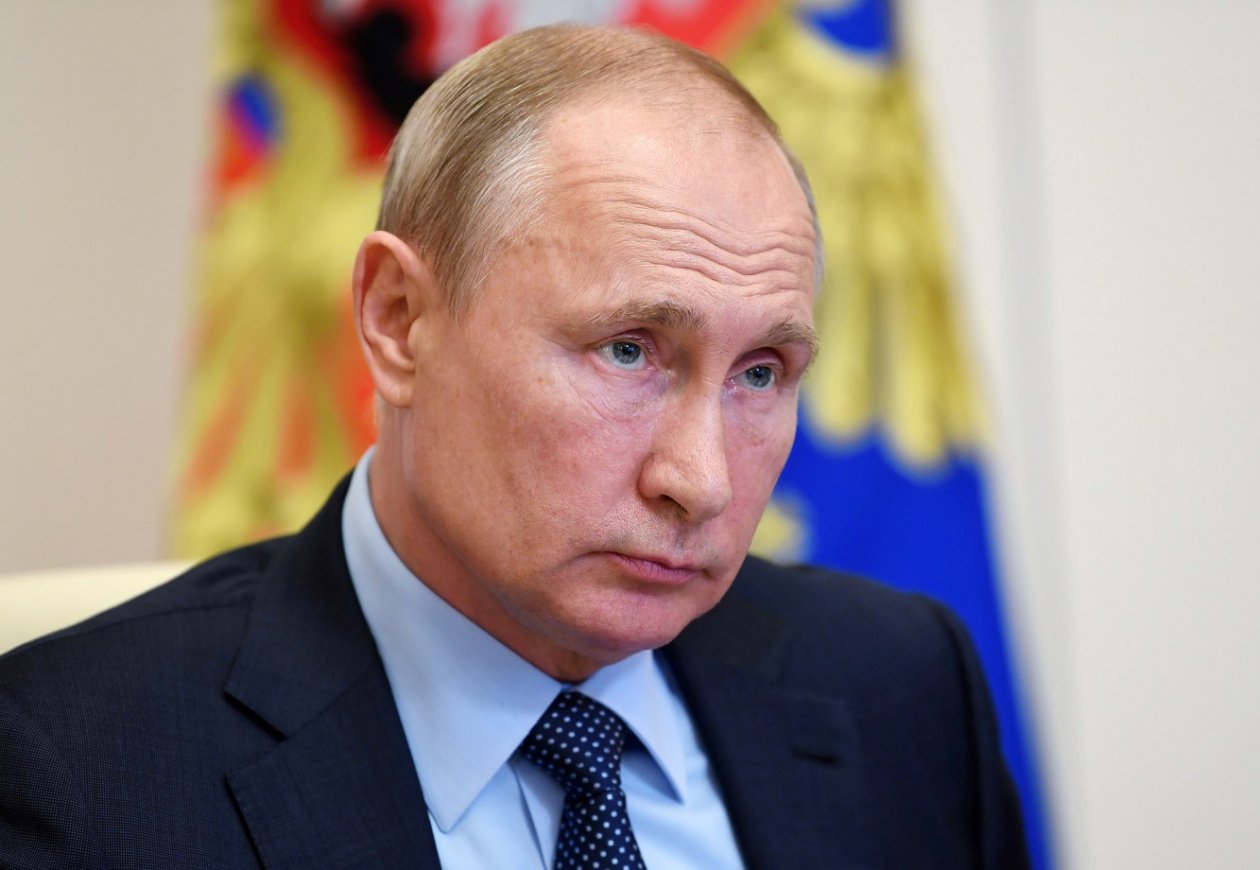
President of Russia Vladimir Putin: Colleagues, good afternoon.

We continue exchanging information and views on the state of our national economy and drafting decisions for this sector.

Today, I suggest that we review trends and developments in the key sectors and the current macroeconomic indicators in general. Of course, we will discuss the effect from the measures that were adopted, as well as additional decisions for supporting household incomes and stimulating business activity.

I would like to begin with dynamics in the production sector. Russia’s industrial output increased by 3.9 percent in the first four months of 2022. However, there was a slight decline in April, with a substantial contraction in car manufacturing and oil refining. Several sectors, for example, the steel industry, have been warning us about a significant decline in their output volumes in the medium-term.

As you know, we have already held several meetings on specific sectors of the economy with representatives of the key businesses and the relevant government agencies. Together, we outlined our priorities and future steps, and agreed on specific measures to support companies, producers and their workforce in the current environment.

I would like to point out to our colleagues in the Government that it is essential that these decisions be implemented and help the affected sectors overcome the challenges they face today. These challenges stem from a number of circumstances – let’s not dwell too much on this subject now.

I will add that it is necessary to step up work in these and some other areas, to meticulously study all the details and make well-considered decisions. In this context, we will certainly continue holding sectoral meetings to stay aware of the problems faced by domestic producers, suppliers and contractors, and, of course, to give timely, targeted and effective responses to the arising challenges.

As for positive results, we know well that we have positive dynamics in agriculture and construction. These are vital, backbone branches of our economy, which employ millions of people, millions of specialists. The growth and strengthening of these branches are decisive for developing entire regions and territories of our country, for improving living standards for our people.

I will also note low unemployment. In April, it was at the lowest historical level in Russia, and in May, the number of jobless, far from increasing, even decreased a little. In April, it stood at 4 percent, which is the lowest rate on record. In the current conditions, this is a very serious achievement, but I would like to ask you to keep the situation under control, considering that there are still risks in the labour market, of course.

Furthermore, we managed to control inflation. In annual terms, it reached 17.4 percent on May 27. Starting in the second half of May, prices stopped rising altogether, and inflation is zero now. But we must bear in mind that there are pluses in this and also a trap, an ambush, as people say. Therefore, it is necessary to analyse the situation very thoroughly and make timely decisions. In effect, this is what we are doing.

The situation in the currency market is also stable. The strengthening of the ruble made it possible to relax requirements for exporters. This primarily applies to the reduction of the mandatory sale of currency revenues from 80 to 50 percent. The sale period was extended as well. According to expert estimates and in your opinion, this should make it easier to conduct foreign trade, but I would like to draw your attention to certain risks in this area, too.

Also, during our previous meetings, I already mentioned the importance of supporting consumer demand and spurring its dynamics. In May, retail trade in nominal terms was up by 5.4 percent compared to the same period last year. However, adjusted to inflation, it declined in real terms. I would like to re-emphasise the importance of stimulating the end demand in the economy, to ensure the growth of individual incomes, and to provide businesses with additional liquidity and lending resources.

A number of decisions to this effect have already been made. On June 1, pensions and the minimum wage, as well as the subsistence wage, were increased by 10 percent, and as a result, many social benefits and payments have increased.

Companies in a number of sectors of the economy will be eligible for a deferment in paying insurance premiums for the second quarter of 2022. However, judging by the budget statistics – I discussed this with the Prime Minister not long ago – not all companies took advantage of this opportunity in May. Actually, less than half of that amount was used. We allocated 350 billion, but only 137 billion was used.

Let’s get to the bottom of this today. In any case, I want the Government, the regions, and our leading business associations to work more closely with the business and to convey in-depth information to the companies on the ground about who is entitled to deferred insurance premiums, how to exercise this right, and so on.

I would also like our colleagues from the Government and the Central Bank to pay attention to business lending and mortgage issuance, which are down despite the key rate cut and the recently launched lending-related state support programmes. Let’s discuss separately ways to increase the effectiveness of these measures.

In closing, work on the federal budget for the next three years is underway. The design of budget rules, which must not only ensure public finance stability, but also bolster the growth rate of the Russian economy, is a matter of fundamental importance. Clearly, flexible approaches and adjustments must be used. I want the Government to submit proposals regarding a new design of the budget rules by late July.

Let’s move on to reviewing the issues at hand. There is plenty to discuss, which we have been planning to do for a long time now….

Brit Sentenced to Death in Donetsk Issues Warning: “Don’t Get Into War You Don’t Really Understand”

Brit sentenced to death in Donetsk issues warning
Shaun Pinner.

RT.com, 6/9/22

“Don’t get into war you don’t really understand,” Shaun Pinner tells aspiring foreign mercenaries

Shaun Pinner, a British citizen who fought with the Ukrainian forces and was sentenced to death on Thursday by a court in Donetsk, has issued a stark warning for all foreigners who might be considering joining the fight against Russian troops: “Don’t get into a war you don’t really understand.”

Shaun Pinner, his compatriot Aiden Aslin and Moroccan Saadun Ibrahim were found guilty of acting as mercenaries and attempting to seize power by force in the Donetsk People’s Republic. They were also accused of undergoing training in order to carry out terrorist activities on the territory of the state, which was formally recognized by Russia in February.

In an exclusive interview with RT, conducted shortly before the sentence was announced, Pinner called on aspiring mercenaries to accept the fact that they can be put on trial and – in the worst-case scenario – may get a death sentence, and warned them against complaining when it happens.

Pinner revealed that his time in captivity was in many ways an eye-opening experience for him.

“Some people do want to be a part of Russia, and you have to accept that,” he said, adding that, now, after he saw Donetsk’s “face,” his “war will be over” no matter what happens to him. He also revealed that he would like to “learn more about the history of both sides.”

Pinner said that his decision to join the Ukrainian military was prompted by several factors: his Ukrainian wife did not want to move to the UK and he could not find a job to support his family. With nine years of service in the British military behind him, Pinner decided to sign a three-year contract with the Ukrainian armed forces which would also provide him with a residency in Ukraine. Being a “patriot of Ukraine,” the Brit decided that it would be a good opportunity for “giving something to Ukraine and, obviously, receiving something back in return.”

He revealed that the standard salary of a contractor at a point of permanent deployment was an amount equivalent to 360 British pounds, which could be raised to around £1,000 for participating in military operations.

According to Pinner, the emphasis of the military training was mainly on “cleaning” and “maintaining military” equipment with not much of actual military training.

There were several foreigners in his unit, the Brit revealed, but three of them deserted last year, “just walked away.”

The active combat service for Pinner did not start till December last year and since February it was “full-on” every day.

Captivity and questioning has been “very very hard” for Pinner, as were solitude and “very confined” conditions. He said that during the questioning he was shown “terrible” photos, allegedly depicting the abuse of Russian prisoners of war by Ukrainian militants.

“I can’t really grumble, I wasn’t shot and I’ve still got all my limbs and my fingers,” the Briton said.

He expressed hope that he and other foreigners who are being tried as mercenaries would be exchanged.

When asked what he’d planned to do after his contract with the Ukrainian military terminated, Pinner said that he and his family intended to move to England and “to start a new life” there.

Pinner and Aslin were captured in Mariupol in April, as Russian and DPR troops cut off a brigade of Ukrainian marines to which they were attached. The British government has demanded that they be treated as prisoners of war under the Geneva Conventions, despite not being formally at war with the republic. However, the DPR has pointed out that the conventions only apply to uniformed soldiers of a national military, not to apparent foreign mercenaries.

Earlier this month, Russian military spokesman, Major General Igor Konashenkov, claimed that the number of foreign fighters in Ukraine, whom he described as “mercenaries,” had decreased from 6,600 to 3,500. Konashenkov specified that hundreds of foreign mercenaries in Ukraine had been destroyed by Russian long-range precision weapons “shortly after their arrival at the places where they were undergoing additional training and where the tactical units were coordinated.” However, most of the mercenaries, according to the spokesman, were killed “due to the low level of training and the lack of real combat experience.”

Therefore, Konashenkov claimed, since the beginning of May, “the flow of foreign mercenaries to Ukraine to participate in hostilities against the Russian armed forces has virtually dried up.”

Andrea Peters: Major Russian industries break down under weight of sanctions

cut off saw cutting metal with sparks
Photo by Anamul Rezwan on Pexels.com

By Andrea Peters, World Socialist Website, 6/7/22

A pretty bleak assessment. I was aware of the problems in the auto industry and that there is expected to be a problem with reserve stocks of some components running out later this year or next year. But I wasn’t aware of the problems asserted here in the metals industries. I also know that, with respect to the water issue for Crimea, Russian forces took control early in the war of the water source for Crimea that had been cut off by Ukraine. Perhaps the author is referring to getting infrastructure in place to connect the water supply back to Crimea for irrigation? Otherwise, that seems to be an inaccurate point. I also would have preferred embedded links for sources in the article. In any event, I think it’s useful that readers are aware of this article and that, despite Putin’s historical savvy at turning lemons into lemonade, there is real pain in Russia’s economy, the height of which we probably haven’t seen yet – Natylie

Key sectors of Russian industry are breaking down under the weight of import and export bans, deficits of spare parts and materials, the closure of foreign markets and the freezing of financial transactions. Reports are emerging of problems in everything from trucking to the production of milk cartons, as companies struggle to sustain operations.

On Tuesday, Russian lead producers announced they are in danger of shuttering factories due to the absence of overseas buyers and a decline in domestic demand fueled in large part by a sharp contraction in the auto industry. Even with some enterprises having already cut production by 30 percent over the last several months, warehouses are full with unsold lead.

European consumers previously accounted for nearly 50 percent of all Russian lead sales, and they have effectively been absent from the market since March due to logistical and financial problems brought on by Western sanction. As of July 10, EU purchases of Russian lead will be entirely prohibited. Lead companies also say they are encountering major obstacles getting the government licenses necessary to divert production to Asian countries.

At an industry-wide conference held on June 7, Russian freight companies declared they are at risk of bankruptcy due to a steep decline in prices, high costs for replacement parts, and an inability to purchase new vehicles from foreign suppliers. In April, the EU barred the country’s trucks from entering its soil.

Domestic demand is down, too. Between March and June 1, corporations saw freight prices drop by 13.2 percent on average for the top 100 destinations, with some major routes experiencing two to three times that decline. The fee charged for transporting goods between Moscow and Saint Petersburg, Russia’s two largest cities, fell by 34.4 percent during those three months. Whereas previously, 1 million Russian trucks made 300,000 daily shipments, now 1.1 million trucks are making just 180,000. Air cargo is also down.

The government is aware of the problem, with the minister of transport acknowledging in May that sanctions “practically broke all the logistics in the country.” It has made grants and low-cost loans available, but companies say that is not enough. They need help with the cost of fuel, and they are overburdened by taxes. In addition, while the ministry of industry and trade has approved “parallel imports”—branded goods that are brought into the country without the permission of the trademark owner—of Scania and Volvo products, they have not done so for Mercedes, MAN, Iveco, DAF and Isuzu. As a result, the rubber necessary for truck repairs is, for instance, in short supply, reports news outlet RBK.

Russia’s ports are also in crisis. In March, cargo turnover in Saint Petersburg, one of the country’s largest harbors, fell by 41 percent in absolute volume. The government has responded by cutting rental rates that shippers have to pay for the use of port facilities, but experts say that without an increase in demand the problem cannot be overcome.

There are ongoing discussions over the creation of new maritime links between domestic and international ports, including some in Iran. But putting such plans into action requires significant investments, as well as time, because in many cases the infrastructure to send or receive the kinds of cargo that would be borne by Russian ships does not currently exist. A looming EU and UK ban on insuring Russian maritime transport will further complicate the situation.

The auto industry also continues to suffer from the pullout of foreign car producers and a major shortfall of materials, particularly electronic components. Rosstat, Russia’s central statistical agency, announced Wednesday that auto production fell by nearly half between January and April. This is the steepest drop witnessed in any sector. In April of this year, Russian automakers produced 85.4 percent fewer cars than they did at the same time in 2021. “At the moment, only two enterprises produce cars more or less stably—the Ulyanovsk UAZ and the Tula plant Haval,” reported Izvestiia on June 6.

In an interview with Ridus.ru, industry expert Sergei Aslanyan explained the depth of the crisis. “We don’t have electronics factories, we don’t have anything to make an engine out of. We have ‘Niva,’ which is 45 years old, 20 percent consists of imports,” he said referring to one model produced by Russian manufacturer Lada. But, he added, “It has pistons and piston rings from the American corporation Federal Mogul. And now we will even have nothing to assemble the Niva from. What are we going to make air bag systems from? Who will present us with an airbag? Nobody. We don’t even have bearings.”

The prospect that a nationwide import substitution program, which the Kremlin is pushing, will fill the gaps is a pipedream, argue experts. “Even the Soviet archaic Moskvich [car model] cannot be revived today. Where can I get it? It disappeared a long time ago. I’m afraid that even the documentation can only be found in the museum. It is impossible to breathe life into the dead,” Yang Heitzeer, vice president of the National Automobile Union, told Ridus.ru. 

The data, computing, and telecommunications industries, which sustain all sectors of the economy, are now without the semiconductors, microchips and servers they need to operate and expand. Home-grown companies have not been able to match the memory, processing and bandwith capacities of foreign-made producers. These are in high demand because overseas corporations are no longer providing cloud services to Russian firms.

In Tatarstan, with a population of more than 3.8 million, the Ministry of Digital Development had to scrap plans to extend 4G/LTE to 61 cities and instead was only able to provide the service to 30 new places. It simply lacked the materials necessary. A similar problem occurred in Saratov Oblast, home to 2.4 million people.

In late May, the Russian Steel Association told the government that it is confronting difficulties due to a steep fall in domestic demand and the strength of the ruble. In addition, with the EU having banned imports, producers have been forced to “sell goods at a discount, and in some cases even below cost” to China and other Asian countries, Russian Steel’s head Alexei Sentyurin explained.

Its members will suffer major losses and have to cut production, the organization said, unless the government reduces its tax burden and works to devalue the ruble. “Ferrous metallurgy enterprises face serious risks of staff reductions,” adds news outlet RBK based on its discussion with Sentyurin.

Russian agriculture is facing problems too because of its heavy reliance on imported seeds, which in some cases account for the majority or even the entirety of the product it uses—for instance, sunflowers (70-77 percent) and sugar beets (100 percent). While experts say an immediate crisis has been forestalled because the industry built up seed reserves, what will happen next year is unclear.

Yevgenii Ivanov of the Institute for Agricultural Market Studies explained to Zol.ru, “As a rule, all companies in the world that deal with sugar beet seeds grow them in northern Italy and southern France. In Russia, only some areas near Sochi and in the Crimea are suitable for these purposes.” Crimea, however, is at the center of the war in Ukraine, and Kiev began cutting off water supplies to the region, which lacks adequate resources of its own, even prior to the Russian invasion. But, as Ivanov noted, “it is impossible to grow sugar beet there without irrigation.”

The forestry industry is also running into difficulties. The head of the Khanty-Mansi autonomous region has been receiving large numbers of complaints from timber companies about the fact that due to export bans they have nowhere to sell their goods. Former major markets, such as Uzbekistan, are now closed.

There are concerns over the supply of bacteria for the fermentation of goods like yogurt and kefir, because Russian milk-product producers import 80 percent of what they need. For some time, there was a deficit of milk in stores in parts of the country because the Finnish carton maker that Russian producers relied on pulled out. The elevator industry is also having manufacturing problems.

Even the Russian oil and gas industry, which is posting record profits despite EU and US import bans due to surging energy prices and increased demand from China, India and elsewhere, is limited by the fact that it has lost access to imported technology, software, and human capital that it needs to develop new wells and gas fields in previously untapped places, like, for instance, the Barents Sea. Without a solution to this, as well as the construction of new pipelines to Asian markets, it will struggle to sustain itself and grow.

The Russian government is trying to cover up the depth of the crisis, claiming that unemployment, allegedly at just 4 percent, is the lowest ever, that its programs will reduce poverty in 2022 and its economic policies secure the real incomes of the population. President Putin declared on Tuesday that inflation is being brought under control.

The Kremlin is deeply concerned that popular anger over the collapse of the economy will not just be directed against the West for its punishing sanctions, but at the state for its disastrous invasion of Ukraine and the miserable consequences of 30 years of capitalist restoration. But the manipulation of jobless numbers, raises for government employees that amount to a couple hundred dollars a year, and false claims about the prices of essentials goods and services cannot change the reality facing the Russian working class.

For its part, the US and its NATO allies are celebrating the destruction of Russia. Media accounts in the Western press generally note with barely suppressed delight the deepening crisis.