“In this video I want to give you an update of how life in Russia has changed under sanctions 2 months later. I will tell you about the current economic situation in Russia and also will show you the prices for food, gas, and other stuff.” – Svetlana
Russian President Vladimir Putin says that Western sanctions aiming to cause panic and shortages among Russians have failed abysmally. The scene at the suburban Europark shopping mall in Moscow seems to bear that out.
A few Western-owned stores, like The Body Shop and L’Occitane, have notices pasted on their doors that cite temporary closure, with no reason given. But many local franchises, selling luggage, curtains, appliances, perfumes, shoes, fashion clothing, and electronics, all seem to be working as usual.
Editor’s note: This article was edited in order to conform with Russian legislation criminalizing references to Russia’s current action in Ukraine as anything other than a “special military operation.”
The giant French-owned Auchan hypermarket downstairs has bursting shelves and full stocks of almost everything from toilet paper, to fresh meats and vegetables, citrus fruits and bananas, to a wide range of domestic cheeses and dairy products. Only if you were looking for a few specific products, such as Kellogg’s brand muesli or Finnish cream cheese, might you notice they are gone.
Two months into the “special military operation” against Ukraine, accompanied by the most comprehensive barrage of sanctions ever leveled against any country, Russian life, at least around Moscow, looks shockingly normal. Opinion surveys show that huge majorities of Russians don’t expect the sanctions to have any impact on their lives, and almost 10% say they didn’t even know about the situation.
“For the most part we are still living in our previous reality,” says Ivan Timofeev, a sanctions expert with the Russian International Affairs Council, which is affiliated with the Foreign Ministry. “But at some point we will begin transitioning to a new reality, and then it will be very hard to ignore the deep changes we shall have to make.”
“Things actually seem better”
If you happened to be at loose ends in Moscow this week and wanted to sit in an upscale coffee shop, sip a latte, and use the Wi-Fi, you’d be spoiled for choice. Restaurants, beauty salons, grocery stores, car repair services, indeed, the full range of consumer services are still operating almost normally. Thanks to the rebound of the ruble – which was trading at around 130 to the U.S. dollar barely a month ago but has climbed above its pre-February value, to around 80 – the price hikes, though very real, are not yet too worrisome.
Back at the Europark mall, clearly named in a more optimistic time, you need to squint hard to spot the emerging supply gaps.
At the food court upstairs, McDonald’s and KFC have been shuttered for weeks. But there is still a pizza stand, an Asian wok place, and a Vietnamese restaurant. Baskin-Robbins continues to dispense about a dozen flavors of ice cream. Teremok, a Russian fast-food outlet that serves up borscht, blini (pancakes), pelmeni (meat dumplings), and Russian salads (vegetables in mayonnaise), seems to be enjoying newfound popularity. Irina, eating some combination of that with her preteen son, Vova, insists the choices are probably healthier now.
“Things have been strange for quite a while,” she says. “Last year, during the pandemic, none of these shops were even open. Things actually seem better.”
If you were craving American-style fast food, nearby outlets of Burger King and Subway are doing a roaring business with their signature offerings. That can be explained by the franchise system, which really took off in Russia over the past decade or so. The head offices of those companies may have left Russia, but the individual outlets continue working.
The manager of a local Burger King, who didn’t want his name mentioned, says that he can source almost all the items on his old menu locally, and carry on indefinitely. He admits a few adjustments will have to be made, including new packaging and some substitute condiments and seasonings. It won’t look, or perhaps taste, exactly the same, but most people won’t even notice, he insists.
“I am pretty sure food isn’t going to be a problem no matter how serious the sanctions get,” says Mr. Timofeev. That’s a politically potent point, since major turning points in Russian history have often been driven by the curse of famine. “Russian agriculture is pretty self-sufficient today and whatever outside inputs, like seeds and equipment, can probably be replaced.”
And those foodstuffs that Russia does need to import can be acquired from countries that are not part of the West’s sanctions regime. Some of the biggest sources of citrus fruits are Turkey and former Soviet countries like Uzbekistan and Tajikistan. And Russia gets its sugar largely from Brazil, which has not signed on to sanctions.
Obviously Russia has no domestic energy shortages. Prices for home heating and electricity are stable and relatively low. No potential shocks there. The price of gasoline in Moscow was 53 rubles per liter [about $2.85 per gallon] last week, and hasn’t changed much in recent years.
Back to the ’90s?
When asked, many Russians say that whatever happens, they will find ways to cope. That perspective is probably informed by their past lives in the former Soviet Union, an economy that survived seven decades producing almost everything it consumed, from cabbages to paper clips to rocket ships. During the near-total economic implosion in the 1990s, Russians grew their own food, routinely used pirated versions of software and movies, and fell back on barter, family, and community networks to survive.
No one seems to believe the present crisis is going to get that bad. But experts warn that it’s early, and the real crunch in supply chains and crippled industrial capacities probably won’t arrive until at least next year.
There are serious worries about parts and servicing for the Japanese and European cars that millions of Russians drive. Most Western automotive giants are among the hundreds of foreign companies that have pulled out of Russia since February, shredding their warranties in the process. The cost of many spare parts has leapt by as much as 50% in recent weeks, according to an article in Gazeta.ru.
But new logistics chains are already being sourced to companies in China, the article says, a big manufacturer of car parts for the whole world.
Even brand-name Western products will keep arriving through “gray distribution” networks, much like those pioneered by other sanctioned countries like Iran, says Andrei Movchan, an independent economist. One of many examples of how that works is an ad for a Turkish company, which promises to purchase any goods the customer wants, and pass them on for payment in rubles to the Russian end user.
“It will be more difficult and expensive, but nobody will have to go without their gadgets and other comforts,” says Mr. Movchan. “In the longer term, Russian industry is capable of producing a lot of things, or it can be ramped up to do so. It’s just that it will be the technology of 20 years ago, worse quality, higher costs. That’s not good, but we can survive it.”
And then there’s outright piracy, a fixture of ’90s life in Russia, now set to make a comeback. For example, several Moscow cinemas are currently screening “The Batman” and other first-run Hollywood films, even though their licenses to do so have been revoked. That’s controversial, even in Russia, and there is a heated discussion about it in the entertainment press.
“I’m afraid we are headed back to the future,” says Alexey Raevsky, director of Zecurion, a Moscow cybersecurity firm. He says the departure of Western competitors has been a big boost to his business.
“When we are talking about software development, there is no issue of spare parts or physical facilities. It’s just a digital code,” he says. “As they say, nature abhors a vacuum. I talk to people in places like Iran and Syria, where they are strictly forbidden to buy Microsoft or Cisco software, but they say they always have the latest installed on their computers. I’ve never asked them how they do that, but I am sure we’ll find out.”
The range of ideological opposition to U.S. foreign policy is the most diverse since before World War II. Liberal and progressive critics, long the primary bastion of dissent, are once again making their presence known after a lapse during the Obama administration. And, on the right, fissures over U.S. foreign policy, which erupted in 2016, are here to stay. These disparate dissidents are attempting to parlay and turn their shared opposition into action.
Many within the commentariat are confused by this perplexing alliance. Some have slandered this relationship as a tenuous “Red-Brown coalition.” Such characterization is an unfortunate (if not an intentional) mischaracterization of this budding partnership. Left-wing opponents to the foreign policy status quo are not communists. Nor are the ranks of the right overpopulated with Nazis. Instead, the two wings of dissent are the inheritors of distinct but often overlapping strains of foreign policy opposition. Both traditions are firmly rooted in the American experience; neither are alien imports of a totalitarian ideology.
The reemergence of both strains signals a return to an earlier norm where opposition to U.S. foreign policy was not a definitive litmus test for a party or ideological affiliation. Understanding this history and how they came to be consumed by partisan politics should reassure those who desire a change in how the U.S. government conducts itself abroad.
The early interwar period constituted the high point of American non-interventionism in the 21st century. The horrors of the Great War and transpartisan suspicion of centralized power created a broad range of antiwar sentiments. In both Congress and the broader political culture, Americans across the political spectrum opposed American involvement in foreign wars, particularly at the prospect of fighting in Europe. Famous works like War is a Racket by retired major general Smedley Butler challenged the naive assumptions of American foreign policy and charged that economic and government interests had become intertwined. Butler’s treatise was preceded by another expose of the corporatist roots of modern war, Merchants of Death. Authored by H.C. Englebrecht and Frank Hanighen, Merchants of Death served as a forerunner of the “military-industrial complex” concept. They helped to spawn a congressional committee to investigate the origins of U.S. entry into the Great War. The differing ideologies of its authors served as proof of broad antiwar sentiment at the time. Englebrecht was a frequent columnist for The World Tomorrow, a leading magazine for Christian socialists; Hanighen would join the America First Committee (AFC) and co-found Human Events, a leading conservative magazine founded to advocate for non-interventionism.
Despite its reputation as an exclusively conservative organization, the AFC had former progressives among its members, like NAACP co-founder and former editor of the Nation magazine Oswald Garrison Villard and dissident liberals such as journalist John T. Flynn. The AFC also found much of its inspiration from progressive historian Charles Beard. While not officially a member of the AFC, Beard’s views paralleled their efforts. The AFC listed his book, A Foreign Policy for America, Giddy Minds and Foreign Quarrels on their book list, along with other antiwar books like Merchants of Death. Conversely, The Progressive, a left-wing antiwar magazine, ran articles from conservative non-interventionists like Frank Hanighen.
In this fluid ideological environment, boilerplate left-wing critiques of capitalism merged with right-wing criticisms of state power to form a potent opposition to future American involvement in overseas wars.
Despite this early consensus, the Overton Window on American involvement in overseas wars narrowed as Hitler’s armies marched across Europe. Nazi Germany’s conquest of France and the Low Countries and assault on the British Isles turned most liberals towards intervention. Similarly, the German invasion of the Soviet Union caused American communists, who had hitherto been counted among the ranks of the non-interventionists, to flip on a dime and join the cause of the Allies. In this collapsed ideological environment, only predominantly right-wing groups like the America First Committee and progressive holdouts like Charles Beard and The Progressive remained in opposition to U.S. entry into the war during the waning months of 1941. The Japanese attack on Pearl Harbor caused official American entry into the war and narrowed the contours of American foreign policy debate for a generation…
Boy, do I miss this guy. Most mainstream journalists have forgotten the basic principle of reporting that Parry enumerates in the first paragraph. Bolding for emphasis is mine. – Natylie
A basic rule of journalism is that there are almost always two sides to a story and that journalists should try to reflect that reality, a principle that is especially important when lives are at stake amid war fevers. Yet, American journalism has failed miserably in this regard during the Ukraine crisis.
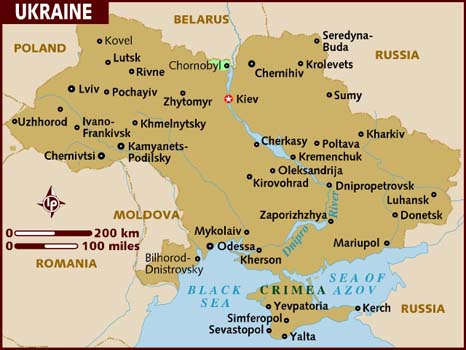
With very few exceptions, the mainstream U.S. media has simply regurgitated the propaganda from the U.S. State Department and other entities favoring western Ukrainians. There has been little effort to view the worsening crisis through the eyes of ethnic Russian Ukrainians living in the east or the Russians witnessing a political and humanitarian crisis on their border.
Frankly, I cannot recall any previous situation in which the U.S. media has been more biased across the board than on Ukraine. Not even the “group think” around Iraq’s non-existent WMDs was as single-minded as this, with the U.S. media perspective on Ukraine almost always from the point of view of the western Ukrainians who led the overthrow of elected President Viktor Yanukovych, whose political base was in the east.
So, what might appear to an objective observer as a civil war between western Ukrainians, including the neo-Nazis who spearheaded last year’s coup against Yanukovych, and eastern Ukrainians, who refused to accept the anti-Yanukovych order that followed the coup, has been transformed by the U.S. news media into a confrontation between the forces of good (the western Ukrainians) and the forces of evil (the eastern Ukrainians) with an overlay of “Russian aggression” as Russian President Vladimir Putin is depicted as a new Hitler.
Though the horrific bloodshed more than 5,000 dead has been inflicted overwhelmingly on the ethnic Russians in eastern Ukraine by the forces from western Ukraine, the killing is routinely blamed on either the eastern Ukrainian rebels or Putin for allegedly fomenting the trouble in the first place (though there is no evidence that he did, as even former Secretary of State Henry Kissinger has acknowledged.)
I realize that anyone who doesn’t accept the Official Washington “group think” on Ukraine is denounced as a “Putin apologist” just as anyone who questioned the conventional wisdom about Saddam Hussein giving his WMDs to al-Qaeda was a “Saddam apologist” but step back for a minute and look at the crisis through the eyes of ethnic Russians in eastern Ukraine.
A year ago, they saw what looked to them like a U.S.-organized coup, relying on both propaganda and violence to overthrow their constitutionally elected government. They also detected a strong anti-ethnic-Russian bias in the new regime with its efforts to strip away Russian as an official language. And they witnessed brutal killings of ethnic Russians at the hands of neo-Nazis in Odessa and elsewhere.
Their economic interests, too, were threatened since they worked at companies that did substantial business with Russia. If those historic ties to Russia were cut in favor of special economic relations with the European Union, the eastern Ukrainians would be among the worst losers.
Remember, that before backing away from the proposed association agreement with the EU in November 2013, Yanukovych received a report from economic experts in Kiev that Ukraine stood to lose $160 billion if it broke with Russia, as Der Spiegel reported. Much of that economic pain would have fallen on eastern Ukraine.
Economic Worries
On the rare occasions when American journalists have actually talked with eastern Ukrainians, this fear of the economic consequences has been a core concern, along with worries about the harsh austerity plan that the International Monetary Fund prescribed as a prerequisite for access to Western loans.
For instance, in April 2014, Washington Post correspondent Anthony Faiola reported from Donetsk that many of the eastern Ukrainians whom he interviewed said their resistance to the new Kiev regime was driven by fear over “economic hardship” and the IMF austerity plan that will make their lives even harder.
“At a most dangerous and delicate time, just as it battles Moscow for hearts and minds across the east, the pro-Western government is set to initiate a shock therapy of economic measures to meet the demands of an emergency bailout from the International Monetary Fund,” Faiola reported.
In other words, Faiola encountered reasonable concerns among eastern Ukrainians about what was happening in Kiev. Many eastern Ukrainians felt disenfranchised by the overthrow of their elected leader and they worried about their future in a U.S.-dominated Ukraine. You can disagree with their point of view but it is an understandable perspective.
When some eastern Ukrainians mounted protests and occupied buildings similar to what the western Ukrainians had done in Kiev before the coup these protesters were denounced by the coup regime as “terrorists” and became the target of a punitive military campaign involving some of the same neo-Nazi militias that spearheaded the Feb. 22 coup against Yanukovych.
Nearly all the 5,000 or more people who have died in the civil war have been killed in eastern Ukraine with ethnic Russian civilians bearing the brunt of those fatalities, many killed by artillery barrages from the Ukrainian army firing into populated centers and using cluster-bomb munitions.
Even Human Rights Watch, which is largely financed by pro-coup billionaire George Soros, reported that “Ukrainian government forces used cluster munitions in populated areas in Donetsk city” despite the fact that “the use of cluster munitions in populated areas violates the laws of war due to the indiscriminate nature of the weapon and may amount to war crimes.”
Neo-Nazi and other “volunteer” brigades, dispatch by the Kiev regime, have also engaged in human rights violations, including death squad operations pulling people from their homes and executing them. Amnesty International, another human rights group that Soros helps fund and that has generally promoted Western interests in Eastern Europe, issued a report noting abuses committed by the pro-Kiev Aidar militia.
“Members of the Aidar territorial defence battalion, operating in the north Luhansk region, have been involved in widespread abuses, including abductions, unlawful detention, ill-treatment, theft, extortion, and possible executions,” the Amnesty International report said.
The Aidar battalion commander told an Amnesty International researcher: “There is a war here. The law has changed, procedures have been simplified. If I choose to, I can have you arrested right now, put a bag over your head and lock you up in a cellar for 30 days on suspicion of aiding separatists.”
Amnesty International wrote: “Some of the abuses committed by members of the Aidar battalion amount to war crimes, for which both the perpetrators and, possibly, the commanders would bear responsibility under national and international law.”
Neo-Nazi Battalions
And the Aidar battalion is not even the worst of the so-called “volunteer” brigades. Others carry Nazi banners and espouse racist contempt for the ethnic Russians who have become the target of something close to “ethnic cleansing” in the areas under control of the Kiev regime. Many eastern Ukrainians fear falling into the hands of these militia members who have been witnessed leading captives to open graves and executing them.
As the conservative London Telegraph described in an article last August by correspondent Tom Parfitt: “Kiev’s use of volunteer paramilitaries to stamp out the Russian-backed Donetsk and Luhansk ‘people’s republics’ should send a shiver down Europe’s spine.
“Recently formed battalions such as Donbas, Dnipro and Azov, with several thousand men under their command, are officially under the control of the interior ministry but their financing is murky, their training inadequate and their ideology often alarming. The Azov men use the neo-Nazi Wolfsangel (Wolf’s Hook) symbol on their banner and members of the battalion are openly white supremacists, or anti-Semites.”
Based on interviews with militia members, the Telegraph reported that some of the fighters doubted the Holocaust, expressed admiration for Adolf Hitler and acknowledged that they are indeed Nazis.
Andriy Biletsky, the Azov commander, “is also head of an extremist Ukrainian group called the Social National Assembly,” according to the Telegraph article which quoted a commentary by Biletsky as declaring: “The historic mission of our nation in this critical moment is to lead the White Races of the world in a final crusade for their survival. A crusade against the Semite-led Untermenschen.”
The Telegraph questioned Ukrainian authorities in Kiev who acknowledged that they were aware of the extremist ideologies of some militias but insisted that the higher priority was having troops who were strongly motivated to fight. [See Consortiumnews.com’s “Ignoring Ukraine’s Neo-Nazi Storm Troopers.”]
So, the current wave of U.S. propaganda condemning a rebel offensive for violating a shaky cease-fire might look different if seen through the eyes of a population under siege, being cut off from banking services, left to starve and facing “death squad” purges by out-of-control neo-Nazis.
Through those eyes, it would make sense to reclaim territory currently occupied by the Kiev forces, to protect fellow ethnic Russians from depredations, and to establish borders for what you might hope to make into a sustainable autonomous zone.
And, if you put yourself in the Russian position, you might feel empathy for people who were your fellow citizens less than a quarter century ago and who saw their elected leader ousted in a U.S.-backed coup. You also might be alarmed at the presence of Nazi storm troopers (considering the history of Hitler’s invasion) and the prospects of NATO moving up to your border with a possible deployment of nuclear weapons. You might even recall how agitated Americans got over nuclear missiles in Cuba.
Granted, some of these Russian fears may be overwrought, but the Kremlin has to worry about threats to Russia’s national security just like any other country does. If you were in Putin’s shoes, what would you do? Would you turn your back on the plight of the eastern Ukrainians? Would you let a hostile military alliance push up against your borders with a potential nuclear threat, especially given the extra-legal means used to remove Ukraine’s constitutionally elected president?
Even if the U.S. press corps fulfilled its obligation to tell both sides of the story, many Americans would still condemn Putin’s acceptance of Crimea’s pleas for reentry into Russia and his assistance to the embattled eastern Ukrainians. They would accept the U.S. government’s relentless presentation of the Ukraine crisis as “Russian aggression.”
And, they might still buy the story that we’re endlessly sold about the Ukraine crisis being a premeditated move by Putin in a Hitlerian strategy to conquer the Baltic States. Even though there’s zero evidence that Putin ever had that in mind, some Americans might still choose to believe it.
But my point is that American journalists should not be U.S. government propagandists. Their job is not to herd the American people into some “group think” corral. A good journalist would want to present the positions of both sides with some evenhandedness.
Yet, that is not what we have witnessed from the U.S. news media on the Ukraine crisis. It has been nearly all propaganda nearly all of the time. That is not only a disservice to the American people and to the democratic precept about an informed electorate. It is a reckless violation of professional principles that has helped lurch the world toward a potential nuclear conflagration.
Investigative reporter Robert Parry broke many of the Iran-Contra stories for The Associated Press and Newsweek in the 1980s.