Considering that this is a memoir of a woman whose claim to fame is being a Russia expert and a celebrated biographer of Putin, I was expecting substantive discussion of contemporary Russia to be a significant part of the book. That was not the case, however, as her real experience with Russia seems to have occurred from the late 1980’s through the early 2000’s. This experience is weaved into her general biography but it doesn’t provide the necessary insight to understand the current state of affairs in the country or the problems that have come to a head recently between Russia and the west.
Hill did not start out as a privileged insider but came from a hardscrabble working class background in Northeast England, which makes her down-to-earth and relatable. She describes how the neoliberal and deindustrialization policies of the 1970’s and 1980’s personally affected her family and many others in the UK and how she observed similarities in certain regions of the U.S. after she moved there. She draws parallels on the dynamics behind this and the economic collapse Russia went through in the 90’s – a theme I have also explored. She is to be lauded for bringing the details of this topic to the professional educated class that will most likely be reading her book. Where she tends to go off the rails is what she says – and doesn’t say – about Putin era Russia.
From what I can ascertain from her telling, she spent significant time on the ground in Russia off and on from 1987 through the early 2000’s. She goes into the most detail about her travels to Russia as an exchange student during the Gorbachev era and then again while pursuing her PhD during the 1990’s. During the former, she describes Moscow as bleak and run-down with crumbling infrastructure and food shortages but an impressive public transportation system. During the latter, she describes the effects of the Shock Therapy program that transitioned Russia to a free market economy. She also goes into the travails of being a woman during this period of economic collapse and chaos where many Russian women turned to prostitution servicing relatively well-heeled western men. She relates an anecdote in which an elevator man at the Moscow hotel where she was bringing a delegation of Japanese businessmen to visit her academic sponsor assumed she was a call girl and was aggressively intent on getting a cut until the reality of the situation was explained to him – by a man, of course.
However, it doesn’t seem that she has spent any real time in Russia for most of the Putin era, with the exception of attendance at a couple of Valdai conferences. This leads me to believe that she is relying on information from the usual dubious sources in the political and media establishment about what contemporary Russia is like. This is evident from the few remarks she makes in passing.
First, she uses the term autocratic when referring to Putin’s Russia, which is inaccurate. Autocracy is absolute rule by one person. Anyone who has any depth of understanding of Putin era Russia knows that Putin does not rule absolutely. Similarly she uses the term populist in a somewhat pejorative sense to compare Putin to Donald Trump and Brexit cheerleader Nigel Farage: “They were charismatic leaders who dealt in pithy slogans that offered promises, not programs.” This is a gross oversimplification of Putin’s politics over the past two decades and implies that Putin has had a lack of political substance in his approach to addressing the numerous crises he inherited when taking over Russia. Putin is a pragmatist who had to learn on the job. There are still many problems to tackle but the command of many details of different areas of governance he has developed over time as demonstrated during lengthy Q&A sessions, speeches and press appearances, along with the concrete improvements he oversaw in poverty reduction, infrastructure investment, lowering crime and rebuilding a dilapidated military reveals this observation by Hill to be quite laughable….
The Russian Federation and the member States of the North Atlantic Treaty Organization (NATO), hereinafter referred to as the Parties,
reaffirming their aspiration to improve relations and deepen mutual understanding,
acknowledging that an effective response to contemporary challenges and threats to security in our interdependent world requires joint efforts of all the Parties,
determined to prevent dangerous military activity and therefore reduce the possibility of incidents between their armed forces,
noting that the security interests of each Party require better multilateral cooperation, more political and military stability, predictability, and transparency,
reaffirming their commitment to the purposes and principles of the Charter of the United Nations, the 1975 Helsinki Final Act of the Conference on Security and Co-operation in Europe, the 1997 Founding Act on Mutual Relations,
Cooperation and Security between the Russian Federation and the North Atlantic Treaty Organization, the 1994 Code of Conduct on Politico-Military Aspects of Security, the 1999 Charter for European Security, and the Rome Declaration “Russia-NATO Relations: a New Quality” signed by the Heads of State and Government of the Russian Federation and NATO member States in 2002,
have agreed as follows:
Article 1 The Parties shall guide in their relations by the principles of cooperation, equal and indivisible security. They shall not strengthen their security individually, within international organizations, military alliances or coalitions at the expense of the security of other Parties. The Parties shall settle all international disputes in their mutual relations by peaceful means and refrain from the use or threat of force in any manner inconsistent with the purposes of the United Nations. The Parties shall not create conditions or situations that pose or could be perceived as a threat to the national security of other Parties. The Parties shall exercise restraint in military planning and conducting exercises to reduce risks of eventual dangerous situations in accordance with their obligations under international law, including those set out in intergovernmental agreements on the prevention of incidents at sea outside territorial waters and in the airspace above, as well as in intergovernmental agreements on the prevention of dangerous military activities. Article 2 In order to address issues and settle problems, the Parties shall use the mechanisms of urgent bilateral or multilateral consultations, including the NATO-Russia Council. The Parties shall regularly and voluntarily exchange assessments of contemporary threats and security challenges, inform each other about military exercises and maneuvers, and main provisions of their military doctrines. All existing mechanisms and tools for confidence-building measures shall be used in order to ensure transparency and predictability of military activities. Telephone hotlines shall be established to maintain emergency contacts between the Parties. Article 3 The Parties reaffirm that they do not consider each other as adversaries. The Parties shall maintain dialogue and interaction on improving mechanisms to prevent incidents on and over the high seas (primarily in the Baltics and the Black Sea region). Article 4 The Russian Federation and all the Parties that were member States of the North Atlantic Treaty Organization as of 27 May 1997, respectively, shall not deploy military forces and weaponry on the territory of any of the other States in Europe in addition to the forces stationed on that territory as of 27 May 1997. With the consent of all the Parties such deployments can take place in exceptional cases to eliminate a threat to security of one or more Parties. Article 5 The Parties shall not deploy land-based intermediate- and short-range missiles in areas allowing them to reach the territory of the other Parties. Article 6 All member States of the North Atlantic Treaty Organization commit themselves to refrain from any further enlargement of NATO, including the accession of Ukraine as well as other States. Article 7 The Parties that are member States of the North Atlantic Treaty Organization shall not conduct any military activity on the territory of Ukraine as well as other States in the Eastern Europe, in the South Caucasus and in Central Asia. In order to exclude incidents the Russian Federation and the Parties that are member States of the North Atlantic Treaty Organization shall not conduct military exercises or other military activities above the brigade level in a zone of agreed width and configuration on each side of the border line of the Russian Federation and the states in a military alliance with it, as well as Parties that are member States of the North Atlantic Treaty Organization. Article 8 This Agreement shall not affect and shall not be interpreted as affecting the primary responsibility of the Security Council of the United Nations for maintaining international peace and security, nor the rights and obligations of the Parties under the Charter of the United Nations. Article 9 This Agreement shall enter into force from the date of deposit of the instruments of ratification, expressing consent to be bound by it, with the Depositary by more than a half of the signatory States. With respect to a State that deposited its instrument of ratification at a later date, this Agreement shall enter into force from the date of its deposit. Each Party to this Agreement may withdraw from it by giving appropriate notice to the Depositary. This Agreement shall terminate for such Party [30] days after receipt of such notice by the Depositary. This Agreement has been drawn up in Russian, English and French, all texts being equally authentic, and shall be deposited in the archive of the Depositary, which is the Government of …
The United States of America and the Russian Federation, hereinafter referred to as the “Parties”,
-guided by the principles contained in the Charter of the United Nations, the 1970 Declaration on Principles of International Law concerning Friendly Relations and Cooperation among States in accordance with the Charter of the United Nations, the 1975 Helsinki Final Act of the Conference on Security and Cooperation in Europe, as well as the provisions of the 1982 Manila Declaration on the Peaceful Settlement of Disputes, the 1999 Charter for European Security, and the 1997 Founding Act on Mutual Relations, Cooperation and Security between the North Atlantic Treaty Organization and the Russian Federation,
-recalling the inadmissibility of the threat or use of force in any manner inconsistent with the purposes and principles of the Charter of the United Nations both in their mutual and international relations in general,
-supporting the role of the United Nations Security Council that has the primary responsibility for maintaining international peace and security,
-recognizing the need for united efforts to effectively respond to modern security challenges and threats in a globalized and interdependent world,
-considering the need for strict compliance with the principle of non-interference in the internal affairs, including refraining from supporting organizations, groups or individuals calling for an unconstitutional change of power, as well as from undertaking any actions aimed at changing the political or social system of one of the Contracting Parties,
-bearing in mind the need to create additional effective and quick-to-launch cooperation mechanisms or improve the existing ones to settle emerging issues and disputes through a constructive dialogue on the basis of mutual respect for and recognition of each other’s security interests and concerns, as well as to elaborate adequate responses to security challenges and threats,
-seeking to avoid any military confrontation and armed conflict between the Parties and realizing that direct military clash between them could result in the use of nuclear weapons that would have far-reaching consequences,
-reaffirming that a nuclear war cannot be won and must never be fought, and recognizing the need to make every effort to prevent the risk of outbreak of such war among States that possess nuclear weapons,
-reaffirming their commitments under the Agreement between the United States of America and the Union of Soviet Socialist Republics on Measures to Reduce the Risk of Outbreak of Nuclear War of 30 September 1971, the Agreement between the Government of the United States of America and the Government of the Union of Soviet Socialist Republics on the Prevention of Incidents On and Over the High Seas of 25 May 1972, the Agreement between the United States of America and the Union of Soviet Socialist Republics on the Establishment of Nuclear Risk Reduction Centers of 15 September 1987, as well as the Agreement between the United States of America and the Union of Soviet Socialist Republics on the Prevention of Dangerous Military Activities of 12 June 1989,
have agreed as follows:
Article 1 The Parties shall cooperate on the basis of principles of indivisible, equal and undiminished security and to these ends: shall not undertake actions nor participate in or support activities that affect the security of the other Party; shall not implement security measures adopted by each Party individually or in the framework of an international organization, military alliance or coalition that could undermine core security interests of the other Party. Article 2 The Parties shall seek to ensure that all international organizations, military alliances and coalitions in which at least one of the Parties is taking part adhere to the principles contained in the Charter of the United Nations. Article 3 The Parties shall not use the territories of other States with a view to preparing or carrying out an armed attack against the other Party or other actions affecting core security interests of the other Party. Article 4 The United States of America shall undertake to prevent further eastward expansion of the North Atlantic Treaty Organization and deny accession to the Alliance to the States of the former Union of Soviet Socialist Republics. The United States of America shall not establish military bases in the territory of the States of the former Union of Soviet Socialist Republics that are not members of the North Atlantic Treaty Organization, use their infrastructure for any military activities or develop bilateral military cooperation with them. Article 5 The Parties shall refrain from deploying their armed forces and armaments, including in the framework of international organizations, military alliances or coalitions, in the areas where such deployment could be perceived by the other Party as a threat to its national security, with the exception of such deployment within the national territories of the Parties. The Parties shall refrain from flying heavy bombers equipped for nuclear or non-nuclear armaments or deploying surface warships of any type, including in the framework of international organizations, military alliances or coalitions, in the areas outside national airspace and national territorial waters respectively, from where they can attack targets in the territory of the other Party. The Parties shall maintain dialogue and cooperate to improve mechanisms to prevent dangerous military activities on and over the high seas, including agreeing on the maximum approach distance between warships and aircraft. Article 6 The Parties shall undertake not to deploy ground-launched intermediate-range and shorter-range missiles outside their national territories, as well as in the areas of their national territories, from which such weapons can attack targets in the national territory of the other Party. Article 7 The Parties shall refrain from deploying nuclear weapons outside their national territories and return such weapons already deployed outside their national territories at the time of the entry into force of the Treaty to their national territories. The Parties shall eliminate all existing infrastructure for deployment of nuclear weapons outside their national territories. The Parties shall not train military and civilian personnel from non-nuclear countries to use nuclear weapons. The Parties shall not conduct exercises or training for general-purpose forces, that include scenarios involving the use of nuclear weapons. Article 8 The Treaty shall enter into force from the date of receipt of the last written notification on the completion by the Parties of their domestic procedures necessary for its entry into force. Done in two originals, each in English and Russian languages, both texts being equally authentic.
Newspapers have been gleefully reporting about a “possible” invasion of Ukraine by Russia since the end of October. But analysts – both Russian and international – are almost unanimous in the belief that the chances of an actual invasion are almost zero.
As bne IntelliNews has reported on in detail, the reasons are obvious: it would be too costly in Russian lives, something that Russian President Vladimir Putin’s slowly falling approval and trust ratings make extremely unappealing to the Kremlin; while Russians overwhelmingly support the annexation of Crimea, they are a lot more uncomfortable with the war in Donbas; eastern Ukraine could be taken easily, but western Ukraine could not; and finally the international diplomatic backlash would be catastrophic for Russia’s economy.
And why bother? What would Russia gain? The only thing of value Ukraine has is agriculture, which would collapse in the event of an all-out war followed an inevitable viscous and impassioned insurrection. On top of that, the Kremlin would take on the cost of fixing Ukraine at a time when it is struggling to fix Russia Inc. It’s not going to happen.
So what is actually going on here? As usual, all you have to do is listen to what Putin says. Putin has a history of telegraphing his moves well in advance. That was the big difference between Putin and his predecessor Boris Yeltsin, who never said what he meant.
In Putin’s big set-piece speeches he lays out his plans in black and white and almost always follows through on them. But as it is Putin and as he has been so demonised in the last two decades a lot of what he says is ignored, or twisted to suit the various narratives used to describe Russia.
Putin said in his very first speech as president that demographics was the main danger to Russia and as we reported in “Putin’s babies”, he did something about that a decade later. Putin warned in his 2007 Munich Security Conference speech that Russia would push back if its security concerns were ignored and he started modernising the army in 2012, annexed the Crimea in 2014 and is now moving up troops that could invade Ukraine in 2021. You can draw a straight line through all these points.
What did he say?
Putin has just done it again. During the Munich speech he brought up the broken verbal promises made to Mikhail Gorbachev of no Nato eastern expansion. And he has mentioned them again in the last month several times.
The year after Munich in 2008 the Russian Foreign Ministry drew up detailed plans for a new pan-European security deal that included a fair specific framework proposal released by the Russian Foreign Ministry in 2009. Putin has now brought that up again, demanding “legal guarantees” from Nato that it will not expand further (i.e. allow Ukraine or Georgia to join). The Russian Foreign Ministry followed up a few days after the two-hour December 7 virtual summit with Biden with a concrete five point list of demands and on December 15 the MFA sent even more extensive details on what a security deal could look like. Clearly the MFA has been working on this for some time and has a very clear idea of what it wants.
There is a general assumption that the current war talk will die away in the New Year. Daniel Salter, head of Equity Strategy and head of Research at Renaissance Capital, said during a conference call on December 16 that Russia is one of the more prospective investment stories in 2022, as the house view is that Russia won’t invade Ukraine and that things will “calm down” at the beginning of next year.
It’s clear to everyone that Putin is dead set against Ukraine joining Nato, but the assumption is that he is satisfied with the frozen conflict he has caused in the Donbas because that guarantees Ukraine can never join Nato. So after the current posturing is over the status quo will resume.
What happens if Washington attempts to force Russia into concessions over Ukraine through a Reaganesque display of strength, when in fact the United States has a comparatively weak hand to play? That is the unenviable situation that President Joe Biden finds himself in after his video meeting with Russian president Vladimir Putin this week and his tough talk about not recognizing any Russian redlines.
The notion that the United States is at a disadvantage in contending with Russia strikes most Americans as far-fetched. After all, America’s gross national product is many times larger than that of Russia, and we dominate the international financial system. Our military is larger and much more capable, our offensive cyber capabilities are unparalleled, and we enjoy the support of a large array of treaty allies and military partners in Europe and around the world. By contrast, Russia has few friends and allies, a middling economy largely dependent on energy exports, and a declining population hit hard by Covid-19. On paper, the United States appears to hold many cards in this high-stakes game.
But in practice, the ability to bring force to bear in specific circumstances matters far more than aggregate measures of national power. When it comes to Ukraine, Russia is better able to move large numbers of combat-ready forces into battle, more familiar with the local terrain, and far more prepared to go to war than is the United States, for which Ukraine is not a matter of existential importance. Russia’s military has a recent track record of success in Syria, not to mention in Ukraine itself. And Moscow has very likely planned for the possibility of draconian U.S. and European sanctions and other punitive measures that Washington might impose in response. If push comes to shove in Ukraine, Russia is very likely to win—and quickly.
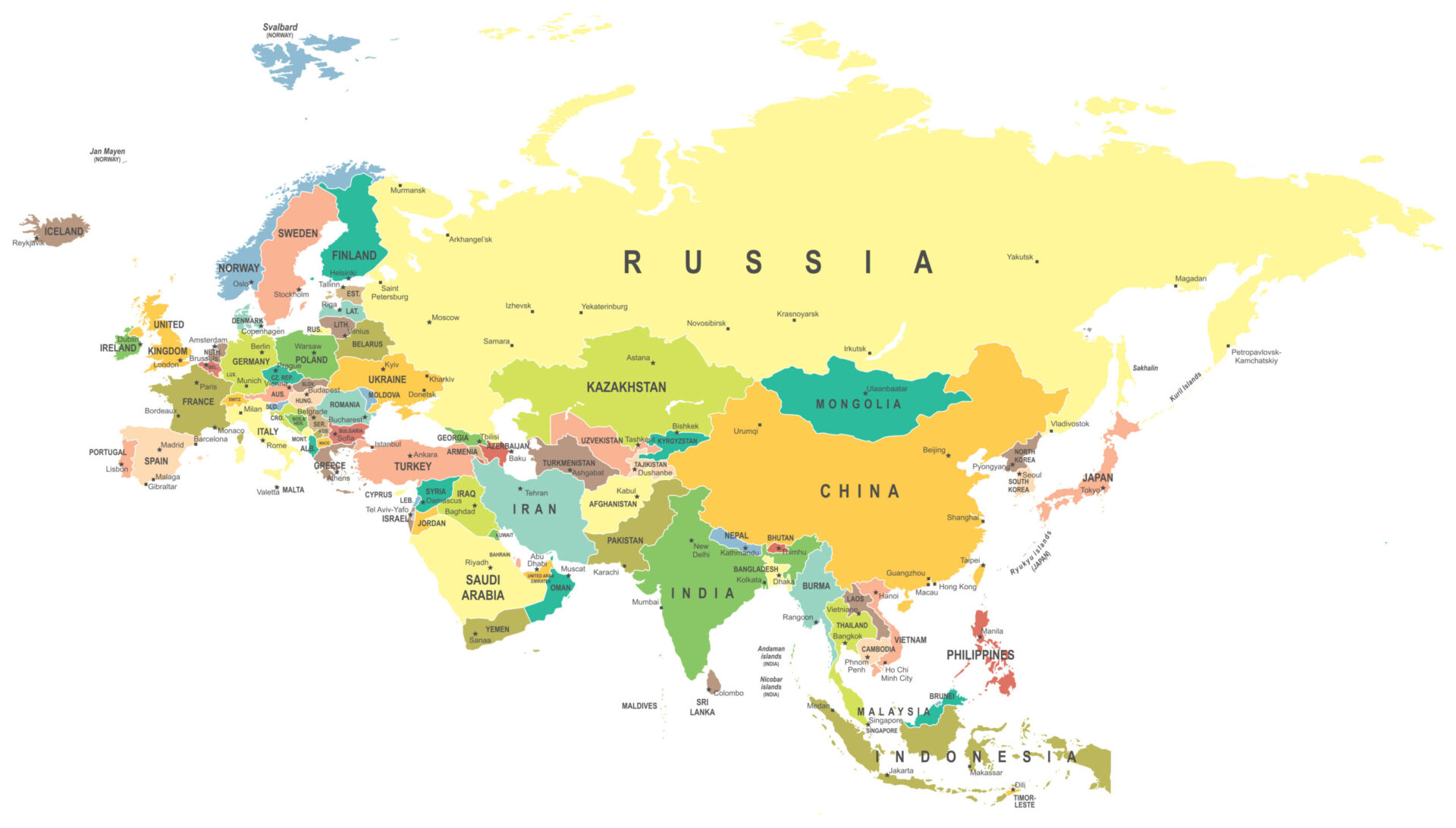
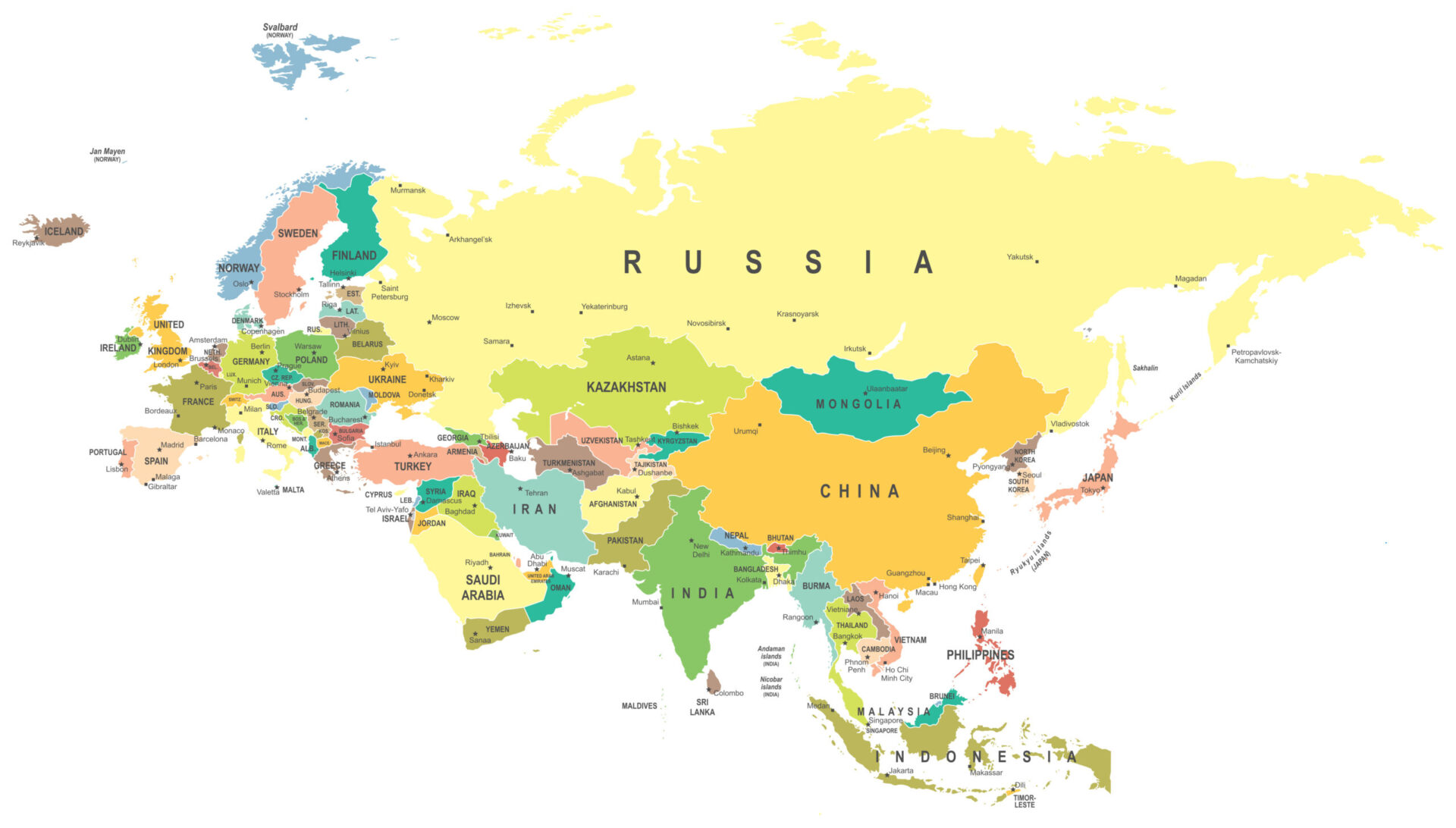
Should Moscow opt to invade, a Russian campaign would probably be aimed at effectively turning territory in southeastern Ukraine into an extension of Russia itself. As many as 200,000 Russian ground forces could be arrayed in an arc from north to south along a 600-mile front. Publicly available satellite photos show that the largest concentration of Russian military forces currently lies between Voronezh and Crimea. Forces north and northwest of Kiev may constitute a supporting attack with the goal of preventing Ukrainian forces in and around Kiev from moving south to reinforce Ukrainian defenses from Voronezh to Luhansk and Donetsk. Since the battle would take place on Russia’s geographical doorstep, leaders on both sides would be intimately familiar with the terrain they must fight over.
The Russian maneuver units consist of approximately 100 battalion tactical groups (BTGs): reinforced armored and armored infantry battalions of roughly 750 to 1,000 soldiers including artillery, engineers, and support elements. The vast majority of this force is positioned in southern Russia, capable of striking west across the border with Ukraine along multiple axes with operational objectives south of Kiev along the Dnieper River. Roughly twelve BTGs are positioned to move west along the Black Sea coast toward Odessa, the seizing of which would transform Ukraine into a landlocked state.
The ground maneuver force would operate within the framework of tightly organized intelligence, reconnaissance, and surveillance (ISR) elements linked to powerful strike formations. There might be as many as 100 batteries of rocket artillery in the assembled force. These include systems like the BM-30 Smerch, a system often referred to as a high-end conventional weapon of mass destruction (WMD). A single salvo of five BM-30 Smerch’s firing 300mm rockets can destroy an area the size of New York City’s Central Park with the explosive power equal to a one-kiloton nuclear warhead. In addition, the Iskander mobile missile system, M a precision-guided tactical ballistic missile, would attack Ukrainian airfields, operational headquarters, and logistical infrastructure with explosive 1,058-pound conventional warheads carrying HE fragmentation, submunition, penetration, and fuel-air explosive at ranges between 180 and 300 miles.
Meanwhile, at every level—tactical, operational, and strategic—integrated air defenses composed of S-400 and S-500 Russian air and missile defense systems would protect Russian strike and maneuver formations from Ukrainian air and missile attack. Any Ukrainian or NATO manned or unmanned, low-flying, subsonic platform, whether it were a conventional rotorcraft, a tilt-rotor, or a fixed-wing prop/turboprop aircraft, would be highly susceptible to detection, engagement, and destruction.
If Russian forces attack, the skies over Ukrainian forces would be crowded with a mix of Russian surveillance drones, manned aircraft, and, potentially, Russia’s new loitering munitions. These are effectively cruise missiles designed to hover over the battlefield for hours and engage beyond line-of-sight ground targets. These attacks would be rapidly followed by precision-guided rocket artillery fire.
Under these circumstances, it is not unreasonable to assume that Russian ground forces would reach their operational objectives along the Dnieper River in as little as seventy-two to ninety-six hours. Whether Moscow would decide to press further west and seize the port of Odessa is hard to know, but the action would place Russian forces in close proximity to the pro-Russian Moldovan separatist republic of Transnistria on Romania’s border, rendering Odessa a tempting target.
Kiev’s ability to contend with such a campaign is highly questionable. It is vastly outmanned and outgunned by the Russian military. Its goal would be to retain as much territory east of the Dnieper River as possible while delaying the Russian advance, in the hope that Russian momentum would slow and buy time for immense international pressure on Moscow to halt its offensive.
The Biden administration is reportedly not considering direct military intervention in the event of an invasion of Ukraine. And with good reason—it could do little on the battlefield to counter such moves. The United States has only three combat brigades in Europe, and two of these are lightly armed with antiquated equipment. Although we could realistically employ advanced combat aircraft in Ukraine, they would have to contend with advanced Russian air defenses and formidable Russian electronic jamming capabilities. U.S. air superiority, which has been central to our military operations against lesser powers since the end of the Cold War, would not be assured in Ukraine.
Knowing this, Washington is threatening to impose harsh consequences on Russia outside the battlefield, using “sanctions from hell” and other unspecified measures, in the hope that this will stay Putin’s hand. Unfortunately, it is very likely that the Russians have long anticipated what the United States may do. Along with China, they have prepared for the possibility of being kicked out of the international SWIFT system. They have alternatives to the newly built Nord Stream 2 natural gas pipeline, should Europeans decline to allow its use, and they may even be prepared to choke off their supplies of gas to Europe in mid-winter in retaliation. To deter possible U.S. action against their satellite systems, they have signaled their willingness to take out U.S. satellites by conducting a successful anti-satellite missile test just two weeks ago despite vehement U.S. protests, and they have built land-based backup systems should their own communications and navigation satellites cease operations.
The good news is that Putin almost certainly understands that an invasion of Ukraine would lead to a complete break in relations with the West, rendering Russia in effect a dependent junior partner of China. Moreover, he probably realizes that Russian forces would very likely have to deal with guerrilla resistance in occupied Ukrainian territory, and that unoccupied portions of western Ukraine could become a host for U.S. and NATO forces over the longer term. It is doubtful that these are outcomes he finds appealing. He would probably prefer to find an alternative way to derail a U.S. alliance with Ukraine if Biden is prepared to bargain. But if Washington refuses to recognize that Russian redline, he may well be prepared to fight—and there is not much the United States could do to stop him.