Big Serge – Sound and Fury: On Nukes, Order of Battle, and Chariots

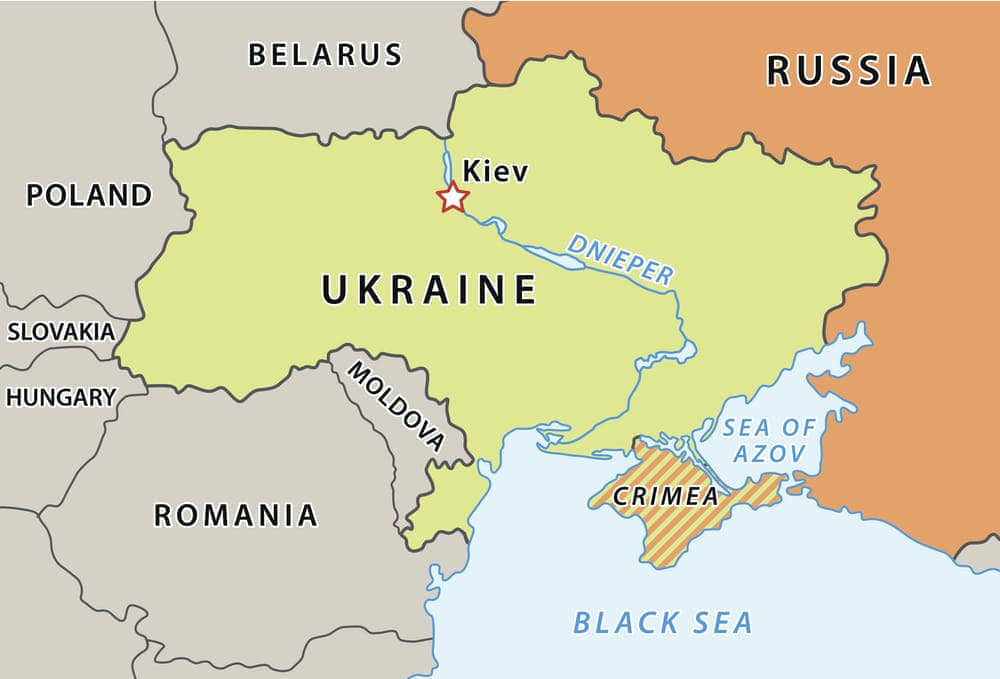
Map of Ukraine

By Big Serge, Substack, 10/28/22

It has been several weeks since I last posted in this space – while I could apologize for the hiatus, I actually believe that one should only write when they have something to say – I do not believe in content simply for the sake of content (call that the Disney model). Events on the ground in Ukraine have been subdued for the past few weeks. This, so far at least, is in keeping with the predictions I made in previous posts that the front would stabilize towards the end of October as Ukraine’s offensive capability degraded and Russian reserves began to enter the theater. We’ll talk on that more in a bit – the real impetus for writing now is to take stock of some of the agitation (both nuclear and conventional) that has occurred in recent weeks and discuss the risks of escalation, with some other minutia and tangential content thrown in.

Straight off the top, I will state that my overall view of the war’s trajectory remains the same. I do not believe nuclear use is likely, and I do not believe outside actors will formally enter the war on behalf of Ukraine. I still think that direct kinetic action will remain contained to the conventional war between Russia and Ukraine, with western support remaining confined to armaments, command and control assistance, intelligence sharing, and economic measures against Russia. NATO personnel are certainly on the ground in Ukraine, but operating in a “volunteer” or informal capacity to keep the veneer of plausible deniability. This veneer will remain intact, and preclude the formal deployment of NATO units to the battlefield.

While I remain attached to this conventional sketch of the war and do not anticipate the conflict to escalate out of control, the nuclear talk is certainly concerning enough to merit a bit of a think – so let’s take a look.

Signifying Nothing

One of the idiosyncrasies of the discourse in the age of the internet is the great difficulty involved in trying to keep timelines straight. I presume this is because the digital space makes information available simultaneously, creating a sort of temporal distortion for the reader. All that is simply to say that it might be useful to hammer out a timeline of events (or really, statements) to figure out how we ended up with nuclear use talk circulating.

The beginning of all this was a September 30th speech by Putin in which he pledged to defend Russia – including the four newly reunited oblasts – using any necessary methods. He did not explicitly use the world nuclear, but this was clearly implied in the scope of his expression “all the forces and resources we have.” This statement amounts to little more than a restatement of Russia’s nuclear use doctrine, which is well understood and a matter of public record.

Russia’s nuclear use doctrine has actually narrowed over time. A previous articulation of the doctrine, promulgated in 2000, stipulated that nuclear weapons could be used in situations “critical to the National Security of Russia” – a very open ended requirement that really places no restrictions at all, given the track record of great powers defining all manner of sundry minutia as critical matters of national security.

The newer version of the nuclear use doctrine, revised in 2010, is more narrow and reads as follows:

“Russia reserves the right to utilize nuclear weapons in response to the utilization of nuclear and other types of weapons of mass destruction against it and (or) its allies, and also in the event of aggression against the Russian Federation involving the use of conventional weapons when the very existence of the state is under threat.”

It is the last sentence that is the most important. This can be read fairly simply: Russia may use nuclear weapons to avoid losing a conventional war with existential stakes. A 2020 memorandum titled “On Basic Principles of State Policy of the Russian Federation on Nuclear Deterrence” articulated this further, and clarified that Russia’s nuclear deterrence:

“is aimed at maintaining the nuclear forces potential at the level sufficient for nuclear deterrence, and guarantees protection of national sovereignty and territorial integrity of the State.”

The use case is fairly straightforward. Nuclear use would be authorized in cases where Russia is losing a war that threatens to either destroy the state or strip its territories. Putin’s statement is entirely consistent with this and does not reflect any sort of revision or escalation of Russia’s approach to nuclear weapons – his statement represents little more than a reminder that Kherson, Zaporozhia, Donetsk, and Lugansk Oblasts are now, in the eyes of the state, subject to that territorial integrity clause. It does not raise the prospect of nuclear weapons use unless Russia was irretrievably losing the conventional war.

This, of course, did not stop western media from spinning Putin’s statements as a “threat” to use nuclear weapons. The narrative that Putin was making threats almost immediately prompted people to put words in his mouth and deduce that he was intimating at the use of a tactical nuclear weapon in Ukraine.

Tactical nuclear weapons tend to be a bit of an obfuscation. Alternatively termed battlefield nukes, or simply nonstrategic nuclear weapons, all this really means is a lower yield nuclear weapon deployed against the enemy’s conventional military assets and bases. Furthermore, that term – “lower yield” – is highly relative. A nonstrategic warhead these days may pack a blast yield of between 10 and 50 kilotons – nothing compared to modern strategic weapons (the American B83 clocks in at 1,200 kt), but still in the range, if not higher, than the bombs that destroyed Nagasaki and Hiroshima, which came in at around 15-20.

In short, a “tactical nuke” is still an unbelievably destructive weapon, but it sounds just benign enough for people to believe that Russia might actually try it. This is just silly. To begin with, nobody on the Russian side made reference to nonstrategic weapons – the entire concept is a western interpolation. Using low yield nuclear weapons would be more than just counterproductive, it would completely smash important elements of Putin’s overarching political framework for the war. Russia aims to retain the support of key Eurasian powers like China and India, keep the United States and NATO from becoming directly involved in the Ukraine War, and maintain the attritive tempo of the war by preventing the transfer of weapons like ATACMs to Ukraine. Deploying a tactical nuclear weapon would shatter all these objectives. It also strains credulity to presume that Russia, which began the war with a very light hand, sparing critical infrastructure at the onset and generally handling the Ukrainians gently, would skip multiple escalation rungs and resort directly to a very blunt instrument.

The question of Russian nuclear use dovetailed with newer claims (which really accelerated in the last week) that Ukraine plans to detonate a dirty bomb, which would then be blamed on Russia as a pretense to bring the west directly into the conflict. Ukraine has countered with that most classic of argumentative devices: “No, you.” A dirty bomb is a very different sort of device from a nuclear weapon. Whereas a nuclear warhead uses nuclear fission to generate explosive energy, a dirty bomb uses a conventional explosive device to spread radioactive material. A nuclear bomb generates tremendous explosive power, of which radioactivity is a byproduct – a dirty bomb has conventional explosive power, with the spread radioactive contamination as the intentional effect.

I do not believe a dirty bomb will be detonated in Ukraine.

Russia will not use a dirty bomb because there is absolutely no reason to do so. A dirty bomb lacks the direct explosive power of a nuclear weapon – the only thing it does that a conventional weapon does not is to spread radioactive material, poisoning the landscape and the people. This, very simply, has little to no military utility for Russia (and even military downside because it irradiates the battlefield) while bearing the same political downside as a tactical nuclear weapon: collapse of global support for Russia and NATO intervention.

That leaves only Ukraine itself, and in this case we are asked to believe that Ukraine would irradiate its own territory simply to try and bluff NATO into entering the war on its side. However, with NATO more or less running the Ukrainian state at this point, this amounts to claiming that NATO itself is seeking to use a dirty bomb as a false flag so that it can enter the war.

Phew. Lots going on, clearly.

Let’s take a step back and look at the broader context – using the destruction of the Nordstream Pipeline as a lodestar. The thing that was perhaps the most striking about the pipeline explosion was the fact that nobody really reacted to it. Of course, words and accusations were thrown both directions, but there was no discernable shift either from the west or from Russia in their handling of the situation. That the destruction of the pipeline was simply tolerated is strong evidence of a mutual commitment to avoid escalation. Compare this to the terrorist attack on the Kerch Bridge, which prompted a ferocious punitive barrage by Russia and intensified strikes on Ukraine’s energy grid.

Both Russia and NATO have shown a strong desire to keep the conflict quarantined to the Ukrainian theater at an acceptable intensity, and it seems they are determined to stay the course as nuclear rumors have gained intensity. Significantly, Russian Defense Minister Shoygu had a phone conversation with his American counterpart Lloyd Austin, after which the US government stated that it has seen no evidence that Russia intends to use nuclear weaponry. Putin followed up on this with his own statement that Russia has no plans to use nuclear weapons and that it would make neither military nor political sense to do so.

My broad understanding of all this is that the narrative got away from the parties involved. Putin reiterated Russia’s established nuclear use doctrine, which prompted a media spiral in the west that created a Russian “nuclear threat” whole cloth, before both parties began a climbdown. A nuclear incident would benefit nobody. Both NATO and Russia possess the ability to escalate without irradiating the Ukrainian steppe, and both parties would like the situation to remain controlled.

In the end, while the idea of nuclear war should always be taken seriously, the idea that a mushroom cloud is soon to rise over Kiev was, as Macbeth said, “a tale told by an idiot, full of sound and fury, signifying nothing.”

Force Generation and Order of Battle

Let us shift gears from the nuclear realm back to the conventional, and talk about two different force deployments to Ukraine – one fictional, and one that is occurring right now.

One cause of alarm recently was the news that units from the famed 101st Airborne Division had been deployed to Romania, just miles from the Ukrainian border. Imaginations ran wild and concluded that the “Screaming Eagles” were going to cross the border and start World War Three. Putting aside the fact that this is only a partial deployment that was planned months ago, the idea that the USA could get involved in the war this quickly is a bit detached from reality.

It actually takes a huge amount of effort to start a war. The infrastructure and logistics that need to be in place are truly enormous. Military rear areas and logistics are more complicated and involved than people commonly understand – from ammo dumps, to fuel and vehicle depots, to command and control infrastructure, to the truck and air lifts that connect it all. This is to say nothing of the need to stage the requisite number of troops to actually achieve something. None of this occurs overnight, or even in secret. Military buildups are highly visible, and have to be obfuscated with diplomatic uncertainty.

US deployment to Saudi Arabia began in August 1990, a full six months before the ground campaign in Operation Desert Storm actually got underway. For the second American invasion of Iraq in 2003, the buildup similarly took months. In the case of the current Russo-Ukrainian War, Russia’s military staging began fully a year before the shooting started (I told some friends in June 2021 that Russia was going to attempt to annex everything east of the Dnieper).

The deployment of airborne units (and not even the entire division) to Romania simply does not constitute anything like the buildup needed for the United States to enter the war. These are not meaningful force deployment levels, nor do they have the infrastructure in place to support them. We’re instead seeing a fairly mundane show the flag exercise, of the sort that occur with regularity around the world and which virtually never precipitate war.

But while we’re on the subject of force generation and deployment, I thought it might be apropos to talk about the Russian mobilization and force structure, and discuss an idiosyncrasy of the Russian military – the Battalion Tactical Group.

Let’s take a step back. Much of military organization depends on what we can call the base maneuver unit. This refers to the smallest level of organization that is capable of effective combined arms operations (cooperative use of armor, artillery, and infantry). Another way of putting this would be to ask, what is the smallest unit in the army that has comprehensive capabilities? This, alas, is where we get into those horrid order of battle diagrams, which are worse than gibberish to the layman.

This sort of organization began with Napoleon, who divided his army into corps. A corps was a combined arms unit, with its own cavalry, infantry, and cannon. However, the units *within* the corps – like an infantry division or a cavalry brigade – were not combined arms. Therefore, a corps had a comprehensive combat capability that made it suitable for any battlefield task, but the sub-units of the corps did not. This made the corps Napoleon’s base maneuver unit – the lowest level unit that could operate independently.

By the time of the World Wars, the division had become the base maneuver unit (a German infantry division had a sizeable organic artillery component). Later, the Panzer Division became the universally adaptable maneuver unit par excellence, with tanks, motorized infantry, artillery, and engineering. These were units that, assuming they were at full strength, could be assigned virtually any combat task.

Fast forward to the modern day – the basic needs remain the same. How does one organize an army around appropriately sized combined arms units that can take on a wide variety of tasks? For most armies, the regiment or brigade (a unit of a few thousand men) is the base combined arms maneuver unit. Russia, however, was forced to experiment due to a variety of unique factors.

Russia’s force generation model is unique, as I mentioned in my last post, utilizing a mixture of conscripts and contract professionals. This mixture, combined with fiscal austerity, creates a unique challenge. Suppose you have a brigade which is kept at only 80% strength during peacetime. Of that remaining force, a substantial fraction are conscripts, who legally cannot be deployed except to defend Russian territory. You are left with a sort of rump brigade that is actually deployable at any given moment. The solution for Russia was to create the 700-900 man Battalion Tactical Group – a smaller, derivative combined arms formation from the larger parent unit (the brigade).

This is key to understanding Russia’s performance in the war to this point. The BTG was devised as a temporary solution to the problem of being legally unable to readily deploy the entire parent brigade. The resulting formation is very high on firepower, with plenty of artillery and armor, but low on infantry. It is a powerful unit in short, high-intensity action, but it lacks the manpower to engage in protracted campaigns with full strength enemy units. A BTG will lack the ability to quickly regenerate combat power without cannibalizing other units.

What we have seen from Russia so far is entirely predictable given the type of force it generated at the beginning of the war. There has been a strong preoccupation with conserving infantry, because this is the arm that the BTG is most lacking. A unit that is overweight on ranged fires and low on infantry is not going to try to defend a tricky forward line – it’s going to pull back and impose a cost on the enemy with its fires. Is this ideal? No, clearly it would be better to have sufficient infantry so that it was unnecessary to hollow out portions of the front. However, the manpower fragility of the BTG necessitates this methodology – the BTG would prefer to retaliate with ranged fires from behind a proxy tripwire force – exactly like the national guard and militia that were manning the frontline in Kharkov Oblast. This leaves front lines vulnerable to penetration, especially when the Ukrainians use dispersed points of contact – but Russia’s tube and rocket advantage give it the ability to impose a foreboding cost when Ukraine pushes into those hollowed regions.

Why is this relevant right now? Well, Russia is in the process of a large mobilization drive which will radically alter the force deployment and organization scheme. The BTG is likely to disappear from the battlefield entirely, with mobilized personnel empowering a shift back to the parent formations (brigades and regiments) that do not have the infantry shortages that proved problematic for the BTG.

The Battalion Tactical Group was a novel attempt to solve a tricky force generation problem, which allowed Russia to keep potent combined arms formations in a ready state. They are high firepower units that proved capable of dishing out horrific punishment – but they are (and always were) temporary derivatives that are simply not designed for a war of attrition or manning a wide front. With mobilization underway, it seems that the time of the BTG has come to a close.

Pepe Escobar: No pain, no grain: Putin’s Black Sea comeback

By Pepe Escobar, The Cradle, 11/2/22

So, Turkish President Recep Tayyip Erdogan picks up the phone and calls his Russian counterpart Vladimir Putin: let’s talk about the “grain deal.” Putin, cool, calm and collected, explains the facts to the Sultan:

First, the reason why Russia withdrew from the export grain deal.

Second, how Moscow seeks a serious investigation into the – terrorist – attack on the Black Sea fleet, which for all practical purposes seems to have violated the deal.

And third, how Kiev must guarantee it will uphold the deal, brokered by Turkey and the UN.

Only then would Russia consider coming back to the table.

And then – today, 2 November – the coup de theatre: Russia’s Ministry of Defense (MoD) announces the country is back to the Black Sea grain deal, after receiving the necessary written guarantees from Kiev.

The MoD, quite diplomatically, praised the “efforts” of both Turkey and the UN: Kiev is committed not to use the “Maritime Humanitarian Corridor” for combat operations, and only in accordance with the provisions of the Black Sea Initiative.

Moscow said the guarantees are sufficient “for the time being.” Implying that can always change.

All rise to the Sultan’s persuasion

Erdogan must have been extremely persuasive with Kiev. Before the phone call to Putin, the Russian Ministry of Defense (MoD) had already explained that the attack on the Black Sea Fleet was conducted by 9 aerial drones and 7 naval drones, plus an American RQ-4B Global Hawk observation drone lurking in the sky over neutral waters.

The attack happened under the cover of civilian ships and targeted Russian vessels that escorted the grain corridor in the perimeter of their responsibility, as well as the infrastructure of the Russian base in Sevastopol.

The MoD explicitly designated British experts deployed in the Ochakov base in the Nikolaev region as the designers of this military operation.

At the UN Security Council, Permanent Representative Vassily Nebenzya declared himself “surprised” that the UN leadership “failed not only to condemn, but even to express concern over the terrorist attacks.”

After stating that the Brit-organized Kiev operation on the Black Sea Fleet “put an end to the humanitarian dimension of the Istanbul agreements,” Nebenzya also clarified:

“It is our understanding that the Black Sea Grain Initiative, which Russia, Turkey, and Ukraine agreed on under UN supervision on 22 July, must not be implemented without Russia, and so we do not view the decisions that were made without our involvement as binding.”

This means, in practice, that Moscow “cannot allow for unimpeded passage of vessels without our inspection.” The crucial question is how and where these inspections will be carried out – as Russia has warned the UN that it will definitely inspect dry cargo ships in the Black Sea.

The UN, for its part, tried at best to put on a brave face, believing Russia’s suspension is “temporary” and looking forward to welcoming “its highly professional team” back to the Joint Coordination Center.

According to humanitarian chief Martin Griffiths, the UN also proclaims to be “ready to address concerns.” And that has to be soon, because the deal reaches its 120-day extension point on November 19.

Well, “addressing concerns” is not exactly the case. Deputy Permanent Representative of Russia Dmitry Polyansky said that at the UN Security Council meeting western nations simply could not deny their involvement in the Sevastopol attack; instead, they simply blamed Russia.

All the way to Odessa

Prior to the phone call with Erdogan, Putin had already pointed out that “34 percent of the grain exported under the deal goes to Turkey, 35 percent to EU countries and only 3-4 percent to the poorest countries. Is this what we did everything for?”

That’s correct. For instance, 1.8 million tons of grain went to Spain; 1.3 million tons to Turkey; and 0.86 million tons to Italy. By contrast, only 0,067 tons went to “starving” Yemen and 0,04 tons to “starving” Afghanistan.

Putin made it very clear that Moscow was not withdrawing from the grain deal but had only suspended its participation.

And as a further gesture of good will, Moscow announced it would willingly ship 500,000 tons of grain to poorer nations for free, in an effort to replace the integral amount that Ukraine should have been able to export.

All this time, Erdogan skillfully maneuvered to convey the impression he was occupying the higher ground: even if Russia behaves in an “indecisive” manner, as he defined it, we will continue to pursue the grain deal.

So, it seems like Moscow was being tested – by the UN and by Ankara, which happens to be the main beneficiary of the grain deal and is clearly profiting from this economic corridor. Ships continue to depart from Odessa to Turkish ports – mainly Istanbul – without Moscow’s agreement. It was expected they would be “filtered” by Russia when coming back to Odessa.

The immediate Russian means of pressure was unleashed in no time: preventing Odessa from becoming a terrorist infrastructure node. This means constant visits by cruise missiles.

Well, the Russians have already “visited” the Ochakov base occupied by Kiev and the British experts. Ochakov – between Nikolaev and Odessa – was built way back in 2017, with key American input.

The British units that were involved in the sabotage of the Nord Streams – according to Moscow – are the same ones that planned the Sevastopol operation. Ochakov is constantly spied upon and sometimes hit out of positions that the Russians have cleared last month only 8 km to the south, on the extremity of the Kinburn peninsula. And yet the base has not been totally destroyed.

To reinforce the “message,” the real response to the attack on Sevastopol has been this week’s relentless “visits” of Ukraine’s electrical infrastructure; if maintained, virtually the whole of Ukraine will soon be plunged into darkness.

Closing down the Black Sea

The attack on Sevastopol may have been the catalyst leading to a Russian move to close down the Black Sea – with Odessa converted into an absolutely priority for the Russian Army. There are serious rumblings across Russia on why Russophone Odessa had not been the object of pinpointed targeting before.

Top infrastructure for Ukrainian Special Forces and British advisers is based in Odessa and Nikolaev. Now there’s no question these will be destroyed.

Even with the grain deal in theory back on track, it is hopeless to expect Kiev to abide by any agreements. After all, every major decision is taken either by Washington or by the Brits at NATO. Just like bombing the Crimea Bridge, and then the Nord Streams, attacking the Black Sea Fleet was designed as a serious provocation.

The brilliant designers though seem to have IQs lower than refrigerator temperatures: every Russian response always plunges Ukraine deeper down an inescapable – and now literally black – hole.

The grain deal seemed to be a sort of win-win. Kiev would not contaminate Black Sea ports again after they were demined. Turkey turned into a grain transport hub for the poorest nations (actually that’s not what happened: the main beneficiary was the EU). And sanctions on Russia were eased on the export of agricultural products and fertilizers.

This was, in principle, a boost for Russian exports. In the end, it did not work out because many players were worried about possible secondary sanctions.

It is important to remember that the Black Sea grain deal is actually two deals: Kiev signed a deal with Turkey and the UN, and Russia signed a separate deal with Turkey.

The corridor for the grain carriers is only 2 km wide. Minesweepers move in parallel along the corridor. Ships are inspected by Ankara. So the Kiev-Ankara-UN deal remains in place. It has nothing to do with Russia – which in this case does not escort and/or inspect the cargoes.

What changes with Russia “suspending” its own deal with Ankara and the UN, is that from now on, Moscow can proceed anyway it deems fit to neutralize terrorist threats and even invade and take over Ukrainian ports: that will not represent a violation of the deal with Ankara and the UN.

So in this respect, it is a game-changer.

Seems like Erdogan fully understood the stakes, and told Kiev in no uncertain terms to behave. There’s no guarantee, though, that western powers won’t come up with another Black Sea provocation. Which means that sooner or later – perhaps by the Spring of 2023 – General Armageddon will have to come up with the goods. That translates as advancing all the way to Odessa.

Sanctions on Russia are increasing, not decreasing, its revenue

industrial machine during golden hour
Photo by Pixabay on Pexels.com

By Noha Razek and Brian McQuinn, The Conversation, 10/18/22

Noha Razek ia Assistant Professor of Economics, University of Regina. Brian McQuinn is Co-Director of the Centre for Artificial Intelligence, Data, and Conflict and Assistant Professor, International Studies, University of Regina

The European Union has just approved new sanctions against Russia, including a price cap on oil sales, following the United States’ Sept. 30 announcement of new economic sanctions. Both announcements are in response to Russia’s annexation of four regions of Ukraine.

The goal of sanctions against Russia is to cripple Russia’s capacity to wage war and reduce Vladimir Putin’s access to the materials and financing necessary to fight.

However, because there are still countries willing to purchase Russia’s petroleum products, sanctions are increasing Russia’s revenue, not decreasing it.

Worse yet, the sanctions are driving up global oil and natural gas prices, causing spikes in inflation worldwide and, ironically, reducing the world’s access to the metals and minerals necessary for the transition away from oil and natural gas.

Widespread impact from sanctions

In early March, the sanctions on Russia’s oil sector had driven oil price estimates up to US$185 per barrel and the price of natural gas in Europe nearly reached US$500 per barrel. In late August, the price of natural gas lowered to US$410 per barrel.

As the winter approaches, Anne-Sophie Corbeau, Global Research Scholar at the Center on Global Energy Policy of Columbia University, stated that current natural gas prices of US$300 per barrel could generate not only a natural gas crisis, but also a power crisis.

This increase has had widespread effects beyond the oil and natural gas industry, impacting agricultural products, minerals and rare metals needed for green technologies, manufacturing industries and fertilizer production.

There’s concern that the monetary policies implemented to contain those inflationary effects could squeeze the amount of money and assistance that have been previously directed to green energy investments.

Another concern is that some countries will revise their short- and long-term energy security policies, putting energy security before energy transition.

Sanction picking is ineffective

Unlike previous “one-size-fits-all” sanctions on Iran and Venezuela, countries boycotting Russia are only picking the restrictions they can afford. All major oil importers will need to reject Russia’s oil exports for the sanctions to be effective, but so far this has not happened.

Christof Rühl, a senior research scholar at Columbia University, has described this “sanction-picking” as a reckless gamble. He’s warned that energy sanctions will backfire, causing oil prices to surge, which will be economically detrimental to sanctioning countries.

The perception that sanctions on Russia’s oil will economically restrain Russia does not account for the dynamics of the global oil market. The U.S. Treasury Secretary cautioned Europe against imposing full sanctions on Russia’s energy exports, warning that it could result in elevated oil prices that would benefit Russia but be detrimental to the global economy.

Although Russia’s crude oil has been sold at a discount this year, the price is still higher than before the pandemic. This means Russia is still making more than the minimum price needed to finance its government budget and international financial obligations.

There is also the issue of Russian oil being traded under the radar. This could result in the emergence of three distinct groups: countries that are willing to trade with Russia, countries that are energy-independent of Russia and countries that are not energy secure and must take a neutral position. This would support further sanction-picking and set us back from our global energy security and transition goals.

Reorienting international trade

Despite the sanctions, Russia’s exports are still flowing into the global economy. This is because although trading firms have ceased new business with Russia, they continue to honour their contracts from before the conflict. Those contracts give trading firms the flexibility to purchase as much oil as they can every month.

Although some of Russia’s exports will be lost, export flows are likely to change. Some of Russia’s crude oil intended for Europe will be redirected to Asia because of the EU’s reluctance to purchase Russia’s oil. Refineries, particularly in China and India, are still willing to buy discounted Russian oil.

To wean itself off Russian exports, Europe is seeking to replace Russian petroleum imports with supplies from the Middle East and Asia to the extent that their contractual commitments, refining configuration and import capacity permit. One outcome of this trade reshuffling is that diesel prices in Europe will increase due to higher transportation costs.

Russia is resilient against sanctions

While some experts have argued that imposing sanctions on Russia’s oil sector, rather than their gas sector, will be more effective, this isn’t the case. The argument that oil is Russia’s biggest source of income is not supported by data on Russia’s GDP and government revenue.

Russia’s crude oil and refined products exports markets are well diversified. The World Bank concentration index indicates that Russia’s economy was relatively diversified in 2020, with a 0.26 concentration index. To put that in context, Saudi Arabia was in the top 20 per cent of least diversified economies with a 0.55 concentration index.

Russia has also shifted away from western markets, toward the Chinese market, since the imposition of sanctions in 2014 following its annexation of Crimea.

This diversification away from the West means that imposing sanctions on Russia’s oil sector will have limited effects on Russia’s economy.

What can be done?

The sanctions against Russia are strangling an important international source of energy, critical metals and minerals, causing non-renewable and green energy shortages, and driving up inflation. Given the role Russia plays in energy supply, the global economy could soon be faced with one of the largest energy supply shocks ever.

Ultimately, the impact of oil sanctions on Russia is limited, while repercussions on the global economy and countries’ abilities to achieve energy security and transition are severe.

As Nikos Tsafos, the previous energy chair at the Center for Strategic and International Studies wrote in March:

“A weapon is most useful when aimed at something — it is not clear what the western weaponization of energy exports is meant to accomplish exactly.”

It is time to evaluate the economic costs of the sanctions on the world and on Russia. Polls show inflation is the most pressing issue for the public in many countries. There is room for political leaders to make the case that some sanctions are not working and should be changed.

Medea Benjamin & Nicholas J.S. Davies: The Growing Chorus for Peace in Ukraine

flower covered peace sign
Photo by cottonbro on Pexels.com

By Medea Benjamin & Nicholas J.S. Davies, Antiwar.com, 10/27/22

Ukraine has been wracked by shocking destruction and deadly violence since Russia invaded the country in February. Estimates of the death toll range from a confirmed minimum of 27,577 people, including 6,374 civilians, to over 150,000. The slaughter can only get more horrific as long as all sides, including the United States and its NATO allies, remain committed to war.

In the first weeks of the war, the United States and NATO countries sent weapons to Ukraine to try to prevent Russia from quickly defeating Ukraine’s armed forces and conducting a U.S.-style “regime change” in Kyiv. But since that goal was achieved, the only goals that President Zelenskyy and his Western allies have publicly proclaimed are to recover all of pre-2014 Ukraine and decisively defeat and weaken Russia.

These are aspirational goals at best, which require sacrificing hundreds of thousands, maybe millions, of Ukrainian lives, regardless of the outcome. Even worse, if they should come close to succeeding, they are likely to trigger a nuclear war, making this the all-time epitome of a “no-win predicament.”

At the end of May, President Biden responded to probing questions about the contradictions in his Ukraine policy from the New York Times Editorial Board,replying that the United States was sending weapons so that Ukraine “can fight on the battlefield and be in the strongest possible position at the negotiating table.”

But when Biden wrote that, Ukraine had no position at any negotiating table, thanks mainly to the conditions that Biden and NATO leaders attached to their support. In April, after Ukraine negotiated a 15-point peace plan for a ceasefire, a Russian withdrawal and a peaceful future as a neutral country, the United States and United Kingdom refused to provide Ukraine with the security guarantees that were a critical part of the agreement.

As now disgraced British prime minister Boris Johnson told President Zelensky in Kyiv on April 9th, the “collective West” was “in it for the long run,” meaning a long war against Russia, but wanted no part in any agreement between Ukraine and Russia.

In May, Russian forces advanced through Donbas, forcing Zelensky to admit, by June 2nd, that Russia now controlled 20% of Ukraine’s pre-2014 territory, leaving Ukraine in a weaker, not a stronger position.

Six months after Secretary Austin declared in April that the new goal of the war was to decisively defeat and “weaken” Russia, President Biden is rejecting calls for a new peace initiative. So the United States and United Kingdom had no reservations about intervening to kill peace talks in April, but now that they’ve sold President Zelensky on fighting an endless war, Biden insists that he has no say in the matter if Zelensky rejects peace negotiations.

But it is axiomatic that wars end at the negotiating table, as Biden acknowledged to the Times. The perennial thorny question for war leaders is “When to negotiate?” The problem is that, when your side seems to be winning, you have little incentive to stop fighting. But when you appear to be losing, there is no incentive to negotiate from a weak position either, as long as you believe that the tide of war will sooner or later shift in your favor and improve your position. That was the hope on which Johnson and Biden convinced Zelensky to stake his country’s future in April.

Now Ukraine has launched localized counter-offensives and recovered parts of its territory. Russia has responded by throwing hundreds of thousands of fresh troops into the war and starting to systematically demolish Ukraine’s electricity grid.

The escalating crisis exposes the weakness of Biden’s position. He is gambling with hundreds of thousands of Ukrainian lives, which he has no moral claim over, that Ukraine will somehow be in a stronger military position after a winter of war and power outages, with hundreds of thousands more Russian troops in the areas Russia controls. This is a bet on a much longer war, in which U.S. taxpayers will shell out for thousands of tons of weapons and millions of Ukrainians will die, with no clear endgame short of nuclear war.

Thanks to the moral and intellectual bankruptcy of the US mass media, most Americans have no inkling of the deceptive way that Biden and his bubble-headed British allies cornered Zelensky into a suicidal decision to abandon promising peace negotiations in favor of a long war that will destroy his country.

The horrors of the war, the contradictions in Western policy, the blowback on European energy supplies, the specter of famine stalking the Global South and the rising danger of nuclear war are provoking a worldwide chorus of voices urgently calling for peace in Ukraine.

If you’re on a media diet of the thin gruel that passes for news in America these days, you may not have heard the calls for peace from UN Secretary General Guterres, Pope Francis or the leaders of 66 countries speaking at the UN General Assembly in September, representing the majority of the world’s population.

But there are also Americans calling for peace. From across the political spectrum, from retired military officers and diplomats to journalists and academics, there are “adults in the room” who recognize the dangerous contradictions of US policy on Ukraine, and are joining leaders from around the world in calling for diplomacy and peace.

Jack Matlock served as the last US Ambassador to the Soviet Union, from 1987 to 1991, after a 35-year career as a Soviet specialist in the US Foreign Service. Matlock was at the embassy in Moscow during the Cuban missile crisis, where he translated critical messages between Kennedy and Khrushchev.

On October 17, 2022, in an article in Responsible Statecraft titled “Why the US must press for a ceasefire in Ukraine,” Ambassador Matlock wrote that as principal arms supplier to Ukraine and the sponsor of the most punitive sanctions on Russia, the United States “is obligated to help find a way out” of this crisis. The article concluded, “Until… the fighting stops, and serious negotiations get underway, the world is headed for an outcome where we all are losers.”

Another veteran U.S. diplomat who has spoken out for diplomacy over Ukraine is Rose Gottemoeller, the Deputy Secretary General of NATO from 2016 to 2019 after she served as President Obama’s senior adviser on arms control, disarmament and nonproliferation. Gottemoeller recently wrote in the Financial Times that she sees no military solution to the crisis in Ukraine, but that “discreet talks” could lead to the kind of “quiet bargain” that resolved the Cuban missile crisis 60 years ago.

On the military side, Admiral Mike Mullen was the Chairman of the Joint Chiefs of Staff from 2007 to 2011. After President Biden chatted at a fundraising party about the war in Ukraine leading to nuclear “Armageddon,” ABC interviewed Mullen about the danger of nuclear war. “I think we need to back off that a little bit and do everything we possibly can to get to the table to resolve this thing,” Mullen replied. “It’s got to end, and usually there are negotiations associated with that. The sooner the better as far as I’m concerned.”

Economist Jeffrey Sachs was the director of the Earth Institute and now the Center for Sustainable Development at Columbia University. He has been a consistent voice for peace in Ukraine ever since the invasion. In a recent article on September 26, titled “The Great Game in Ukraine is Spinning out of Control,” Sachs quoted President Kennedy in June 1963, uttering what Sachs called “the essential truth that can keep us alive today:”

“Above all, while defending our own vital interests, nuclear powers must avert those confrontations which bring an adversary to a choice of either a humiliating retreat or a nuclear war,” said JFK. “To adopt that kind of course in the nuclear age would be evidence only of the bankruptcy of our policy – or of a collective death-wish for the world.”

Sachs concluded, “It is urgent to return to the draft peace agreement between Russia and Ukraine of late March, based on the non-enlargement of NATO… The world’s very survival depends on prudence, diplomacy, and compromise by all sides.”

Even Henry Kissinger, whose own war crimes are well documented, has spoken out on the senselessness of current US policy. Kissinger told the Wall Street Journal in August, “We are at the edge of war with Russia and China on issues which we partly created, without any concept of how this is going to end or what it’s supposed to lead to.”

In the US Congress, after every single Democrat voted for a virtual blank check for arming Ukraine in May, with no provision for peacemaking, Progressive Caucus leader Pramila Jayapal and 29 other progressive Democratic Representatives recently signed a letter to President Biden, urging him to “make vigorous diplomatic efforts in support of a negotiated settlement and ceasefire, engage in direct talks with Russia, explore prospects for a new European security arrangement acceptable to all parties that will allow for a sovereign and independent Ukraine, and, in coordination with our Ukrainian partners, seek a rapid end to the conflict and reiterate this goal as America’s chief priority.”

Unfortunately, the backlash within their own party was so blistering that within 24 hours they withdrew the letter. Siding with calls for peace and diplomacy from all over the world is still not an idea whose time has come in the halls of power in Washington DC.

This is an extremely dangerous moment in history. Americans are waking up to the reality that this war threatens us with the existential danger of nuclear war, a danger most Americans thought we had survived once and for all at the end of the First Cold War. Even if we manage to avoid nuclear war, the impact of a long, bloody war will destroy Ukraine and kill millions of Ukrainians, cause humanitarian catastrophes across the Global South, and trigger a long-lasting global economic crisis.

That will relegate all humanity’s urgent priorities, from tackling the climate crisis to hunger, poverty and disease, to the back-burner for the foreseeable future.

There is an alternative. We can and must resolve this conflict through peaceful diplomacy and negotiation, to end the killing and destruction and let the people of Ukraine live in peace.

Medea Benjamin and Nicolas J. S. Davies are the authors of War in Ukraine: Making Sense of a Senseless Conflict, available from OR Books in November 2022.

Medea Benjamin is the cofounder of CODEPINK for Peace, and the author of several books, includingInside Iran: The Real History and Politics of the Islamic Republic of Iran.

Nicolas J. S. Davies is an independent journalist, a researcher with CODEPINK and the author ofBlood on Our Hands: The American Invasion and Destruction of Iraq.

Analysis & Book Reviews on U.S. Foreign Policy and Russia