Sunday, March 31st in Albany, CA – Russia and the West: What’s True, Exaggerated and False?

East Bay Peace Action & Ecumenical Peace Institute present

Natylie Baldwin speaking on

Russia and the West:

What’s True, Exaggerated and False?

Natylie Baldwin is the author of Understanding Russia and U.S.-Russia Relations:  A Primer, forthcoming in Spring of 2019.  She is also co-author of Ukraine: Zbig’s Grand Chessboard & How the West Was Checkmated.  She has traveled to Russia twice, visiting 6 different cities and interviewing a cross-section of Russians on various issues, including their views of Putin, the economy, US-Russia relations, the Yeltsin era, and the Russian Revolution.  She writes for Consortium News and blogs at natyliesbaldwin.com.

“I’m not sure there’s been a better book published this year …. I’m confident there’s not been a more important one.” – Author and activist David Swanson, re Ukraine: Zbig’s Grand Chessboard. . .

Sunday March 31st 2:00 – 4:00

Edith Stone Room

Albany Community Center

1249 Marin Avenue (at Masonic), Albany

For more information call (510) 524-6071

The Rule of Law in Russia Under Putin

Here is a short excerpt about democracy and the rule of law under Putin from my forthcoming book:

One very frequent criticism of Russia by the West is that the rule of law is weak, if it exists at all.  Let’s look at three important measures of the rule of law in Russia:  the rights of the accused, judicial independence, and the confidence and participation of Russian citizens in the court system.

The 1993 constitution guarantees the presumption of innocence for criminal defendants as well as the right to counsel (Henderson 2011).  During Putin’s first two terms as president, he introduced or oversaw the implementation of the rights of habeas corpus and trial by jury, and increased rights to exculpatory evidence (Petro 2018).  After certain reforms made by Putin to the criminal code, acquittal rates in bench trials (only heard by a judge) doubled and acquittal rates in jury trials tripled, contributing to a 40 percent drop in the overall  incarceration rate and a 95 percent drop in the juvenile incarceration rate since 2001 (Petro 2018). 

He also introduced the role of bailiffs and Justices of the Peace (JP’s) into the system (Petro 2018).

JP’s act as judges in the lowest tier of courts and preside over approximately 75 percent of civil cases and 45 percent of criminal cases – most of the latter are resolved through plea bargaining (Hendley 2017). University of Wisconsin Professor Kathryn Hendley concluded in her years-long study of Russia’s court system, Everyday Law in Russia, that JP’s demonstrate independence – in other words, they base their decisions on the written law – in the vast majority of cases before them.  Exceptions involve the very small percentage of cases that are politically sensitive, particularly to the Kremlin.  In these instances the JP’s will often go along with power as a matter of being socialized into the system rather than being overtly told to do so. 

JP’s, who are primarily women and do not enjoy the same prestige as their counterparts in the US, are not specialized and have very heavy caseloads that must be decided within statutory deadlines.  Though they generally strive to be fair, they also tend to feel burdened by the workload and diligently seek to avoid reversals on appeal, the ramifications of which can hurt them financially and professionally, though only a small percentage of litigants ever exercise the right of appeal (Hendley 2017). 

All JP’s are required to be over the age of 25, have a law degree, and pass an exam and a strict security clearance.   They are formally appointed by either regional governors or regional legislative bodies and are often former JP law clerks or prosecutors rather than attorneys in private practice since, as someone who has already served in a public position, their professional background and propensities will be more readily ascertainable.  They are then given 3 months of formal training before they are allowed to preside over cases (Hendley 2017).

Hendley also found that overall, in civil and administrative cases, the Russian government often loses.

State agencies are frequent litigants in civil cases, both as plaintiffs and defendants.  Both in JP courts and other courts, they are more likely to lose these cases than are private actors.  Their victory in administrative cases involving private citizens, such as traffic violations and fines for noncompliance with various laws, is far from automatic.  The same is true in the business setting.  Economic actors’ challenges to their treatment by the tax and other regulatory authorities are frequently successful (Hendley 2017).

Court rulings in civil cases favoring private plaintiffs over the government occur at a rate of approximately 70 percent (Petro 2018). 

Furthermore, during Putin’s second term, courts ruled that individuals arrested without merit must be compensated and compensation limits for government negligence were struck down, making it more meaningful when the Russian government comes out on the losing end of such cases (Petro 2018). 

Foreign businesses operating in Russia have benefited from the improved state of the legal system.  Lawsuits on behalf of foreign businesses have tripled since 2014 and favorable judgments have increased from 59 percent to 83 percent (Petro 2018).  Many Russians are reluctant to take a dispute to court, citing time, inconvenience, and “the difficulty of proving one’s case.” But as incomes increase and the traditional informal methods of resolving disputes become less relevant, more Russians are utilizing the court system, increasing from one million in 1998 to over seventeen million in 2016 (Petro 2018).  Hendley found many of these Russians to be generally satisfied with their experiences, which largely take place in the JP system, regardless of whether they won or lost.  80 percent of Russians find JP’s to be “well trained and competent” with only 10 percent believing their JP was biased (Hendley 2017). 

References:

Henderson, Jane. The Constitution of the Russian Federation:  A Contextual Analysis.  Hart Publishing.  Oxford and Portland, OR. 2011.

Hendley, Kathryn.  Everyday Law in Russia.  Cornell University Press. Ithaca, NY.  2017.  Pp. 137, 142 – 146.

“Are We Reading Russia Right?” by Nicolai N. Petro.  The Fletcher Forum of World Affairs.  Vol. 42, No. 2, pp. 131-154.

Update on Blog Status and What I’m Working On

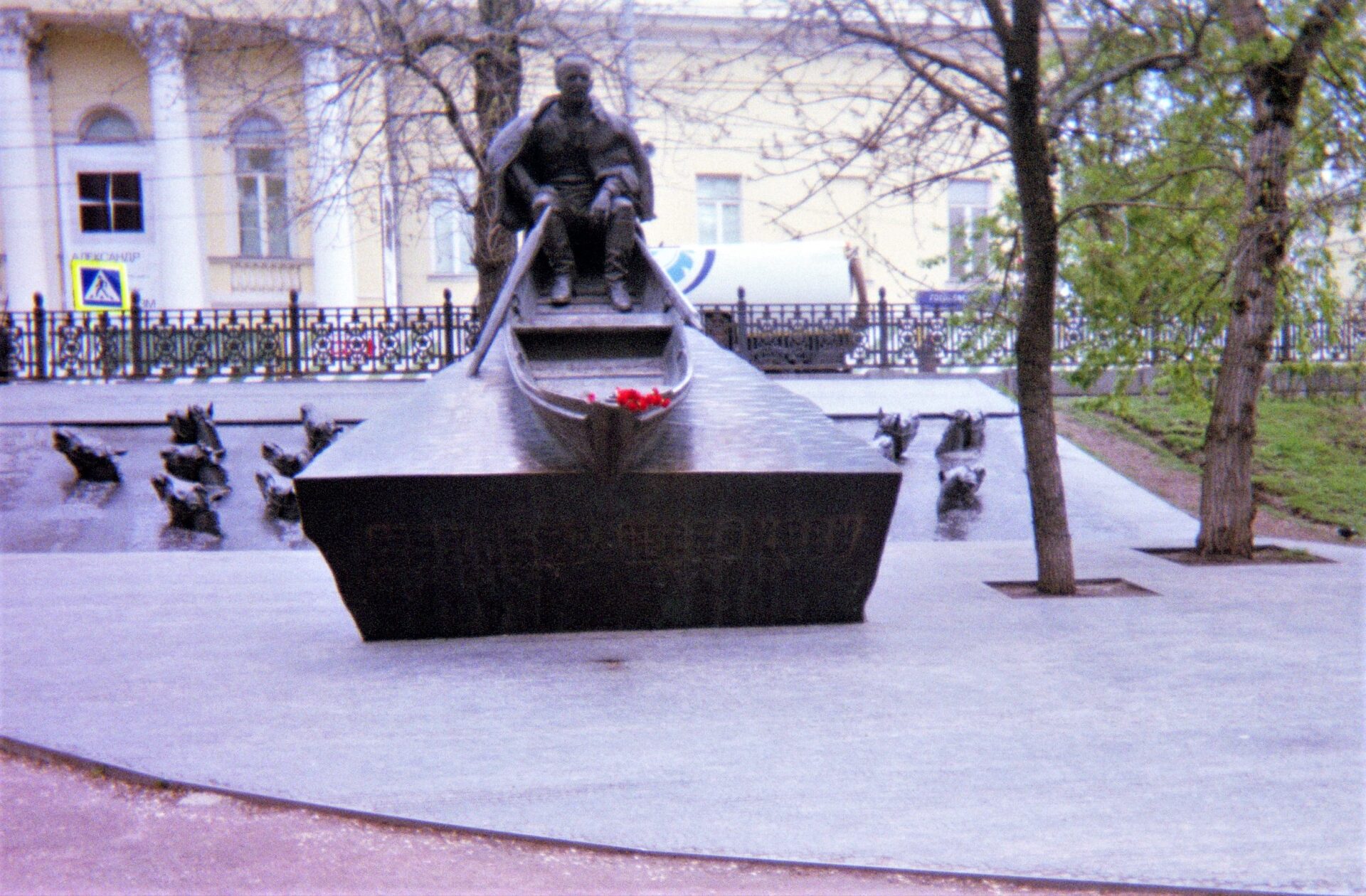
Monument to author of “And Quiet Flows the Don,” Moscow; photo by Natylie Baldwin, May 2017

I wanted to give readers an update to explain the slowdown over the past 6 weeks in posting to my blog.  I’m currently transitioning out of my day job and, starting in December, I will be spending the next six months writing full-time.

In addition to a couple of other projects, I will be working full-time on a new book on Russia and U.S.-Russia relations that I hope to have out in late winter or early spring.   I will also be working on articles and will be able to post to the blog more regularly.

Thank you for your patience and I hope everyone enjoys the upcoming holidays.

Regards,

Natylie

Sunday, Oct. 14th in Lafayette, CA – Russia and the West: What’s True, Exaggerated and False?

Rossmoor Friends of Mt Diablo Peace & Justice Center are proud to present


Natylie Baldwin speaking on

Russia and the West:

What’s True, Exaggerated and False?


Natylie Baldwin will speak about her travels and research in Russia and Crimea.  She is co-author of the 2016 book “Ukraine: Zbig’s Grand Chessboard & How the West was Checkmated”.


“I’m not sure there’s been a better book published this year …. I’m confident there’s not been a more important one.” – Author and activist David Swanson


Sunday October 14 at 2 pm

Vista Room at Hillside Clubhouse

3400 Golden Rain Road, Walnut Creek (Rossmoor)


For more information contact Rick at 925-324-3358

Russian Plane Shot Down Over Syria, Killing 15, Russian Defense Ministry Blames Israel, What Role Did France Play?; Offensive in Idlib Cancelled Due to Agreement Between Russia and Turkey; North and South Korea Reportedly Working on Declaration Officially Ending War; Code Pink Kicks Off Campaign to Divest from MIC with Publication of Report on War Profiteering


Il-20 / aviarf.ru; Image

Earlier today, a Russian Il-20 was shot down during a missile attack in Latakia province in Syria, killing all 15 Russian service members on board.   The Russian Ministry of Defense officially blamed Israel whom it claims attacked Syria and did not warn Russia until “one minute before” the assault began, using the Russian plane as “cover” to avoid the Syrian defense system shooting its planes down.  Russian Defense Minister Sergei Shoigu also declared that he had spoken to his Israeli counterpart, Avigdor Lieberman, and informed him that Russia “won’t leave Israeli actions unanswered.”  NBC News reported:

According to the Russian Defense Ministry, the Israeli F-16 jets carrying out the airstrikes used the Russian plane as a cover to allow them to approach their targets on the ground without being hit by Syrian anti-aircraft fire.

Moscow said said Israel did not warn Russia of its operation in the area until one minute before the strike.

However, according to Antiwar.com’s news gathering on the incident, there is some question as to whether the Russian plane could have been shot down by France’s missiles:

There are conflicting stories on whether this was the latest Israeli attack on Syria, or if it was the French military firing the missiles.

US officials reported they had knowledge of the incident, but they tried to blame it on Syrian anti-aircraft fire, which was fired at the incoming missiles. This seems to try to avoid the possibility of a US ally having shot down a Russian plane.

It doesn’t, however, make sense. Syrian anti-aircraft forces are all Russian-made, and carefully integrated with the Russian forces operating in the area. Between that and the Russian plane operating 35 km off the coast, it doesn’t seem plausible that a stray Syrian shot would’ve brought the plane down.

….Syrian state media conceded that they had no way of confirming who was attacking, though an early statement from the Syrian Army said it was an Israeli attack that came from inside Lebanese airspace. They claimed two soldiers were killed in the attack.

The Russian Defense Ministry, however, issued an alternate statement saying they’d detected the missile fire as coming from he FS Auvergne, a French naval frigate deployed off the Syrian coast.

RT reported that Putin’s first public comments on the incident, during a press conference in Moscow, indicate that he is, for the time being, assuming it was accidental:

“When people are dying – especially under such circumstances – it is always a tragedy,” President Putin said during a joint press conference with Hungarian Prime Minister Viktor Orban in Moscow on Tuesday.

Responding to a reporter’s question as to whether the incident in Latakia could be compared to the downing of the Russian Su-24 by Turkey in 2015, Putin said the two situations were “different.”

Ankara “deliberately downed” the Russian jet, he explained, while the Il-20 incident “looks like a chain of tragic circumstances, because the Israeli plane didn’t shoot down our jet.”

….Russia will investigate the incident, Putin said, adding that Moscow will boost security of Russian troops in Syria following the incident. He said that these will be “the steps that everyone will notice.”

In more positive news from Syria, Russia and Turkey have reportedly reached a deal wherein a buffer zone will be created in Idlib, pushing the terrorist “rebels” further toward the Turkish border, making the planned offensive in the town unnecessary for the moment.  Antiwar.com reported:

The deal will see a 15-25 km wide buffer zone established between government and rebel territory, inside Idlib Province. The rebels are to leave this area, which will be jointly patrolled by Turkey and Russia, and are to withdraw all heavy weapons from the area.

….In the meantime, this will both mean an end to the Syrian and Russian airstrikes against the province and put rebel artillery farther away from the rest of the country, limiting civilian casualties. Whether a deal results afterwards is anyone’s guess, but there still appears to be little interest in direct talks on either side.

************************************************************************

Reports from Democracy Now! and other media say that the leaders of North Korea and South Korea, who are currently meeting for their third summit, are hoping to issue a joint declaration that officially ends the Korean war.   Washington, of course, is opposed to this move, wanting to use the official ending of the war as a potential carrot to entice North Korea to make numerous concessions first.

Within the past week, a liaison office was opened in the city of Kaesong, north of the DMZ, to facilitate further diplomatic relations between North and South as a permanent channel of communication.

**************************************************************************

Over the past several years, I’d often wondered why peace groups didn’t push a campaign to divest from the military-industrial complex and companies that profit off of war and death, similar to campaigns to divest from fossil fuels or Israeli companies that profit from the Palestinian occupation.   Well, peace group Code Pink is finally pushing for such a campaign and to get the ball rolling, they’ve published a report called War Profiteers: the U.S. War Machine and the Arming of Repressive Regimes.   Code Pink co-founder and co-author of the report, Medea Benjamin, was interviewed by the Real News Network about the issue:

BEN NORTON:  You also point out that support for the arms industry in the U.S. is bipartisan. This is not just a Republican issue. And you mentioned in the report that a major beneficiary of President Obama’s record military spending was the company General Dynamics. The CEO of General Dynamics, Lester Crown, and his Chicago family, you write, played a critical role as career-long patrons and fundraisers for Obama’s rise to power. So can you talk a bit more specifically about this kind of revolving door between Washington and these lobby groups and the arms industry? And then also these arms industry fund many politicians from both parties.

MEDEA BENJAMIN:That’s right. It’s really the military-industrial-congressional complex that Eisenhower talked about back in 61, but gone wild. And when you look at the fact that every single congressional district in this country has some kind of piece of a weapon being manufactured there, both as a way to push the Congressional official to say, well, this is about jobs, but also as a way to bribe those officials. About 55 percent of the lobby money coming from the weapons industry is going to Republicans; 45 percent is going to Democrats. So it is certainly bipartisan. And given the examples that you gave, we could give a lot more to show the revolving door where there are high-level people from these companies that are actually not only supporting the wars, but cheerleaders for the wars, helped manufacture the excuses to go to war, as they did in the case of Iraq.

And unfortunately, I think down the road we’ll find out examples of how they are creating the animosity with Iran right now that might take us down that road. When the CEO of Boeing was asked about how he felt with the new sanctions that the Trump administration imposed nixing a $20 billion deal that he was negotiating with Iran, he basically said, we’ll make more money from the conflict. And when you look at the stocks of these companies you see every time there is an uptick in the war there is an uptick in their profits.

Watch the full interview here

Analysis & Book Reviews on U.S. Foreign Policy and Russia