Araghchi Says Ukraine’s Attack on an Iranian Ship in the Caspian Sea ‘Cannot Go Unanswered’
By Dave DeCamp, Antiwar.com, 7/26/26
Iranian Foreign Minister Abbas Araghchi on Sunday said that Ukraine’s attack on an Iranian commercial ship in the Caspian Sea “cannot go unanswered,” comments that came after Ukrainian President Volodymyr Zelensky took credit for the strike, which killed an Iranian crew member.
Zelensky claimed that the ship that was struck was carrying military cargo. “We also achieved very strong results with long‑range strikes in the Caspian Sea – including vessels used in military cargo shipments involving Iran, as well as a warship,” he wrote on X on Saturday, the day of the attack.
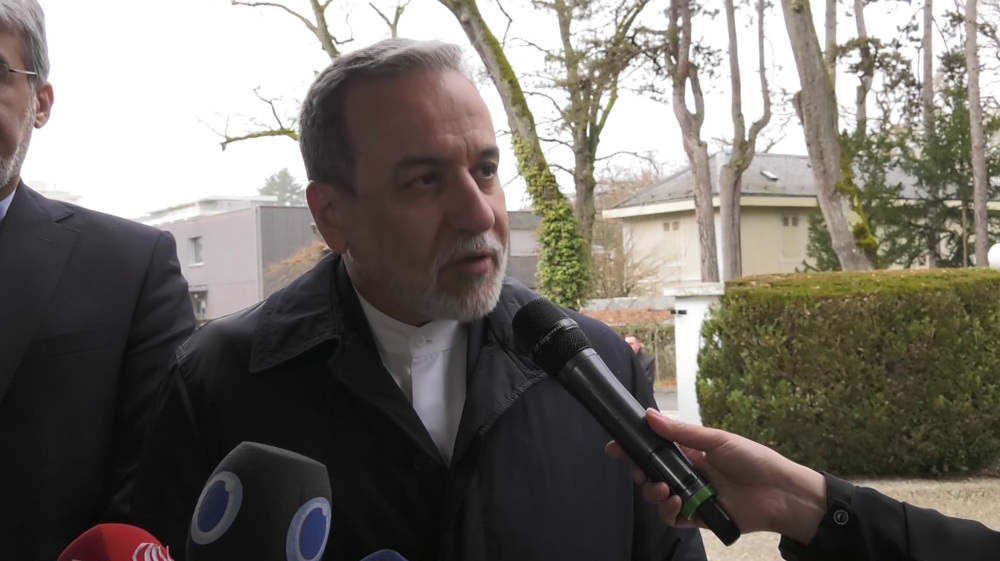
In his statement on Sunday, Araghchi said that Zelensky “has attacked an Iranian commercial vessel, killing a sailor. A blatant UN Charter violation done at Israel’s behest to drag Europe into its war.”
The Iranian diplomat added that in calls with Russian Foreign Minister Sergey Lavrov and Kaja Kallas, the EU’s top foreign policy official, he “made clear that what the freeloader in Kyiv did CANNOT GO UNANSWERED.”
The attack on the Iranian ship comes as Ukraine continues escalating its long-range drone attacks against Russia, which are carried out using intelligence provided by the US, and have been targeting Russian oil tankers and refineries, and have also been killing a significant number of civilians.
***
Size Matters: Russian and Ukrainian Armies
By Oliver Boyd-Barrett, Substack, 7/28/26
Russian President Vladimir Putin has signed a decree raising the army’s authorized size to 2,426,130 personnel, with service members now numbering 1,535,000, up from 1,510,000.
The decree takes effect August 1 and ties the change to the creation of military construction units within the Russian Armed Forces.
A little more than a month earlier, Putin had signed the previous decree, which raised the army’s authorized size to 2,399,130 personnel. The reason for that increase was not specified.
It is the third change to the army’s size in the past six months, following two earlier decrees signed in March and June 2026.
Putin has now increased the army’s size six times since the start of the full-scale war between Russia and Ukraine.
Russia is increasing its armed forces through official personnel cap increases, force restructuring, and high-financial-incentive recruitment. Key steps include raising authorized end-strength numbers via presidential decrees, expanding regional military districts and commands, and relying heavily on lucrative contract enlistment bonuses.
As we have seen, Putin yesterday signed a decree on July 27, 2026, raising total authorized armed forces strength to 2,426,130 personnel – including 1,535,000 active service members – effective August 1, 2026. He has expanded specific force allocations to incorporate specialized military construction and infrastructure units.
In addition, recent measures have divided the traditional Western Military District into two distinct regional commands: the Moscow Military District and the Leningrad Military District; formed new combined-arms and army corps units (such as the 44th Army Corps) alongside upgrading existing motorized rifle brigades directly into divisions; developed new military bases and infrastructure near northern and eastern NATO borders to permanently station newly raised formations.
Moscow is offering large federal and regional sign-on cash bonuses alongside monthly salaries that significantly exceed standard national civilian wages, maintaining a continuous influx of monthly contract volunteers (averaging roughly 30,000 to 40,000 new recruits per month) to offset frontline combat losses; enforcing legal and administrative restrictions that bar active contract soldiers from resigning or leaving service.
Russia has also benefitted from the assistance of tens of thousands of troops from its allies, notably North Korea.
In brief, Russia has far many more active troops at its disposal than does Ukraine.
Sources from the United Kingdom assess the total size of the Ukrainian armed forces as between 800,000 and 1 million active personnel, reflecting the mass mobilization and expansion required during the ongoing war. Specific components include the ground branch and overall defense structure.
So, Ukraine’s army is estimated at roughly around 800,000 to 1,000,000 active service members and mobilized personnel. The Ukrainian Ground Forces account for approximately 450,000 active personnel.