The Russo-Ukrainian War has been a novel historical experience for a variety of reasons, and not only for the intricacies and technicalities of the military enterprise itself. This became the first conventional military conflict to occur in the age of social media and planetary cinematography (that is, the ubiquitous presence of cameras). This brought a veneer (though only a veneer) of immanence to war, which for millennia had unveiled itself only through the mediating forces of cable news, print newspapers, and victory steles.
For the eternal optimist, there were upsides to the idea that a high intensity war was slated to be documented in thousands of first-person view videos. Purely from the standpoint of intellectual curiosity (and martial prudence), the flood of footage from Ukraine offers insight into emerging weapons systems and methods and allows for a remarkable level of tactical-level data. Rather than waiting for years of agonizing dissection of after action reports to reconstruct engagements, we are aware in near real time of tactical movements.
Unfortunately, all the obvious downsides of airing a war live on social media were also in effect. The war instantly became sensationalized and saturated with fake, fabricated, or incorrectly captioned videos, cluttered with information that most people are simply not equipped to parse through (for obvious reasons, the average citizen does not have extensive experience differentiating between two post-Soviet armies using similar equipment and speaking similar, or even the same language), and pseudo-expertise.
More abstractly, the war in Ukraine was transformed into an American entertainment product, complete with celebrity wonder weapons (like Saint Javelin and the HIMARS), groan-inducing references to American pop culture, visits from American celebrities, and voiceovers from Luke Skywalker. All of this fit very naturally with American sensibilities, because Americans ostensibly love underdogs, and in particularly spunky underdogs who overcome extreme odds through perseverance and grit.
The problem with this favored narrative structure is that underdogs rarely win wars. Most major peer conflicts do not have the conventional Hollywood plot structure with a dramatic turning point and reversal of fortune. Most of the time, wars are won by the more powerful state, which is to say the state with the ability to mobilize and effectively apply more fighting power over a longer period of time. This has certainly been the case in American history – no matter how much Americans may long to recast themselves as a historical underdog, America has historically won its wars because it has been an exceptionally powerful state with irresistible and innate advantages over its enemies. This is nothing to be ashamed of. As General George Patton famously said: Americans love a winner.
Thus we arrived at a convolution situation where, despite Russia’s many obvious advantages (which in the end come down to a superior indigenous capacity to mobilize men, industrial output, and technology), it became “propaganda” to argue that Russia was going to achieve some sort of victory in Ukraine – that Ukraine would end the war having failed to re-attain its 1991 borders (Zelensky’s stated victory condition) and with the country in a wrecked state of demographic hollowing and material destruction.
At last, we seem to have reached a denouement phase, where this view – allegedly an artifact of Kremlin influence, but in reality the most straightforward and obvious conclusion – is becoming inescapable. Russia is a bigger fighter with a much bigger bat.
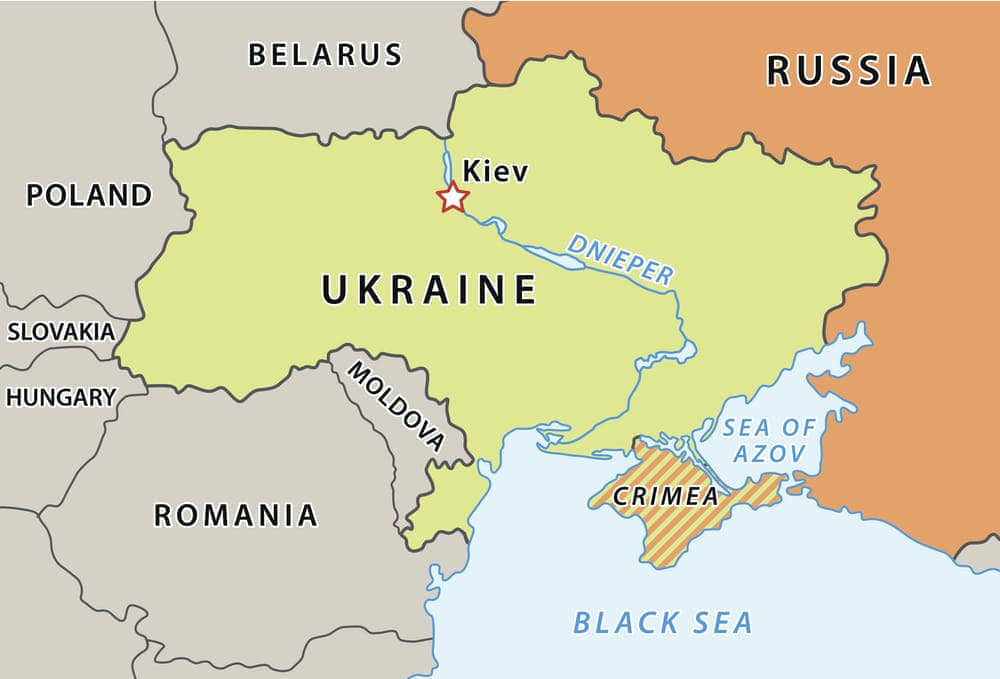
The case for Ukraine’s victory rested almost entirely on dramatic success in a summer counteroffensive, which was supposedly expected to smash its way through the Russian positions in Zaporizhia Oblast, knife to the Sea of Azov, sever Russia’s land bridge to Crimea, and place the entire underbelly of Russia’s strategic position in jeopardy. A whole host of assumptions about the war were to be tested: the supremacy of western equipment, Russia’s paucity of reserves, the superiority of Western-Ukrainian tactical methods, the inflexibility and incompetence of Russian commanders in the defense.
More generally – and more importantly – this was intended to prove that Ukraine could successfully attack and advance against strongly held Russian positions. This is obviously a prerequisite for a Ukraine strategic victory. If the Ukrainian armed forces cannot advance, then Ukraine cannot restore its 1991 boundaries and the war has transformed from a struggle for victory into a struggle for a managed or mitigated defeat. The issue ceases to be whether Ukraine will lose, and becomes a question only of how much…
“. . . the United States will not be able to deal with the vexing problems in the Middle East if it cannot have a serious and candid discussion of the role of the Israel lobby.” —John Mearsheimer and Stephen Walt.
2 NOVEMBER—Two weeks ago, as Israel continued bombing Gaza into a wasteland, the president of the United States sat with Israel’s prime minister at the start of an Israeli war cabinet meeting. Netanyahu had phoned Biden two days previously to request what The Times of Israel called a “solidarity visit.”
Much has passed since Biden’s visit to Israel. The atrocity of Israel’s indiscriminate military campaign in Gaza is now widely recognized as constituting a genocide. Principled non–Western nations—Bolivia, Chile, Columbia to date—began this week to sever relations with Tel Aviv or recall their ambassadors. The world order, as should be obvious, has been disrupted.
But questions remain. What does solidarity, as Biden pledges, mean when Israel is daily committing war crimes for all the world to see? Why is the U.S., in violation of international law and everything it claims to stand for, aiding and abetting Israel’s agenda of ethnic cleansing in Gaza? Why, bringing matters closer to home, is the United States prioritizing the interests and security of Israel above its own, while simultaneously damaging its credibility and authority abroad?
It isn’t possible to understand American conduct in West Asia at this critical moment without recognizing the role that the American Israel Public Affairs Committee plays in setting foreign policy. U.S. foreign policy aligns so congruently with AIPAC’s agenda that there is little distinction between them. In effect, the U.S. lacks an independent foreign policy that reflects its own security interests in that region of the world.
At this critical moment of violence, human suffering, and chaos, we must recognize that AIPAC, an unelected, technically nongovernmental agency, exercises an excessive, wholly inappropriate influence in global affairs as well as in U.S. politics. This is very rarely mentioned in our corporate media, and we can read this silence as a measure of the organization’s unacceptable accumulation of power. AIPAC, it is time to conclude, must be broken. Peace in West Asia and a stable order elsewhere depend on this project.
AIPAC’s influence on U.S. policy, domestic as well as foreign, has been considered many times. Most notably, there is the work of John Mearsheimer and Stephen Walt, whose 2008 book, The Israel Lobby and U.S. Foreign Policy, stands as the most extensive examination of AIPAC’s power we have to date. Their analysis is now more pertinent than ever. In the current context, given the magnitude of what is unfolding—given its potential impact on relationships among many different nations—we must recognize that AIPAC’s reach extends well beyond Washington or West Asia. Indeed, the committee’s influence now marks world affairs altogether. This is our disturbing new reality.
With this reality in mind—a dangerous reality given the extremist character of this organization—let’s consider Biden’s recent visit to Israel and all that has followed from it.
Biden has given two speeches since that war cabinet meeting, one in Tel Aviv on 18 October, the other upon returning to Washington, when he addressed the American public on 20 October. In each, the president reiterated all of the talking points and established dogma that have long characterized America’s relationship with Israel, all of which support Israeli priorities. Nothing new was offered—no moral clarity, no fresh vision of how to address the original moral crime committed against the Palestinians when their homeland was taken from them 75 years ago, a theft of land that accounts for the never-ending cycle of violence we witness once again.
Two factors explain Biden’s failure: First and obviously, this president isn’t capable of statesmanship of the magnitude required. Moreover, he professes a deep personal affinity for the Zionist vision—for Israel to seize all the lands of Biblical Palestine as its own—and no incentive to do anything other than align himself with Israel’s interest. More important and directly to my point, with Biden serving as an almost perfect example: No new thinking and no new policies are ever possible because of AIPAC’s stranglehold on U.S. elections, politics, and politicians.
More important and directly to my point, with Biden serving as an almost perfect example: No new thinking and no new policies are ever possible because of AIPAC’s stranglehold on U.S. elections, politics and politicians.
The world is a far more dangerous place, far more Palestinians have been killed, and the U.S. is far less secure, since Biden’s visit to Israel. AIPAC is more or less directly responsible for this.
It should not be difficult to miss the gravity, the peril indeed, of the post–Oct. 7 crisis in West Asia. The region threatens to explode, and there is no able leadership in the United States, in large part because its foreign policy has been shaped by a special-interest group that has worked for decades in behalf of another nation.
Washington’s unthinking, pro–Israel bias has blinded U.S. policy elites such that no one in Washington, and certainly not Biden nor Secretary of State Antony Blinken, appears to understand that there is a seismic shift in global power taking place.
U.S. security and standing in the world are suddenly more precarious than they have been the whole of its history. The U.S. is being damaged — is seriously damaging itself — by its continued unwavering support of a nation that is so clearly out of control and that has been recognized by many human rights organizations as an apartheid state. Supporting Israel is no longer in the best interest of the United States, if ever it was, and is becoming an increasing liability.
We cannot any longer overlook the role of the American Israel Public Affairs Committee in all this. It bears considerable responsibility for this global upheaval and for the damage the U.S. sustains as it supports the nation AIPAC serves.
AIPAC & the 1953 Qibya Massacre
Founded in 1954 as the American Zionist Committee for Public Affairs, AIPAC’s mission was at the start threefold: to advance a pro–Israel agenda within the U.S. government; to shape public opinion in support of Israel; to close ranks within the American Jewish community, so creating a monolithic and united Jewish front, by censoring and ostracizing any Jew who criticized Israel, no matter what Israel did. From the beginning, then, AIPAC’s mission was bound to be detrimental to U.S. democracy and policy alike.
The pro–Israel lobby as we now have it emerged as a public relations response to a massacre of Palestinians in the village of Qibya 70 years ago last month. Doug Rossinow, an academic historian, described the events in “The dark roots of AIPAC, ‘America’s Pro-Israel Lobby,’” published March 6, 2018, in The Washington Post:
“. . . on Oct. 15, 1953, all hell broke loose. News spread that a special Israeli army unit had struck into the Jordanian-occupied West Bank and committed a massacre in the Palestinian village of Qibya, killing more than 60 civilians indiscriminately in retaliation for the murder of a Jewish woman and her two children in Israel on the night of Oct. 12.
The strike reflected Israeli policy. . . . Prime Minister David Ben–Gurion had fixed on a policy of reprisals — military assaults, intentionally disproportionate, on local Arab populations — as a response to any such attacks. After the Oct. 12 killings, Ben–Gurion and top colleagues chose nearby Qibya to suffer retribution.
Time magazine carried a shocking account of deliberate, even casual mass murder by Israeli soldiers at Qibya — ‘slouching . . . smoking and joking.’ The New York Times ran extensive excerpts from a U.N. commission that refuted Israeli lies about the incident.”
The response from Washington was immediate: Aid to Israel was suspended. At the U.N. Security Council, the United States supported a censure of Israel. This was during President Dwight Eisenhower’s first term in the White House. Today, any American response of this kind to Israeli violations of international law is inconceivable — testimony to AIPAC’s success.
Ben-Gurion’s policy of asymmetrical retaliation is precisely what is now happening in Gaza. It is the enactment of a longstanding Israeli strategy of inflicting maximum casualties on Palestinians to crush them into submission or, failing that, eliminate them completely. America, it must be noted, remains silent.
This is the historical context that AIPAC has successfully erased from public discourse and memory. In direct consequence, when Hamas launched its attack on Oct. 7, Israel was able to deny that their own policies helped to create the conditions that set the stage for the Hamas strike.
This intentional erasure of history enables the Israel lobby to twist public perceptions so that American sympathy lies with Israel while the suffering of the Palestinians remains largely invisible.
Swearing Fealty
AIPAC’s influence on the U.S. politicalprocess and within party politics is well-known and well-documented. No one makes it into the White House, and very few are elected to Congress, without swearing fealty to Israel and the American Israel lobby. Few politicians last in political office without accommodating the demands of AIPAC.
The lobby spends millions of dollars promoting its favored candidates while aggressively undermining any who express criticism of Israel or concern for the plight of Palestinians.
Obviously, U.S. foreign and domestic policies should reflect and respond to American security interests and the needs of its people, and not the needs of Israel. It is therefore not surprising that a key feature of AIPAC propaganda is the fiction that U.S. interests naturally align with those of Israel.
Reinforcing this, AIPAC routinely flies new congressional representatives to Israel, where they meet with government officials in a process of pro–Israel indoctrination to secure continuing U.S. political, financial, and military support. In reality, U.S. uncritical support of Israel has long enraged the Arab world, making the U.S. less safe, and was one of the motives behind the 9/11 attacks.
AIPAC’s reach extends deeply into the legislative and executive branches of U.S. government, U.S. think tanks, foreign policy elites, corporate media and academia — a phenomenon extensively researched and documented by Mearsheimer and Walt. In a working paper published in 2006 under the same name as their book and available here, the authors had this to say:
“. . . were it not for the lobby’s ability to work effectively within the America political system, the relationship between Israel and the United States would be far less intimate than it is today.”
Seventeen years later this reads like a gross understatement. The Israel lobby is effectively running U.S. foreign policy in West Asia and funneling billions of dollars to Israel in support of a racist Zionist agenda — a system of apartheid, according to the U.N. and Amnesty International — that weakens the United States, undermines our domestic policies and welfare, and destabilizes the entire region.
Here, again, are Mearsheimer and Walt:
“If the lobby’s impact were confined to U.S. economic aid to Israel, its influence might not be that worrisome. Foreign aid is valuable, but not as useful as having the world’s only superpower bring its vast capabilities to bear on Israel’s behalf. Accordingly, the lobby has also sought to shape the core elements of U.S. Middle East policy. In particular, it has worked successfully to convince American leaders to back Israel’s continued repression of the Palestinians and to take aim at Israel’s primary regional adversaries — Iran, Iraq and Syria — as well as groups like Hezbollah.”
As we have it now, U.S. support for Israel’s brutal destruction of Gaza — its project of ethnic cleansing — for which the U.S. is now complicit in war crimes and genocide — is due largely to decades of AIPAC lobbying efforts, particularly in Congress. AIPAC’s influence is such that it has involved the U.S. in a revolting crime against humanity that will almost certainly undermine American security at home and abroad, as it threatens to expand into a regional conflict. No lobby should have this kind of power.
It is very difficult to criticize Israel, and U.S. policy that favors Israel, for several reasons. First, media coverage of events in West Asia has long been slanted in Israel’s favor so that it is almost impossible to get unbiased information from mainstream news sources.
Related to this and as I have already mentioned, the historical context surrounding the conflict has been erased by the press and in public memory. Last, one of the more cynical strategies AIPAC employs is branding anyone who criticizes Israel an anti–Semitev— an accusation it habitually and obviously uses to censor and silence dissent.
Impeding a Resolution
All that I outline here has made it impossible to resolve the need for Palestinians to have a secure homeland, whether that is a one– or two-state solution. Until this fundamental issue is resolved, the entire region will remain unstable, Israelis will never be safe, Palestinians, denied basic human rights, will continue to suffer under Israeli apartheid, and the Palestinian resistance will continue its sporadic attacks — all of which undermines global stability and security.
For things to change the United States needs entirely new thinking, a new vision, an altogether new foreign policy agenda regarding the state of Israel and West Asia. This will only come to be when AIPAC loses the influence it currently holds over America’s elected officials and policy elites — and indeed at all levels in Washington, within corporate media, and academia — is broken.
AIPAC, it is time to conclude, must be broken. Peace in West Asia and a stable order elsewhere depend on this project.
The way forward as I see it is twofold:
First, a bright light must be kept focused on Israel’s war crimes and on its long-established policy of apartheid.
Second, and related to this, the history that has been erased must be resurrected — the history of Zionism, of the founding of Israel, and of the sustained and systemic violence perpetrated against the Palestinian people.
Along with this, the U.S. must come to terms with the historical presence and influence of Christian Zionism, a movement that sustains AIPAC’s influence as it enables the expansion of illegal Israeli settlements.
The project I describe is in no way easily accomplished. It will necessitate a relentless and sustained campaign: on social media, within independent journalism and within the political arena, a project capable of reaching deeply into American society and politics.
It is an effort each of us can take up according to our abilities and influence. Among other things, it will require time and courage, including the courage to risk accusations of anti–Semitism.
Ultimately, it may be that Israel’s conduct itself is what will eventually break AIPAC’s influence. People around the world, including in America, can see for themselves, now as clearly as they did after the Qibya massacre in 1953, that Israel’s behavior is not rational or just and that it constitutes an intentional program of ethnic-cleansing.
Above all else, America — and ordinary Americans — must regain a more balanced and critical perspective toward Israel, one that properly prevailed before the advent of AIPAC.
Cara MariAnna publishes a Substack newsletter, Our Journey. She is a painter and has a Ph.D. in American Studies.
The original version of this article was published by The Floutist.
John Varoli is a former foreign correspondent for New York Times, Bloomberg and Reuters TV. Trained as a U.S. foreign policy expert with a focus on Russia and Ukraine.
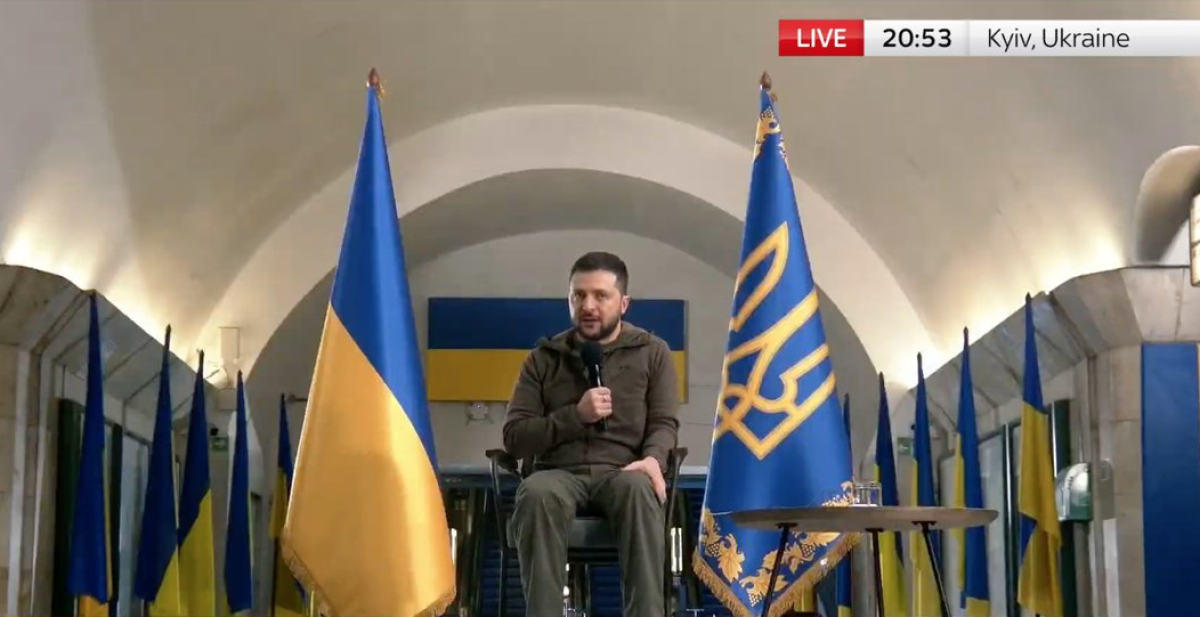
On Wednesday, I attended a Reuters conference in New York that gathered top CEOs and government officials to discuss global economic and technology issues. I attended as an energy expert. Alas, Reuters had a surprise guest — Vladimir Zelensky. Indeed, media support for Ukraine is a lucrative business.
His interview was conducted live by Reuters via video link. For about 20 minutes, Zelensky skillfully deceived his audience with a performance worthy of an Oscar. The mesmerized audience lapped up every word. They simply don’t know any better. But the journalists in the room knew better. And that’s a huge problem.
Reuters’ Editor-in-Chief asked the questions, all of them polite and easily answered. No one else was allowed to ask a question. I could dismiss this interview as access journalism and Reuters’ wish not to upset Zelensky. But hundreds of thousands of people have died and millions more forced from their homes in a conflict incited by NATO expansion and which was easily avoidable. Therefore, I need to speak out.
Not for a moment was Zelensky put in an uncomfortable position. One question gently touched on Ukraine’s “counteroffensive” without mentioning the massive losses of Ukrainian soldiers and NATO equipment; another question delicately brought up the issue of NATO support in light of the conflict in Gaza; and a third question inquired about what a Trump victory would mean for Ukraine (without mentioning the politically-motivated prosecution that Trump faces).
Even when the question concerned a potentially difficult topic — corruption in Ukraine — it was phrased to make Zelensky look like an anti-corruption crusader, even though 77% of Ukrainians blame him for rampant corruption. (Reuters really hadn’t seen this recent poll of Ukrainians?)
The interview ended with an insult to the Ukrainian people. “Can you tell us one thing that has made you laugh amid the tears of the past two years?” With a big smile on his face, Zelensky answered that his children and his dogs are his greatest joys.
“Sometimes I think that the best way would be if this planet would be the planet of dogs. Sometimes I don’t understand people. Crazy. Crazy people,” concluded Zelensky, as the audience joined him in a burst of laughter.
All the death and destruction is indeed a joke for Zelensky, who grows wealthy on this war as an international celebrity and NATO satrap. Far from the laughter, however, Zelensky’s nationalist regime has turned Ukraine into a dead zone where the funeral and cemetery business is booming; where anyone perceived as a threat to Zelensky’s rule is labeled a “Russian agent” and jailed or killed. Ukraine is a country of horrors where mothers and wives scream in anguish as hundreds of thousands of soldiers have returned home in boxes, if their bodies can even be found.
Ukraine faces a far superior enemy that dominates the skies, the sea and the ground. Several generations of Ukrainian men are being wiped out. A merciless, tyrannical Zelensky gleefully sends his men into a meat grinder. Of course, there is also the tremendous misery that Zelensky’s regime has brought on the people of the rebel Donbass region and Crimea, both of which want to be with Russia.
This conflict could have been avoided if only Zelensky and his Western masters had agreed to keep Ukraine neutral as was stated in the country’s constitution until December 2014; as well as respect the right to self-determination of the ethnic Russians in the Donbass and Crimea regions.
Ukraine’s population is now half of what it was before 2014, with millions scattered across the globe; its economy and industrial base wrecked, and lawlessness and corruption rampant. The country has no future. None whatsoever. This is Zelensky’s legacy. But Reuters, the most powerful news agency on the planet, is apparently not aware of these facts. Why? Because it doesn’t ask the right questions.
Well, since Reuters has trouble conducting a rigorous interview with Zelensky, I’m offering my assistance. Here are 16 questions that a professional and neutral journalist would have asked Zelensky:
Political freedom. Mr Zelensky, You’ve shut down opposition parties and jailed those who speak out against your rule. Dissidents have fled abroad to escape your brutal secret police, the SBU, heir to the KGB. You justify this repression by accusing the opposition of being “Russian agents”. How can you call Ukraine a “democracy” with such human rights abuses?
Press freedom. Opposition and dissenting media have been shut down and journalists intimidated. What are you afraid of? Will you ever allow freedom of the press to return to Ukraine?
Religious freedom. The Ukrainian Orthodox Church, which used to represent half of the country’s population, faces brutal persecution; priests are jailed and churches closed. You justify this heinous policy with accusations that the Church is under Kremlin control. In fact, the UOC’s only “sin” is calling for peace and Slavic unity. Do you plan to entirely dismantle the Church? And do you realize that this is a gross violation of EU and international law?
Presidential elections. Do you plan to hold presidential elections? Please explain Why or Why not? And what do you think about your declining popularity and the rising popularity of General Zaluzhny?
Palace intrigue. There’s evidence of infighting among the Ukrainian elite, especially in light of the recent murder of Zaluzhny’s assistant. Are you afraid that you might be removed from power in a violent coup by your own military?Cheering on a 98-year old Nazi murderer in Canada’s parliament
Peace. You came to power in May 2019 on a platform of peace with Russia. About 80% of Ukrainians supported you on this. They wanted peace with Russia, with whom they are related by language, blood, culture, and religion. Today, hundreds of thousands of your men are dead; 22% of your land taken away. It didn’t have to be like this. You could have made a deal with Russia. How do you justify the carnage of the past 20 months?
Nationalist extremism. Ukrainian nationalists, such as Azov Battalion, are very influential in Ukraine and glorify World War 2-era Nazi collaborators that slaughtered thousands of Jews and Poles. Why do you tolerate Nazi supporters? And why did you cheer for the 98-year old Nazi murderer Yaroslav Hunka when you visited Canada’s Parliament in September?
Donbass and Crimea. You very well know that Donbass and Crimea are populated by ethnic Russians who want to join the Russian Federation. Why won’t you allow them freedom and the right to self-determination?
Murder of civilians in Donbass. So, you claim that the people in rebel Donbass are still “Ukrainians”, but yet your forces constantly bomb their cities, such as Donetsk and Gorlovka, with banned cluster bombs. So, why do you kill people who you consider to be “Ukrainian citizens”?
Brutal conscription. We’ve seen many videos of Ukrainians snatched off the streets by your press gangs and forcibly sent to the front. Why do you think many Ukrainians don’t want to fight for you and are resisting the draft?Zelensky truly deserves an Oscar for his acting
Attacks on nuclear power plants. Many reports indicate that Ukraine is targeting nuclear reactors, such as the one in Zaporozhye and the one in the Kursk region. This is extremely reckless and dangerous. How do you justify such attacks?
Battle of Avdeevka. This key fortress is clearly falling to the Russians. When it falls, what does this mean for Ukrainian forces? Will this lead to a total collapse of the Donbass front, as many experts predict?
Worse case scenario. What is your plan if your eastern defenses collapse and the Russians push all the way to the Dnieper River — what will you do then? Will you flee the country and retreat to your villa in Miami? By the way, how much property do you and your family own outside of Ukraine?
Bankrupt, devastated country. Most of your population has fled; economy destroyed; national bankruptcy on the horizon. How do you plan to rebuild Ukraine? Are you ready for years of hostility with Russia? Don’t you realize that neither Ukraine nor the West can afford years of conflict with Moscow, which has nearly unlimited resources?
NATO expansion. Don’t you realize that NATO expansion into Ukraine is a death sentence for Ukraine? Moscow will never allow it. Also, is it true that in spring 2020 you were ready to make peace with Moscow, but then the British intervened and pushed you to end those talks?
Detractors. The number of your detractors in the West is growing and they ridicule you as an ungrateful, annoying beggar. How do you feel about that?
Russians are ready to support the war’s end (if that’s what Putin decides). They are in favor of negotiations with Ukraine.
The majority of Russians would support an immediate cessation of hostilities in Ukraine, according to a new poll conducted by the Levada Center. However, a majority of respondents said that they don’t agree with giving Russian-occupied territories back to Ukraine.
As part of the survey, which the Levada Center conducts on a monthly basis, respondents were randomly divided into two groups. The first group was asked: “If President Vladimir Putin decided to end the military conflict in Ukraine this week, would you, or would you not, support this decision?”
Responses
37% — Definitely support
33% — Mostly support
12% — Definitely oppose
9% — Mostly oppose
9% — Difficult to answer
The second group of respondents was asked: “If President Vladimir Putin decided to end the military conflict in Ukraine this week and return the annexed territories to Ukraine, would you, or would you not, support this decision?”
Responses
16% — Definitely support
18% — Mostly support
19% — Definitely oppose
38% — Mostly oppose
10% — Difficult to answer
More than half of respondents said they would support peace talks over continuing the war.
Russians support the army
Three quarters of respondents said that they support “the actions of the Russian Armed Forces in Ukraine.” 62 percent of respondents aged 18-24 and 82 percent of those over the age of 55 gave this response.
Nearly half of Russians would like to ‘reverse’ the decision to start the war.
Respondents were asked: “If you had the opportunity to go back in time and either reverse or support the start of the military operation in Ukraine, you would…”
Responses
23% — Definitely have reversed it
18% — Mostly likely have reversed it
22% — Definitely have supported it
21% — Mostly likely have supported it
15% — Difficult to answer
Russians believe that the war will go on for a long time, though they believe the war has been successful
Nearly half of respondents (46 percent) believe that Russia’s war against Ukraine will continue for at least another year. In May 2022, three months after the start of the full-scale invasion, 21 percent of people said they thought it would continue for at least another year.
62 percent of respondents said they were confident that Russia’s “special operation” in Ukraine is going “very successfully” or “rather successfully.”
Why did Russia start the war?
When asked why Russia started the war, 23 percent of respondents said they don’t know why, or found it difficult to answer why. 25 percent said they believe Russia is “protecting and liberating” the residents of the Donbas. Every 10th person believes that “it’s necessary to reclaim our historic lands.” 14 percent said that it’s necessary to “eradicate fascism,” while 13 percent believe that “we were forced and abused.”