Category Archives: Uncategorized

Analysis of Hamas-Israel Conflict

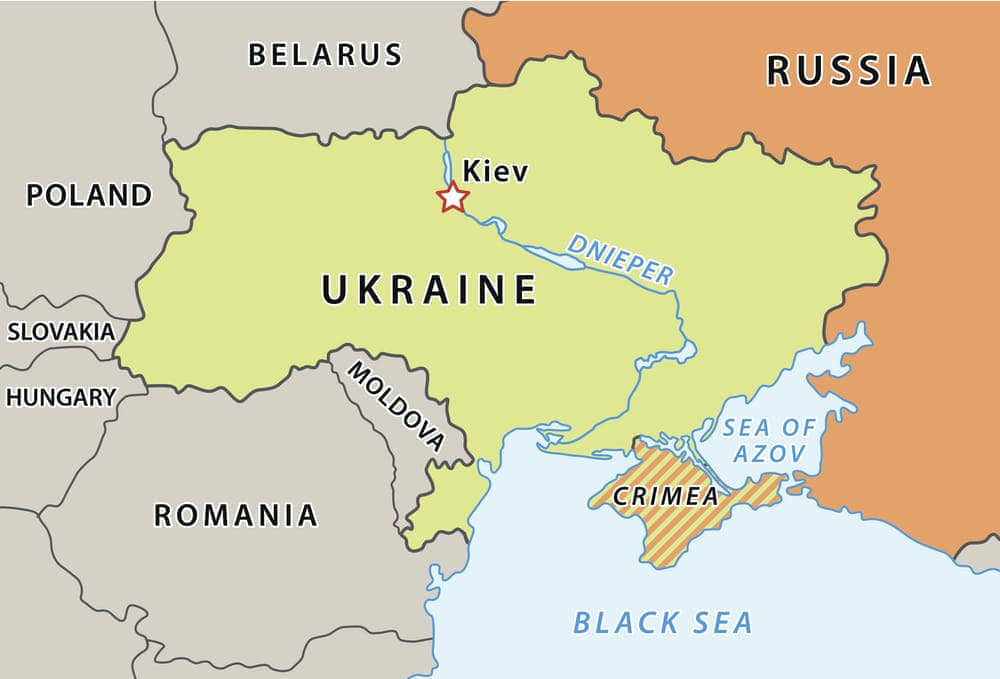
Craig Jardula, guest hosting for Jimmy Dore, interviews Moscow-based geopolitical analyst Mark Sleboda on the likely motive for Hamas’s massacre in Israel last weekend and the geopolitical implications of the escalating conflict. Link here, embed below.

Glenn Greenwald interviews realist scholar Stephen Walt for his analysis of the events of the past eight days regarding Hamas-Israel. Link here, embed below.

Bruce Clark: When the West picked winners in Russia

By Bruce Clark, 10/3/23

Bruce Clark is a Former London Times correspondent in Moscow

Exactly 30 years ago (on 3 October 1993), the world of hazardous news-gathering lost one of its finest practitioners. After many hours of gunfire around Moscow’s broadcasting centre known as Ostankino, bodies were strewn across the blood-stained concrete. Among them was the unmistakable figure of Rory Peck, whose cheeky grin and big bald pate framed by brown curls were familiar to every reporter roaming the post-communist war zones. Aged nearly 37, a supremely skilled cameraman of lofty and eccentric Anglo-Irish origin, with a feline ability to negotiate danger, had finally – so it seemed run out of luck. At least two other Westerners also perished: a Frenchman, Yvan Skopan, filming for his country’s first TV channel, and a brave young American lawyer, Mike Duncan, who had hauled several people to safety.

Yet so momentous was the wider drama then unfolding in Moscow that the world had little time to ponder the Ostankino massacre. Boris Yeltsin told the world that his young democracy had come under devastating attack from a fiendish mix of Stalinists and fascists, with whom his political adversaries in the legislature had cynically allied. Against such threats, he implied, only draconian force would work. He then drove his foes out of the White House – the Russian parliament – by lobbing shells at the upper floors until its pale front was streaked with black. Morally and militarily he seemed to have triumphed in the deep political deadlock which had become critical after he suspended parliament on September 21. The way was clear for him to push through a more presidentially-oriented constitution and to organize elections with his own authority unchallenged.

Whatever the rights and wrongs of Moscow’s micro-civil war, and regardless of the foreign casualties, Western leaders fully accepted Yeltsin’s story. Bill Clinton insisted the Russian leader had “bent over backwards” to avoid violence. John Major said Yeltsin “deserves the support of all democrats inside and outside Russia.” Any casualties had been entirely the fault of “ugly attacks” by Yeltsin’s foes. But this was, to put it very mildly, an over-simplification. On both sides of Russia’s political crisis, there had been dark forces bent on drawing blood, as well as idealists who believed that they enjoyed constitutional legitimacy. The Yeltsin people were simply cleverer. 

As chaos subsided, Rory’s colleagues including myself were left trying to make sense of a great reporter’s life and death, and to honour his memory. On the latter front, extraordinary things have happened. The Rory Peck Trust, a London-based charity, has raised millions of pounds and assisted nearly 3,000 news-gatherers in practical ways. It showcases the work of freelancers with a star-studded annual awards ceremony. It has become of the world’s leading advocates for independent journalism.

In quieter ways, those of us who knew Rory well are still searching for the meaning – if there is one – of his passing. Was it the inevitable consequence of a reckless life? Having mulled that question, I find

my friend innocent. Not only did Rory add to the annals of history during his short, brilliant career – for example, by filming the besieged enclaves of Bosnia, and capturing the scenes in Moscow’s corridors of power in the August 1991 putsch. He also, in death, bore witness to a grave moral truth that the Western world chose to ignore. The Muscovite crisis of October 1993 was not, contrary to many claims, a very close-run thing. And the battle for Ostankino, in which Rory and other unarmed people died, was more like a turkey-shoot by the president’s forces than an almost-revolution. True, the anti-Yeltsin mob, led by dim-witted General Albert Makashov, which raced from the White House to Ostankino on October 3 imagined they might win. In fact they were in a trap.

An investigation for Russia’s chief prosecutor (suppressed in 1994 but leaked a few years later) found that Makashov’s ragtag followers amounted to no more than 20 lightly armed men, while about 900 police and soldiers loyal to Yeltsin, including special forces, were progressively deployed to defend the TV buildings and make a massive counter-attack. David Satter, an American writer who has watched Russia closely since Soviet times, argues that by bringing the constitutional crisis to a violent head, Yeltsin committed the “original sin” of the post-Soviet order. It was the first step, Satter says, in building a new authoritarian state which would carpet-bomb Chechnya, harass critics and ultimately invade Ukraine.

That argument is difficult to prove – but the sight of brave reporters’ bodies, along with at least 40 other unarmed folk, lying outside the Ostankino building, makes it impossible to dismiss. In death as well as life, Rory told a story to the world.

Perhaps the fundamental mistake of Western leaders back then was their certainty that by unconditionally “picking winners” in Russia’s internal fights, they could gain moral leverage over those winners and influence Russia’s future. In fact, by unconditionally accepting Yeltsin’s claim that all blame for the October 1993 crisis lay with the opposition, the West diminished itself in the eyes of many Russian citizens.  As they progressively turned against Yeltsin and blamed him for the bloodbath, as well as for much else, they concluded that the West had collaborated with a near-treacherous president to

harm their nation. The anti-Western sentiment which Vladimir Putin so relentlessly cultivates today had started to build up.   

There were no perfect options for Western leaders faced with a chaotically re-emerging Russia. But turning a blind eye to the shootout that claimed the lives of Rory, of Yvan Skopan, of Mike Duncan, and other decent people wasn’t among the better ones. Rory’s death pointed to a story, one which Western leaders would not hear. They paid a price for that, and perhaps we are still paying a price.

Fred Weir: With one video, Russia’s Chechnya problem seizes the spotlight again

By Fred Weir, Christian Science Monitor, 10/2/23

When Chechen leader Ramzan Kadyrov posted a video on his Telegram channel last week that showed his teenage son brutally beating up a Russian prisoner, Mr. Kadyrov said he was “proud” of his son’s actions.

But many Russians were shocked, and the Kremlin was visibly irritated.

The episode is just the latest of many in recent years to highlight the basic conundrum at the heart of the arrangement ending a decade-long cycle of wars between Russia and the formerly separatist Caucasus republic.

Russia’s military devastated and pacified Chechnya, and the Russian government expended vast subsidies to reconstruct Chechnya’s war-ravaged cities. But Moscow did little to reintegrate the republic with Russia’s constitutional order, and instead left Chechnya in the hands of a leader who swore fealty to Russia but otherwise had a free hand to run the republic as he wished.

The result is a maze of contradictions, a statelet where Russian law is openly flouted and the official ideology is at odds with the Russian constitution. Yet it is one of the most Kremlin-loyal regions in Russia, and has sent thousands of volunteers to fight alongside Russian troops in the war against Ukraine.

“The regime installed in Chechnya was intended to establish peace and insure Moscow’s control,” says Andrei Kolesnikov, a Carnegie expert who continues to live and work in Russia.

But very quickly it became more of a feudal system in which Mr. Kadyrov enjoys absolute personal power, Chechen clans are his vassals, and his rule is enforced by brutal methods, Mr. Kolesnikov adds. Mr. Kadyrov repays Russian President Vladimir Putin for Moscow’s lavish subsidies with total loyalty. “The tasks set by Putin were solved by such methods, and he was satisfied. Kadyrov demonstrates absolute loyalty, and that is why he is permitted more than the heads of other regions.”

Oleg Orlov, chairman of the now-banned Memorial human rights center, says the odd relationship of Chechnya to Russia is not an accident, but part of Mr. Putin’s design for governing his huge, fractious country.

“At some point I thought Chechnya was a tiger that had escaped from the Kremlin’s control,” he says. “But then I realized that it’s part of Putin’s system of balances and counter-balances. Even if the situation with Chechnya is bad for Russia, it’s good for Putin.”

But it comes at the price of constant embarrassment, as inner-Chechen reality and Mr. Kadyrov’s wayward behavior repeatedly underlines the difficult and disconnected nature of Chechnya’s place within the Russian Federation.

“Chechnya is a separate state”

After Mr. Kadyrov posted the video of his son beating an incarcerated man, Kremlin spokesman Dmitry Peskov opened his daily briefing with a shrug: “I will say from the start, I will not comment on the story about Kadyrov’s son,” he said. “I don’t want to.”

Mr. Orlov says the Kremlin faces a dilemma. “It’s not the first time Kadyrov has put the Kremlin in a stupid situation. They can neither support nor condemn him. Peskov’s reaction shows they are at a loss for what to do.”

Many other Russian politicians and thought leaders offered what was, for many, unusual expressions of outrage. “This is a challenge to Russia’s whole legal system. They have shown that they can commit crimes and nothing will happen to them,” said Eva Merkacheva, a member of Russia’s Presidential Human Rights Council.

The abused prisoner was a Russian man, Nikita Zhuravel, from Volgograd, a city far from Chechnya. Last May, Mr. Zhuravel was charged with “insulting the feelings of religious believers” by allegedly burning a Koran outside of a mosque at the behest of Ukrainian intelligence services, it was claimed.

The alleged crime was local, but Russia’s Investigative Committee used strained reasoning to transfer the incarcerated man to Chechnya for “further investigation.” How Mr. Kadyrov’s son happened to gain access to the prisoner, and given the opportunity to beat him, has not been explained.

“For Russian intellectuals it emphasizes that Chechnya is a separate state, outside the laws of Russia,” says Grigory Shvedov, editor of Caucasian Knot, an independent online news site that covers the Caucasian region. “Ordinary Russians usually don’t think about Chechnya, or care whether it recognizes Russian law. But this case draws attention, because it shows that any regular Russian person could be sent to Chechnya and end up a similar situation. … This person, Zhuravel, might be innocent, just a victim, but he was just taken to Grozny and treated in such a way.”

Even many Chechens appear to have been shocked by the arbitrary violence depicted in the video, Mr. Kadyrov’s declared pride in his son’s actions, and the absolute impunity it suggests. Chechnya’s state TV channel posted a survey on its Telegram channel last week asking viewers how they react to the younger Kadyrov’s actions. The first wave of responses showed 84% took it negatively, and even after the results began to shift, 55% were still condemning it a full day later.

Despite such embarrassments, some analysts say the Chechnya model has been a success for the Kremlin, one that perhaps holds implications for the final outcome of the ongoing war in Ukraine. It took a long time to subdue Chechnya, the human costs were horrific, and the expense of rebuilding it exorbitant. Yet the long-term result is a territory under reliable control, with a pacified population and a loyal leader.

“The Chechnya model not only looks like a success from Moscow’s point of view,” says Mr. Shvedov. “It comes down to the question of price: Was it worth it? And it looks like the answer is yes, that’s a price [the Kremlin is] willing to pay.”

The Bell: Ramzan Kadyrov’s mystery illness

The Bell, 10/2/23

Russia’s top domestic political story last month was the mystery swirling around Chechen leader Ramzan Kadyrov after it emerged that the 46-year-old feudal warlord, a key figure in the Putin system, has serious health problems. In mid-September, Chechen opposition Telegram channels even reported his death. In a bid to show those reports had been greatly exaggerated, Kadyrov hit the airwaves and set about stoking some political intrigue concerning his potential successor.

  • Rumours about Kadyrov’s poor health have been around for a while — sources first told Novaya Gazeta about the Chechen leader’s ailing condition a few years ago. In summer 2022, according to reports, his unspecified condition grew worse. By December, the rumors had grown so persistent that Kadyrov, seeking to dispel any concerns, decided to perform 35 push-ups on live TV. But the intrigue remained. In spring 2023, Kadyrov did not attend President Vladimir Putin’s address to the Federal Assembly, an event that the Russian elite is expected to show up for. At the time, German newspaper Bild cited opposition reports that he had serious kidney problems.
  • Nobody knows the truth about Kadyrov’s condition. Sources of Novaya Gazeta’s Elena Milashina (one of the most credible reporters on Chechnya) described the disease as an one that is difficult to treat and, in 30% of cases, results in death. Without naming the actual condition, they said it can lead to kidney and lung failure (which would explain Kadyrov’s evident breathing difficulties). “The disease is accompanied by attacks of excruciating pain, which keep sufferers awake. Not even strong painkillers, typically given to late-stage cancer patients, can help,” Novaya Gazeta reported.
  • In mid-September, Chechen Telegram channels (and then Ukrainian media) began reporting that Kadyrov’s health had deteriorated further yet again. Some reports suggested that he was at death’s door, others said he was in a coma or had in fact already died. The well-known anonymous Russian Telegram channel VChK-OGPU published photos of several expensive cars with Chechen number plates gathered outside the Moscow Central Clinical Hospital, the Kremlin’s trusted medical institution for the country’s elite. However, Kadyrov soon popped up alive on his Telegram channel, posting photos that suggested he was visiting a relative in the hospital. Nobody believed him. Alexei Venediktov, former editor-in-chief of the Ekho Moskvy radio station, reported that Kadyrov is suffering from kidney failure and was at the hospital for a round of dialysis.
  • Periodic reports of a deterioration in Kadyrov’s condition are routinely accompanied by his own media machine starting to boost the public profile of his sons as potential successors. Since summer 2022, when Kadyrov’s condition allegedly began to decline, Chechen TV has regularly broadcast reports featuring his three sons – Akhmat (17), Zelimkhan (16) and Adam (15). In the fall, the Chechen leader released a video of them firing a machine gun, which he said was on the frontlines in Ukraine. The video also showed prisoners they had allegedly captured. During another alleged deterioration in Kadyrov’s illness in spring 2023, Putin publicly met his oldest son, Akhmat, for the first time.
  • This time, Kadyrov’s youngest son Adam got the starring role. And even by Chechen standards, it took a pretty extreme form. A week after the first unsubstantiated reports of his death, Kadyrov published a clip of 15-year-old Adam beating a prisoner in a pre-trial detention center in Chechnya’s capital, Grozny. The prisoner, Nikita Zhuravel, was a young man who investigators said burned a copy of the Koran outside a local mosque in Volgograd and later told the FSB that he did so on orders from the Ukrainian security forces. The criminal case against Zhuravel was pointedly transferred to Chechnya for investigation.
  • No Russian officials commented on or reacted to the video, which blatantly showed criminal behaviour. The reason soon became clear when a couple of days later, Putin welcomed Ramzan Kadyrov himself to the Kremlin in a televised meeting, indicating such actions are not a concern for the president.

What does it mean?

After Yevgeny Prigozhin’s uprising, Ramzan Kadyrov found himself in an unusually vulnerable position. Throughout 2022, Kadyrov had positioned himself as the owner of a private army comparable to the Wagner Group (although Wagner, unlike Kadyrov’s men, had an identifiable track record of military achievements). Along with Prigozhin, Kadyrov too had spoken out and complained about Russia’s military leadership and the performance of the country’s regular army in Ukraine.

In Feb. 2023, when the Wagner leadership irrevocably fell out with the defense ministry, Kadyrov understood that continuing to support Prigozhin could be dangerous. He started to unwind his alliance with the mercenary boss and turned into a critic of his former ally. Since the June uprising and Prigozhin’s death two months later, Kadyrov has remained in an awkward position – he is now the only high-profile figure leading a large paramilitary group, something that the Kremlin may feel differently about following the Prigozhin saga.

For now, having secured a public meeting with the president even against the background of the scandalous video featuring his son, Kadyrov has reinforced his status. As for his successors, Kadyrov does not seriously believe that any of his sons – none of whom have yet turned 18 – are ready to take over his role immediately upon his likely demise. Novaya Gazeta’s Milashina suggested that the PR campaign for Kadyrov’s kids is instead an attempt to protect them after their father’s death, showing that the Kremlin will guarantee their safety.

Why the world should care

This wave of events and reports leaves no doubt that Ramzan Kadyrov is seriously ill. And that should seriously worry the Kremlin. Chechnya is a hugely important region for Vladimir Putin: in the 1990s it was a symbol of violent separatism, and successfully quelling the separatist movement was a key foundation of Putin’s rise to power. Since then, his entire policy in Chechnya has been built on Kadyrov’s leadership. A change of power in the region could pose a challenge for Moscow.

Military and Foreign Affairs Experts Release Proposal: “Ending the War with a Negotiated Peace”

flower covered peace sign
Photo by cottonbro on Pexels.com

International Schiller Institute, 9/27/23

All reports indicate that President Biden intends to send U.S. Army Tactical Missile Systems (ATACMS) long-range missiles to Ukraine, with Germany then moving in lock step, sending Taurus long-range cruise missiles to Kiev, capable of hitting 500 kilometers deep into Russian territory. This escalation by NATO could very well bring NATO into direct warfighting with Russia and — by design or miscalculation — into a nuclear world war.

The Schiller Institute is today circulating worldwide an in-depth and well thought out peace proposal first published in Europe by four renowned German experts, titled, “Ending the War with a Negotiated Peace.” (Please see the press release at the bottom) The proposal, first published on August 28, 2023 is signed by Prof. Dr. Peter Brandt, Prof. Dr. Hajo Funke, General Harald Kujat (ret.), and Prof. Dr. H.C. Horst Teltschik. 

Peter Brandt is an historian and the son of former Chancellor Willy Brandt; Hajo Funke is a leading professor of political science at the Free University of Berlin; Harald Kujat is the former Bundeswehr Chief of Staff (2000-2002) and former Chairman of the Military Committee of NATO (2002-2005); and Horst Teltschik is a former top diplomat who operated out of the chancellery of Chancellor Helmut Kohl at the time of the Iron Curtain’s fall, and subsequently became president of the Munich Security Conference. 

What follows is the full text of the peace proposal:  peace proposal

Ending the war by a negotiated peace

Legitimate self-defense and the quest for a just and lasting peace are not contradictory

Negotiation proposal by Professor Dr. Peter Brandt, Professor Dr. Hajo Funke, General (ret.) Harald Kujat and Professor Dr. h. c. Horst Teltschik

Since the beginning of the Russian war of aggression on 24 February 2022, Ukraine has been waging a legitimate war of defense in which its survival as a state, its national independence and security are at stake. This statement is true regardless of the democratic and rule of law situation and constitutional reality and also regardless of the war’s much more complicated antecedents and its equally complicated global political backdrop.

However, the legitimacy of armed self-defense on the basis of Article 51 of the UN Charter does not release the government in Kyiv, and the states supporting it, from the obligation – not least vis-à-vis its own people – to exercise restraint, not to overreact by increasing violence and destruction and to promote a political settlement on the basis of a just and lasting peace. Even during the war – and especially during it – constant efforts to achieve a diplomatic solution must not let up.

This applies just as much to those states indirectly involved, including the Federal Republic of Germany, which is particularly obliged by the peace imperative of its Constitution. Moreover, on 2 March 2022, a few days after the start of the Russian attack, the Federal Government agreed to a resolutiontabled by Ukraine and adopted by the United Nations General Assembly, calling for a “peaceful settlement of the conflict between the Russian Federation and Ukraine through political dialogue, negotiations, mediation and other peaceful means”. On 23 February 2023, another UN resolutioncalled on member states and international organisations to “redouble their support for diplomatic efforts to achieve a comprehensive, just and lasting peace in Ukraine”. This commitment also applies to the Ukrainian government, which continues to reject negotiations with Russia.3

Ukraine has so far resisted the Russian war of aggression thanks to comprehensive Western support. However, far-reaching decisions on the expenditures necessary to continue the war, contrary to all reason and despite the unachievable nature of the political goals, must not be left to the Ukrainian government alone. The constant ramping up of the war has already led to large numbers of Ukrainian casualties, both military and civilian, as well as to substantial destruction of infrastructure. The longer the war goes on, the more Ukraine’s casualties and destruction will increase and the more difficult it will be to achieve a just and lasting negotiated peace that also provides security for the states supporting Ukraine. There is already the potential for further escalation through foreseeable offensives by Russian forces, in the battle for Odesa and through the conflict that has broken out again over Ukrainian grain exports.

Since 4 June 2023, Ukrainian forces have been trying to break through the deeply layered Russian defensive positions and sever the land bridge between Russia and Crimea in order to cut off Russian forces from the logistics hub of Crimea. Ukrainian forces are losing large numbers of soldiers and (Western) armor in the fighting, without having achieved any sweeping success so far.

If the counteroffensive fails, it is to be expected that Ukraine will demand that Western soldiers follow Western weapons, as even the planned Western arms deliveries cannot compensate for the enormous losses of Ukrainian military personnel. Russia, on the other hand, has not yet deployed the mass of its active combat troops. It can therefore be assumed that after further Ukrainian losses in the counteroffensive, Russia will move to secure the annexed territories and thus achieve the goal of the “special military operation”.

Neither side can win the war

It has been clear for some time that neither Russia nor Ukraine can win this war, as neither will achieve the political goals for which they are fighting. Ukraine cannot defeat Russia militarily, even with Western support in the form of arms and ammunition and the training of Ukrainian soldiers. Even the delivery of “miracle weapons”4, which has been demanded by laymen time and again, will not be the hoped for “game changer” that could shift the strategic situation in Ukraine’s favour. At the same time, however, there is an increasing risk of even greater escalation, leading to a military conflict between NATO and Russia and the real danger of a nuclear war limited to the European continent, although the USA and Russia want to avoid it.5

This eventuality should be averted, as it would be most of all in Ukraine’s interest to seek a ceasefire as soon as possible, opening the door to peace negotiations. It is equally in the interest of the European states which unconditionally support Ukraine but lack a discernible strategy. And due to the increasing attrition of the Ukrainian armed forces, the risk is growing that the war in Ukraine will escalate into a European war over Ukraine.

Ukraine is increasing this risk by launching an increasing number of attacks against Russia’s strategic infrastructure with Western support, like the one against the Engels nuclear strategic base near Saratov on 26 December 2022 or the Kerch Bridge.6 Moreover, the West might feel compelled to intervene actively to prevent a crushing Ukrainian defeat. There is a growing realisation that this is a real danger. (Daily Telegraph: “Ukraine and the West are facing a devastating defeat.”)7

Is it possible to negotiate with Putin?

So far there is no evidence that the political goal of the “special military operation” is to conquer and occupy the whole of Ukraine and that subsequently Russia is planning to attack NATO states. Nor is there any evidence that Russia and the USA are making preparations for this eventuality. From a military point of view, however, one cannot completely rule out the possibility that Russian forces intend to conquer areas west of the Dnieper, as they have not yet destroyed the bridges over the river, although this would be to their advantage in the current configuration. Putin vigorously refutes that he is pursuing – as is often claimed – the imperialist goal of restoring the Soviet Union: “Whoever does not miss the Soviet Union has no heart, whoever wants it back has no brain.”8

Putin was willing to negotiate with Ukraine and certainly still is – but always on the condition that the other side – the American, Ukrainian and Western sides – also want to negotiate. Putin has made several positive statements in this respect. For example, on the occasion of the declaration of partial mobilization on 21 September 2022: “This is what I would like to declare publicly for the first time. After the start of the special military operation, in particular after the Istanbul talks, Kyiv representatives voiced quite a positive response to our proposals. […] But a peaceful settlement obviously did not suit the West, which is why, after certain compromises were coordinated, Kyiv was in effect ordered to wreck all these agreements.”9

Also on 30 September 2022, in the declaration on the annexation of the four regions: “We call on the Kyiv regime to immediately cease fire and all hostilities; to end the war it unleashed back in 2014 and return to the negotiating table. We are ready for this, as we have said more than once.”10

On 17 June 2023, Putin told the African peace delegation: “We are open to a constructive dialogue with all those who want peace, based on the principles of justice and taking into account the legitimate interests of the different sides. “11/12 On this occasion, Putin demonstratively showed an initialled copy of the draft treaty from the Istanbul negotiations.

The “Welt” wrote in a detailed editorial on 23 June 2023 that the Russian media also spoke of negotiations; one can assume that this was done with the approval of the Kremlin. The African initiative had been widely picked up and favorably commented on in Russian news coverage on the occasion of the Russia-Africa summit. The state news agency, RIA, published a commentary deploring the failure of the previous peace initiatives. Editor-in-chief Margarita Simonjan, who had previously called for tougher action by the Russian army, advocated a ceasefire and a demilitarised zone secured by UN peacekeepers. It was right to stop the bloodshed now, she said. Ukrainians should then vote in referendums to which country they want to belong. “Do we need territories that do not want to live with us? I am not sure about that. For some reason it seems to me that the president doesn’t need them either,” Simonjan said.13

The war could have been prevented,14 had the West accepted a neutral status for Ukraine – which Zelensky was initially quite willing to do – renounced NATO membership and enforced the Minsk II agreement on minority rights for the Russian-speaking population. The war could have ended in early April 2022 if the West had allowed the Istanbul negotiations to be concluded. It is now once again, and possibly for the last time, the responsibility of the “collective West” and especially the USA to set a course towards a ceasefire and peace negotiations.

It is imperative to ward off danger

Imperial rivalries, national arrogance and ignorance triggered the First World War, which has been called the seminal catastrophe of the 20th century. The Ukraine war must not become the seminal catastrophe of the 21st century! The increasing Europeanisation of the conflict threatens to slide into a major war between Russia and NATO, which neither side wants and, in view of the acute threat of nuclear catastrophe in such a case, cannot possibly want. Therefore, it is urgent to stop the escalation before it develops a momentum of its own that escapes political control.

Now it is up to the European states and the European Union, whose global political weight is constantly being reduced in the war and by the war, to direct all their efforts towards the restoration of a stable peace on the continent and thus prevent a major European war. Averting this requires the commitment of leading European politicians, namely the French President and the German Chancellor15 in a joint effort and in coordination with the US and Turkish Presidents, while there is still time and the “point of no return”, to which Jürgen Habermas has specifically referred, has not yet been passed.

Peace is possible – a way out of danger

Positions of the warring parties:

Ukraine:

– Negotiations only after the withdrawal of Russian troops from Ukrainian territory or after the liberation of all Russian occupied territories.

– Obligation on Russia to bear the costs of reconstruction.

– Condemnation of the Russian leadership responsible for the attack.

– NATO membership after the end of the war.

– Security guarantees by states designated by Ukraine.

Russia:

– Consolidated neutrality of Ukraine – no NATO membership.

– No stationing of American and other NATO troops on Ukrainian territory.

– Recognition of the Luhansk, Donetsk, Zaporizhia and Kherson regions as Russian territory.

– Ceilings on Ukrainian armed forces in general and for each armed force in particular.

– Arms control negotiations with the USA/NATO, in particular on verification mechanisms for NATO’s Ballistic Missile Defence System/BMDS in Poland and Romania.

Both warring parties have set preconditions for the start of negotiations after Ukraine’s withdrawal from the Istanbul agreements, and the Ukrainian president has even issued a decree forbidding negotiations. Both sides have also made demands for the outcome of negotiations that are impossible to fulfill in this way. Therefore, it is essential that all preconditions for the start of negotiations are dropped. The Chinese position paper offers a reasonable approach. It calls on the parties to “resume peace talks […] resumption of negotiations”.

The USA has an important role to play in bringing about negotiations and would have to pressure the Ukrainian president to negotiate. In addition, the USA (and NATO) must be prepared to engage in arms control negotiations, including confidence-building military measures.

Phase I – Ceasefire

To start the peace process, the UN Security Council should consider a draft resolution along the following lines and mandate further measure as outlined below:

  1. The UN Security Council:
  • shall adopt, in accordance with Article 24(1) of the UN Charter, a timetable and schedule for a ceasefire and for negotiations to end the Ukrainian war and restore peace, consistent with the primary responsibility assigned to it by its members for the maintenance of international peace and security,
  • shall decide on a general and comprehensive ceasefire between the warring parties, Russia and Ukraine, with effect from “Day X”. The ceasefire shall be without exception and without limitation or special arrangements, irrespective of the deployment of the opposing armed forces and weapons systems. It shall be binding and implemented in a general and comprehensive manner,
  • shall entrust a High Commissioner for Peace and Security in Ukraine with the political responsibility for the implementation of the timetable and schedule as well as all measures decided by the UN Security Council in this context,
  • shall decide on the deployment of a UN peacekeeping force16 in accordance with Chapter VII of the UN Charter, tasked with observing and enforcing the ceasefire and the security and military measures agreed between the parties to the conflict.
  1. The parties to the conflict shall cease all hostilities on the date determined by the UN Security Council (“Day X”).
  2. No more weapons and ammunition shall be supplied to Ukraine from that date. Russia shall also cease supplying arms and ammunition to its forces in the territories occupied since 24 February 2022 and Crimea.
  3. All irregular foreign forces, military advisors and intelligence personnel of both warring parties shall be withdrawn from Ukrainian territory by Day X +10.

Phase II – Peace Negotiations

  1. Peace negotiations shall begin on Day X +15 under the chairmanship of the UN Secretary-General and/or the UN High Commissioner for Peace and Security in Ukraine at UN Headquarters in Geneva.
  2. Both parties to the conflict shall reaffirm their determination to conduct the negotiations with the firm intention of ending the war and seeking a peaceful and lasting settlement of all issues in dispute. They shall take account of Russia’s letters to the United States and NATO of 17 December 2021, insofar as they are relevant to the bilateral negotiations, and Ukraine’s position paper for the negotiations of 29 March 2022, and build on the results of the Istanbul negotiations.
  3. Elements of a negotiated settlement:
  4. a) The parties to the conflict

– would not consider each other as adversaries in the future and would undertake to return to the principles of equal and indivisible security,

– would undertake to renounce the threat and use of force,

– would undertake not to take any preparatory measures to wage war against the other party,

– would undertake to show transparency in their military planning and exercises and greater predictability in their military and political actions,

– would accept the deployment of a UN peacekeeping force on Ukrainian territory in a 50 km wide zone from the Russian border, including the regions of Luhansk, Donetsk, Zaporizhia and Kherson within their administrative boundaries,

– would undertake to resolve all disputes without the use of force through the mediation of the United Nations High Comissioner or if necessary, by the guarantor states. The right of Ukraine to individual and collective self-defense under article 51 of the UN Charter would not be affected.

  1. b) Russia

– would withdraw its armed forces from the territory of Ukraine to the borders of 23 February 2022,

– would withdraw its armed forces on its own territory to no less than 50 km from the Ukrainian border, if they have been deployed to this zone since 24 February 2022.

  1. c) Ukraine

– would withdraw its armed forces from a zone no less than 50 km from the Russian border, including the regions of Luhansk Donetsk, Zaporizhia and Kherson,

– would declare as permanent its status as a neutral state and would not join any military alliance, including the North Atlantic Alliance. Ukraine’s sovereignty, territorial integrity and state independence would be guaranteed by corresponding pledges of guarantor powers.17 The guarantees would not apply to Crimea, and the regions of Luhansk Donetsk, Zaporizhia and Kherson within their former administrative borders,

– would renounce the development, possession, and deployment of nuclear weapons on its territory,

– would not allow the permanent or temporary deployment of the armed forces of a foreign power or its military infrastructure on its territory,

– would not permit exercises and manoeuvres by foreign armed forces on its territory,

– would implement the agreed ceilings18 on Ukrainian armed forces within two years.

  1. d) The problems related to Crimea and Sevastopol would be negotiated bilaterally through diplomatic channels within 15 years and resolved by renouncing military force.
  2. e) The future status of the Luhansk, Donetsk, Zaporizhia and Kherson regions would be mutually agreed in the negotiations. Russia would allow refugees to return. If the negotiating partners failed to reach an agreement on this issue, the United Nations High Commissioner for Peace and Security in Ukraine would hold a referendum within two years of the peace treaty coming into force, in which the population would decide on the future status. Ukrainian citizens who were permanent residents of these regions on 31.12.2021 would be eligible to participate. Russia and Ukraine would undertake to recognize the results of the referendum and implement them in their respective national legislations by the end of the year in which the referendum took place. For the population of regions that decided to remain within Ukraine, the Ukrainian government would incorporate into its constitution minority rights according to European standards and implement them by the end of the year in which the referendum took place (in accordance with the Minsk II Agreement).
  3. f) Guarantor states, which are members of the European Union, would promote Ukraine’s membership by supporting rule of law and democratic reforms.
  4. g) The reconstruction of the Ukrainian economy and infrastructure would be promoted through an international donor conference.
  5. h) Both Parties would participate in and constructively support a Conference on Security and Cooperation in Europe in the CSCE format with the aim of establishing a European security and peace order. The conference would take place within one year of the entry into force of the Peace Treaty.
  6. i) The Treaty would enter into force as soon as both Parties and five guarantor states had signed the Treaty and, to the extent necessary, the parliaments of these states had approved it, and Ukraine had enshrined its status as a neutral, independent and non-aligned state (without the goal of NATO membership) by amending its constitution.19
  7. k) Any delays would not justify either breaking the ceasefire or withdrawing from the agreements reached so far.

Phase III – A European Security and Peace Order

In the long term, only a European security and peace order can guarantee Ukraine’s security and freedom, in which Ukraine and Russia have their place. This European security architecture would ensure that Ukraine’s geostrategic position would no longer play a key role in the geopolitical rivalry between the United States and Russia. The way to achieve this is through a conference in the CSCE format that builds on the great progress made in the “Charter of Paris” and develops it further, taking into account the current security and strategic framework.

Published: 28/8/2023

1 www.un.org/depts/german/gv-notsondert/a-es11-1.pdf
2 www.securitycouncilreport.org/atf/cf/%7B65BFCF9B-6D27-4E9C-8CD3-CF6E4FF96FF9%7D/a_res_es_11_6.pdf
3 According to FAZ, Ukraine still sees no chance for a negotiated peace with Russia. “This peace must be fought for. And Russia must be defeated. Otherwise, there will be no peace,” the Ukrainian ambassador in Berlin, Oleksii Makeiev, told the newspapers “Rheinische Post” and “General-Anzeiger”.
4 German politicians, who do not understand the strategic principle of end-means relationships, are again demanding the delivery of Taurus cruise missiles. https://www.faz.net/aktuell/politik/ukraine-liveticker-deutsche-politiker-fordern-lieferung-von-marschflugkoerpern-faz-19030454.html
5 And then there’s the whole question of, if Ukraine is really losing, let’s assume that the Ukrainian military cracks […] and the Ukrainians are on the run. Again, I’m not saying that’s going to happen, but it is a possibility. What is NATO going to do? Are we going to accept the situation where Ukraine is being defeated on the battlefield in a serious way by the Russians? I’m not so sure. And it may be possible in those circumstances that NATO will come into the fight. It may be possible that the Poles decide that they alone have to come into the fight, and once the Poles come into the fight in a very important way, that may bring us into the fight, and then you have a great power war involving the United States on one side and the Russians on the other. https://mate.substack.com/p/john-mearsheimer-ukraine-war-is-a?utm_source=substack&utm_medium=email
seymourhersh.substack.com/p/opera-buffa-in-ukraine
7 www.telegraph.co.uk/news/2023/07/18/ukraine-and-the-west-are-facing-a-devastating-defeat/
8 https://www.newyorker.com/news/q-and-a/why-john-mearsheimer-blames-the-us-for-the-crisis-in-ukraine
9 http://www.en.kremlin.ru/events/president/news/69390
10 http://www.en.kremlin.ru/events/president/news/69465
11 www.mdr.de/nachrichten/welt/osteuropa/politik/ukraine-krieg-russland-putin-afrika-friedensmission-100.html
12 Azali Assoumani, President of Comoros and Chair of the African Union, after meeting President Putin: “President Putin has shown that he is ready for dialogue and to find a solution, and now we have to convince the other side. I hope we will succeed.” https://augenauf.blog/2023/07/28/afrikanische-union-waffenstillstand-in-ukraine-ruckt-naher-wenn-selenski-will/
13 The editorialist of the “Welt” writes: “Putin currently considers negotiations and a ceasefire to be the most advantageous option. At any rate, a better one than having to decide for himself how many of the conquered territories he can hold. For Ukraine’s counteroffensive is advancing. The costs of the war are also growing with each passing day and are detrimental to developments in the country. The population feels this, and Putin, who does not want any social tensions around next year’s presidential election, knows it.” The author concludes: “Should the negotiations between Ukraine and Russia be taken up seriously at some point – for example, because Ukraine’s counteroffensive has not produced the desired results – nothing will have changed in the conflict: Ukraine will need credible security guarantees from the West so that Russia does not invade Ukraine again after the ceasefire.

At the very least, it is a sign that the Kremlin is testing the waters, but it should be heeded because it takes up what the Chinese initiative has always emphasized, namely that the Istanbul negotiations, that were not finalized, should be “resumed”. (Compare Harald Kujat’s ceasefire and peace plan, printed in Funke: “Ukraine. Negotiation is the only way to peace”. Berlin 2023: S. 100-104).
14 Jeffrey D. Sachs: “In fact, the war was provoked by the U.S. in ways that leading U.S. diplomats anticipated for decades in the lead-up to the war, meaning that the war could have been avoided and should now be stopped through negotiations.” consortiumnews.com/2023/05/24/the-war-in-ukraine-was-provoked/
15 President Biden on 31.05 2022 in NYT: “As President Volodymyr Zelensky of Ukraine has said, ultimately this war will only definitively end through diplomacy.” www.nytimes.com/2022/05/31/opinion/biden-ukraine-strategy.html
16 The selection and composition should not follow the usual force generation procedure of the UN, but the troop contributors should be coordinated by the negotiating partners. Military contingents of the following states could be acceptable to both sides: Austria, Brazil, Egypt, France, Germany, India, Ireland, Italy, Pakistan, Switzerland, Turkey.
17 In its position paper on the negotiations in Istanbul on 29 March 2022, Ukraine named the following states as its favored guarantors: Russia, Great Britain, China, USA, France, Turkey, Germany, Canada, Italy, Poland, Israel.
18 On the basis of the text of the treaty as annexed to the initialed Istanbul text and its listed ceilings.
19 Ukraine could make the entry into force of the treaty dependent on a nationwide referendum.