Link here
Gonazlo Lira’s twitter thread referenced in this video can be found here.
Mark Sleboda’s tweet referenced in this article can be found here.
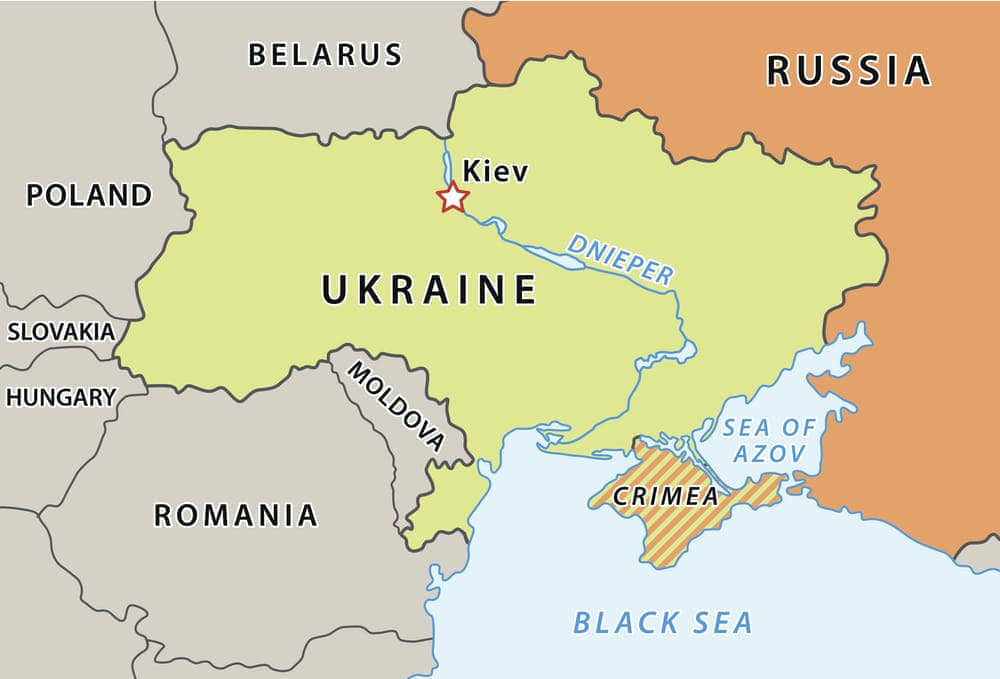
By Dan Kovalik, LA Progressive, 7/26/23
Dan Kovalik is a human rights attorney and author of seven books.
I just returned from my third trip to Russia, and my second trip to Donbass (now referring to the republics of Donetsk and Lugansk collectively) in about 8 months. This time, I flew into lovely Tallinn, Estonia and took what should be about a 6-hour bus ride to St. Petersburg. In the end, the bus trip took me about 12 hours due to a long wait in Customs on the Russian side of the border.
Having a US passport and trying to pass the frontier from a hostile, NATO country into Russia during wartime got me immediately flagged for questioning. And then, it turned out I didn’t have all my papers in order as I was still without my journalist credential from the Russian Foreign Ministry which was necessary given that I told the border patrol that I was traveling to do reporting. I was treated very nicely, though the long layover forced me to my bus which understandably went on without me.
However, sometimes we find opportunity in seemingly inconvenient detours, and that was true in this case. Thus, I became a witness to a number of Ukrainians, some of them entire families, trying to cross the border and to immigrate to Russia. Indeed, the only other type of passport (besides my US passport) I saw amongst those held over for questioning and processing was the blue Ukranian passport. This is evidence of an inconvenient fact to the Western narrative of the war which portrays Russia as an invader of Ukraine. In fact, many Ukrainians have an affinity for Russia and have voluntarily chosen to live there over the years.
Between 2014 – the real start of the war when the Ukrainian government began attacking its own people in the Donbass – and the beginning of Russia’s intervention in February of 2022, around 1 million Ukrainians had already immigrated to Russia. This was reported in the mainstream press back then, with the BBC writing about these 1 million refugees, and also explaining, “[s]eparatists in the eastern regions of Donetsk and Luhansk declared independence after Russia annexed Crimea from Ukraine. Since the violence erupted, some 2,600 people have been killed and thousands more wounded. The city of Luhansk has been under siege by government forces for the past month and is without proper supplies of food and water.” The number of dead in this war would grow to 14,000 by February of 2022, again before Russia’s Special Military Operations (SMO) had even begun.
Around 1.3 million additional Ukrainians have immigrated to Russia since February of 2022, making Russia the largest recipient of Ukrainian refugees in the world since the beginning of the SMO.
When I commented to one of the Russian border officials, Kirill is his name, about the stack of Ukrainian passports sitting on his desk, he made a point to tell me that they treat the Ukrainians coming in “as human beings.” When my contact in St Petersburg, Boris, was able to send a photo of my press credential to Kirill, I was sent on my way with a handshake and was able to catch the next bus coming through to St. Petersburg almost immediately.
Once in St. Petersburg, I went to Boris’s house for a short rest and then was off by car to Rostov-on-Don, the last Russian city before Donetsk. I was driven in a black Lexus by a kind Russian businessman named Vladimir and along with German, the founder of the humanitarian aid group known as “Leningrad Volunteers.” The car was indeed loaded with humanitarian aid to take to Donbas. After some short introductions, and my dad joke about the “Lexus from Texas,” we were off on our 20-hour journey at a brisk pace of about 110 miles an hour.
We arrived in Rostov in the evening and checked into the Sholokhov Lofts hotel, named after Mikhail Sholokhov, Rostov’s favorite son who wrote the great novel, “And Quiet Flows the Don.” We were told that, up until recently, a portrait of the titular head of the Wagner Group, Yevgeny Prigozhin, had adorned the lobby wall. They took this down after members of the Wagner Group invaded Rostov, putting fear in many of the residents. Now, the hotel only has Hollywood movie posters decorating the walls.
In the early afternoon the next day, my translator Sasha arrived from her hometown of Krasnodar, Russia – a 7-hour train ride from Rostov. Sasha, who is just 22 years old, is a tiny red-headed woman who quickly turned out to be one of the most interesting people I met on my journey. As she explained to me, Sasha has been supporting humanitarian work in Donbass since the age of 12. She told me that she derived her interest in this work from her grandmother who raised her in the “patriotic spirit” of the USSR. As Sasha explained, her parents were too busy working to do much raising of her at all. Sasha, who is from the mainland of Russia, attends the University of Donetsk to live in solidarity with the people who have been under attack there since 2014.
Sasha, who wore open-toed sandals even when we traveled to the frontlines, is one of the bravest people I have ever met, and she certainly disabused me of any notion that I was doing anything especially brave by going to the Donbass. But of course, as Graham Greene once wrote, “with a return ticket, courage becomes an intellectual exercise” anyway.
We quickly set out on our approximately 3-to-4-hour drive to Donetsk City, with a brief stop at a passport control office now run by the Russian Federation subsequent to the September, 2022 referendum in which the people of Donetsk and three other Ukrainian republics voted to join Russia. I was again questioned by officials at this stop, but for only 15 minutes or so. I just resigned myself to the fact that, as an American traveling through Russia at this time, I was not going to go through any border area without some level of questioning. However, the tone of the questioning was always friendly.
We arrived in Donetsk City, a small but lovely town along the Kalmius River, without incident. Our first stop was at the Leningrad Volunteers warehouse to unload some of the aid we had brought and to meet some of the local volunteers. Almost all of these volunteers are life-long residents of Donetsk, and nearly all of them wore military fatigues and have been fighting the Ukrainian forces as part of the Donetsk militia for years, many since the beginning of the conflict in 2014. This is something I cannot impress upon the reader enough. While we are often told that these fighters in the Donbass are Russians or “Russian proxies,” this is simply not true. The lion’s share of these fighters are locals of varying ages, some quite old, who have been fighting for their homes, families and survival since 2014. While there have been Russian and international volunteers who have supported these forces – just as there were international volunteers who went to support the Republicans in Spain in the 1930’s — they are mostly local. Of course, this changed in February of 2022 when Russia began the SMO. But even still, the locals of Donetsk continue to fight on, now alongside the Russian forces.
The lie of “Russian proxies” fighting in the Donbass after 2014 is actually one of the smaller ones of the Western mainstream press, for the claim at least acknowledges that there has been such fighting. Of course, the mainstream media has tried to convince us that there was never such fighting at all and that the Russian SMO beginning in February of 2022 was completely “unprovoked.” This is the big lie that has been peddled in order to gain the consent of the Western populations to militarily support Ukraine. What is also ignored is the fact that this war was escalating greatly before the beginning of the SMO and this escalation indeed provoked it. Thus, according to the Organization for European Security and Cooperation (OESC) — a 57-member organization including many Western countries, including the United States – there were around 2000 cease-fire violations in the Donbass in the weekend just before the SMO began on February 24, 2022. In a rare moment of candor, Reuters reported on February 19, 2022, “Almost 2,000 ceasefire violations were registered in eastern Ukraine by monitors for the Organization for Security and Cooperation in Europe on Saturday, a diplomatic source told Reuters on Sunday. Ukrainian government and separatist forces have been fighting in eastern Ukraine since 2014.”
Jacques Baud, a Swiss intelligence and security consultant and former NATO military analyst, further explains the precipitating events of the SMO:
“as early as February 16, Joe Biden knew that the Ukrainians had begun shelling the civilian population of Donbass, putting Vladimir Putin in front of a difficult choice: to help Donbass militarily and create an international problem, or to stand by and watch the Russian-speaking people of Donbass being crushed.”
. . . This is what he explained in his speech on February 21.
On that day, he agreed to the request of the Duma and recognized the independence of the two Donbass Republics and, at the same time, he signed friendship and assistance treaties with them.
The Ukrainian artillery bombardment of the Donbass population continued, and, on 23 February, the two Republics asked for military assistance from Russia. On 24 February, Vladimir Putin invoked Article 51 of the United Nations Charter, which provides for mutual military assistance in the framework of a defensive alliance.
In order to make the Russian intervention totally illegal in the eyes of the public we deliberately hid the fact that the war actually started on February 16. The Ukrainian army was preparing to attack the Donbass as early as 2021, as some Russian and European intelligence services were well aware. Jurists will judge.
Of course, none of this was news to the people I met in Donetsk, for they had been living this reality for years. For example, Dimitri, a young resident of Donetsk who has been fighting since 2014 along with his mother and father, told me quite exasperated as he pointed to some of the weapons and ammunition behind him, “what is all this stuff doing here? Why have we been getting this since 2014? Because the war has been going on since then.” Dimitri, who was studying at the university when the conflict began, can no longer fight due to injuries received in the war, including damage to his hearing which is evidenced by the earplugs he wears. He hopes he can go back to his studies.
Just a few days before my arrival in Donetsk, Dimitri’s apartment building was shelled by Ukrainian forces, just as it had been before in 2016. Like many in Donetsk, he is used to quickly repairing the damage and going on with his life.
Dimitri took me to the Donetsk airport and nearby Orthodox church and monastery which were destroyed in fighting between the Ukrainian military and Donetsk militia forces back in 2014-2015. Dimitri participated in the fighting in this area back then, explaining that during that time, this was the area of the most intense fighting in the world. But you would not know this from the mainstream press coverage which has largely ignored this war before February of 2022.
One of the first individuals I interviewed in Donetsk was 36-year-old Vitaly, a big guy with a chubby, boyish face who wore a baseball hat with the red Soviet flag with the hammer and sickle. Vitaly, the father of three children, is from Donetsk and has been fighting there for four years, including in the very tough battle for the steel plant in Mariupol in the summer of 2022. He decided to take up arms after friends of his were killed by Ukrainian forces, including some who were killed by being burned alive by fascist forces –- the same forces, we are told, don’t exist. Vitaly, referring to the mainstream Western media, laughed when saying, “they’ve been saying we’ve been shelling ourselves for 9 years.”
Vitaly has personally fought against soldiers wearing Nazi insignia, and he is very clear that he is fighting fascism. Indeed, when I asked him what the Soviet flag on his hat meant to him, he said that it signified the defeat over Nazism, and he hopes he will contribute to this again. When I asked him about claims that Russia had intervened with soldiers in the war prior to February of 2022 as some allege, he adamantly denied this, as did everyone else I interviewed in Donetsk. However, he has witnessed the fact that Polish and UK soldiers have been fighting with the Ukrainian military since the beginning. Vitaly opined that, given what has transpired over the past 9 years, he does not believe that the Donbass will ever return to Ukraine, and he certainly hopes it will not. Vitaly told me quite stoically that he believes he will not see peace in his lifetime.
During my stay in Donetsk, I twice had dinner with Anastasia, my interpreter during my first trip to the Donbass in November. Anastasia teaches at the University of Donetsk. She has been traveling around Russia, including to the far east, telling of what has been happening in the Donbass since 2014 because many in Russia themselves do not fully understand what has been going on. She told me that when she was recounting her story, she found herself reliving her trauma from 9 years of war and feeling overwhelmed. Anastasia’s parents and 13-year-old brother live near the frontlines in the Donetsk Republic, and she worries greatly about them. Anastasia is glad that Russia has intervened in the conflict, and she indeed corrected me when I once referred to the Russian SMO as an “invasion,” telling me that Russia did not invade. Rather, they were invited and welcomed in. That does seem to be the prevailing view in Donetsk as far as I can tell.
During my 5-day trip to Donetsk, I was taken to two cities within the conflict zone – Yasinovataya and Gorlovka. I was required to wear body armor and a helmet during this journey, though wearing a seatbelt was optional, if not frowned upon. While Donetsk City, which certainly sees its share of shelling, is largely intact and with teeming traffic and a brisk restaurant and café scene, once we got out of the city, this changed pretty quickly. Yasinovataya showed signs of great destruction, and I was told that a lot of this dated back to 2014. The destruction going back that far included a machine factory which is now being used as a base of operations for Donetsk forces and the adjacent administrative building which looks like it could have been an opera house before its being shelled. For its part, the city center of Gorlovka looked largely unmolested with signs of street life and even had an old trolley, clearly from the Soviet era, running through the center of town. But the outskirts of Gorlovka certainly showed signs of war. In both cities, one could hear the sound of shelling in the distance quite frequently.
In Gorlovka, we met with Nikoli, nicknamed “Heavy.” Nikoli looks like a Greek god, standing at probably 6 feet, 5 inches and all muscle. I joked with him while I was standing next to him that I felt like I was appearing next to Ivan Drago in Rocky IV. He got the joke and laughed. While a giant of a man, seemed very nice and with a strong moral compass. He led us over to a makeshift Orthodox chapel in the cafeteria of what was a school, but which is now the base of operations for his Donetsk militia forces. He told us that, even now after the SMO began, about 90 percent of the forces in Gorlovka are still local Donetsk soldiers, and the other 10 percent are Russian. Again, this is something we rarely get a sense of from the mainstream press.
Nikoli, while sitting in front of the makeshift chapel, explained that while he still considers himself Ukrainian, for after all he was born in Ukraine, he said that Donetsk would never go back to Ukraine because Ukraine had “acted against God” when it began to attack its own people in the Donbass. He made it clear that he was prepared to fight to the end to ensure the survival of the people of Donetsk, and I had no doubt that he was telling the truth about that.
At my request, I met with the First Secretary of the Donetsk section of the Communist Party of the Russian Federation (CPRF), Boris Litvinov. Boris, who has also served in the Donetsk parliament, explained that the Communist Party under his leadership had been one of the leaders and initiators of the 2014 Referendum in which the people of Donetsk voted to become an autonomous republic and leave Ukraine. According to Boris, about 100 members of the Donetsk section of the CPRF are serving on the frontlines of the conflict. Indeed, as Boris explained, the CPRF supports the Russian SMO, only wishing that it had commenced in 2014. Boris is clear that the war in Ukraine is one over the very survival of Russia (regardless of whether it is capitalist or socialist) and that Russia is fighting the collective West which wants to destroy Russia.
Boris compares the fight in the Donbass to the fight of the Republicans against the fascists in Spain in the 1930’s, and he says that there are international fighters from all over the world (Americans, Israelis, Spanish and Colombians, for example) who are fighting alongside the people of Donbass against the fascists just as international fighters helped in Spain.
The last person I interviewed, again at my own request, was Olga Tseselskaya, assistant to the head of the Union of Women of the Republic of Donetsk and First Secretary of the Mothers’ United organization. The Mothers’ United organization, which has 6000 members throughout the Donetsk Republic, advocates for and provides social services to the mothers of children killed in the conflict since 2014. I was excited that Olga opened our discussion by saying that she was glad to be talking to someone from Pittsburgh because Pittsburgh and Donetsk City had once been sister cities.
I asked Olga about how she viewed the Russian forces now in Donetsk, and she made it clear that she supported their presence in Donetsk and believed that they were treating the population well. She adamantly denied the claims of mass rape made against the Russians earlier in the conflict. Of course, it should be noted, the Ukrainian parliament’s commissioner for human rights, Lyudmila Denisova, who was the source of these claims was ultimately fired because her claims were found to be unverified and without substantiation, but again the Western media has barely reported on that fact.
When I asked Olga whether she agreed with some Western peace groups, such as the Stop the War Coalition in the UK, that Russia should pull its troops out of the Donbass, she disagreed, saying that she hates to think what would happen to the people of the Donbass if they did. I think that this is something the people of the West need to come to grips with – that the government of Ukraine has done great violence against its own people in the Donbass, and that the people of the Donbass had every right to choose to leave Ukraine and join Russia. If Westerners understood this reality, they would think twice about “standing with” and continuing to arm Ukraine.
By Andre Damon, World Socialist Website, 7/25/23
Since January of this year, the New York Times has published dozens of articles claiming that Ukraine’s “spring offensive” would be a decisive turning point in the war with Russia. But this offensive, now six weeks old, has turned into a debacle. While Ukrainian forces have nowhere breached Russia’s main defensive line, tens of thousands of troops have died.
This is the context in which the New York Times published and quickly edited an article presenting a realistic, and therefore nightmarish, depiction of the Ukrainian troops as little more than cannon fodder, “forced into action” to face almost certain death.
Buried on page A9 and not referenced on the front page of the print edition, the extensive and detailed report on Ukraine’s offensive was titled, “Depleted Troops, Unreliable Munitions: Kyiv’s Obstacles in the East.” It included a sub-headline describing the offensive as a “grisly stalemate.”
With equally little notice, that article had been published online the day before under the title, “Weary Soldiers, Unreliable Munitions: Ukraine’s Many Challenges.”
The article presented Ukraine’s offensive as a bloody debacle, in which Ukrainian forces have suffered massive casualties, who are then replaced with older recruits who are “forced” to fight.
The article documented three new, previously undisclosed revelations:
-There exists a unit in Ukraine with a “200 percent” casualty rate, meaning that all of its members were killed or injured, then replaced with recruits, all of whom were killed or injured.
-The munitions provided to Ukraine are often so old that they regularly misfire or accidentally detonate, injuring soldiers.
-After young troops are killed in combat, they are typically replaced with much older people, a sign that Ukraine is running out of fighting-age troops.
Typically, a journalist who uncovered these facts based on firsthand reporting would proclaim each of them a “scoop” and take to Twitter to publicize them.
But the method of the New York Times is that of the “buried lede”–to take these potentially explosive revelations and stick them in an article on the inside pages, which is quickly removed from the newspaper’s online front page.
In this case, however, merely burying these revelations was insufficient. It was necessary to erase them.
The first snapshot of the article was captured by archive.org at 5:32 a.m. Eastern Time. Over the ensuing 24 hours, a series of major changes was implemented, with no public notice, in which all three of the facts presented above were effaced.
The initial version of the article published online contained a paragraph stating that Ukraine was achieving “small territorial gains” at an “outsize cost.” It continued with the following quote:
“We’re trading our people for their people and they have more people and equipment,” said one Ukrainian commander whose platoon has suffered around 200 percent casualties since Russia launched its full-scale invasion last year.
This paragraph was revised as follows:
“We’re trading our people for their people, and they have more people and equipment,” said one Ukrainian commander whose platoon has suffered around [sic] heavy casualties since Russia launched its full-scale invasion last year.
In this case, “200 percent” was replaced with “heavy,” (albeit in such a hasty manner that the preceding word, “around,” remained). In the Battle of Normandy, in which 156,000 Allied soldiers landed on the beaches, approximately 10,000, or 6 percent, were killed or injured in what would typically be described as “heavy” casualties.
By contrast, the original language in the Times article implied that the entire unit was killed or wounded, then replaced, and the entire replacement unit was killed or wounded again.
This is a jaw-dropping figure, perhaps totally unheard of since the First World War, if even then. Rather than explaining it, the Times simply expunged it from the record, never to be seen again by readers of the Times.
The modifications continued. The next (literally) explosive revelation in the article was the statement that the munitions being sent to Ukraine, often to clear out expiring stockrooms for the imperialist powers, would regularly explode as Ukrainian troops were handling them. The article originally read as follows:
“Ammunition, as always, is in short supply, and there is a mixture of munitions sent from different countries. That has forced Ukrainian artillery units to use more ammunition to hit their targets, since accuracy varies widely between the various shells, Ukrainian soldiers said. In addition, some of the older shells and rockets sent from abroad are damaging their equipment, and injuring soldiers. ‘It’s a huge problem,’ said Alex, a Ukrainian battalion commander.”
The last sentence was modified to read as follows:
“In addition, some of the older shells and rockets sent from abroad are damaging their equipment and injuring soldiers. ‘t’s a very big problem now,’ said Alex, a Ukrainian battalion commander.”
An excerpt of the Times article, showing additions in green and deletions in red.
Modern artillery munitions typically have a shelf life of 10 to 15 years. After that time, it becomes hazardous to operate these munitions, which are prone to misfires and accidental detonations.
The rate at which “older” and possibly expired munitions misfire and accidentally detonate is, apparently, a “huge” problem for Ukrainian troops. At least it was, until the problem was downgraded to “very big” by the Times editors, again without explanation.
The article continued:
“But other Ukrainian formations elsewhere on the front have had trouble filling their ranks with the caliber of soldiers capable of carrying out successful trench attacks, given that months of fighting have exhausted their ranks. New replacements are often older recruits who were forced into action.”
This article replaces this line with the following:
“But other Ukrainian formations elsewhere on the front have had trouble filling their ranks with the caliber of soldiers capable of carrying out successful trench attacks, given that months of fighting have exhausted their ranks. New replacements are sometimes older recruits who were mobilized.”
Instead of replacements for the troops that were killed being “often” older recruits, they are now “sometimes” older recruits. Moreover, instead of being “forced into action,” the troops are now “mobilized.”
The following paragraph gives context to what is being described:
“How can you expect a 40-year-old to be a good infantry soldier or machine-gunner?” asked the Ukrainian commander whose platoon had taken dozens of casualties. Youth not only means better physical prowess, but younger soldiers are less likely to question orders.
In other words, it is “often” the case that the soldiers “forced into action” are close to middle-age and, moreover, “question orders” when they are told to carry out suicidal attacks.
The changes to this article are a microcosm of US media reporting on the war. The horrendous, bloody debacle of the war in Ukraine is systematically sanitized, with certain topics clearly taboo and in many cases completely expunged from the media.
To cite just one example, a search for the term “Ukraine conscription” in the publicly accessible AP news image database returns only five results, all of them dealing with conscription in Russia.
Even though Ukraine has its entire prime-age population under arms, the US media seems to have an internal code that does not allow these images of recruitment and mobilization to be transmitted to the population.
Just one month ago, Times columnist Bret Stephens mused of the offensive bringing a “crushing and unmistakable defeat” for Russia, while Washington Post columnist Max Boot quoted General David Petraeus as stating that he expected “the Ukrainians to achieve significant breakthroughs and accomplish much more than most analysts are predicting.”
It has produced something else: A nightmare on the scale of the First World War, in which whole units are wiped out, replaced with conscripts, then wiped out again, then told to assault well-defended trenches.
In September of last year, the World Socialist Web Site characterized the growing calls in the US media and political establishment for Ukrainian forces to go on the offensive against well-defended Russian trenches as follows:
“Human life means nothing to the Washington warmongers or their stooges in Kiev. … The lives of Ukraine’s youth, many of them conscripted, are being squandered, mere cannon fodder, or to use the phrase favored by Leo Tolstoy, ‘cannon meat.’”
These warnings have been horrifyingly confirmed.
The Bell, 7/29/23
Russia’s war in Ukraine is already in its 17th month. In that time, President Vladimir Putin has clearly demonstrated that he is not bothered by losses — whether they be financial, material, or human. His war will go on as long as he needs. And, judging by how the authorities have woven the so-called “special military operation” into Russian life, that will be a long time. The government has cash reserves and policy options (such as tax hikes) that mean the current level of military expenditure can be maintained. Putin has not unveiled a coherent plan for “eternal war,” but the Russian parliament has recently passed many laws that institutionalize the war; making it ever-present in day-to-day life.
This week, before it went into holidays, the State Duma greenlighted a whole series of amendments to the law on military service. Most of these were only published hours before they were passed (a tactic deputies typically use when they want to prevent a public outcry). “This law has been written for a major war, for general mobilization,” said Andrei Karatonov, head of the State Duma’s defense committee.
Perhaps the most significant change was an extension of the age at which men can be conscripted for military service. Now, young people aged between 18 and 30 can be called up for military service, not just those aged between 18 and 27 (as it had been since Soviet times). This comes into force next year (legislators said that anyone turning 27 before the New Year will not be affected — however, the law itself does not state this).
In addition, failing to report to a recruitment office or provide up-to-date personal information to the military authorities can now be punished with much higher fines. And there will be tougher penalties for organizations that try to help employees avoid the draft.
Interestingly, these amendments were not unanimously supported by Duma deputies, notices independent journalist Farida Rustamova. Some even voted against — a rare occurrence when it comes to major political initiatives.
This week’s changes follow legislation passed earlier this year that means, as soon as call-up papers are issued (i.e. included in an online call-up register), men will face restrictions on leaving Russia. Being unaware of the call-up does not relieve a conscript of responsibility. Draft dodgers can be hit with limits on acquiring real estate and cars, as well as huge fines.
Other significant laws added to the statute books in recent weeks include those on military companies, which governors can now create in their regions on the president’s behalf (during periods of mobilization and martial law). Rosgvardia, Russia’s National Guard, is obliged to provide arms to these groups, and their soldiers have the right to carry and use them. The Moscow mayor has extra powers and he can make his own arrangements directly with Rosgvardia. This law was a clear response to Wagner’s rebellion.
Deputies have also approved laws allowing the Defense Ministry to make purchases for the armed forces in cash, canceling maximum purchase sizes and requirements about suppliers. In simple terms, the Defense Ministry can now buy almost anything from almost anyone – if the purchase can be justified by the needs of the war.
Electoral legislation has also been altered as a result of the war — and the course of the fighting will be a key part of upcoming campaigns in both regional and local elections. On Sep. 10, there will be governor elections in 21 regions, 16 regional parliament elections and local assembly elections in 12 cities. This is the start of the current electoral cycle culminating in a presidential election expected to be in March next year. According to sources cited by independent media outlet Meduza, the Kremlin’s aim is to deliver a record 80% support for the aging president (in 2018, Putin officially got 78% of the vote).
Between June 2022 and May 2023 Russia’s parliament passed six amendments to the law on electoral rights, according to election monitor Golos. They included banning so-called “foreign agents” from being members of electoral commissions or serving as election observers. Elections can now also be held under martial law (something explicitly prohibited in the Russian constitution).
There is almost no doubt that Putin will be re-elected for another six-year term. The Kremlin is already preparing for the vote and the war will be a major part of Putin’s campaign. According to political expert Tatiana Stanovaya, there will be a big emphasis on the social issues linked to the war like assistance to families and children and support for veterans. At the same time, she predicts patriotic messaging will be less prominent.
The nation’s finances have inevitably been influenced by the war and the upcoming elections. Despite problems at the start of the year, things have improved in recent months. The budget deficit fell from its April peak of 3.4 trillion rubles to 2.6 trillion at the end of June. In addition, economic growth has led to a rise in non-energy taxation revenue and spending fell. Finance Minister Anton Siluanov has promised the annual budget deficit will not exceed 2.5% of GDP, but there is still a high risk that it will increase above its current level.
In 2024, we expect some tweaks to expenditure. But any major cuts seem impossible: not just for political reasons but because state spending – primarily military spending and social handouts — are driving economic growth and rising salaries (you can read more about this here). On a structural level, the war is now an integral part of the country’s economy. Even if the conflict in Ukraine transitions from an active war to a more frozen conflict, Russia’s military spending is extremely unlikely to decline.
Without spending cuts, the government has a range of measures to combat the deficit. First, it can increase taxes. Although this cannot be used right away — the current moratorium on tax rises expires in 2024. It’s unlikely the government will rush to announce tax hikes on the eve of the election, but this could happen immediately after the vote. There is also the possibility of “stealth taxes.” For example, there was a recent proposal to increase duties on alcohol from countries that Russia has deemed “unfriendly.” But the market for wine is not large and demand is elastic, so higher duties would mostly benefit Russian winemakers and importers from Latin America and South Africa.
Borrowing could also plug the deficit. There is liquidity in the market. However, Russian banks, which no longer face foreign competition, are increasingly dictating their own terms. They prefer to shift inflationary risks to the government and buy inflation-linked bonds. In the context of accelerating inflation, this will make servicing debt more expensive.
The Kremlin could also increase withdrawals from the National Welfare Fund. Over the past six months, doing this has helped plug a 507 billion ruble hole in the budget, the Finance Ministry reported. A further 300 billion rubles went into shares and bonds of state-owned companies. In total, the fund has 6.8 trillion rubles of liquid assets left, specifically gold and yuan. By the end of next year, 2.3 trillion rubles should remain (according to the Finance Ministry). However, the budget deficit could grow much faster than planned and there is likely reluctance to spend every last cent from the fund.
Western sanctions mean the Russian economy is securely insulated from global shocks. If there is no sudden fall in oil prices, or anything similarly catastrophic, there is enough money to maintain current spending for about two years.
The Russian economy is set to completely reverse last year’s slump – something Putin has recently highlighted. Manufacturing and construction lead the way, alongside retail. In a broad sense, all three sectors are beneficiaries of the war. The defense sector, working in three shifts, is boosting production: in June, for example, the biggest increases were in finished metal products (+45.8% year-on-year); computers, electronics and optics (+71.6% year-on-year), radar equipment (+75.4% year-on-year) and electrical equipment (+32.1% year-on-year). Production capacities are running at their maximum.
Construction is primarily driven by discounted mortgages: currently, 51% of loans come with state support, up two percentage points since April. Overall, the mortgage portfolio of Russia’s top 20 banks was up 3% in May. In addition, construction continues on occupied Ukrainian territory. “In the first half of the year, 20 apartment blocks were built and more than 2,000 were restored. More than 150 public buildings, plus more than 1,000 residential and community objects. Federal contractors restored 260 kilometers of roads,” Deputy Prime Minister Marat Khusnullin said recently. These projects, along with the construction of massive defensive fortifications on the frontline, even led to a shortage of cement.
Retail growth has been driven by increased salaries and social handouts (some of which are connected to the war). Real incomes are up in regions that are home to military factories and where reports suggest there are large numbers of contract soldiers (for example, Buryatia, the Jewish Autonomous Okrug and Chechnya). Double-digit wage growth masks one of the biggest barriers to economic growth — a shortage of labor. A lack of workers and limits on production capacity lead to what economists call an “overheated economy”: supply cannot match rising demand, and prices increase accordingly. To cool down the economy, the Central Bank may be forced to further increase interest rates.
The distribution of demand via military expenditure encourages the Kremlin to drag out the war as long as possible. Or to start a cold war in place of the current hot one. All indicators suggest that this is what is happening: economically and legally, the Russian authorities are weaving the war in Ukraine — and more generally the struggle against the West — into the fabric of public life. However, the more the economy binges on military expenditures, the greater the hangover. In political terms, “eternal war” is increasingly becoming a cornerstone of the Kremlin’s narrative. Putin has no other vision to offer.
Russia’s Central Bank has lost its fourth deputy since the invasion of Ukraine as Ksenia Yudaeva said Friday she was resigning. Along with Central Bank head Elvira Nabiullina, Yudaeva has played a key role in transforming the Central Bank into one of Russia’s most effective institutions and managing the economic fallout from the Ukraine war.
From Aug. 1, Yudaeva will be an adviser to Nabiullina. She will remain a member of the Central Bank’s Executive Board and the Financial Stability Committee.
Yudaeva became deputy head of the Central Bank in 2013 shortly after Nabiullina was appointed chairwoman by Putin. Initially, Yudaeva was responsible for monetary policy and inflation targeting. In recent years, she has overseen financial stability and analytics.
A prominent economist who received her Phd from MIT in the United States, Yudaeva was widely seen as a technocrat with liberal views. However, like her boss Nabiullina, she remained in post following Russia’s invasion of Ukraine. Prior to joining the Central Bank, Yudaeva was in charge of state-owned Sberbank’s macroeconomic research center. She was sanctioned by the U.S. last year for her affiliation with bailed-out lender Otkritie Bank.
Between July 18 and July 24, inflation accelerated from 0.18% to 0.23%. Year-on-year inflation reached 4.19%. This increase is primarily a knock-on effect of the exchange rate on prices. Last week, the Central Bank increased interest rates by a percentage point to 8.5%.
The IMF updated its forecast for the world economy. Expectations of GDP growth in Russia in 2023 were upgraded from 0.7% to 1.5%. The prediction for 2024 is unchanged at 1.3%.
Russia Matters, 7/28/23
According to Levada Center’s polls. At the end of July, the share of respondents supporting continued hostilities was at 41% compared to 40% in June. As for supporters of the transition to peace negotiations, their share decreased from 53% in June to 51% in July. In July, only 10% of the Levada Center’s respondents believed that hostilities would last less than six more months (11% in May ), while 73% of respondents believe that hostilities will last more than six months (71% in May). Levada’s recent polls also show that the share of Russians who approve of Putin’s conduct as president reached 82% in July. When asked to name several public figures that they trust most, 44% of Russians named Putin in July (43% did so in June). Failed mutineer Yevgeny Prigozhin, who featured on the list of most trusted figures in June, was no longer on that list in July. The slight decrease in the share of Russians who support peace negotiations in July can be explained, in part, by the ending of Prigozhin’s short-lived mutiny the previous month. The conclusion of the June 23-24 mutiny can explain the increase, if only slight, in Putin’s approval and trust ratings.