Belarusian President Alexander Lukashenko announced on Saturday that he had arranged a deal whereby Wagner Group leader Evgeny Prigozhin will abandon his mutiny in exchange for “security guarantees” for his fighters.
“Evgeny Prigozhin accepted the proposal of President Alexander Lukashenko to stop the movement of armed men of Wagner in Russia and take further steps to de-escalate tension,” read a statement from Lukashenko’s office.
According to the statement, Lukashenko and Prigozhin held talks for the “whole day,” and “came to an agreement on the inadmissibility of unleashing a bloodbath on the territory of Russia.”
Lukashenko’s office said that the talks were held in coordination with Russian President Vladimir Putin, adding that Prigozhin was offered “an advantageous and acceptable option of resolving the situation, with security guarantees for the Wagner PMC fighters.”
The news came as a Wagner convoy drew closer to Moscow, several hours after members of the private military outfit passed through the southern city of Rostov-on-Don. In a series of video statements released since Friday, Prigozhin declared that he was advancing on Moscow to confront Russian military officials he deemed corrupt.
Prigozhin garnered no support from the Russian establishment. Instead, Putin accused the Wagner chief of “backstabbing our country and our people,” while Russia’s Federal Security Service (FSB) opened a criminal investigation into Prigozhin for “calling for an armed rebellion.”
Senior Russian political and military figures denounced Prigozhin’s mutiny, and called on Wagner fighters to lay down their arms.
Shortly after Lukashenko’s announcement, Prigozhin confirmed that his troops were abandoning their push to Moscow and returning to their field camps.
There have been reports on social media that Yevgeny Prigozhin, leader of the Wagner private military group, had taken control of the military quarters in Rostov-on-Don and at least some of his forces have advanced on to Vorozneh. He has reportedly said that he will blockade Rostov until Defense Minister Sergei Shoigu and Chief of General Staff Valery Gerasimov (both of whom he has accused of mismanagement of the SMO) are removed or he will advance to Moscow for them. I can’t verify that all of the above details are true at this time.
(A good analysis of the crisis and what led up to it by Moscow-based analyst Andrew Korybko can be read here.)
Around 10:00 am Moscow time Russian President Vladmir Putin gave a public televised address.
He called Prigozhin’s actions mutiny and a “criminal act.” He also used the term “treason” and referred to Prigozhin’s acts as “a stab in the back” being used by Russia’s enemies.
He said Russia would not allow a repeat of 1917 by “opportunists”. Putin said that measures will be taken that are very hard and those responsible will be brought to justice. The armed forces and other agencies have been given orders. Furthermore, restrictions have been taken in Moscow. He said that the situation in Rostov is “complicated.” He stated that those participating in the mutiny have betrayed Russia and he urged Russians to cease any participation in it.
Here is the full transcript from Slavyangrad Telegram channel:
I appeal to the citizens of Russia, to the personnel of the Armed Forces, law enforcement agencies and special services, to the soldiers and commanders who are now fighting at their battle positions, repelling the enemy’s attacks and doing so heroically—I know, I spoke again tonight with the commanders of all directions. I am also addressing those who have been lured into this criminal enterprise and pushed onto the path of the gravest crime—armed mutiny—through deceit or threats.
Russia today is fighting an uphill battle for its future, repelling the aggression of the neo-Nazis and their masters. Virtually the entire military, economic and information machine of the West is directed against us. We are fighting for the lives and security of our people, for our sovereignty and independence. For the right to be and remain Russia—a state with a thousand-year history.
This battle, when the fate of our people is being decided, requires the unity of all forces, unity, consolidation, and responsibility. When everything that weakens us, any kind of discord, which our external enemies can and do use to undermine us from inside, must be put aside.
And so the actions that split our unity are, in essence, an apostasy from our people, from our comrades-in-arms who are now fighting on the frontlines. It is a stab in the back of our country and our people.
This is exactly the blow that was dealt to Russia in 1917, when the country fought the First World War. But the victory was stolen from her. Intrigues, squabbles, politicking behind the backs of the army and the people resulted in the greatest shock, the destruction of the army and the disintegration of the state, the loss of vast territories. The result was the tragedy of the civil war.
The Russians killed the Russians, the brothers killed their brothers, and the lucrative interests were reaped by all kinds of political adventurers and foreign forces who divided the country and tore it apart.
We will not allow this to happen again. We will protect both our people and our statehood against all threats. Including internal treachery.
And what we have faced is precisely betrayal. Excessive ambitions and vested interests have led to treason. Betrayal of their country, their people, and the cause for which the fighters and commanders of Wagner fought and died alongside our other units. The heroes who liberated Soledar and Artemovsk, towns and villages of Donbass, fought and gave their lives for Novorossiya, for the unity of the Russian world. Their name and glory have also been betrayed by those who are trying to organise rebellion, pushing the country towards anarchy and fratricide. To defeat, ultimately, and capitulation.
I repeat, any internal turmoil is a mortal threat to our statehood, to us as a nation. It is a blow to Russia, to our people. And our actions to defend the Fatherland against such a threat will be tough. Everyone who deliberately chose the path of betrayal, who prepared an armed insurrection, who chose the path of blackmail and terrorist methods, will suffer an inevitable punishment, they will be held accountable both before the law and before our people.
The Armed Forces and other government agencies have received the necessary orders, and additional anti-terrorist measures are being introduced in Moscow, the Moscow region, and a number of other regions. Decisive action will also be taken to stabilise the situation in Rostov-on-Don. It remains complex, with the work of the civilian and military authorities effectively blocked.
As the President of Russia and Commander-in-Chief, as a citizen of Russia, I will do my utmost to defend the country, to protect the constitutional order, the lives, security, and freedom of its citizens.
Those who organized and prepared the military uprising, who raised arms against their comrades-in-arms, have betrayed Russia. And they will be held accountable for it. And I urge those who are being dragged into this crime not to make the fatal and tragic, an irreversible mistake, and to make the only right choice – to stop participating in criminal actions.
I believe that we will preserve and defend what is dear and sacred to us, and together with our Motherland we will overcome any trials, we will become even stronger.
There are a lot of unverified claims on social media right now and it’s hard to know for sure what’s really going on. I will do my best to keep readers updated as soon as I get meaningful and credible information. The timeline from RT below is from earliest events to most recent – Natylie
There is some turmoil in Russia after Evgeny Prigozhin, the head of Wagner Group private military company, was accused by the government of staging an armed insurrection.
The charges were brought late Friday night [Moscow time] after Prigozhin accused Defense Minister Sergey Shoigu and General Valery Gerasimov, the chair of the Russian general staff, of serious crimes.
Prigozhin claimed to have ordered troops loyal to him to move towards Rostov-on-Don, a major city in southern Russia. Security measures were also reportedly beefed up in Moscow.
On Friday, Evgeny Prigozhin, the head of the Russian private military company Wagner Group, claimed that senior Russian commanders were traitors and demanded the prosecution of Defense Minister Sergey Shoigu and General Valery Gerasimov, the chair of the general staff.
Later in the day Prigozhin claimed that the Russian military had attacked Wagner reserve positions. Prigozhin announced that forces loyal to him were moving towards the city of Rostov-on-Don.
The Defense Ministry denied the claim. The Russian Federal Security Service (FSB) accused Prigozhin of staging an armed coup and called on Wagner fighters to apprehend him.
Moscow’s police have increased their presence in the city, taking additional measures to protect the Russian capital’s ‘most important buildings, public authorities and transport infrastructure’, the news agency TASS has reported. Several pictures and videos of military hardware moving through the city’s streets have appeared on the web.
Putin is being informed on all the latest developments regarding the ‘armed coup attempt’ by Wagner PMC and its boss Evgeniy Prigozhin, Kremlin spokesman Dmitry Peskov has stated, according to TASS news agency. Peskov said Russia’s Ministry of Defense, FSB and National Guard are feeding information after ‘receiving orders from the president’.
Senior Russian military commanders, including Deputy commander of the Russian Joint Forces, Army General Sergey Surovikin and Lieutenant General Vladimir Alekseev have recorded public video addresses to Wagner troops. They denounced Prigozhin’s actions and called on the fighters to stand down.“This is a stab in the back to the nation and the president,” Alekseev said, warning that there was a risk of a civil war in Russia. Surovikin urged the soldiers to return to their positions and seek a peaceful resolution of the situation.
The White House has said it is “monitoring the situation” in Russia. President Joe Biden has been informed about the developments, National Security Council spokesperson Adam Hodge told the media. US officials indicated that they consider the situation ‘serious’ and beyond Prigozhin’s previous statements launched against the Russian military leadership in the past, according to CNN.
Despite claims by Evgeny Prigozhin, there appears to be no video or photo evidence of any PMC forces moving through Russia. There are also no reports of any battles or skirmishes.
The situation in Rostov-on-Don appears to be relatively calm, according to media reports from the city. Troops are deployed at the headquarters of the Russian Southern military district, but there are no signs that they are preparing to fight off an attack, according to Kommersant daily.
TASS has reported increased security on the highway connecting Rostov-on-Don with central Russia, including Moscow. Police presence has been increased, and inbound traffic is kettled and subject to inspections. Vehicles are not allowed to travel from the city towards the capital at all, according to the news agency.
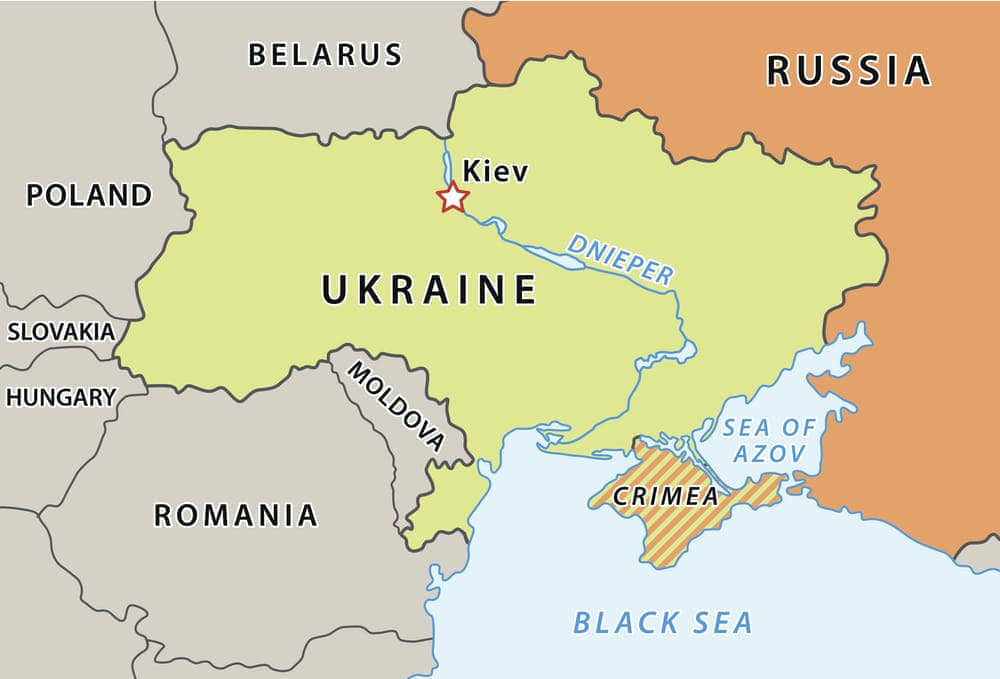
The Russian Defense Ministry has warned on its Telegram channel that Ukrainian forces were preparing to use “Prigozhin’s provocation” to launch an assault in the vicinity of Artyomovsk. The Donbass city, which Ukraine calls Bakhmut, was the focal point of an intensive months-long battle, in which PMC Wagner played a significant role. The city was taken by Russian forces last month.
Traffic camera video feed from Rostov-on-Don, which could have shown the alleged columns of Wagner military hardware moving through the streets, is presently unavailable. When trying to access the feed, users are greeted with a message saying ‘Access to the broadcast is temporarily limited’.
No unusual activity has been noted near the Wagner PMC headquarters in St. Petersburg, according to a TASS correspondent at the location. The news agency added that security guards have also denied reports that a search was underway in the building.
Rostov Region Governor Vasily Golubev has urged residents via his Telegram channel to “keep calm and not leave home without need.” He added that law enforcement was doing everything necessary to ensure the safety of civilians.
A video purportedly showing an armed confrontation between Wagner PMC forces and the Russian Army has been making the rounds on social media. However it has not been independently verified. (Go to RT link above to view the video – NB)
The Russian social network VK has blocked one of the statements released by Prigozhin’s press service on the platform. The post now states that the message is not available in Russia, based on a decision by the Prosecutor General’s office.
There are also claims that some news about Prigozhin’s latest steps are being blocked by Yandex, the Russian tech giant that runs an eponymous web search engine.
The Rostov Region branch of the Emergencies Ministry has warned about a fake post issued in its name on social media. The message falsely claims that a curfew has been imposed in the region, adding that those spreading the message are apparently seeking to cause panic.
Igor Artamonov, the governor of Lipetsk Region, has announced increased security measures, with particular focus on protecting critical infrastructure. He called on residents to avoid traveling to southern parts of Russia, including the neighboring Voronezh Region.
“The latest events have disturbed all of us. But I ask you all to keep calm,” he said on his Telegram account.
Lipetsk is located some 370 km south of Moscow and 590 km north of Rostov-on-Don.
The road connecting the city of Rostov-on-Don with the Azov Sea port of Taganrog, some 60 km to the west, has been fully shut down for traffic, a TASS correspondent has reported. Similar restrictions have also been reported relating to north-bound traffic on the M4 highway, which leads to Moscow. Other exits from Rostov-on-Don remain available, according to the report.
A video purportedly filmed in Rostov-on-Don shows a tank and an armored personnel carrier (APC) driving past a group of police officers who are guarding a fuel station. More military hardware, including another tank, another APC, two armored cars and a truck, follow shortly afterwards.
The footage circulating online could not be immediately verified.
A military column is on the move on the M-4 highway connecting Voronezh and Rostov-on-Don, local authorities have announced on Telegram, asking local residents to temporarily refrain from using the road. The statement adds that law enforcement agencies in the region are “taking all necessary measures to ensure the safety.”
Sixty years ago, in the aftermath of the Cuban Missile Crisis, President John F. Kennedy gave probably the greatest speech on nuclear arms ever given by an American President. Speaking only months after the crisis, Kennedy could have lashed out at the Soviet Union’s reckless behavior in putting missiles in Cuba. Or he could have taken a triumphal tone, highlighting his success in forcing the Soviets to pull the missiles out (with the public then in the dark on his secret promise to pull similar U.S. missiles out of Turkey).
Instead, in a June 10 commencement address at American University, Kennedy made the case that the horrors of a potential nuclear holocaust made it urgent to find a path to peace and that doing so required both sides of the Cold War to change. He announced that the United States would unilaterally stop testing its nuclear weapons until a treaty banning such tests could be reached. “Some say that it is useless to speak of peace,” Kennedy noted, “until the leaders of the Soviet Union adopt a more enlightened attitude. I hope they do. I believe we can help them do it.”
World response was immediate. The NATO allies hailed the speech. The Manchester Guardian ranked it “among the great state papers of American history.” The Soviets turned off their giant radio jammers so that Soviet citizens could hear the speech on Voice of America, and they printed the full text in both Pravda and Izvestia. (The Soviets had some warning: Kennedy’s team had consulted with them informally before he gave his speech.)
Although the Soviets made no formal announcement of a testing halt, they, too, paused nuclear testing. Less than ten days after Kennedy’s speech, the United States and the Soviet Union agreed to the creation of a “hotline” between the two governments. In a month and a half, the Limited Test Ban Treaty had been completed, putting an end to the constant explosions that were spewing radiation across the world, contaminating even mothers’ milk. Kennedy called the treaty “a victory for mankind,” and said that even if the journey to peace was a thousand miles, “let history record that we, in this land, at this time, took the first step.” Soviet leader Nikita Khrushchev hailed the treaty in similar terms.
In the months that followed, the two sides each announced unilateral cutbacks in the production of fissile material for nuclear weapons; reductions in their military spending; and modest pullbacks of troops from the front lines in Central Europe. None of these initiatives were negotiated in detail ahead of time, or verified, though there were informal consultations on each one before they were announced. Khrushchev called it “a policy of reciprocal example in the matter of reducing the armaments race.”
At the UN, the sides also managed to reach an agreement on the Outer Space Treaty, banning nuclear weapons in orbit. The atmosphere of heated Cold War confrontation changed markedly, paving the way for the start of negotiations of the Nuclear Nonproliferation Treaty and then strategic arms talks.
Kennedy’s initiative—sometimes called “the Kennedy Experiment”—drew on the ideas of psychologist Charles E. Osgood, who had published a paper on a strategy he called “Graduated Reciprocation in Tension-Reduction,” or GRIT. The concept was that with two sides in a high state of tension, one side could unilaterally take a tension-reducing step—large enough to be noticed, but small enough not to endanger its security—and challenge the other side to take a step of its own. Osgood argued that the challenge should not be a specific demand, because, in such a state of high tension, the other side would likely see a specific demand as asking too much. Osgood proposed that the first step be accompanied by an unambiguous statement of a new, peaceful policy—exactly what Kennedy did in his American University address.
Osgood went further and argued that even if the other side did not reciprocate—perhaps not fully accepting that its adversary was genuinely trying to reduce the temperature—the side trying to reduce tension should continue with additional small steps, to make the changed approach impossible to deny. It is that idea of continuing even without any positive response that most justifies the GRIT acronym. If the other side did reciprocate, then the initiating side could take a somewhat larger step and see if that was also reciprocated. Osgood hoped to “run the arms race in reverse.”
Osgood suggested that if the opponent makes a warlike move, there should be a “measured response”: enough to show the opponent that the new strategy did not indicate weakness, but not so much as to close the door to further progress.
Decades after Kennedy’s initiative, this approach worked again. In 1991, as the Soviet Union hurtled toward collapse, President George H.W. Bush announced a dramatic set of unilateral initiatives, pulling back U.S. tactical nuclear weapons from around the world (except for a small force that remained in Europe) and destroying most of them; eliminating nuclear weapons from surface ships; and taking strategic bombers off alert. The Soviet Union, and then Russia, reciprocated with similarly sweeping (though not identical) reductions. These “Presidential Nuclear Initiatives” resulted in the fastest nuclear arms reductions that have ever taken place.
Today, tensions between Washington and Moscow are higher than they have been since Kennedy spoke, after Russia’s brutal invasion of Ukraine and repeated nuclear threats. Hostility between the United States and China is growing—and North Korea’s dictator keeps up a relentless pace of missile testing and reckless nuclear rhetoric. These tensions between nuclear-armed states matter: the more hostile two states are, the more likely it is that a crisis will occur, that the crisis will escalate to conflict, and that conflict will escalate to the use of nuclear weapons. Hence, in each of these cases, it is time for new action to bring down the temperature.
President Joe Biden has taken a few small initial steps. The Biden team announced that the United States would unilaterally pledge not to conduct direct-ascent antisatellite (ASAT) weapon tests that would create showers of space debris, endangering other satellites. And they put forward a set of political commitments on “responsible” military use of artificial intelligence—including a commitment that the decision to use nuclear weapons would always be made by a human, not a machine. Scores of other countries have signed on to the ASAT initiative—though not, so far, Russia or China.
Unfortunately, Biden faces obstacles to doing more that President Kennedy did not. In particular, Kennedy spoke when the Cuban Missile Crisis was over: the Soviets had withdrawn their missiles. Today, Russia’s war on Ukraine continues, with new violations of the laws of war almost every day.
Nevertheless, the need for reducing tensions is urgent, and there is more Biden could do. He could announce that a portion of U.S. nuclear missiles would be taken off alert: surely not all of them need to be ready for immediate launch. He could commit that the United States would never use nuclear weapons first unless the very survival of our country or one of our treaty allies was at stake. He could commit that the United States would never deploy its missiles where they could reach Moscow or Beijing in just a few minutes. He could offer to let Chinese or Russian experts monitor U.S. weapons-maintenance experiments to confirm American compliance with the nuclear test ban. He could commit that all U.S. nuclear enrichment and plutonium reprocessing activities would be available for international inspection to confirm they were not being used to make new material for nuclear weapons.
None of those steps would endanger U.S. security. If reciprocated, each of them would improve security significantly. They might be a first step toward new arms restraints that could take the place of New START—the last remaining treaty limiting U.S. and Russian strategic nuclear force numbers—when it expires in early 2026.
The world today is very different from the world of six decades ago. But the need to manage hostility among nuclear-armed states is no less. Biden should draw on Kennedy’s example and pursue new steps to reduce nuclear dangers.
Matthew Bunn is the James R. Schlesinger Professor of the Practice of Energy, National Security, and Foreign Policy at Harvard Kennedy School and Co-Principal Investigator for the Project on Managing the Atom at the Kennedy School’s Belfer Center for Science and International Affairs.