Category Archives: Uncategorized

Sergey Karaganov: How Russia could save humanity from a global catastrophe

I find this proposal disgusting and stupid. Karaganov ignores that even one or a few nuclear bombs would cause major effects on the weather and consequently major famine that would affect billions of people outside of the areas bombed. I hope the reckless morons controlling policy in Washington are proud that they are now getting people of significant stature in Russia to consider these kinds of ideas. – Natylie

By Professor Sergey Karaganov, honorary chairman of Russia’s Council on Foreign and Defense Policy, and academic supervisor at the School of International Economics and Foreign Affairs Higher School of Economics (HSE) in Moscow

Published in English by RT, 6/14/23

This article has sparked major debate among experts in Russia about nuclear weapons, their role and the conditions of their use.

This is especially the case given Sergey Karaganov’s status as a former presidential adviser to both Boris Yeltsin and Vladimir Putin, and his position as head of the Council on Foreign and Defense Policy, a noted Moscow think tank.

Some prominent figures have reacted with dismay, while others have been less critical.

RT has decided it would be beneficial for our readers to read it in full. The following piece has been translated and lightly edited.

***

Our country, and its leadership, seems to me to be facing a difficult choice. It is becoming increasingly clear that our clash with the West will not end even if we achieve a partial – let alone a crushing – victory in Ukraine.

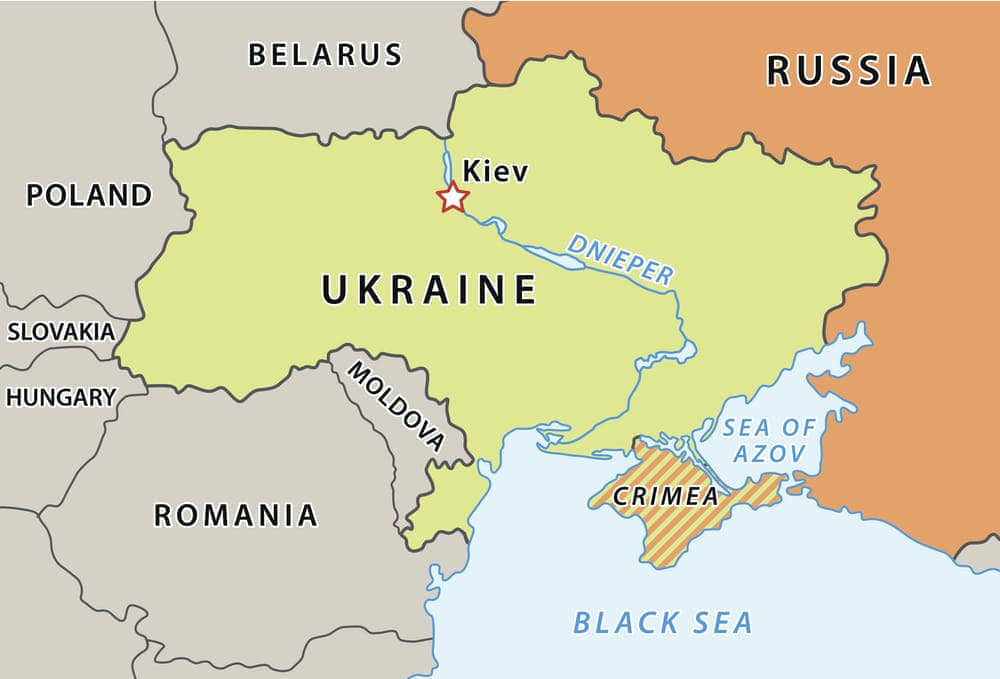
Even if we completely liberate the Donetsk, Lugansk, Zaporozhye and Kherson regions, it will be a minimal victory. A slightly greater success would be to liberate the whole of eastern and southern Ukraine within a year or two. But it would still leave part of the country with an even more embittered ultra-nationalist population pumped full of weapons – a bleeding wound that threatens inevitable complications, such as another war.

The situation could be worse if we liberate the whole of Ukraine at the cost of monstrous sacrifices and are left with ruins and a population that mostly hates us. It would take more than a decade to “re-educate” them.

Any of these options, especially the last one, will distract Russia from the much-needed shift of its spiritual, economic, military and political center to the East of Eurasia. We will be stuck with a wasteful focus on the West. And the territories of today’s Ukraine, especially the central and western ones, will attract resources – both human and financial. These regions were heavily subsidised even in Soviet times.

Meanwhile, hostility from the West will continue; it will support a slow-burning guerrilla civil war.

A more attractive option is the liberation and reunification of the east and south, and the imposition of capitulation on the remnants of Ukraine with complete demilitarization, creating a buffer, friendly state. But such an outcome would only be possible if we are able to break the West’s will to support the Kiev junta, and use it against us, forcing the US-led bloc into a strategic retreat.

And here I come to a crucial but hardly discussed issue. The root cause of – and indeed the main reason for – the Ukrainian crisis, as well as many other conflicts in the world, and the general increase in military threats, is the accelerating failure of the contemporary Western ruling elites.

This crisis is accompanied by an unprecedentedly rapid shift in the balance of power in the world in favor of the global majority, driven economically by China and partly by India, with Russia as the military and strategic anchor. This weakening not only infuriates the imperial-cosmopolitan elites (US President Joe Biden and his ilk) but also frightens the imperial-national elites (such as his predecessor Donald Trump). The West is losing the advantage it has held for five centuries to siphon off the wealth of the entire world by imposing its political and economic order and establishing its cultural dominance, mainly by brute force. So there is no quick end to the defensive, but aggressive, confrontation that the West has unleashed.

This moral, political and economic collapse has been brewing since the mid-1960s, was interrupted by the collapse of the USSR, but resumed with renewed vigour in the 2000s (the defeats of the Americans and their allies in Iraq and Afghanistan, and the crisis of the Western economic model in 2008 were milestones).

In order to slow down this seismic shift, the West has temporarily consolidated itself. The US has turned Ukraine into a punching bag to tie the hands of Russia, the politico-military lynchpin of a non-Western world freed from the shackles of neocolonialism. Ideally, of course, the Americans would simply like to blow up our country and thus radically weaken the emerging alternative superpower, China. We, either not realizing the inevitability of the clash or hoarding our strength, have been slow to act preemptively. Moreover, in line with modern, mainly Western, political and military thinking, we were rash in raising the threshold for the use of nuclear weapons, inaccurate in assessing the situation in Ukraine, and not entirely successful in launching the current military operation.

By failing internally, Western elites have actively fed the weeds that have taken root in the soil of 70 years of prosperity, satiation and peace. These comprise of anti-human ideologies: the denial of family, homeland, history, love between men and women, faith, service to higher ideals, everything that is human. Their philosophy is to weed out those who resist. The aim is to neuter people in order to reduce their ability to resist modern “globalist” capitalism, which is becoming more and more obviously unjust and harmful to man and humanity.

Meanwhile, a weakened US is destroying Western Europe and other countries dependent on it, trying to push them into a confrontation that will follow Ukraine. The elites in most of these countries have lost their bearings and, panicked by the crisis in their own positions at home and abroad, are dutifully leading their countries to the slaughter. At the same time, because of greater failure, a sense of powerlessness, centuries of Russophobia, intellectual degradation and a loss of strategic culture, their hatred is almost more intense than that of the US.

Thus, the trajectory of most Western countries clearly points towards a new fascism, which could be called “liberal” totalitarianism.

In the future, and this is the most important thing, it will only get worse. Truces are possible, but reconciliation is not. Anger and despair will continue to grow in waves and waves. This vector of Western movement is a clear sign of the drift towards the outbreak of World War Three. It has already begun and could erupt into a full-blown conflagration either by accident, or due to the growing incompetence and irresponsibility of the ruling circles of the West.

The introduction of artificial intelligence and the robotization of war increase the risk of unintended escalation. Machines can act outside the control of confused elites.

The situation is aggravated by “strategic parasitism” – in 75 years of relative peace, people have forgotten the horrors of war, have stopped fearing even nuclear weapons. Everywhere, but especially in the West, the instinct for self-preservation has weakened.

I have spent many years studying the history of nuclear strategy and have come to an unequivocal, if unscientific, conclusion. The advent of nuclear weapons is the result of the intervention of the Almighty, who, appalled that mankind had unleashed two world wars within a generation, costing tens of millions of lives, gave us the weapons of Armageddon to show those who had lost their fear of hell that it existed. On that fear rested the relative peace of the last three-quarters of a century.

But now that fear is gone. The unthinkable in terms of previous notions of nuclear deterrence is happening – a group of ruling elites, in a fit of desperate rage, have unleashed a full-scale war in the underbelly of a nuclear superpower.

The fear of atomic escalation must be restored. Otherwise humanity is doomed.

It is not only, and not even so much, what the future world order will look like that is being decided in the fields of Ukraine right now. But rather whether the world we are used to will be preserved at all, or if all will be left is radioactive ruins, poisoning the remnants of humanity.

By breaking the West’s will in imposing its aggression, we will not only save ourselves and finally free the world from the Western yoke of five centuries, but we will also salvage the whole of humanity. By pushing the West towards catharsis and the abandonment of the hegemony of its elites, we will force it to retreat before a global catastrophe. Humanity will be given a new chance to develop.

Proposed solution

Of course, there is an uphill struggle ahead. It is also necessary to solve our own internal problems – to finally get rid of the mindset of Western-centrism and of the Westernizers in the administrative class. Especially the compradors and their peculiar way of thinking. Of course, in this area, the NATO bloc is helping us, unwittingly.

Our 300-year journey around Europe has given us a lot of useful lessons and it has helped us to form our great culture. Let us cherish our European heritage. But it is time to return home, to ourselves. Let us begin, with the baggage we have accumulated, to live in our own way. Our friends in the Foreign Ministry have recently made a real breakthrough by referring to Russia as a civilizational state in their foreign policy concept. I would add – a civilization of civilizations, open to the North as well as to the South, to the West as well as to the East. Now the main direction of development is to the South, to the North and, above all, to the East.

The confrontation with the West in Ukraine, however it ends, should not distract us from the strategic internal movement – spiritual, cultural, economic, political, military and political – towards the Urals, Siberia and the Pacific Ocean. A new Ural-Siberian strategy is needed, one that includes several powerful spiritually uplifting projects, including, of course, the creation of a third capital in Siberia. This movement should become part of the much-needed formulation of the “Russian Dream” – the image of the Russia and the world to which one aspires.

I have often written, and I am not alone in this, that great states without a great idea cease to be such or simply disappear into the void. History is littered with the graves of powers that lost their way. This idea should be created from above and not rely, as fools or lazy people do, on what comes from below. It must correspond to the deepest values and aspirations of the people and, above all, it must take us all forward. But it is the responsibility of the elite and the leadership of the country to formulate it. The delay in putting forward such a vision is unacceptably long.

But for the future to come to pass, the resistance of the forces of the past – i.e. the West – must be overcome. If this is not achieved, there will almost certainly be a full-scale world war. Which will probably be the last of its kind.

And here I come to the most difficult part of this article. We can keep fighting for another year or two, or even three, sacrificing thousands and thousands of our best men and grinding up hundreds of thousands more who are unfortunate enough to fall into the tragic historical trap of what is now called Ukraine. But this military operation cannot end in a decisive victory without forcing the West into a strategic retreat or even capitulation. We must force the West to abandon its attempts to turn back history, to abandon its attempts at global domination, and to force it to deal with its own problems, to manage its current multifaceted crisis. To put it crudely, it is necessary for the West to simply “piss off” and end its interference in the direction of Russia and the rest of the world.

However, for this to happen, Western elites need to rediscover their own lost sense of self-preservation by understanding that attempts to wear down Russia by playing the Ukrainians against it are counterproductive for the West itself.

The credibility of nuclear deterrence must be restored by lowering the unacceptably high threshold for the use of atomic weapons and by moving cautiously but quickly up the ladder of deterrence-escalation. The first steps have already been taken through statements to this effect by the president and other leaders, by beginning to deploy nuclear weapons and their delivery vehicles in Belarus, and by increasing the combat effectiveness of the strategic deterrent forces. There are quite a few steps on this ladder. I count about two dozen. It could even go as far as warning our compatriots and all people of good will about the need to leave their homes near the objects of possible nuclear strikes in countries directly supporting the Kiev regime. The enemy must know that we are ready to launch a preemptive retaliatory strike in response to its current and past aggression in order to prevent a slide into a global thermonuclear war.

I have often said and written that with the right strategy of deterrence and even use, the risk of a ‘retaliatory’ nuclear or other strike on our territory can be minimized. Only if there is a madman in the White House who also hates his own country will the US decide to strike in ‘defense’ of the Europeans and invite retaliation by sacrificing a hypothetical Boston for a notional Poznan. The Americans and the Western Europeans are well aware of this, they just prefer not to think about it. We, too, have contributed to this recklessness with our peace-loving pronouncements. Having studied the history of US nuclear strategy, I know that after the USSR acquired a credible nuclear retaliatory capability, Washington never seriously considered using nuclear weapons on Soviet territory, even though it publicly bluffed. When nuclear weapons were considered, it was only against “advancing” Soviet forces in Western Europe. I know that the late Chancellors Helmut Kohl and Helmut Schmidt fled from their bunkers as soon as the question of such use came up in an exercise.

Movement down the ladder of containment-escalation should be fairly quick. Given the current direction of the West – and the degradation of most of its elites – each successive decision it makes is more incompetent and ideologically veiled than the last. And, at present, we cannot expect these elites to be replaced by more responsible and reasonable ones. This will only happen after a catharsis, leading to the abandonment of much ambition.

We cannot repeat the ‘Ukrainian scenario’. For a quarter of a century we were not listened to when we warned that NATO enlargement would lead to war; we tried to delay, to “negotiate”. As a result, we ended up in a serious armed conflict. Now the price of indecision is an order of magnitude higher than it would have been earlier.

But what if the present Western leaders refuse to back down? Perhaps they have lost all sense of self-preservation? Then we will have to hit a group of targets in a number of countries to bring those who have lost their senses back to their senses.

It’s a morally frightening choice – we would be using God’s weapon and condemning ourselves to great spiritual loss. But if this is not done, not only may Russia perish, but most likely the whole of human civilization will end.

We will have to make this choice ourselves. Even friends and sympathizers will not support it at first. If I were Chinese, I would not want an abrupt and decisive end to the conflict, because it will draw back US forces and allow them to gather forces for a decisive battle – either directly or, in the best Sun Tzu tradition, by forcing the enemy to retreat without a fight. As a Chinese person, I would also oppose the use of nuclear weapons because taking the confrontation to the nuclear level means moving to an area where my country is still weak.

Also, decisive action is not in line with the Chinese foreign policy philosophy, which emphasizes economic factors (with the accumulation of military power) and avoids direct confrontation. I would support an ally by providing him with rear cover, but I would go behind his back and not enter the fray. (In this case, perhaps I don’t understand this philosophy well enough and am attributing motives to my Chinese friends that are not their own.) If Russia uses nuclear weapons, Beijing would condemn it. But Chinese hearts would also rejoice in knowing that that the reputation and position of the US had been dealt a severe blow.

How would we react if (God forbid!) Pakistan attacked India, or vice versa? We’d be horrified. Upset that the nuclear taboo has been broken. Then let us help the victims and change our nuclear doctrine accordingly.

For India and other countries of the world majority, including nuclear weapon states (Pakistan, Israel), the use of nuclear weapons is unacceptable, both for moral and geostrategic reasons. If they are used “successfully”, the nuclear taboo – the notion that such weapons should never be used and that their use is a direct route to nuclear Armageddon – will be devalued. We are unlikely to win support quickly, even if many in the Global South would feel satisfaction at the defeat of their former oppressors who plundered them, carried out genocides and imposed an alien culture.

But in the end, the victors are not judged. And the saviors are thanked. Western European political culture does not remember, but the rest of the world does (and with gratitude) how we helped the Chinese to free themselves from the brutal Japanese occupation, and many Western colonies to throw off the colonial yoke.

Of course, if they do not understand us at first, they will have all the more incentive to educate themselves. Still, it is very likely that we can win, and focus the minds enemy states without extreme measures, and force them to retreat. And after a few years, we take take up a position as China’s rear, as it is now performing for us, supporting it in its struggle with the US. Then this fight can be avoided without a big war. And we will win together for the good of all, including the people of the Western countries.

At that stage, Russia and the rest of humanity will pass through all the thorns and traumas into the future, which I see as bright – multipolar, multicultural, multicolored – and giving countries and peoples the opportunity to build their own destinies in addition to the common one, which should unite worldwide.

Two thirds of Russians say paternalistic family head unnecessary – poll

Considering that Russia’s abortion laws are similar to those of many western European countries, there is no death penalty, guns are seriously restricted, street cops generally don’t carry guns, and support for strong welfare state programs are popular across the political spectrum, it seems that Russia is mainly conservative on issues relating to homosexuality and trans issues. – Natylie

RT.com, 6/5/23

Most Russians believe it is no longer necessary to have a single head of the family and that a rigid gender hierarchy has been replaced by the model of seeking a consensus in the family, a recent poll conducted by the All-Russian Public Opinion Research Center (VTsIOM) suggests.

According to the survey, which was published on the organization’s website on Monday and polled some 1,600 people across the country on their beliefs about family structure, the share of Russians who believe there should be a clear head of the family has gone down from 58% to 29% over the past 15 years.  

Only about one in five people said they adhered to the paternalistic model and believed that the eldest man in the house should be the head of the family, and if there isn’t one, then that role should belong to the eldest woman. About 18% believe that the duty of providing for the family should rest with the man and that women should be in charge of the housework and raising children. 

The poll showed that those adhering to the paternalistic model of decision-making in the family are primarily men (23% versus 15% women), and also those with an incomplete secondary education, active television viewers, and residents of villages.

Meanwhile, over two thirds of respondents, or 68%, instead said that they believe in a consensus model, and that important decisions in the family should be made jointly while smaller ones should be made in accordance with the existing division of responsibilities. Many respondents also said that a strict division of household chores is a thing of the past and that both spouses equally contribute to resolving domestic and family issues.

Equality in family relations was most often advocated for by women (70% versus 64% of men), people between the ages of 18 and 34, those with at least a secondary education, residents of Moscow and St. Petersburg, as well as those who prefer the internet over traditional television.

Anna Arutunyan: Who’s actually running Russia?

Is Putin quietly grooming Mishustin to be his successor? Bolding for emphasis is mine. – Natylie

By Anna Arutunyan, The Spectator, 6/4/23

As the war in Ukraine spilled into Russian territory, with shelling in the Russian city of Belgorod, President Vladimir Putin was busy explaining that he “sleeps like a normal person” during an online meeting with families to honor Children’s Day. That Putin mentioned his healthy sleeping pattern, without discussing the ongoing Ukrainian incursion into Belgorod – where civilians, including children, were being evacuated — left some observers wondering who is actually running the country while he plays war. 

The Russian regime is far from monolithic, and there are other forces in power besides Putin and the turbo-patriots

Putin has a penchant for disengaging and struggling to make decisions, especially when there are no good ones left to make. He will micromanage his generals, but when it comes down to serious policy choices — like whether to announce another round of mobilization, or intercede in the vicious conflict between his defense minister Sergei Shoigu and the head of the Wagner mercenaries Yevgeny Prigozhin — he can’t seem to make up his mind. 

Which is odd, because aside from his floundering military campaign, the Russian economy is doing surprisingly well for a country slapped with unprecedented sanctions and isolation. Despite forecasts of a double-digit contraction, the economy shrank by just 2.1 percent in 2022 — less than it did during the pandemic year of 2020. And in April, the International Monetary Fund raised its prognosis for 2023, forecasting growth of 0.7 percent. 

While Putin is focusing all of his attention on the front — but without actually deciding much — the business of actually running the country has fallen to his prime minister, Mikhail Mishustin. The resilience of Russia’s economy and its day-to-day functioning is owed to Mishustin and his team of technocrats in the cabinet, as well as the fiscal miracles being worked by Central Bank chief Elvira Nabiullina. The prime minister has done a great deal to reorient Russia’s economy towards the global southeast, and has acted with a considerable degree of autonomy in dealing with foreign heads of state.

It was Mishustin, not Putin, who traveled to China on May 24. He met not only with his counterpart, premier Li Qiang, but also directly with President Xi Jinping. Russia is the junior partner in its relationship with China, so it is significant that Mishustin, and not Putin, reciprocated this state visit.

What is interesting, though, is that evidence suggests Mishustin does not support the war. At the fateful Security Council meeting on February 21, 2022, when Putin essentially asked each of his officials to approve a decision to recognize the secession of a good chunk of Ukrainian territory, Mishustin was one of only three officials who instead favored continuing talks with the West. Insiders say Mishustin was not even informed of the plans to invade until the night before. Moreover, in his public statements, Mishustin, unlike the majority of officials eager to stoke patriotic fervor, avoids talking about the “special military operation” when he can. True, he was responsible for implementing Putin’s orders on economic and social mobilization to support the war effort, but it is believed that even in private he doesn’t like talking about the war. 

That has led some observers to identify a “party of silence” or even a “party of peace” in the Kremlin that does not support the war, and which includes powerful officials close to Putin such as Moscow mayor Sergei Sobyanin. 

And this is where things get interesting. While Russia is very much ruled by a system where personal relations with the president often take precedence over institutional power, that is only part of the picture. Institutions still matter, and as prime minister, Mikhail Mishustin is the second most powerful man after Putin, regardless of Yevgeny Prigozhin’s temper tantrums. All state bodies — except the so-called of “men of force,” or siloviki, such as the defense ministry and security agencies — report to the prime minister. In addition, Putin’s practice of over-delegating hard decisions — especially during the pandemic — further beefed up Mishustin’s role. 

Mishustin cannot simply go to Putin and talk him out of the invasion. His power depends on his trustworthiness and his impeccable loyalty. Which leaves him little other choice but to make the best out of an impossible situation and at least preserve Russia’s economy to the extent that he can. 

All of this is important, however, because it demonstrates that the Russian regime is far from monolithic, and there are other forces in power besides Putin and the turbo-patriots — the loud supporters of the war in Ukraine. 

Right now, keeping quiet and doing their job is the only option for these silent, pragmatic technocrats, and we shouldn’t expect them to be in a position to sway Putin towards peace anytime soon. But a time will come when these forces may well be deciding Russia’s future. It is a giant stretch to call them the “good guys”: mired in corruption and complicit in the war, they will inevitably face a reckoning. But beyond the magical thinking about Russia’s disintegration, or conversely its overnight transformation into a peaceful democracy, western policymakers need to start thinking about a realistic future for Russia if they are serious about sustainable security in Europe. These technocrats will not have the answers anytime soon, but alienating them wholesale is not in anyone’s interests.

Caitlin Johnstone: 15 Reasons Why Media Don’t Do Journalism

By Caitlin Johnstone, Consortium News, 6/5/23

If you watch western news media with a critical eye you eventually notice how their reporting consistently aligns with the interests of the U.S.-centralized empire, in almost the same way you’d expect them to if they were government-run propaganda outlets.

The New York Times has reliably supported every war the U.S. has waged. Western mass media focus overwhelmingly on foreign protests against governments the United States dislikes while paying far less attention to widespread protests against U.S.-aligned governments. The only time Trump was universally showered with praise by the mass media was when he bombed Syria, while the only time Biden has been universally slammed by the mass media was when he withdrew from Afghanistan.

U.S. media did such a good job deceitfully marrying Saddam Hussein to the September 11 attacks in the minds of the public in the lead-up to the invasion of Iraq that seven in ten Americans still believed he was connected to 9/11 months after the war began. 

That this extreme bias occurs is self-evident and indisputable to anyone who pays attention, but why and how it happens is harder to see. The uniformity is so complete and so consistent that when people first begin noticing these patterns it’s common for them to assume the media must be controlled by a small, centralized authority much like the state media of more openly authoritarian governments. But if you actually dig into the reasons why the media act the way they act, that isn’t really what you find.

Instead, what you find is a much larger, much less centralized network of factors which tips the scales of media coverage to the advantage of the U.S. empire and the forces which benefit from it. Some of it is indeed conspiratorial in nature and happens in secret, but most of it is essentially out in the open.

Here are 15 of those factors.

1. Media ownership.

The most obvious point of influence in the mass media is the fact that such outlets tend to be owned and controlled by plutocrats whose wealth and power are built upon the status quo they benefit from.

Jeff Bezos owns The Washington Post, which he bought in 2013 from the also-immensely-wealthy Graham familyThe New York Times has been run by the same family for over a century. Rupert Murdoch owns a vast international media empire whose success is largely owed to the U.S. government agencies with whom he is closely intertwined.

Owning media has in and of itself historically been an investment that can generate immense wealth — “like having a license to print your own money” as Canadian television magnate Roy Thomson once put it.

Does this mean that wealthy media owners are standing over their employees and telling them what to report from day to day? No. But it does mean they control who will run their outlet, which means they control who will be doing the hiring of its executives and editors, who control the hiring of everyone else at the outlet.

Rupert Murdoch probably never stood in the newsroom announcing the talking points and war propaganda for the day, but you’ve got a snowball’s chance in hell of securing a job with the Murdoch press if you’re known as a flag-burning anti-imperialist.

Which takes us to another related point:

2. ‘If you believed something different, you wouldn’t be sitting where you’re sitting.’

In a contentious 1996 discussion between Noam Chomsky and British journalist Andrew Marr, Chomsky derided the false image that mainstream journalists have of themselves as “a crusading profession” who are “adversarial” and “stand up against power,” saying it’s almost impossible for a good journalist to do so in any meaningful way in the mass media of the western world.

“How can you know that I’m self-censoring?” Marr objected. “How can you know that journalists are-”

“I’m not saying you’re self-censoring,” Chomsky replied. “I’m sure you believe everything you’re saying. But what I’m saying is that if you believed something different, you wouldn’t be sitting where you’re sitting.”

In a 1997 essay, Chomsky added that “the point is that they wouldn’t be there unless they had already demonstrated that nobody has to tell them what to write because they are going to say the right thing anyway.”

3. Journalists learn pro-establishment groupthink without being told.

This “you wouldn’t be sitting where you’re sitting” effect isn’t just some personal working theory of Chomsky’s; journalists who’ve spent time in the mass media have publicly acknowledged that this is the case in recent years, saying that they learned very quickly what kinds of output will help and hinder their movement up the career ladder without needing to be explicitly told.

During his second presidential primary run in 2019, Senator Bernie Sanders enraged the mass media with some comments he made accusing the Washington Post of biased reporting against him.

Sanders’ claim was entirely correct; during the hottest and most tightly contested point in the 2016 presidential primary, Fairness and Accuracy In Reporting noted that WaPo had published no fewer than sixteen smear pieces about Sanders in the span of sixteen hours. Sanders pointing out this blatantly obvious fact sparked an emotional controversy about bias in the media which yielded a few quality testimonials from people in the know.

Among these were former MSNBC reporter Krystal Ball and former Daily Caller White House correspondent Saagar Enjeti, who explained the subtle pressures to adhere to a groupthink orthodoxy that they’d experienced in a segment with The Hill’s online show Rising

“There are certain pressures to stay in good with the establishment to maintain the access that is the life blood of political journalism,” Ball said in the segment.

“So what do I mean? Let me give an example from my own career since everything I’m saying here really frankly applies to me too. Back in early 2015 at MSNBC I did a monologue that some of you may have seen pretty much begging Hillary Clinton not to run. I said her elite ties were out of step with the party and the country, that if she ran she would likely be the nominee and would then go on to lose.

No one censored me, I was allowed to say it, but afterwards the Clinton people called and complained to the MSNBC top brass and threatened not to provide any access during the upcoming campaign. I was told that I could still say what I wanted, but I would have to get any Clinton-related commentary cleared with the president of the network. Now being a human interested in maintaining my job, I’m certain I did less critical Clinton commentary after that than I maybe otherwise would have.”

“This is something that a lot of people don’t understand,” said Enjeti.

“It’s not necessarily that somebody tells you how to do your coverage, it’s that if you were to do your coverage that way, you would not be hired at that institution. So it’s like if you do not already fit within this framework, then the system is designed to not give you a voice. And if you necessarily did do that, all of the incentive structures around your pay, around your promotion, around your colleagues that are slapping you on the back, that would all disappear. So it’s a system of reinforcement, which makes it so that you wouldn’t go down that path in the first place.”

“Right, and again, it’s not necessarily intentional,” Ball added. “It’s that those are the people that you’re surrounded with, so there becomes a groupthink. And look, you are aware of what you’re going to be rewarded for and what you’re going to be punished for, or not rewarded for, like that definitely plays in the mind, whether you want it to or not, that’s a reality.”

During the same controversy, former MSNBC producer Jeff Cohen published an article in Salon titled “Memo to mainstream journalists: Can the phony outrage; Bernie is right about bias” in which he described the same “groupthink” experience:

“It happens because of groupthink. It happens because top editors and producers know — without being told — which issues and sources are off limits. No orders need be given, for example, for rank-and-file journalists to understand that the business of the corporate boss or top advertisers is off-limits, short of criminal indictments.

No memo is needed to achieve the narrowness of perspective — selecting all the usual experts from all the usual think tanks to say all the usual things. Think Tom Friedman. Or Barry McCaffrey. Or Neera Tanden. Or any of the elite club members who’ve been proven to be absurdly wrong time and again about national or global affairs.”

Matt Taibbi also jumped into the controversy to highlight the media groupthink effect, publishing an article with Rolling Stone about the way journalists come to understand what will and will not elevate their mass media careers:

“Reporters watch as good investigative journalism about serious structural problems dies on the vine, while mountains of column space are devoted to trivialities like Trump tweets and/or simplistic partisan storylines. Nobody needs to pressure anyone. We all know what takes will and will not earn attaboys in newsrooms.”And it is probably worth noting here that Taibbi is no longer with Rolling Stone.”

4. Mass media employees who don’t comply with the groupthink get worn down and pressured out.

Journalists either learn how to do the kind of reporting that will advance their careers in the mass media, or they don’t learn and they either remain marginalized and unheard of or they get worn down and quit.

NBC reporter William Arkin resigned from the network in 2019, criticizing NBC in an open letter for being consistently “in favor of policies that just spell more conflict and more war,” and complaining that the network had begun “emulating the national security state itself.”

Arkin said he often found himself a “lone voice” in scrutinizing various aspects of the U.S. war machine, saying he “argued endlessly with MSNBC about all things national security for years.”

“We have contributed to turning the world national security into this sort of political story,” Arkin wrote. “I find it disheartening that we do not report the failures of the generals and national security leaders. I find it shocking that we essentially condone continued American bumbling in the Middle East and now Africa through our ho-hum reporting.”

Sometimes the pressure is much less subtle. Pulitzer-winning journalist Chris Hedges left The New York Timesafter being issued a formal written reprimand by the paper for criticizing the Iraq invasion in a speech at Rockford College, realizing that he would either have to stop speaking publicly about what he believed or he’d be fired.

“Either I muzzled myself to pay fealty to my career… or I spoke out and realized that my relationship with my employer was terminal,” Hedges said in 2013. “And so at that point I left before they got rid of me. But I knew that, you know, I wasn’t going to be able to stay.”

5. Mass media employees who step too far out of line get fired.

This measure doesn’t need to be applied often but happens enough for people with careers in media to get the message, like when Phil Donahue was fired from MSNBC for his opposition to the Bush administration’s warmongering in the lead-up to the Iraq invasion despite having the best ratings of any show on the network, or in 2018 when Temple University professor Marc Lamont Hill was fired from CNN for supporting freedom for Palestinians during a speech at the United Nations.  

[RELATED: How CN’s editor was fired from mainstream outlet for Iraq coverage: IRAQ 20 YEARS: Joe Lauria — Covering the ‘Vial Display’]

6. Mass media employees who toe the imperial line see their careers advance.

In his 2008 book War Journal: My Five Years in Iraq, NBC’s Richard Engel wrote that he did everything he could to get into Iraq because he knew it would provide a massive boost to his career, calling his presence there during the war his “big break”.

“In the run-up to the war, it was clear that Iraq was a land where careers were going to be made,” Engels wrote. “I sneaked into Iraq before the war because I thought the conflict would be the turning point in the Middle East, where I had already been living for seven years. As a young freelancer, I believed some reporters would die covering the Iraq war, and that others would make a name for themselves.”

This gives a lot of insight into the way ambitious journalists think about climbing the career ladder in their field, and also into one reason why those types are so gung-ho about war all the time. If you know a war can advance your career, you’re going to hope it happens and do everything you can to facilitate it. The whole system is set up to elevate the absolute worst sort of people.

Engels is now NBC’s chief foreign correspondent, by the way.

7. With public and state-funded media, the influence is more overt.

So we’ve been talking about the pressures that are brought to bear on mass media employees in the plutocrat-run media, but what about mass media that aren’t owned by plutocrats, like NPR and the BBC?

Well, propaganda thrives in those institutions for more obvious reasons: their proximity to government powers. Right up into the 1990s the BBC was just letting MI5 outright vet its employees for “subversive” political activity, and only officially changed that policy when they got caught. 

NPR’s CEO John Lansing came directly out of the U.S. government’s official propaganda services, having previously served as the CEO of the U.S. Agency for Global Media — and he was not the first NPR executive with an extensive background in the U.S. state propaganda apparatus.

With U.S. government-owned outlets like Voice of America the control is even more overt than that. In a 2017 article with Columbia Journalism Review titled “Spare the indignation: Voice of America has never been independent,” VOA veteran Dan Robinson says such outlets are entirely different from normal news companies and are expected to facilitate U.S. information interests to receive government funding:

“I spent about 35 years with Voice of America, serving in positions ranging from chief White House correspondent to overseas bureau chief and head of a key language division, and I can tell you that for a long time, two things have been true. First, U.S. government-funded media have been seriously mismanaged, a reality that made them ripe for bipartisan reform efforts in Congress, climaxing late in 2016 when President Obama signed the 2017 National Defense Authorization Act. Second, there is widespread agreement in Congress and elsewhere that, in exchange for continued funding, these government broadcasters must do more, as part of the national security apparatus, to assist efforts to combat Russian, ISIS, and al-Qaeda disinformation.”

8. Access journalism.

Krystal Ball touched on this one in her anecdote about MSNBC’s influential call from the Clinton camp above. Access journalism refers to the way media outlets and reporters can lose access to politicians, government officials and other powerful figures if those figures don’t perceive them as sufficiently sympathetic.

If someone in power decides they don’t like a given reporter they can simply decide to give their interviews to someone else who’s sufficiently sycophantic, or call on someone else at the press conference, or have conversations on and off the record with someone who kisses up to them a bit more. 

Depriving challenging interlocutors of access funnels all the prized news media material to the most obsequious brown-nosers in the press, because if you’ve got too much dignity to pitch softball questions and not follow up on ridiculous politician-speak word salad non-answers there’s always someone else who will.

This creates a dynamic where power-serving bootlickers are elevated to the top of the mainstream media, while actual journalists who try to hold power to account go unrewarded.

9. Getting fed “scoops” by government agencies looking to advance their information interests.

In Totalitarian Dictatorships, the government spy agency tells the news media what stories to run, and the news media unquestioningly publish it. In Free Democracies, the government spy agency says “Hoo buddy, have I got a scoop for you!” and the news media unquestioningly publish it.

One of the easiest ways to break a major story on national security or foreign policy these days is to get entrusted with a “scoop” by one or more government officials — on condition of anonymity of course — which just so happens to make the government look good and/or make its enemies look bad and/or manufacture consent for this or that agenda.

This of course amounts to simply publishing press releases for the White House, the Pentagon or the U.S. intelligence cartel, since you’re just uncritically repeating some unverified thing that an official handed you and disguising it as news reporting. But it’s a practice that’s becoming more and more common in western “journalism” as the need to distribute propaganda about Washington’s cold war enemies in Moscow and Beijing increases.

Some notorious recent examples of this are The New York Times‘ completely discredited report that Russia was paying Taliban-linked fighters to kill U.S. and allied forces in Afghanistan, and The Guardian‘s completely discredited report that Paul Manafort paid visits to Julian Assange at the Ecuadorian embassy.

Both were simply falsehoods that the mass media were fed by intelligence operatives who were trying to seed a narrative in the public consciousness, which they then repeated as fact without ever disclosing the names of those who fed them the false story. Another related example is U.S. officials admitting to NBC last year — again under cover of anonymity — that the Biden administration had simply been feeding lies about Russia to the media in order to win an “information war” against Putin.

This dynamic is similar to the one in access journalism in that outlets and reporters who’ve proven themselves sympathetic and uncritical parrots of the government narratives they are fed are the ones most likely to be fed them, and therefore the ones to get the “scoop”.

We caught a whiff of what this looks like from the inside when acting C.I.A. director under the Obama administration Mike Morell testified that he and his intelligence cartel cohorts had initially planned to seed their disinfo op about the Hunter Biden laptop to a particular unnamed reporter at The Washington Post, whom they presumably had a good working relationship with.

Another twist on the intelligence cartel “scoop” dynamic is the way government officials will feed information to a reporter from one outlet, and then reporters from another outlet will contact those very same officials and ask them if the information is true, and then all outlets involved will have a public parade on Twitter proclaiming that the report has been “confirmed”. Nothing about the story was verified as true in any way; it was just the same story being told by the same source to different people.

10. Class interests.

The more a mass media employee goes along with the imperial groupthink, follows the unwritten rules and remains unthreatening to the powerful, the higher up the media career ladder they will climb. The higher up the career ladder they climb, the more money they will often find themselves making. Once they find themselves in a position to influence a very large number of people, they are a part of a wealthy class which has a vested interest in maintaining the political status quo which lets them keep their fortune.

This can take the form of opposing anything resembling socialism or political movements that might make the rich pay more taxes, as we saw in the virulent smear campaigns against progressive figures like Bernie Sanders and Jeremy Corbyn.

It can also take the form of encouraging the public to fight a culture war so that they won’t start fighting a class war. It can also take the form of making one more supportive of the empire more generally, because that’s the status quo your fortune is built on.

It can also take the form of making one more sympathetic to politicians, government officials, plutocrats and celebrities as a whole, because that class is who your friends are now; that’s who you’re hanging out with, going to the parties and the weddings of, drinking with, laughing with, schmoozing with.

Class interests dance with the behavior of journalists in multiple ways because, as both Glenn Greenwald and Matt Taibbi have noted, journalists in the mass media are increasingly coming not from working-class backgrounds but from wealthy families, and have degrees from expensive elite universities.

The number of journalists with college degrees skyrocketed from 58 percent in 1971 to 92 percent in 2013. If your wealthy parents aren’t paying that off for you then you’ve got crushing student debt that you need to pay off yourself, which you can only do in the field you studied in by making a decent amount of money, which you can only do by acting as a propagandist for the imperial establishment in the ways we’ve been discussing.

Universities themselves tend to play a status quo-serving, conformity-manufacturing role when churning out journalists, as wealth won’t flow into an academic environment that is offensive to the wealthy. Moneyed interests are unlikely to make large donations to universities which teach their students that moneyed interests are a plague upon the nation, and they are certainly not going to send their kids there.

11. Think tanks.

The Quincy Institute has a new study out which found that a staggering 85 percent of the think tanks cited by the news media in their reporting on U.S. military support for Ukraine have been paid by literal Pentagon contractors.

“Think tanks in the United States are a go–to resource for media outlets seeking expert opinions on pressing public policy issues,” writes Quincy Institute’s Ben Freeman.

“But think tanks often have entrenched stances; a growing body of research has shown that their funders can influence their analysis and commentary. This influence can include censorship — both self-censorship and more direct censoring of work unfavorable to a funder — and outright pay–for–research agreements with funders. The result is an environment where the interests of the most generous funders can dominate think tank policy debates.”

This is journalistic malpractice. It is never, ever in accord with journalistic ethics to cite war profiteer-funded think tanks on matters of war, militarism or foreign relations, but the western press do it constantly, without even disclosing this immense conflict of interest to their audience.

Western journalists cite empire-funded think tanks because they generally align with the empire-approved lines that a mass media stenographer knows they can advance their career by pushing, and they do it because doing so gives them an official-looking “expert” “source” to cite while proclaiming more expensive war machinery needs to be sent to this or that part of the world or what have you.

But in reality there’s only one story to be found in such citations: “War Industry Supports More War.”

The fact that war profiteers are allowed to actively influence media, politics and government bodies through think tanks, advertising and corporate lobbying is one of the most insane things happening in our society today. And not only is it allowed, it’s seldom even questioned.

12. The Council on Foreign Relations.

It should probably also be noted here that the Council on Foreign Relations is a profoundly influential think tank which counts a jarring number of media executives and influential journalists among its membership, a dynamic which gives think tanks another layer of influence in the media.

In 1993 former Washington Post senior editor and ombudsman Richard Harwood approvingly described CFR as “the nearest thing we have to a ruling establishment in the United States.”

Harwood writes:

“The membership of these journalists in the council, however they may think of themselves, is an acknowledgment of their active and important role in public affairs and of their ascension into the American ruling class. They do not merely analyze and interpret foreign policy for the United States; they help make it. Their influence, Jon Vanden Heuvel speculates in an article in the Media Studies Journal, is likely to increase now that the Cold War has ended: ‘By focusing on particular crises around the world {the media are in a better position} to pressure government to act.’”

13. Advertising.

In 2021 Politico was caught publishing fawning apologia for top weapons manufacturer Lockheed Martin at the same time Lockheed was sponsoring a Politico newsletter on foreign policy. Responsible Statecraft’s Eli Clifton wrote at the time:

“There’s a very blurry line between Politico’s financial relationship with the largest weapons firm in the United States, Lockheed Martin, and its editorial output. And that line may have just become even more opaque.

Last week, Responsible Statecraft’s Ethan Paul reported that Politico was scrubbing its archives of any reference to Lockheed Martin’s longtime sponsorship of the publication’s popular newsletter, Morning Defense. While evidence of Lockheed’s financial relationship with Politico was erased, the popular beltway outlet just published a remarkable puff piece about the company, with no acknowledgement of the longstanding financial relationship with Politico.

Politico didn’t respond to questions about whether Lockheed was an ongoing sponsor of the publication after last month when it scrubbed the defense giant’s ads or whether the weapons firm paid for what read largely-like an advertorial.

Politico’s Lee Hudson visited Lockheed’s highly secure, and mostly classified, Skunk Works research and development facility north of Los Angeles and glowingly wrote, “For defense tech journalists and aviation nerds, this is the equivalent of a Golden Ticket to Willy Wonka’s factory, but think supersonic drones instead of Everlasting Gobstoppers.”

Ever wondered why you’ll see things like ads for Northrop Grumman during the Superbowl? Do you think anyone’s watching that ad saying “You know what? I’m gonna buy myself a stealth bomber”? Of course not.

The defense industry advertises in media all the time, and while it might not always get caught red-handed in blatant manipulation of news publications like Lockheed did with Politico, it’s hard to imagine that their money wouldn’t have a chilling effect on foreign policy reporting, and perhaps even give them some pull on editorial matters.

Like Jeff Cohen said above: the top advertisers are off limits.

14. Covert infiltration.

Just because a lot of the mass media’s propagandistic behavior can be explained without secret conspiracies doesn’t mean secret conspiracies aren’t happening. In 1977 Carl Bernstein published an article titled “The C.I.A. and the Media” reporting that the C.I.A. had covertly infiltrated America’s most influential news outlets and had over 400 reporters who it considered assets in a program known as Operation Mockingbird

We are told that this sort of covert infiltration doesn’t happen anymore today, but that’s absurd. Of course it does. People believe the C.I.A. no longer engages in nefarious behavior because they find it comfortable to believe that, not because there is any evidentiary basis for that belief.

There were no conditions which gave rise to Operation Mockingbird in the 1970s which aren’t also with us today. Cold war? That’s happening today. Hot war? That’s happening today. Dissident groups? Happening today. A mad scramble to secure U.S. domination and capital on the world stage? Happening today.

The C.I.A. wasn’t dismantled and nobody went to prison. All that’s changed is that news media now have more things for government operatives to toy with, like online media and social media. 

And indeed we have seen evidence that it happens today. Back in 2014 Ken Dilanian, now a prominent reporter for NBC, was caught intimately collaborating with the C.I.A. in his reporting and sending them articles for approval and changes before publication. In his emails with C.I.A. press handlers Dilanian is seen acting like a propagandist for the agency, talking about how he intended an article about C.I.A. drone strikes to be “reassuring to the public” and editing his reporting in accordance with their wishes.

Other potential C.I.A. assets include CNN’s Anderson Cooper, who interned with the agency, and Tucker Carlson, whose past features a highly suspicious amount of overlap with the C.I.A..

15. Overt infiltration.

Lastly, sometimes the mass media act like state propagandists because they are actual state propagandists. Back in Carl Bernstein’s day the C.I.A. had to secretly infiltrate the mass media; nowadays the mass media openly hire intelligence insiders to work among their ranks. 

Mass media outlets now openly employ intelligence agency veterans like John Brennan, James Clapper, Chuck Rosenberg, Michael Hayden, Frank Figliuzzi, Fran Townsend, Stephen Hall, Samantha Vinograd, Andrew McCabe, Josh Campbell, Asha Rangappa, Phil Mudd, James Gagliano, Jeremy Bash, Susan Hennessey, Ned Price and Rick Francona.

The mass media also commonly bring in “experts” to provide opinions on war and weapons who are direct employees of the military-industrial complex, without ever explaining that massive conflict of interest to their audience.

Last year Lever News published a report on the way the media had been bringing on U.S. empire managers who are currently working for war profiteer companies as part of their life in the DC swamp’s revolving door between the public and private sector and presenting them as impartial pundits on the war in Ukraine. 

So as you can see, the news media are subject to pressures from every conceivable angle on every relevant level which push them toward functioning not as reporters, but as propagandists. This is why the employees of the western mass media act like PR agents for the western empire and its component parts: because that’s exactly what they are.

Caitlin Johnstone’s work is entirely reader-supported, so if you enjoyed this piece please consider sharing it around, following her on FacebookTwitterSoundcloudYouTube, or throwing some money into her tip jar on Ko-fiPatreon or Paypal. If you want to read more you can buy her books. The best way to make sure you see the stuff she publishes is to subscribe to the mailing list at her website or on Substack, which will get you an email notification for everything she publishes.  For more info on who she is, where she stands and what she’s trying to do with her platform, click here. All works are co-authored with her American husband Tim Foley.