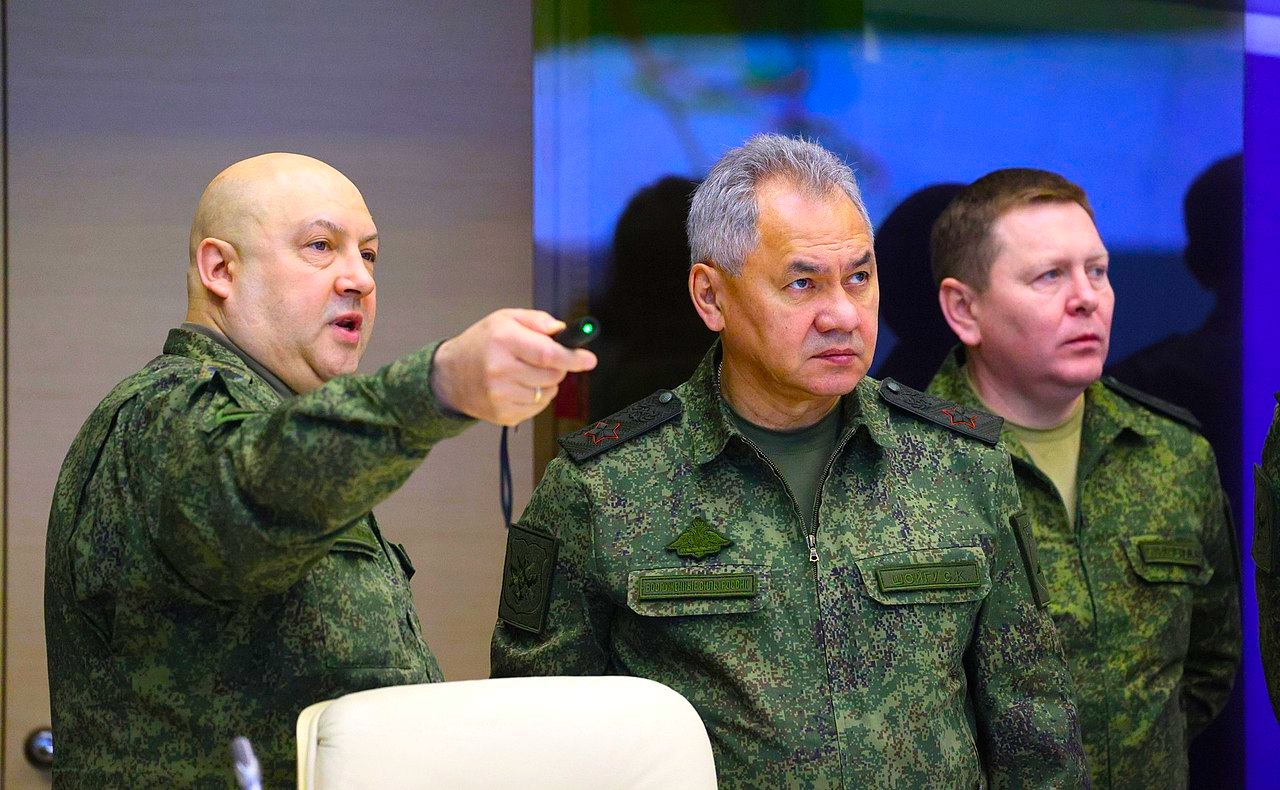
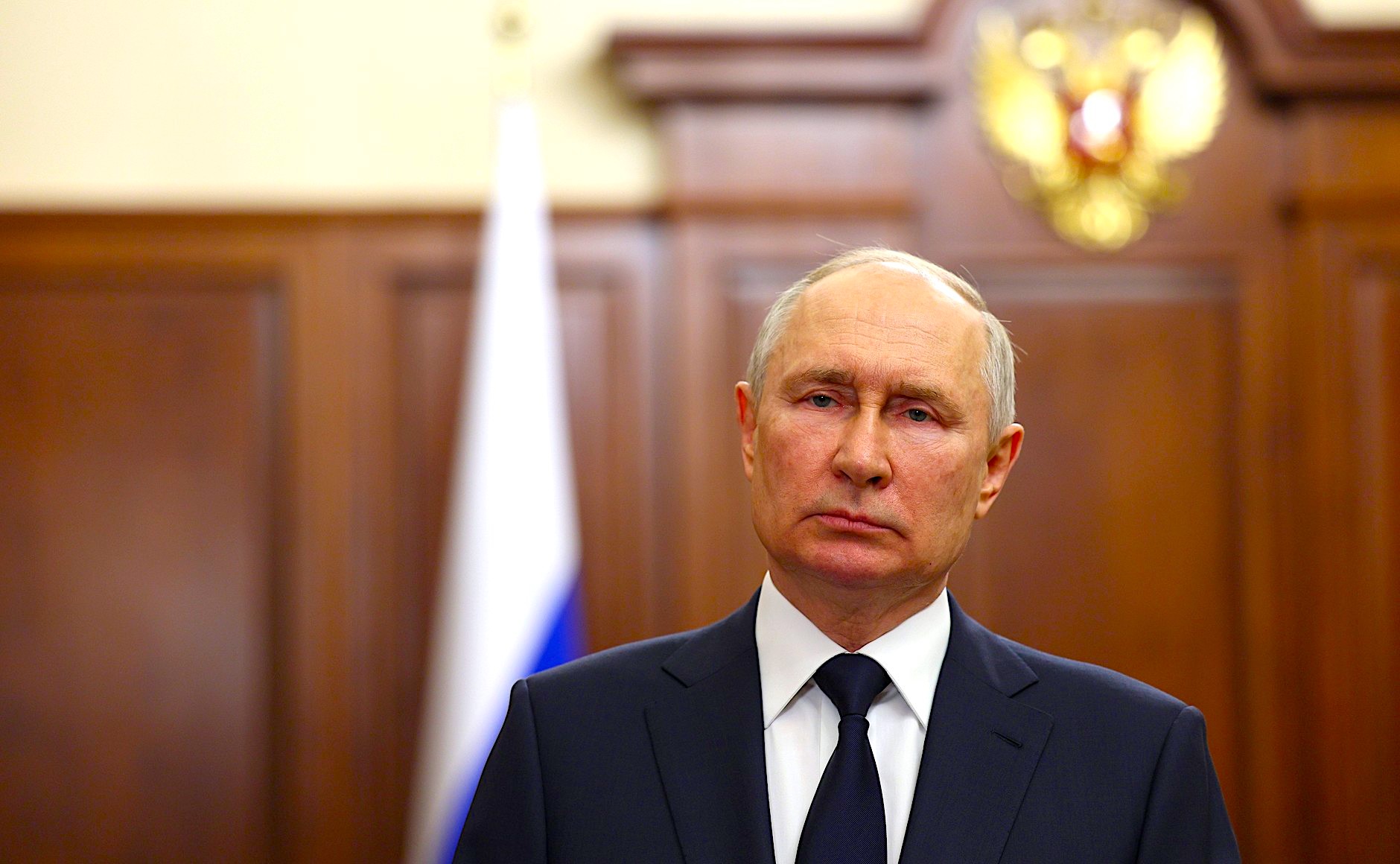
An eye-opening documentary investigation of Volodymyr Zelensky by Scott Ritter. Link here.
More info: https://www.scottritterextra.com/p/ag…
An eye-opening documentary investigation of Volodymyr Zelensky by Scott Ritter. Link here.
More info: https://www.scottritterextra.com/p/ag…
By Matt Taibbi, Racket News, 7/12/23
Yesterday [July 11, 2023] a House Committee — Republican-led, but still — released a series of documents showing without a doubt that the FBI has been forwarding thousands of content moderation “requests” to Facebook, Instagram, Twitter, and YouTube on behalf of the SBU, Ukraine’s Security Agency.
The documents not only contain incontrovertible evidence that our own FBI pressures tech companies to censor material, but that the Bureau is outsourcing such work to a foreign government, in this case Ukraine. This passage below for instance reads “The SBU requested for your review and if appropriate deletion/suspension of these accounts.”

There can’t possibly be controversy at this point as to whether or not this censorship program is going on. Whether it’s the FBI forwarding the SBU asking for the removal of Aaron Maté, or the Global Engagement Center recommending action on the Canadian site GlobalResearch.Ca, or the White House demanding the takedown of figures like Robert F. Kennedy, Jr., the same types of behavior have now been captured over and over.
In light of this, I have to ask: where are the rest of the “card-carrying” liberals from the seventies, eighties, and nineties — people like me, who always reflexively opposed restrictions on speech?
Is your argument that private companies can do what they want? Then why did you think otherwise in 1985, when Tipper Gore’s Parents Music Resource Center suggested record companies “voluntarily” label as dirty songs like “Darling Nikki,” and call them McCarthyites when they compiled a list of the “Filthy Fifteen” albums? Does that not sound suspiciously like the “Disinformation Dozen”? Why were you on Frank Zappa’s side then, but with blacklisters now?
Do you now think it’s not really censorship if the FBI merely makes its opinion known about content, and doesn’t order takedowns? Did you think the same when the FBI sent a letter to Priority Records complaining about NWA’s “Fuck the Police”? Did you agree then with the ACLU, whose Southern California chairman responded to the FBI’s letter by saying, “It is completely inappropriate for any government agency to try to influence what artists do. It is completely against the American traditions of free speech”?
Is your belief that new forms of speech constitute “harm” and “offense” to such a degree that censorship is warranted? If so, why did you once support Andres Serrano and his work Piss Christ, which Catholics insisted was an intolerable offense, and call it censorship when opponents like Al D’Amato and Jesse Helms tried to pull funding for Serrano from the National Endowment of the Arts? Wasn’t the Hustler magazine spread suggesting Jerry Falwell had sex with his mother in an outhouse offensive? Didn’t you go to The People Versus Larry Flynt anyway?
If you’re okay with the FBI collaborating on censorship with the SBU now, why oppose the original PATRIOT Act, suggesting you didn’t even want the government looking at library records in search of Islamic terrorists? Why did you support the Dixie Chicks when they were blackballed for antiwar views after the Iraq invasion? Did you cheer them when you watched Shut Up and Sing?
Weren’t those national security issues, too? That wasn’t even that long ago. Is Vladimir Putin that much more of a menace than Al-Qaeda to justify the change in heart?
The change in thinking of traditional American liberals is the only part of this censorship picture that still doesn’t quite compute for me. I’d like to hear from anyone who has an explanation, a personal testimonial, anything. Comments are open to everyone here.

By Natylie Baldwin, Covert Action Magazine, 7/12/23
Below is an interview that I conducted with Sarah Lindemann-Komarova, an American who has lived in Siberia since 1992. She was a community development activist there for 20 years. She currently focuses on research and writing, mostly about Russia and community activism. Her work has been published in The Nation and she is the co-author of several academic articles and blogs at Echo of Siberia.
Natylie Baldwin: When and how did you end up going to Russia and what made you decide to stay?
SLK: In 1988 I was working as the production coordinator on a movie and wanted a career change. With no college degree or any idea what I would like to do, I decided to say “yes” to anything, hoping my fate would reveal itself. My first “yes” was to a trip traveling around the Soviet Union with a peace group to train for and run the Moscow Marathon.
I grew up duck-and-covering with the standard fear and stereotypes about the Soviet Union. As we traveled around, I didn’t need language to understand that a lot had been left out of the narrative, especially in relation to the USSR’s role and sacrifice defeating Nazi Germany.
Traveling over the Caucasus Mountains from Pyatigorsk [Russia] to Tbilisi [Georgia] and then flying to Baku [Azerbaijan], Kyiv, and Byelorussia [now Belarus] to train with local running groups before going to Moscow for the race, I had an epiphany. There was so much energy and excitement and hope for change and peace that I wanted to know more and be a part of it. I returned home to New York and entered Columbia University to major in Political Science with a Soviet Union focus.
Summer of junior year I went back to the Soviet Union, this time to Siberia. It was with a citizen diplomacy group to live with a family, study language, and hang out for a month in Akademgorodok, the university and science center 30 kilometers from Novosibirsk, the third largest city in Russia. It was May of 1990 and Yeltsin had just been elected President of what was still the Russian Republic and, similar to two years earlier, there was energy, excitement and hope. I made many friends, several of them visited me in New York, and a university English teacher agreed to arrange a visa for me when I graduated.
On February 1, 1992, I arrived expecting to spend four months experiencing the transition to democracy and teaching a course at the university before returning home to apply to grad schools. I came with an optimism shared by many Americans: Western companies were moving in, the country was loaded with resources, had a highly educated population, and the guy who stood on the tank won. That was not the mood that greeted me.
Once again the narrative was off as the news in America did not capture the catastrophic dimensions of economic Shock Therapy. No one I met in Siberia expected the change to be so sudden, unpredictable and cruel. Three weeks in, I was skiing through the forest when I knew—it was not a decision, I just knew—I wasn’t going back. Everything was happening here. This transition was going to take a lot longer and, if I wanted to understand it, I had to be here, not in a U.S. classroom. Plus, there were endless opportunities to get involved, promote peaceful change, and generate increased understanding between Russia and America.
NB: What was Russia like in the 1990s and how has it changed in the years since?
There is a myth about the golden age of democracy during the 1990s that was perpetuated by Moscow-based liberal elites. This is how my student described the national scene: “Congress made a strange impression on me. It looks like a group of people who are fighting for power and don’t care about the country. They don’t want to work together…we have just political games and not a real process of building democracy.”
And the exciting world of elections locally? In Novosibirsk, Yeltsin found a way to kick out the elected communist governor and replace him with a more “liberal” guy. The Communist went on to become a banker until he made a comeback when the “liberal” guy was voted out of office.
The “liberal” guy then went on to become a banker, the Communist achieved nothing and was challenged in the next election by the “liberal,” the “democratic” mayor of Novosibirsk, and a Vice Minister of Economics. The “liberal,” the Communist and the Minister lost; two returned to banking and the third to Moscow. Except for the Communist, I have no idea what political party any of them represented, there were over 60 of them competing for offices in Novosibirsk at this time. My personal favorite was the “Beer Lovers Party.”
With regard to economics, in 2013 journalist Masha Gessen’s version was, “Contrary to popular belief the 1990s did see living standards rise…between 1991 and 1996 EVERY Russian household acquired a new washing machine” (see video link above at the 22-minute mark).
The reality is it was 20th century Dickens with the best of times for Americans and a tiny group of Russians and the worst of times for everybody else. There were three Russias. The first was tiny, rich and getting richer by the minute, leaving nothing for everybody else. I did not have much, if any, exposure to this group.
The second group of 1990s people in Russia consisted of the 99.99% who were busy surviving or not. My first year, the dollar exchange rate went from 95 rubles to 720 rubles and leading researchers at institutes had 90-ruble salaries. Life was a high jump, every time you were lucky or savvy enough to make it over, the bar got raised with salary arrears that could last five months for teachers, or physicists getting land to plant potatoes instead of [receiving] money, or hearing they were lopping the zeroes off the money only later to be told that [the] money wasn’t legal tender any more, it was “old money.” One of my students wrote that her father’s institute “buried three gifted scientists between 50-60 years old in three months.” Purchasing a fully automatic washing machine was the last thing on anyone’s mind or ability to purchase.
The amazing thing was how calm and silent it was considering the desperate situation. People continued going to work. Students attended my classes even when it was -30 degrees [Celsius or -22 degrees Fahrenheit] and there was no heat at the university. One of my students explained, “It is not pleasant or good when you can say nothing about what will happen to you in the near future. The majority of people are simply tired of everything….They just want to live like ‘normal’ people, they want to have comfortable flats and tasty food.” An old woman I shared a coupe with on the train from Moscow to Novosibirsk told me there are only two words you need to know to understand Russians, “terpelivoye” (patient) and “perezhit” (live through it). These traits continue to be both curse and blessing.
The third Russia was the one for the Americans and for us, every door was open based on the assumption we had all the answers. The opportunities in all spheres were endless, [Russia was] the place where frogs came to become princes. We felt powerful and hopeful and for the most part the Americans who came here were good people swept up not only in the excitement of opportunities and being able to immediately operate above [their] pay grade, but because they believed they were part of a great and positive mission for peace and prosperity.
As for how it has changed, everything is different. Statistically, the Levada Center has been covering “right track, wrong track” since 1996 and in November of that year 21% said right track and 58% wrong track. In April of this year, it was 68% right track and 21% wrong track. There are still fabulously rich people as well as people with outside toilets but there is also everything in between with an ever-growing middle class. It has been nothing short of astonishing to see the changes that have taken place in my village in one of the poorest regions in the country since we built our house in 2001.
NB: How did you get involved in community activism in Russia? How has community activism evolved there over the years? What types of issues are likely to precipitate activism in Russia and what form does it take?
SLK: It was organic. It began by using my English classes as a means of civics education. This was inspired by my students’ response to the question, “What is democracy?” There was only one answer: “freedom.” When I prompted for more answers, it was more freedoms: religion, speech, etc. Never did anyone say “responsibility” and that was shocking and troubling to me having been raised in the Kennedy “ask not what your country can do for you” era. I developed a mock government curriculum for my classes and discovered that, as long as you called it a master class in English, you could talk about anything. I went on to conduct open seminars starting with the first gender seminar in Siberia with the only Russian feminist in the region and then, with AIDS raging in New York. I decided it was important to conduct the first sex seminar with an American male psychologist.
After a year, money was a problem. I was saved by a woman in an American delegation who was impressed with my work and organized for me to apply to an American foundation for support. My first grant of $18,000 was to travel around to universities with my “Democracy Seminar.”
In the meantime, people started knocking on my door asking questions about organizing. The U.S. foundation encouraged me to create a U.S. NGO and apply to open an information center. I got the grant, left the university, and opened the ECHO information center and the first free access Internet node in Siberia. I only found out later that this was possible because a former student who became my technical director illegally tapped into a cable at a technology company several floors above our office.
A year later USAID gave me almost $2 million through a U.S.-based organization to expand what I was doing and create the Siberian Civic Initiatives Support Center and Siberian Network of community development/NGO resource centers in 11 regions covering a territory larger than the United States. An American colleague moved to Krasnoyarsk to take over the “democracy seminars.” After several months, he told me that university [level] is too late, we needed to work with schools. He started conducting school seminars in small towns that were all decimated by the transition.
Throughout the country the enterprises and institutions that supported these communities were shuttered, all that was left were the schools. He came up with the idea of developing a community school model that, instead of the U.S.’s life-long learning focus, would be about creating schools as centers for community development. This led us to John Dewey, the great American democratic education philosopher. One particular quote provided the foundation for our overall development approach, “Wherever democracy has fallen, it was too exclusively political in nature. It had not become part of the bone and blood of people in daily conduct. Unless democratic habits of thought are part of the fiber of a people, political democracy is insecure.”
Both of these organizations continue to do important work and the models they promote are being practiced not only throughout Russia but in other former Soviet republics. Management was turned over to Russians years ago and I continued to work with them as an expert until the pandemic.
Still, most Americans have no idea that their taxpayer dollars were invested so successfully in Russia. That is because they only hear about and from a very small group of mostly Moscow-based human rights groups that applied a completely different strategy to their development work. The blowback from their strategy became so pronounced that it started to impact anyone receiving U.S. funding.
Prior to Obama coming to the White House my colleagues and I were often invited to debrief new USAID staff and other visiting delegations. I developed a democracy paradigm comparison Power Point to outline the two strategies as I perceived them [traditional transition vs. new Siberian]. It included an emphasis on freedom vs. responsibility, being against something vs. being for something, PR vs. one-on-one organizing, civil society equated with human rights and NGOs vs. civil society equated with anyone who chooses to use the space, NGO development vs. community and economic development, and human rights vs. quality of life.
We all agreed that human rights was a key goal, our problem was using it as a means for democratic development because it tended to generate criticism and conflict instead of partnership and trust. The step one I was raised on [was to] find that small patch of common ground and build from there.
My Russian colleagues told me early on, if we start demanding and lecturing local government, they will squish us like a bug. Instead, we invited them to observe a grant committee and introduced them to supporting NGOs in open competition. Next, we invited them to contribute some money and conduct a competition together. This led to the first Russian government money in history distributed to NGOs through a transparent competition. So, from zero rubles to non-government-related organizations to multiple millions yearly through national, regional and local competitions that often include NGO leaders as judges.
Another example is coalitions. In 1995 we organized sectoral meetings for Novosibirsk NGOs (environment, disabled, women’s, etc.) and were surprised that most of them didn’t know each other. We offered to finance an all-Siberian conference for their issue if they would organize it. No one was interested; there was real resistance to working with people they didn’t know. I thought of it as the “nashi” (ours) Soviet hangover. We were desperate until USAID gave me permission to find a real U.S. grassroots activist (most of the experts used in these programs are trained trainers with no real experience). He came over from Maine and asked NGO leaders several questions. When they left, he told us, “weak organizations don’t create coalitions, concentrate on institutional development and create opportunities for people to meet and work together and coalitions will appear.” He was right.
These are just two key examples of how things have changed. Also, essential for us was the inclusion of regional NGO leaders in all national decision-making processes. In general, more people are active addressing a wider range of issues than ever before. For the most part, today things are similar to the U.S.
Community development almost always begins with beautification actions [like] collecting litter, landscaping, building playgrounds and benches, etc. Issue-specific groups most often appear in response to a personal experience such as a child born with disabilities, breast cancer, a passion for nature or animals, etc. The big difference is the numbers. They are increasing but still relatively small compared to the U.S. Still, when we first tried to introduce volunteerism, we were universally met with pushback, “we were all volunteers during the Soviet Union and what good did it do us?” By the end of the ’90s our [program] mobilized over half a million volunteers throughout Siberia.
The challenges 30 years ago continue to be relevant: to encourage more people to be active, to help those who were active to be more effective and to get government and business to be supportive of these initiatives. There is no question that over the last 5-6 years the situation has become more challenging for NGOs and that is sad and frustrating, but it has not stopped the community development-focused organizations I have worked with.
Most significantly, in terms of how all this can ultimately lead to the kind of responsibility-focused democracy I believe in, are the results of a recent Levada Center survey. They asked “to what degree do you feel responsible for what happens in your town and in the country?” The number who feel fully or significantly responsible for their town went from 3% in 2006 to 21% in December 2022 and in the country from 15% to 39%.
The number who felt no responsibility registered a 19% drop for town and 30% for country. Equally important they asked “to what degree do you think you can influence what happens in your town fully or significantly?” Influence went from 8% to 23% and in the country from 4% to 19%. Here there was a 22% drop for town and 29% drop in the number of people who feel they have no influence on what happens in the country. This is more characteristic of democracy than the totalitarian state some people in America have been led to believe exists in Russia.
My final examples come from my village. For 20 years I was one of two activists in the community and there were no grassroots NGOs. Things really started to change when there was a COVID influx of middle-class people and the appearance of a broader middle class among “locals” thanks to increased economic opportunity from tourism. Since then, there have been dozens of initiatives from pickets to planting trees, and saving a riverbank park from privatization.
Not all have been successful; perhaps more have failed than succeeded but the dynamic has changed. Everything came full circle for me last year. A colleague from the Siberian Center days contacted me. He is now working for a major private foundation in Moscow and was coming for a site visit to an NGO they were supporting in my village! A month later I sat next to a woman at a dinner party who told me about her NGO that had just won a [Russian] presidential grant. None of this existed 30 years ago, [so] how can I not be hopeful?
NB: In terms of activism in Russia, Westerners tend to hear about Western-supported opposition activists like Alexei Navalny and expats like Garry Kasparov and Mikhail Khodorkovsky. How well do these people represent Russian opinion in general? How well do they represent actual grassroots Russian activists and their concerns?
SLK: I have never heard a Russian talk about Kasparov or Khodorkovsky in relation to politics. Navalny is not as popular as people in America think. Navalny appeared on the list of Levada Center responses to the question, “Name politicians or public figures you trust the most.” He peaked at 5% in January 2021. A January 2023 survey asked if people approved of Navalny’s activities and 9% approved, 57% did not, 23% said they hadn’t heard about him, and 11% said it was hard to answer.
At a more grassroots level, I followed the 2020 Novosibirsk City Council elections closely because there were several non-systemic opposition candidates running, some as part of the Navalny Coalition and others as Independents. The Navalny candidate said that “Elections in Novosibirsk are elections for all of Russia. Today in Novosibirsk, we will decide how the electoral landscape in general will look next year. We have the capital cities Moscow and St. Petersburg, they have their electoral behavior, and we have villages with their electoral behavior. Novosibirsk is the golden middle, how people vote in Novosibirsk, plus or minus, is how the rest of the country votes.”
With a miserable 18.4% turnout, only 3% of eligible voters showed up to support Coalition candidates. So, despite a video about corruption in Novosibirsk that went viral with 4.9 million views, Navalny’s massive PR campaign was not generating votes, there was an enthusiasm gap, the turnout for all Coalition candidates was even slightly lower than the overall. This could have been a style rather than a policy issue because a less confrontational Independent candidate garnered the most votes in the election and 27.6% of her district’s eligible voters turned out.
NB: Can you talk about the effect of government crackdowns on foreign funding of media and NGOs in Russia? How much of an effect has this had on Russian activism both qualitatively and quantitatively?
SLK: I can only speak authoritatively about the initial “Foreign Agent Law” [of 2012] requiring certain NGOs to register as foreign agents or to be identified by the government to be put on the list. The hysteria [about] the initial appearance of the “Foreign Agent Law” and the crushing of civil society was not borne out in practice.
The organization I founded was in the first wave and shortly thereafter a number of my colleagues’ organizations were listed. The reality was that listed groups had three options. They could forgo foreign funding and apply to be removed from the list (as did the organization I started) and continue to do their work. They could make their objections public while following the increased reporting and labeling requirements, keep their foreign funding, and continue to operate. Lastly groups who refused to comply with the requirements could be assessed large fines and eventually liquidation. Some in this latter group found work-arounds registering new entities. There was a chilling effect but I did not see the work of activists notably diminished qualitatively or quantitatively.
As relations between the West and Russia worsened over the years, the effects became more pronounced for some groups, especially those with Western funding which did not have any domestic sources of funding. Still, the organizations that I know continue to work. There was a great quote from a community foundation leader responding to a couple of people complaining about how hard it was to work with their local government. He said, “Don’t spend your energy trying to break through, find a way to go around.” It has never been easy for activists.
The “foreign agent” label became noticeable to a broader group of the public with its expansion to include media in 2021 and 2022. None of this is good and the space for civil society has constricted but it has not been crushed. I do not offer this as justification but to add some context to the initial appearance of the foreign agent label. It was a blowback response to activities by some foreign-funded groups that the Russian government did not feel were appropriate. There had been numerous warnings that went ignored. Based on my personal experience, it would and should be unacceptable for a wholly Russian-funded NGO to conduct some of the activities I saw here in the U.S. There were issues to be addressed; however, considering their lack of connection to the grass roots, the government response was an over-reaction.
NB: How would you characterize democracy in Russia? From what I’ve studied and heard Russians say is that what happened there in the ’90s gave many Russians a negative association with democracy. Would you say that Russians want democracy and, if they do, what will that democracy look like compared to American democracy? For example, Russians do not have the kind of libertarian hostility toward the role of the state that underlies American democratic philosophy.
SLK: As I said when I first asked my students their word association to “democracy,” there was one response: “freedom.” When I returned to the classroom in 2016, in addition to freedom, student associations included “compromise,” “lie,” “choice,” “majority,” “not Russia,” “liberality,” “inefficient,” “quality,” “respect,” “sham,” “Ancient Greece,” “impossible.” Still no “responsibility.”
The assumption that freedom is both necessary and sufficient for a sustainable democracy may be why some elites still see the 1990s as the heyday of democracy when it was chaos and desperation for most. The ’90s democracy was also problematic because of things like the constitutional crisis and Yeltsin bombing the Moscow White House Parliament building. A student wrote, “The most amazing thing is that Yeltsin swore to obey the Constitution…but a few days ago he said he would not pay attention to Congress’s decisions.” So, this was not a great environment for an ends-justifies-the-means situation.
Another issue surfaced later. When I asked my follow-up question, is Russia a democracy, only a smattering of hands went up if any. Then, “Is America a democracy?” and instantaneously all hands up until 2001 when I attended a conference for school directors in Voronezh, 500 kilometers south of Moscow, [which] was used by the Germans as a staging ground for [the five-month battle of] Stalingrad and school kids still pull bullets and helmets out of the ground for school museums. “Is America a democracy?” and no hands went up. There was an awkward silence as the directors traded looks of embarrassment and confusion until a large, commanding woman sitting in the middle of the front row asked, “why didn’t they count the votes?” [NB: referring to the 2000 Bush-Gore election]
Despite all those mixed messages and quality-of-life negative results, what I consider the real indicators for a democracy continue to improve—i.e., more people actively addressing a wider range of issues. Yes, the civil society space has contracted but there is still plenty of room to be active and it is being used. I don’t think any response to the question “do you want democracy?” would be meaningful here because of the wide variety of ways people define it, they are still trying to figure out what it means.
Thirty years in, what did we expect? I know I thought, like most, four months, maybe a year and bing-bang-boom democracy. Well, the U.S. has been defining and redefining its democracy for over 200 years. It’s an on-going process. However, if it cannot be connected in any way with improved quality of life or hope for it, people will not be attracted to it. That said, I do think that people here are more predisposed to a more social democratic format (Europe vs. U.S. free market) since, as you noted, they are comfortable with a bigger government role and safety net.
NB: What is your personal observation about the effect of the “special military operation” in Ukraine in general on Russians? What about the mobilization?
SLK: What strikes me most is how different it is from the American experience of war in the 21st century. In the U.S., wars have been a constant, tragic but largely ignorable fact for most people I know. Here, there are two fronts, the kinetic special military operation [SMO] and economic sanctions, and everyone I know is impacted by both of them.
The degree of impact varies with some leaving Russia while others volunteered to serve. Another big difference is that this is personal for so many people who have relatives or friends in Ukraine and/or who grew up there. Some of those relationships have survived while others have not. Even for those who do not have relatives or friends living or fighting in Ukraine the realities of war are more visceral to people here. Perhaps it is fading among some in the younger generation, but the horrors of what is called the Great Patriotic War are part of every family’s history. Most of the people I know are supportive of the SMO—they do not think it was “unprovoked”—but none of them are “rah-rah” about it.
As for the sanctions, everyone was terrified at first, scrambling to do what they could to mitigate the effects. The big hit never came even though everything is different. People here are good at being creative, making ends meet as the most significant impact has been inflation that all countries are suffering. Most of what left is not really missed or has a work-around. On the plus side, there are big opportunities for those ready to take advantage of them. For example, the closing of the West to Russia has generated an economic boom for people in my village, which has become a major tourist destination with two flights a day from Moscow.
NB: How have friends and family that you may still have in the U.S. reacted to your living in Russia all these years? Did you notice any change at various times when tensions between the U.S. and Russia were heightened, such as during Russiagate and after the start of the “special military operation”?
SLK: My family and friends have always been very supportive of my work here. The fact is I could never have done what I did without their support. You have to remember, when I arrived there was no Internet. If I wanted to call home, I had to order a call in advance through an overseas operator. My sister, who is a lawyer, set up and ran an American NGO when I started to get American funding. She was an essential resource strategically and helping identify American activists who could enlighten our work.
My other sister owns a successful coffee business and introduced me to the double bottom line business model with profit equal to social mission. I presented this and her company as a case study in my seminars on social entrepreneurship at the university and on a tour around Yamalo- Nenets (Autonomous Okrug) sponsored by the regional government in the far north. On the personal front, I got together with my future husband when one of my best friends came to visit and encouraged me to take another look at him [as a romantic prospect].
As for changes in response to increasing tensions between the U.S. and Russia, until Trump they were only noticeable in relation to my work. A shift in the press was noticeable with Putin’s decision to run and opposition protests were launched in 2011. The coverage was based on a Moscow-centric liberal point of view that had every right to exist but promoted a very limited view of the country. This skewed narrative over time has led to inaccurate assumptions with disastrous policy implications. It is also the reason I turned my attention to writing and academic research.
The appearance of Russiagate brought it home. During a 2017 visit to America, MSNBC blared from enormous flat-screened TVs in homes of friends where I never noticed a TV before. In 2018 things grew even more ominous when my Russian husband and I went to dinner at a friend’s fiancé’s family home in Maine. An American, he was our neighbor for years in Altai before returning to the U.S. The next morning, he told us the liberal matriarch said we were not welcomed back. He apologized saying, “she gets her news from Rachel Maddow.” Around that time, my teenage daughter asked me, “why are the Russians in American TV shows and movies always bad people?”
When the SMO began, it became necessary to navigate relationships with some friends in regular COVID-inspired ZOOM groups. Others reached out and asked, “tell me what I don’t know.” When friends shared my pieces on Facebook, there were some shocking comments from their friends and any attempt to have a mutually beneficial dialogue was useless. One high school friend compared me to a diarist in 1930s’ Nazi Germany and said that any Russian who supports the war should burn in hell.
I was allowed to enter the country but my elite private high school told me I would not be welcomed at the reunion because I had the Sputnik vaccine. When the SMO happened three months before the reunion, a couple of friends said America would not be a good environment for me so I canceled the 2022 trip. A classmate said he was worried I would get in trouble if he mailed me our reunion book of memories. I follow the American press daily so I am not surprised by the assumptions. It is the deeply hate-filled attitudes of a very few people that scare me. I never experienced hatred before and nothing good can come of it. Despite the sounds of distant thunder growing louder over the past 20 years, I never imagined it would come to this, it is heartbreaking and so, so dangerous and unnecessary.
NB: What do you most want Americans and Westerners to know about Russia?
SLK: No Russian has ever thrown me out of their home. I was concerned when the SMO and sanctions began but it is almost as if people go out of their way to be kind. When I meet new people, they always ask where I am from because of my awful accent. When I tell them, their response is the same as it was 30 years ago, “What is it like there? Why are you still here?” My answers are more complicated now as my daughter loves studying math at the university and my husband has his dream machine-learning job. Still, for me it is the same now as it was 30 years ago. The best way for me to contribute to America is to generate increased understanding and peace between our two countries. I do spend a lot of time now drowning in a sense of failure and yet I am starting to see some green shoots, things I spent years looking for here in relation to civil society and now evidence of real reason for hope. There is an anti-war candidate running for [U.S.] President [Robert F. Kennedy Jr.] and people ask me for sources so they can learn more.
There are four things I am sure of:
By Joe Lauria, Consortium News, 7/7/23
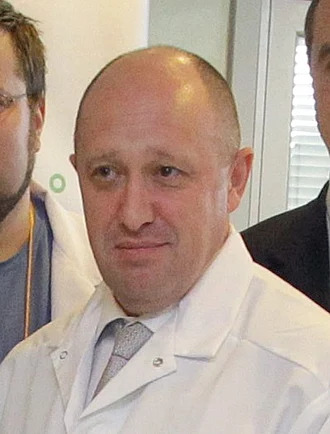
Two weeks since the bizarre events in Russia on the weekend of June 23-25 there still remain different interpretations of Yevgeny Prigozhin’s 36-hour adventure on the road to Moscow and its aftermath.
Was it a genuine mutiny or coup attempt? Was he working with Western or Ukrainian intelligence? What is Prizgozhin ‘s and the Wagner group’s future? And, most importantly, why did he do it?
The drama ended when Prigozhin called off his march on the capital, turning around his column of 4,000 or so Wagner men. With Russian special forces in Moscow arrayed to meet him at the city gates, and Chechen forces headed to Rostov-on Don, which he partially occupied, reason took hold as Prigozhin realized death awaited him and his men.
The anguish in London and Washington was palpable. They thought they were on the verge of achieving the principle aim of their war against Russia: overthrowing Vladimir Putin. They are still pushing the line that Putin was irrevocably weakened by the event and that Russia is a dangerously unstable country.
The Deal
The president of Belarus, Aleksandr Lukashenko, worked out a deal to end the crisis. In return Russia – for the moment anyway – dropped its criminal charges of mutiny against Prigozhin.
He lost his post and was reportedly exiled to Belarus. But now there are even doubts about that. Lukashenko said on Thursday that Prigozhin is a “free man.” He said, “Maybe he went to Moscow, maybe somewhere else, but he is not on the territory of Belarus.”
The New York Times reported on the same day that Prigozhin may be using a look-alike:
“A Pentagon official who spoke on the condition of anonymity because of the sensitivity of the situation later confirmed that Mr. Prigozhin had been in Russia, between Moscow and St. Petersburg, during most of the period since the mutiny. The official said it was unclear if Mr. Prigozhin had ever gone to Belarus because he apparently uses body doubles to mask his movements.”
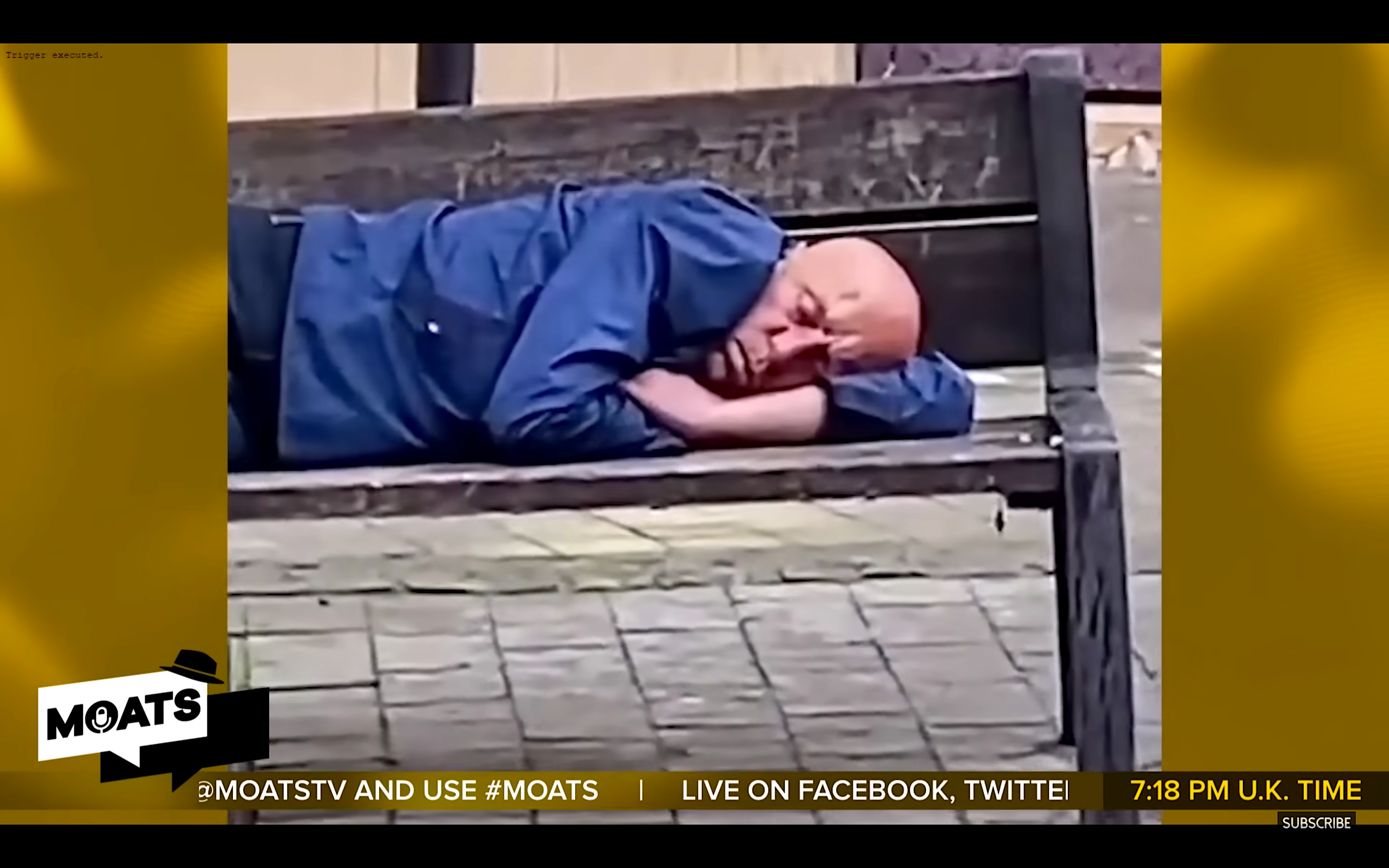
On his MOATS TV show, George Galloway on June 25 aired a brief video of a man who looked exactly like Prigozhin sleeping on a park bench in Minsk the day after the rebellion ended. (One would think Prigozhin could afford to book his double a hotel room, if it was indeed his double.)
Prigozhin was not offered amnesty as had the Wagner troops that took part in the mutiny. Those who didn’t participate were given the option of signing contracts with the Russian Ministry of Defense. Prigozhin being allowed to roam free in Russia without amnesty throws his status and his future into confusion.
Even if he is being allowed his freedom, his main demands in the mutiny of sacking Defense Minister Sergei Shoigu and Chief of Staff Gen. Valery Gerasimov have not so far succeeded.
Was It a Coup Attempt?
Given that Prigozhin was overtly only seeking Shoigu and Gerasimov’s heads, and not Putin’s, it can be argued that his gambit was not an attempt to overthrow the entire government.
Geopolitical analyst Alexander Mercouris on The Duran channel, on the other hand, contends that if he had gotten as far as seizing the Defense Ministry, which Mercouris says was out of the question, he would have effectively seized power from Putin.
Former U.S. Marines counterintelligence office Scott Ritter told Robert F. Kennedy Jr.’s podcast that it was treason and a clear coup attempt. He said Prigozhin had set up cells in Moscow to take part in the overthrow but Russia security services broke them up before they could act.
There are analysts who argue that this was not a coup attempt at all. Retired U.S. Col. Douglas MacGregor, a fierce critic of Washington’s Ukraine policy, believes Prigozhin was instead sending Putin a message to conduct the war in Ukraine more forcefully.
For what it’s worth, on the first day of the move towards Moscow Prigozhin insisted the action was not “a military coup, but a march of justice.”
Putin himself called Prigozhin’s action many things: a “grave crime,” “an armed mutiny,” “blackmail,” “betrayal,” “terrorism,” an “internal revolt “ and “a knife in the back of our country and our people.”
He also called it “treason.” Putin said:
“Inflated ambitions and personal interests have led to treason – treason against our country, our people and the common cause which Wagner Group soldiers and commanders were fighting and dying for shoulder to shoulder, together with our other units and troops.”
The Surovikin Mystery
Western media uniformly presented the episode as the greatest threat to Putin’s government since he took office as president on New Year’s Eve 1999. The New York Times, unsceptically quoted U.S. intelligence officials, reporting that Gen. Sergei Surovikin, deputy commander of Russian forces in Ukraine, knew about the coup attempt in advance but did nothing to stop it, implying that he was in on it.
CNN reported on June 30 that Surovikin was a “V.I.P. member of Wagner.” Surovikin was replaced in January by Gerasimov as overall commander of forces in Ukraine.
The anti-Putin, English language Moscow Times, published an unconfirmed report that Surovikin was arrested. The Associated Press reported the same, quoting unnamed sources.
But as The Wall Street Journal reported: “Surovikin was the first senior commander to condemn the plot … and urge Prigozhin to stop his men. Forces under Surovikin’s command carried out airstrikes on the Wagner column, the only such attack by regular troops against the insurrectionists.”
Why Did He Do It?
Prigozhin had launched several highly public attacks over the previous months on Shoigu and Gerasimov, accusing them of corruption and not providing enough ammunition for Wagner’s battle in Bakhmut.
Prigozhin said this led to the unnecessary deaths of scores of his fighters. Moscow tolerated his antics, even after Wagner completed its takeover of Bakhmut in May.
Prigozhin’s rhetoric racheted up the day before his revolt when he said Russian motives for intervention in Ukraine were bogus. He said Ukraine was not planning an offensive on Donbass in February 2022 and that demilitarization and denazification of Ukraine were just excuses. It sounded like words from officials in Kiev, London or Washington.
There appear to have been several motives to Prigozhin’s reckless move. The first was an apparently insane plan to arrive at the Ministry of Defense and force the removal of Shoigu and Gerasimov.
A second motive appeared to be a lust for power touching on megalomania. The former chef and caterer (to Putin and the MOD) was put in charge of the Wagner mercenary organization though he had zero military experience.
(Prigozhin also ran the Internet Research Agency, which bought $100,000 in Facebook ads during the 2016 U.S. presidential campaign and figured prominently in the Russiagate fraud.)
Putin said last week that Prigozhin’s $1 billion contract to feed the Russian military had been cancelled.
Wagner was set up as a private military organization in 2014 to legally avoid the oversight and regulation of regular Russian military branches, though it was equipped and funded by the Ministry of Defense, Putin confirmed in public remarks last Monday.
As a legally separate entity from the Russian government, Wagner troops operated in Crimea and in defense of Donbass starting in 2014 (without the need of official Russian military intervention) against the Kiev coup government’s military assault on Donbass after it declared independence from Ukraine.
No doubt partly because they were fed up with Prigozhin’s constant criticisms, the Ministry of Defense set a July 1 deadline for Wagner to be absorbed into the MOD, making them legally part of the Russian military. Prigozhin knew this would end his career as head of the Wagner force, which is being dissolved.
That was likely the prime motive, especially the timing for his revolt. This, combined with his bravado and hatred of Shoigu and Gerasimov, led Prigozhin on a road to ruin, though he thought he was headed to Moscow.
There was yet another factor driving Prigozhin, according to MacGregor.
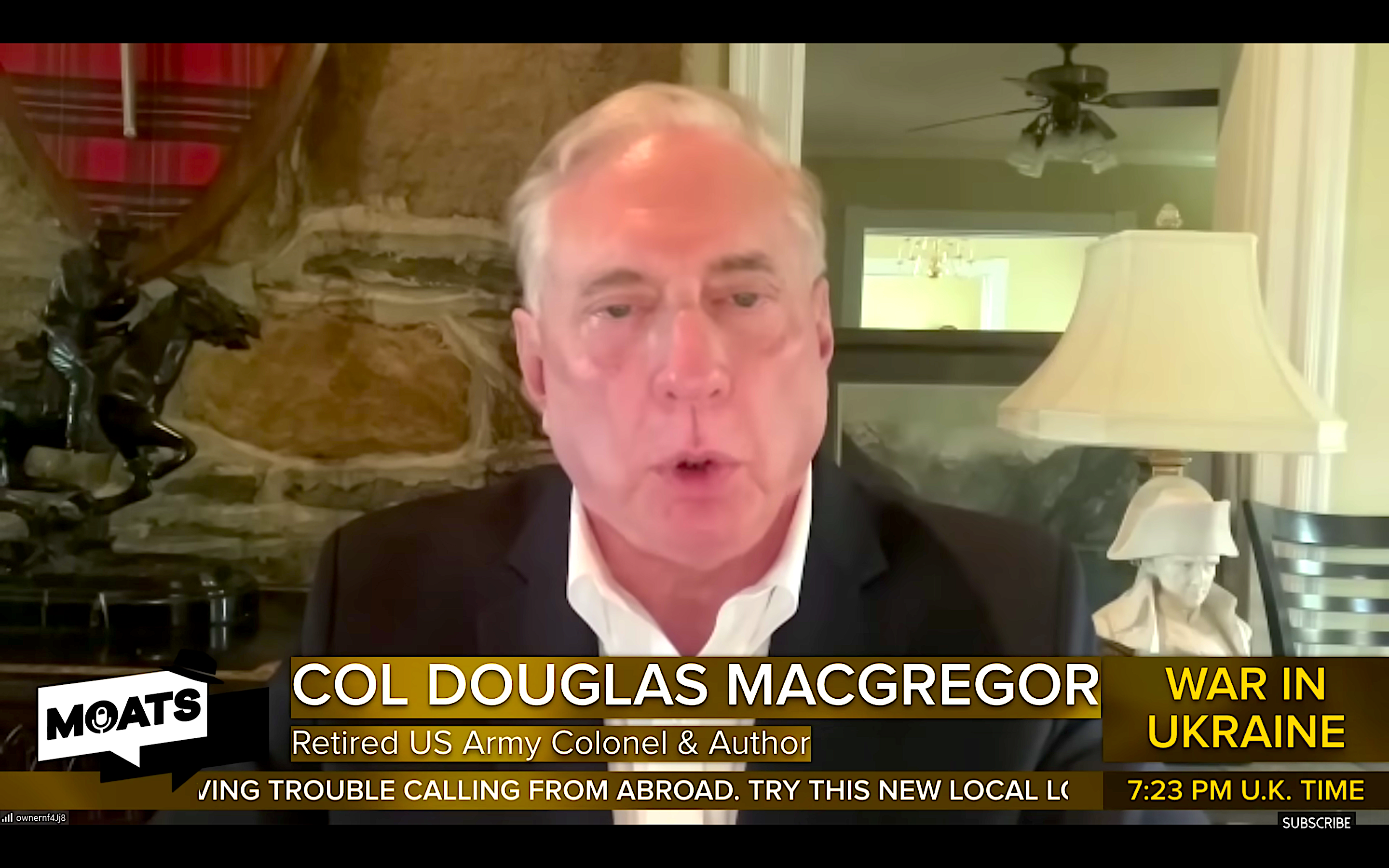
The most strident criticism of Putin in Russia is that he’s been too soft on Ukraine, that the military operation has been too careful. These critics want to see Russia smash through southern Ukraine to take Odessa and reach the Romania border, if not take Kiev itself.
(This may be easier said than done, given NATO’s equipping and training of the Ukrainian army, the increased Russian and civilian casualties that would be involved and the stress it would put on Russian armaments production.)
According to MacGregor, among these hard-line critics of the go-slow war is Prigozhin. But rather than openly criticizing Putin for this state of affairs, Prigozhin zeroed in on Shoigu and Gerasimov, blaming them for the piecemeal military strategy.
MacGregor told Galloway on June 25, the day the rebellion died:
“I wouldn’t call it a coup. I think what happened is that Mr. Prigozhin … who is a well-known blowhard and has frequently said outrageous things, reached a conclusion that I think a lot of people in the senior ranks of the Russian army have reached, and that is … first, that this war has dragged on too long, and they want Putin to take decisive action to end it. And secondly, I think the fear is the United States will be tempted to intervene in Western Ukraine with its Polish allies, and others potentially, if this does not come to an end. …
Both Prigozhin and Wagner are very popular with the Russian people. They see him as the kind of aggressive leader they want on the battlefield in this war with Ukraine. So I expect now what we will see is a very powerful offensive unleashed against the Ukrainians. And secondly I think you are going to see some changes at the top of the command structure. I would expect Gen. Surovikin to rise as a result of this.”
This was before reports of Surovikin’s “arrest.”
Mercouris, on the other hand, said Putin had
“lanced the boil that Prigozhin and Wagner represented, and it has probably once and for all banished any idea on the part of the nationalist fringe — the people who are hostile for various reasons to Gerismov and Shoigu and other figures within the Russian Defense Ministry – … that they can force Putin’s hand through any kind of political agitation.”
At press time, Gerasimov and Shoigu were still in their posts.
Was He Working for Foreign Intelligence?
Because Prigozhin appeared to be fulfilling the West’s aims there has been speculation he may have been working with either American, British or Ukrainian intelligence, or all of the above.
Ritter stated categorically on his Substack page and in podcast interviews that Prigozhin was working with foreign intelligence: “Let there be no doubt in anyone’s mind — Yevgeny Prigozhin has become a witting agent of Ukraine and the intelligence services of the collective West.” He wrote:
“Prigozhin’s antics, which were played out in intimate detail on social media, caught the attention of pro-Ukrainian information warfare specialists, who began promoting the narrative of Prigozhin—a former convict with zero political experience—assuming a leadership position in Russia. Prigozhin himself seemed to feed off this notion. While publicly denying any such ambition, Prigozhin continued his public trolling of Shoigu and Gerasimov. …
At some point in time Prigozhin’s antics caught the attention of Ukrainian intelligence, and their British and US counterparts. The narcissistic need for attention, coupled with grandiose notions of self-importance, made Prigozhin an ideal candidate for recruitment by a hostile foreign intelligence service. A financial component—basic greed—can be added to this behavioral model as well.”
Ritter then added this qualifier: “The collusion between Prigozhin and the Ukrainians, while unproven at this juncture, appears obvious in retrospect.”
The New York Times and other outlets reported that U.S. intelligence was aware of Prigozhin’s plans to rebel days in advance. “The possibility that a major nuclear-armed rival of the United States could descend into internal chaos carried with it a new set of risks,” the Times reported.
Despite this, the U.S. did not alert Russia to what they knew, which could have perhaps prevented a nuclear crisis, as Ritter said in a Consortium News piece on Monday.
Perhaps most significantly, the so-called Discord leaks of U.S. intelligence revealed that Prigozhin was prepared to give Ukraine intelligence Russian troop positions in exchange for calling off its defense of Bakhmut.
Long before the mutiny, The Washington Post reported on May 14:
“Prigozhin said that if Ukraine’s commanders withdrew their soldiers from the area around Bakhmut, he would give Kyiv information on Russian troop positions, which Ukraine could use to attack them. Prigozhin conveyed the proposal to his contacts in Ukraine’s military intelligence directorate, with whom he has maintained secret communications during the course of the war, according to previously unreported U.S. intelligence documents leaked on the group-chat platform Discord.”
The U.S. raised suspicions by going out of its way to say it had nothing to do with the revolt. President Joe Biden, Secretary of State Antony Blinken and the U.S. ambassador in Moscow all made statements to that effect.
MacGregor disagreed that the former Wagner chief was in cahoots with Russia’s enemies.
He said: “I see no evidence that Mr. Prigozhin was made an agent by MI6 or the CIA or anybody else. Anybody who knows the Russians knows that any senior officer or commander or leader is surrounded by numerous FSB informants. The idea that he could have sold out even if he wanted to seems ludicrous.”
Ritter pointed out in his CN piece that the Russian government is investigating the matter.
If Prigozhin was indeed working for Western or Ukrainian intelligence they clearly did not get what they paid for.
Lessons
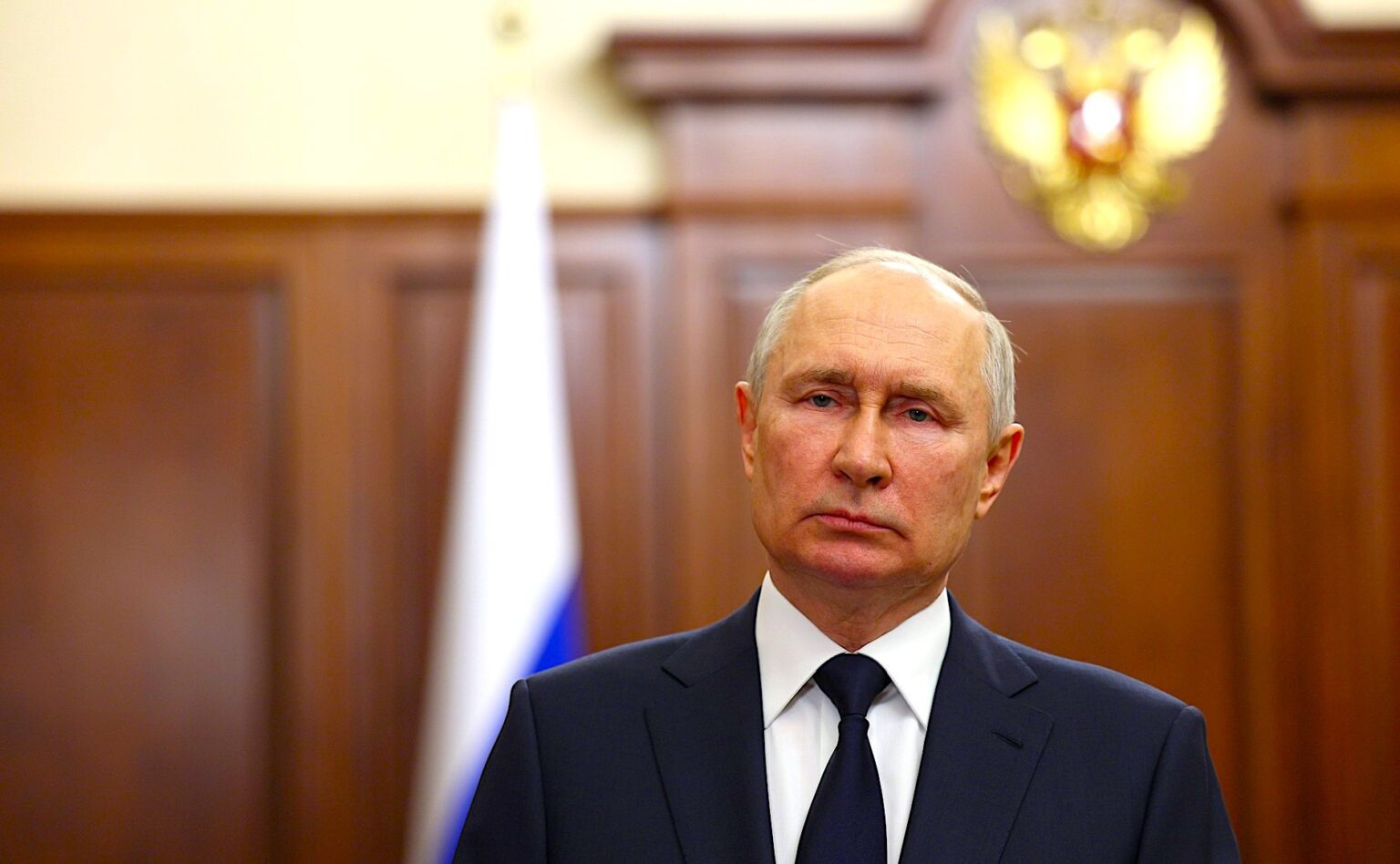
Putin addressing nation on June 26. (Kremlin.ru)
For Russia: Don’t repeat the mistake of hiring a private army.
Several analysts pointed to a 500-year old lesson from Niccolo Machiavelli that Russia ignored:
“Mercenaries and auxiliaries are useless and dangerous; and if one holds his state based on these arms, he will stand neither firm nor safe; for they are disunited, ambitious and without discipline, unfaithful. …
I wish to demonstrate further the infelicity of these arms [i.e., mercenaries]. The mercenary captains are either capable men or they are not; if they are, you cannot trust them, because they always aspire to their own greatness, either by oppressing you, who are their master, or others contrary to your intentions; but if the captain [i.e., the leader of the mercenaries] is not skillful, you are ruined in the usual way [i.e., you will lose the war].”
MacGregor disputed the whole idea. He told Galloway:
“I reject the notion that these people are mercenaries. I would compare them to the French Foreign Legion. The French Foreign Legion consists of large numbers of non Frenchmen in many cases, but they have sworn allegiance to the French state and the French nation, and no one has fought harder and more loyally for France than the French Foreign Legion. I would say you have something very similar in the Wagner group.
These are still Russians overwhelmingly, but there are numbers of Serbs or some Germans or others in the group, and they too have sworn allegiance to the Russian state. And as far as we can tell, none of them thought that they were marching on Moscow to remove Putin. On the contrary, they saw themselves as going to Moscow to rescue Putin from what was widely considered bad advisors, bad councilors who have held up the Russian offensive and caused this war to drag out beyond the point of reason.”
Whether they were mercenaries or not, the Kremlin and the MOD tried to get away with a dodgy legal maneuver and it caused them international embarrassment and nearly a bloody civil conflict.
For the West: Wait until an operation is over before popping the corks. Cries about a Russian civil war being under way, such as tweets from former U.S. Ambassador to Russia Michael McFaul, which blared that “The fight is now on. This is now a civil war,” blew up in their faces when Prigozhin turned tail.
The bigger lesson would be not to meddle in other nations’ internal affairs but that would be too much to ask.
The entire Russian nation had rallied around Putin, leaving him in a much stronger position, exposing the continuing line that Russia is now a dangerously unstable nation.
Western governments and pundits clearly suffered more embarrassment from this episode than Putin did.
But ideologues rarely learn any lessons.
Joe Lauria is editor-in-chief of Consortium News and a former U.N. correspondent for The Wall Street Journal, Boston Globe, and numerous other newspapers, including The Montreal Gazette and The Star of Johannesburg. He was an investigative reporter for the Sunday Times of London, a financial reporter for Bloomberg News and began his professional work as a 19-year old stringer for The New York Times. He is the author of two books, A Political Odyssey, with Sen. Mike Gravel, foreword by Daniel Ellsberg; and How I Lost By Hillary Clinton, foreword by Julian Assange. He can be reached at joelauria@consortiumnews.com and followed on Twitter @unjoe
Russia Matters, 7/14/23
At their summit in Vilnius, NATO allies approved highly-secretive defense plans that laid out which of the 31 member states would be called on to respond if an attack were to occur anywhere from the Arctic and Baltic Sea regions to the Mediterranean and Black Seas, AP reported. The new plans, which are reportedly more than 4,400 pages long, provide for NATO to have up to 300,000 troops ready to move to its eastern flank within 30 days. The number of forces deployed on this flank will increase to brigade level (4,000 troops) under the approved plans. The July 11-12 summit also saw NATO members agree to expand NATO’s Integrated Air and Missile Defense, and set 2% of GDP as the floor, rather than ceiling, of their annual defense expenditures.
***
Meanwhile, the White House has announced it’s calling up 3,000 reserve soldiers for deployment to Europe. Alex Christoforou and Alexander Mercouris discuss the move in the video below.
Link here.