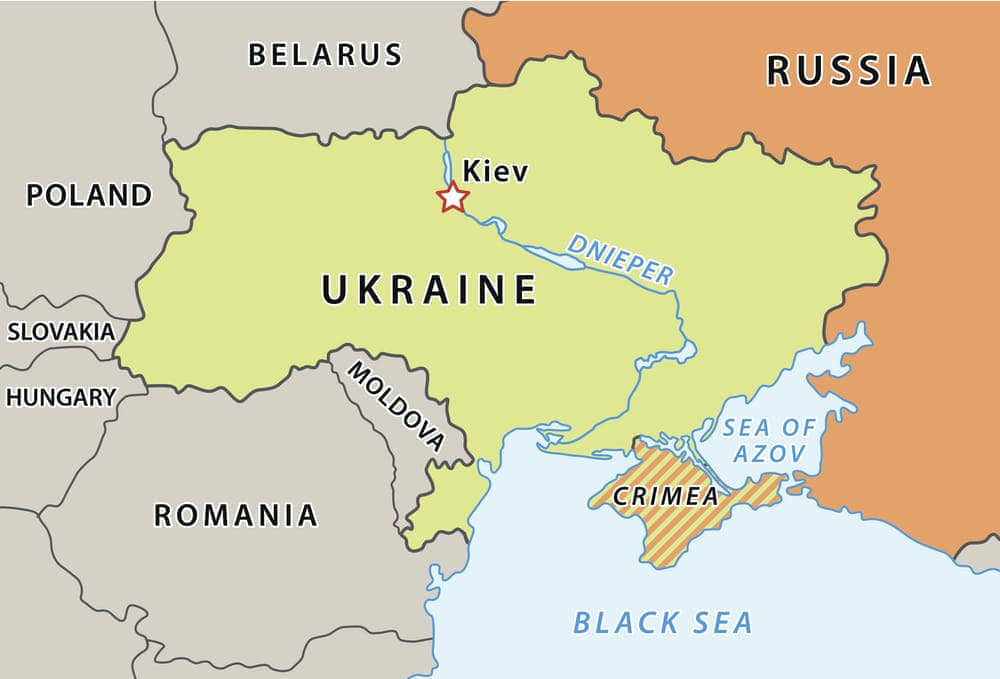
-One year into the war, a new report reveals how oligarchs and financial interests are expanding control over Ukraine’s agricultural land with help and financing from Western financial institutions.
-Aid provided to Ukraine in recent years has been tied to a drastic structural adjustment program requiring the creation of a land market through a law that leads to greater concentration of land in the hands of powerful interests.
-Ukraine’s crippling debt is being leveraged by financial institutions to drive post-war reconstruction towards further privatization and liberalization in several sectors, including agriculture.
-Ukrainian civil society, academics, and farmers are demanding the suspension of the land law and of all land transactions; and calling for an agricultural model no longer dominated by oligarchy and corruption.
Oakland, CA — One year after the Russian invasion of Ukraine, a new report from the Oakland Institute, War and Theft: The Takeover of Ukraine’s Agricultural Land, exposes the financial interests and the dynamics at play leading to further concentration of land and finance.
“Despite being at the center of news cycle and international policy, little attention has gone to the core of the conflict — who controls the agricultural land in the country known as the breadbasket of Europe. Answer to this question is paramount to understanding the major stakes in the war,” said Frédéric Mousseau, Oakland Institute’s Policy Director and co-author of the report.
The total amount of land controlled by oligarchs, corrupt individuals, and large agribusinesses is over nine million hectares — exceeding 28 percent of Ukraine’s arable land. The largest landholders are a mix of Ukrainian oligarchs and foreign interests — mostly European and North American as well as the sovereign fund of Saudi Arabia. Prominent US pension funds, foundations, and university endowments are invested through NCH Capital, a US-based private equity fund.
Several agribusinesses, still largely controlled by oligarchs, have opened up to Western banks and investment funds — including prominent ones such as Kopernik, BNP, or Vanguard — who now control part of their shares. Most of the large landholders are substantially indebted to Western funds and institutions, notably the European Bank for Reconstruction and Development (EBRD) and the World Bank.
Western financing to Ukraine in recent years has been tied to a drastic structural adjustment program that has required austerity and privatization measures, including the creation of a land market for the sale of agricultural land. President Zelenskyy put the land reform into law in 2020 against the will of the vast majority of the population who feared it would exacerbate corruption and reinforce control by powerful interests in the agricultural sector. Findings of the report concur with these concerns. While large landholders are securing massive financing from Western financial institutions, Ukrainian farmers — essential for ensuring domestic food supply — receive virtually no support. With the land market in place, amidst high economic stress and war, this difference of treatment will lead to more land consolidation by large agribusinesses.
The report also sounds the alarm that Ukraine’s crippling debt is being used as a leverage by the financial institutions to drive post-war reconstruction towards further privatization and liberalization reforms in several sectors, including agriculture.
“This is a lose-lose situation for Ukrainians. While they are dying to defend their land, financial institutions are insidiously supporting the consolidation of farmland by oligarchs and Western financial interests. At a time when the country faces the horrors of the war, the government and Western institutions must listen to the calls made by the Ukrainian civil society, academics, and farmers to suspend the land law and all land transactions. The necessity to prioritize an agricultural model no longer dominated by oligarchy and corruption, where land and resources are controlled by and benefit all Ukrainians, is the way forward for post war reconstruction,” Mousseau concluded.
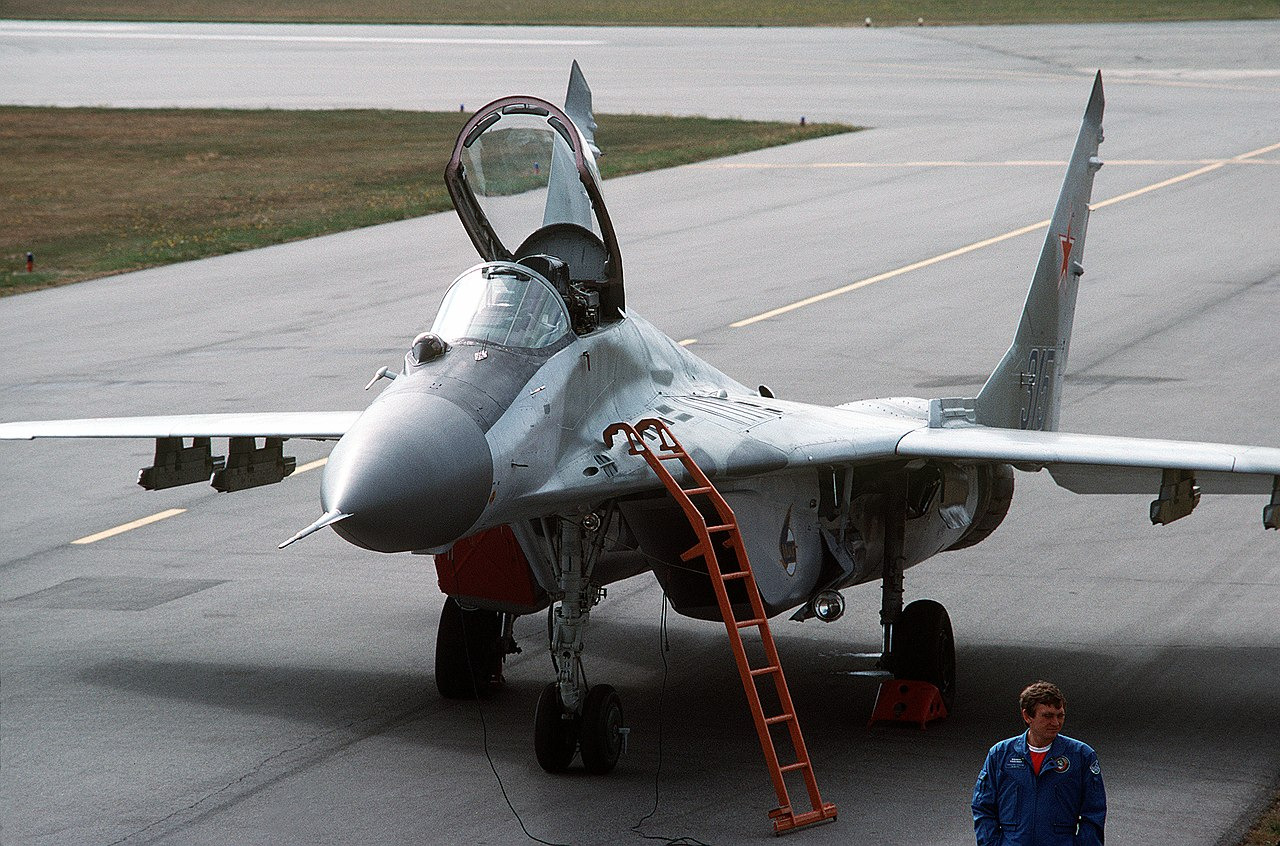
“In the coming days, we are handing over four aircraft to Ukraine in full working order,” Duda said at a press conference. Ukrainian pilots are trained to use the MiG-29, so the Polish planes can be used in battle once they arrive. Duda said Poland will send more MiG-29s after the first four are delivered.
Last year, in March 2022, Poland offered to give MiG-29s to the US to transfer them to Ukraine, but the Pentagon declined, citing concerns of escalation. NATO diplomats said at the time that Russia could perceive the move as the alliance directly entering the war.
But now, the US and its NATO allies are less concerned about escalation, and Poland’s move could inspire other alliance members to provide Ukraine with aircraft. Poland led the charge to give Kyiv German-made Leopard tanks.
According to The Wall Street Journal, Ukraine’s MiG-29s are already armed with NATO equipment, including AGM-88 High-Speed Anti-Radiation Missiles, or HARMs, which have a range of about 50 miles. Ukraine’s MiGs are also firing US-provided Joint Direct Attack Munition-Extended Range (JDAM-ER), precision-guided bombs that can hit targets up to 45 miles away.
Duda said he was open to providing Kyiv with American-made F-16s, which would require extensive training for Ukrainian pilots. The US is already laying the groundwork for the training as at least two Ukrainian pilots have arrived in the US to assess their skills.
Reporters make mistakes. It is the nature of the trade. There are always a few stories we wish were reported more carefully. Writing on deadline with often only a few hours before publication is an imperfect art. But when mistakes occur, they must be acknowledged and publicized. To cover them up, to pretend they did not happen, destroys our credibility. Once this credibility is gone, the press becomes nothing more than an echo chamber for a selected demographic. This, unfortunately, is the model that now defines the commerical media.
The failure to report accurately on the Trump-Russia saga for the four years of the Trump presidency is bad enough. What is worse, major media organizations, which produced thousands of stories and reports that were false, refuse to engage in a serious postmortem. The systematic failure was so egregious and widespread that it casts a very troubling shadow over the press. How do CNN, ABC, NBC, CBS, MSNBC, The Washington Post, The New York Times and Mother Jones admit that for four years they reported salacious, unverified gossip as fact? How do they level with viewers and readers that the most basic rules of journalism were ignored to participate in a witch hunt, a virulent New McCarthyism? How do they explain to the public that their hatred for Trump led them to accuse him, for years, of activities and crimes he did not commit? How do they justify their current lack of transparency and dishonesty? It is not a pretty confession, which is why it won’t happen. The U.S. media has the lowest credibility — 26 percent — among 46 nations, according to a 2022 report from the Reuters Institute for the Study of Journalism. And with good reason.
The commercial model of journalism has changed from when I began working as a reporter, covering conflicts in Central America in the early 1980s. In those days, there were a few large media outlets that sought to reach a broad public. I do not want to romanticize the old press. Those who reported stories that challenged the dominant narrative were targets, not only of the U.S. government but also of the hierarchies within news organizations such as The New York Times. Ray Bonner, for example, was reprimanded by the editors at The New York Times when he exposed egregious human rights violations committed by the El Salvadoran government, which the Reagan administration funded and armed. He quit shortly after being transferred to a dead-end job at the financial desk. Sydney Schanberg won a Pulitzer Prize for his reporting in Cambodia on the Khmer Rouge, which was the basis for the film “The Killing Fields.” He was subsequently appointed metropolitan editor at The New York Times where he assigned reporters to cover the homeless, the poor and those being driven from their homes and apartments by Manhattan real estate developers. The paper’s Executive Editor, Abe Rosenthal, Schanberg told me, derisively referred to him as his “resident commie.” He terminated Schanberg’s twice-weekly column and forced him out. I saw my career at the paper end when I publicly criticized the invasion of Iraq. The career-killing campaigns against those who reported controversial stories or expressed controversial opinions was not lost on other reporters and editors who, to protect themselves, practiced self-censorship.
But the old media, because it sought to reach a broad public, reported on events and issues that did not please all of its readers. It left a lot out, to be sure. It gave too much credibility to officialdom, but, as Schanberg told me, the old model of news arguably kept “the swamp from getting any deeper, from rising higher.”
The advent of digital media and the compartmentalizing of the public into antagonistic demographics has destroyed the traditional model of commercial journalism. Devastated by a loss of advertising revenue and a steep decline in viewers and readers, the commercial media has a vested interest in catering to those who remain. The approximately three and a half million digital news subscribers The New York Times gained during the Trump presidency were, internal surveys found, overwhelmingly anti-Trump. A feedback loop began where the paper fed its digital subscribers what they wanted to hear. Digital subscribers, it turns out, are also very thin-skinned.
“If the paper reported something that could be interpreted as supportive of Trump or not sufficiently critical of Trump,” Jeff Gerth, an investigative journalist who spent many years at The New York Times recently told me, they would sometimes “drop their subscription or go on social media and complain about it.”
Giving subscribers what they want makes commercial sense. However, it is not journalism.
News organizations, whose future is digital, have at the same time filled newsrooms with those who are tech-savvy and able to attract followers on social media, even if they lack reportorial skills. Margaret Coker, the bureau chief for The New York Times in Baghdad, was fired by the newspaper’s editors in 2018, after management claimed she was responsible for its star terrorism reporter, Rukmini Callimachi, being barred from re-entering Iraq, a charge Coker consistently denied. It was well known, however, by many at the paper, that Coker filed a number of complaints about Callimachi’s work and considered Callimachi to be untrustworthy. The paper would later have to retract a highly acclaimed 12-part podcast, “Caliphate,” hosted by Callimachi in 2018, because it was based on the testimony of an imposter. “‘Caliphate’ represents the modern New York Times,” Sam Dolnick, an assistant managing editor,said in announcing the launch of the podcast. The statement proved true, although in a way Dolnick probably did not anticipate.
Gerth, a Pulitzer Prize-winning investigative reporter who worked at The New York Times from 1976 until 2005, spent the last two years writing an exhaustive look at the systemic failure of the press during the Trump-Russia story, authoring a four-part series of 24,000 words that has been published by The Columbia Journalism Review. It is an important, if depressing, read. News organizations repeatedly seized on any story, he documents, no matter how unverified, to discredit Trump and routinely ignored reports that cast doubt on the rumors they presented as fact. You can see my interview with Gerth here.
The New York Times, for example, in January 2018, ignored a publicly available document showing that the FBI’s lead investigator, after a ten month inquiry, did not find evidence of collusion between Trump and Moscow. The lie of omission was combined with reliance on sources that peddled fictions designed to cater to Trump-haters, as well as a failure to interview those being accused of collaborating with Russia.
The Washington Post and NPR reported, incorrectly, that Trump had weakened the GOP’s stance on Ukraine in the party platform because he opposed language calling for arming Ukraine with so-called “lethal defensive weapons” — a position identicalto that of his predecessor President Barack Obama. These outlets ignored the platform’s support for sanctions against Russia as well its call for “appropriate assistance to the armed forces of Ukraine and greater coordination with NATO defense planning.” News organizations amplified this charge. In a New York Times column that called Trump the “Siberian candidate,” Paul Krugman wrote that the platform was “watered down to blandness” by the Republican president. Jeffrey Goldberg, editor of The Atlantic, described Trump as a “de facto agent” of Vladimir Putin. Those who tried to call out this shoddy reporting, including Russian-American journalist and Putin critic Masha Gessen were ignored.
After Trump’s first meeting as president with Putin, he was attacked as if the meeting itself proved he was a Russian stooge. Then New York Times columnist Roger Cohen wrote of the “disgusting spectacle of the American president kowtowing in Helsinki to Vladimir Putin.” Rachel Maddow, MSNBC’s most popular host, said that the meeting between Trump and Putin validated her covering the Trump-Russia allegations “more than anyone else in the national press” and strongly implied — and her show’s Twitteraccount and YouTube page explicitly stated — that Americans were now “coming to grips with a worst-case scenario that the U.S. president is compromised by a hostile foreign power.”
The anti-Trump reporting, Gerth notes, hid behind the wall of anonymous sources, frequently identified as “people (or person) familiar with” — The New York Times used it over a thousand times in stories involving Trump and Russia, between October 2016 and the end of his presidency, Gerth found. Any rumor or smear was picked up in the news cycle with the sources often unidentified and the information unverified.
A routine soon took shape in the Trump-Russia saga. “First, a federal agency like the CIA or FBI secretly briefs Congress,” Gerth writes. “Then Democrats or Republicans selectively leak snippets. Finally, the story comes out, using vague attribution.” These cherry-picked pieces of information largely distorted the conclusions of the briefings.
The reports that Trump was a Russian asset began with the so-called Steele dossier, financed at first by Republican opponents of Trump and later by Hillary Clinton’s campaign. The charges in the dossier — which included reports of Trump receiving a “golden shower” from prostituted women in a Moscow hotel room and claims that Trump and the Kremlin had ties going back five years — were discredited by the FBI.
“Bob Woodward, appearing on Fox News, called the dossier a ‘garbage document’ that ‘never should have’ been part of an intelligence briefing,” Gerth writes in his report. “He later told me that the Post wasn’t interested in his harsh criticism of the dossier. After his remarks on Fox, Woodward said he ‘reached out to people who covered this’ at the paper, identifying them only generically as ‘reporters,’ to explain why he was so critical. Asked how they reacted, Woodward said: ‘To be honest, there was a lack of curiosity on the part of the people at the Post about what I had said, why I said this, and I accepted that and I didn’t force it on anyone.’”
Other reporters who exposed the fabrications — Glenn Greenwald at The Intercept, Matt Taibbi at Rolling Stone and Aaron Mate at The Nation — ran afoul of their news organizations and now work as independent journalists.
The New York Times and The Washington Post shared Pulitzer Prizes in 2019 for their reporting on “Russian interference in the 2016 presidential election and its connection to the Trump campaign, the President-elect’s transition team and his eventual administration.”
The silence by news organizations that for years perpetuated this fraud is ominous. It cements into place a new media model, one without credibility or accountability. The handful of reporters who have responded to Gerth’s investigative piece, such as David Corn at Mother Jones, have doubled down on the old lies, as if the mountain of evidence discrediting their reporting, most of it coming from the FBI and the Mueller Report, does not exist.
Once fact becomes interchangeable with opinion, once truth is irrelevant, once people are told only what they wish to hear, journalism ceases to be journalism and becomes propaganda.
Two observations: First, the implications that a pro-Ukrainian outlet is now regularly publishing accounts of how badly things are going for Ukraine on the battlefield. Second, not only will Ukraine’s population of young to middle aged males be decimated by the time this is over, but many of the survivors will be injured and/or traumatized. – Natylie
By Asami Terajima, Kyiv Independent, 3/15/23
Editor’s note: The Kyiv Independent is not revealing the soldiers’ surnames or the exact location of their deployment due to security concerns amid the ongoing war. Some military personnel spoke without the authorization of their commanders or a press officer.
DONETSK OBLAST – Just days before heading back to fight in the Battle of Bakhmut, a Ukrainian soldier Volodymyr, 54, said he felt ill-prepared.
“When they drive us to Bakhmut, I already know I’m being sent to death,” Volodymyr told the Kyiv Independent during his brief stay in Kramatorsk, a city in Donetsk Oblast some 25 kilometers west of the front line.
Volodymyr, an infantryman from the 93rd Mechanized Brigade, said he struggled to eat after fighting in Bakhmut for months. He looked shaken as he talked.
For two months, Volodymyr’s unit was tasked with guarding Bakhmut against small Russian assault groups creeping into the city. The brigade was constantly under mortar fire as soldiers were outdoors where shrapnels could wound or kill them at any moment.
“(The Russians) keep firing at us, but we don’t have artillery – so we have nothing to attack them back with,” Volodymyr said. “I don’t know if I will return or not. We are just getting killed.”
Ukrainian infantrymen interviewed by the Kyiv Independent described the fighting in Bakhmut as a desperate survival challenge against Russia’s “infinite” stocks of artillery munitions and manpower. With just their machine guns and rifles, they say they braced relentless Russian mortar and artillery attacks until their hideout was eventually destroyed.
Volodymyr is haunted by the thoughts of his comrades killed in Bakhmut. He recalls a 29-year-old comrade whom he found lying dead after shrapnel hit the young man’s head at a position.
“I knew he was dead, but I just kept wrapping his head (with bandages),” Volodymyr said.
Volodymyr’s story is far from the only harrowing account of what soldiers face as they defend Bakhmut.
Eight months into the Battle for Bakhmut, Ukraine faces growing concern over the need to defend the ruined city, now nearly empty of its 70,000 residents.
Russians have almost encircled Bakhmut and have entered the city. Ukraine has been clinging to Bakhmut at a high price. Withdrawing from it would give the Kremlin its first major victory since July 2022.
Seizing the ruined city has become a symbolic and political objective for the Kremlin after facing humiliating defeats in late 2022 amid Ukraine’s successful counteroffensives.
Speaking to the Kyiv Independent in the nearby town of Kostyantynivka in early March, Senior Lieutenant Oleksandr said he was unaware of any plans to withdraw from Bakhmut but acknowledged that the situation is tense “everywhere.”
Russians put enormous pressure to “squeeze out” the Ukrainian troops from Bakhmut, Oleksandr said, with the fiercest fighting raging in the northern part of the city. The lack of munitions and equipment, such as armored personnel carriers, makes it hard to hold on to the city, Oleksandr added.
Russian forces outnumber the Ukrainians two to three times on the Bakhmut front, with approximately 20,000 to 30,000 troops fighting in the area, according to Mykola, a staff sergeant from the 28th Mechanized Brigade.
If Russia keeps up its current pace of attacks, “it could be a few weeks, and that’s it,” Mykola said about the fight for Bakhmut.
“The situation is now very difficult because they have already felt the taste (of victory in Bakhmut),” Mykola said. “And now they know that there is only a little bit left.”
Ukraine’s military leadership said that a complete withdrawal from Bakhmut is on the table, but such a decision would only be made if necessary.
As Russia throws more Wagner Group mercenaries to fight in Bakhmut, the tension surrounding the city is at an all-time high.
Bloody warfare
While Russian casualties on the Bakhmut front are assumed to be very high, Ukraine is also taking heavy losses as it holds on to the city, soldiers’ testimonies reveal. NATO intelligence estimates that at least five Russian soldiers were killed for every Ukrainian loss, CNN reported on March 6, citing an unnamed official with the alliance.
Valeriy, a Ukrainian infantryman, says that most of his fallen comrades were fatally wounded by projectile fragments.
“It’s a pity that probably 90% of our losses are from artillery – or tanks and aviation,” Valeriy told the Kyiv Independent a few hours after leaving the Bakhmut front. “And much less (casualties) from shooting battles.”
Valeriy counted that “only a few” of the original 27 members of his platoon got out of the Bakhmut front with him, though he explained that most of them were wounded, not killed.
“The Russians have so many weapons, and there are so many of them,” Valeriy said. “They are firing at us all the time. Sometimes, you hear an incoming (shell) every second.”
Russian forces have intensified their assault on Bakhmut since mid-January after capturing the nearby salt-mining town of Soledar, which sits some 15 kilometers northeast of Bakhmut.
Infantryman Vladyslav from the 58th Independent Motorized Infantry Brigade says many soldiers in his platoon have refused to go to Bakhmut as Russians came closer.
Multiple soldiers from other brigades also said they’ve encountered many “refusers” who did everything not to be deployed back to Bakhmut.
During the last rotation in late February, Vladyslav said that only eight out of 25 soldiers in his platoon headed out to Bakhmut – and the rest said they couldn’t go because of sudden fever or body pain.
The eight then headed to a position at a crossroad near the Bakhmutka River, where destroyed houses lined up. The platoon came under heavy Russian mortar fire as soon as they arrived.
Two were killed, and two were severely wounded – one soldier lost his arm, and the other was hit in the stomach by a projectile, Vladyslav said. The rest, including Vladyslav himself, received a severe concussion.
They were all evacuated from Bakhmut that day and lost the position.
Ukrainian soldiers fighting in and around Bakhmut told the Kyiv Independent that Russia’s tactics are potent. They locate Ukrainian positions, use mass fire to kill as many as possible, then move forward with infantry, usually also witnessing heavy losses.
Infantryman Vladyslav said that the Russians would usually appear in a group of about five people at night, but they seemed “scared” to launch close-range attacks.
So instead, the Russians would use mass firepower to destroy the houses – where the Ukrainians hid to monitor invading forces – to the point that they were forced to abandon the position to seek another position with better protection, according to Vladyslav.
“They are (now) fighting smartly, too,” Vladyslav said.
Some soldiers deployed in Bakhmut said the Russians split into small assault groups of about ten people and launch waves of nearly suicidal attacks. They say that Wagner mercenaries could have been among them, but it was difficult to assess since they all wore similar uniforms.
Maksym, 33, an infantryman from the 5th Separate Assault Brigade, said the Russians also had an established tactic in the southern area near Bakhmut.
The infantryman from Kyiv was deployed on the Ivanivske front, at the southwest outskirts of Bakhmut, throughout February 2023, where fierce fighting rages over a strategic village that sits on one of the key routes into the city.
Relying heavily on drones, the Russians would locate Ukraine’s positions in the area. They would then fire multiple rounds of mortar and artillery, which would then be followed by infantry assaults, in an attempt to encircle Ukrainian soldiers, according to Maksym.
If the drones cannot detect Ukrainian positions, the Russians will send a few soldiers to fire gunshots until they hear return fire, according to Maksym.
As brutal as they may be, the Russian tactics have slowly worked and pushed back Maksym’s unit by 1.5 kilometers in total throughout February. He said that his unit had to relocate to another position 100-300 meters away every now and then, especially if nearby units began withdrawing and the defense line began to collapse.
According to Maksym, Russia’s weapons, such as its Soviet-designed mortars and grenade launchers, might not be accurate, but they are “very effective infantry weapons” when used en masse.
As Russia strives for full-encirclement of Bakhmut by capturing settlements such as Ivanivske, Ukrainian forces are under increasing pressure.
Anticipating Russia’s next move
While Russia’s capture of Bakhmut is becoming more plausible, “Russian forces lack the capability to exploit the tactical capture of Bakhmut to generate operational effects,” the Institute for the Study of War predicted.
Russia’s offensive will likely “rapidly culminate” after its possible capture of the city, according to the report.
But despite reports that Russia’s push could stall after what would be Russia’s biggest victory in eight months, Ukrainian soldiers deployed further out from Bakhmut are not taking chances.
According to soldiers that talked to the Kyiv Independent, while Russia was concentrating its forces on capturing Bakhmut, the intensity of fighting in areas outside Bakhmut had slowed down, giving Ukrainians the opportunity to focus on propping up the defense.
Staff Sergeant Mykola said his 28th Brigade had begun conducting short training exercises for less experienced soldiers now that the fighting had become less intense north of Bakhmut.
Oleksii and Vasyl, sappers from the 80th Air Assault Brigade, said they lay explosives – mostly anti-tank mines, but also anti-personnel mines in areas that they expect to be the next front line.
At this point, Bakhmut is “basically surrounded by mines,” the younger sapper Oleksii from Kharkiv Oblast says.
If Bakhmut falls, the ISW forecasts that Russia could attempt to push westward along the highway toward the nearby town of Kostyantynivka (about 20 kilometers from Bakhmut) and further northwest to Kramatorsk and Sloviansk – the two central hubs in eastern Ukraine.
The village of Ivanivske, which sits on the highway to Kostyantynivka and is located only eight kilometers from Bakhmut, is among the settlements Ukrainian forces are fortifying.
A deputy company commander from the 80th Brigade, known under the call sign Third, told the Kyiv Independent that trenches were being dug out alongside the highway from Ivanivske to Kostyantynivka to prevent a Russian breakthrough in Ivanivske. The “operational pause” in the fighting in the areas further away from Bakhmut has been helpful to build fortifications.
“If the Russians capture Bakhmut, they will advance further to the south, to Ivanivske, then to Chasiv Yar, and further to the west,” said Third, 45, who has served since 2014. “We are preparing in advance.”
“At the moment, there is enough (defense),” he said of defending the rest of the region from Russians if Bakhmut falls. “But it’s for now, and I do not know what the enemy will do next.”
“Light at the end of the tunnel” was an iconic phrase used by the warmongers who kept the U.S. in Vietnam long after the War had been lost. The implication was that insiders could see through the fog of war and know that things were getting better. It was a lie.
In January 1966, long before the military height of the War, Secretary of Defense Robert McNamara told President Johnson that the U.S. had a one-out-of-three chance of winning on the battlefield. But Johnson, like Eisenhower and Kennedy before him, and Nixon after him, didn’t want to be the first American president to lose a war. So, he ginned up a simplistic lie and “soldiered on.”
The lie was blown by the Tet Offensive in January 1968. More than 100 U.S. military installations were attacked in a simultaneous nationwide assault that stunned the U.S. The broadcaster, Walter Cronkite, then “the most trusted man in America,” bellowed on national television, “I thought we were supposed to be winning this damned thing.” It was the beginning of the end of the U.S.’ murderous and failed occupation.
We’re now facing another light-and-tunnel event, this time in Ukraine. Only now, it’s not the light at the end of the tunnel. It’s the tunnel at the end of the light. What do we mean by that?
Until now, it’s been all light. Remember when the scrappy Ukrainian forces were kicking the barbarian Russian hordes’ asses? When every development betrayed the Russians’ clod-footed strategy, its soldiers’ bad morale, its army’s poor provisioning and worse leadership, and the perilous political situation for Putin back home? The testosterone was flowing. The bravado was intoxicating. The exceptionalism was sublimely seductive. It was only a matter of time and pluck and determination before Ukraine would bloody the bully’s nose and show it what the West was made of.
Remember?
No more.
You can prosecute a war for only so long on the strength of smoke and mirrors, delusions and illusions, lies and press releases. Eventually, however, reality catches up with you. The thuggishly propagandized American citizenry couldn’t know it, but that catching up began in the first weeks of the War and has only accelerated since.
Within the first week of the War, Russia had destroyed Ukraine’s air force and air defenses. By the second week, it had taken out most of Ukraine’s armories and weapons depots. Over following weeks and months, it systematically demolished artillery shipped in from former Warsaw Pact, now NATO, countries in Eastern Europe. It dismantled the country’s transportation and fuel supply systems. It has recently taken out most of the country’s electrical infrastructure.
The Ukrainian army has lost an estimated 150,000 troops, a pace more than 140 times the rate of U.S. losses in Vietnam. This, at a time when 10 million of its formerly 36 million people have fled the country. The military is down to dragooning 16-year-old boys and 60-year-old men to man the barricades. It cannot get replacement ammunition. Russia has knocked out some 90% of Ukraine’s drones, leaving it largely sightless. Delivery times for the tanks that are the hoped-for “game changer” are running into months and years. Not that that will matter.
Remember all the other failed “game changers”? The M777 howitzers and the Stryker armored fighting vehicles? The HIMARS multiple rocket launchers and the PATRIOT air defense systems? All were going to turn the tide at one time. All have proven impotent to stop Russia from seizing 20% of Ukraine’s territory and annexing it and its people to Russia.
The U.S. lost the economic war, as well. Remember Joe Biden’s delusional prediction that the U.S. would see that “the ruble will be reduced to rubble”? And that “the most stringent sanctions regime in history” was going to “weaken” Russia, perhaps even leading to Putin’s overthrow? Most of it backfired, badly. Last year, the ruble reached its highest exchange rate in history. Russia’s 2022 trade surplus of $227 billion was up 86% from 2021. The U.S.’ trade deficit over the same period rose 12.2%, and is approaching $1 trillion.
As a result of all of the above and more, the tide of insider opinion has turned against the War. Senior officials in Europe are talking openly about how the losses are unsustainable and they need to get back to security architectures that prevailed before the poisoned CIA-supported coup in Maidan in 2014. Mark Milley, Chairman of the Joint Chiefs of Staff, recently let slip that “It will be very, very difficult to eject the Russians from all of occupied Ukraine in the next year. The Washington Post warned recently that Ukraine faced a “critical moment” in the war, belaboring the fact that U.S. support was not limitless and would soon be reached. Hint. Hint.
The Rand Corporation, one of the U.S.’ best-connected strategic whisperers, just published a report stating that “The consequences of a long war far outweigh the benefits.” It explicitly states that the U.S. needs to husband its resources for its more important upcoming conflict with China. Newsweek headlined that “Joe Biden Offered Vladimir Putin 20 Percent of Ukraine to End War.” It also revealed that “Nearly 90 percent of the world isn’t following us on Ukraine.” Vast swaths of Latin American, Africa, and Asia refuse to support the U.S. in its demand for sanctions against Russia.
These are not “Light at the end of the tunnel” divinations. Quite the contrary. If there’s a common thread running through it all it is the sickening recognition that the war is lost, militarily, economically, and diplomatically, that there is no plausible scenario in which those losses will be turned around by soldiering on, and that what is needed now is a hide-the-loss, get-out-any-way-you-can, face-saving exit strategy.
That will not be available, either. That’s where the tunnel at the end of the light comes into play.
Even before the U.S. and its NATO puppets undertook the War, the rest of the world—and that means most of the world—was congealing itself into an anti-Western economic and security bloc. Led by China and its strategic ally, Russia, that bloc includes more than a dozen trade and security organizations. Those include the BRICS confederation of Brazil, Russia, India, China, and South Africa, working explicitly to devise multi-polar institutions to stand up to the U.S.’ unipolar hegemonic model.
It includes the Shanghai Cooperation Organization, a security compact made up of leading nations from east, central, and south Asia, including China, Russia, India, and soon, Iran, Turkey, and Saudi Arabia. It is explicitly working to devise measures to prevent the kind of predatory military assaults the U.S. carried out against Iraq, Libya, Somalia, Yemen, and Afghanistan.
The organizing economic engine behind these efforts it is China’s Belt and Road Initiative. BRI is a dizzyingly ambitious plan to connect Asia and more than 100 nations with 21st Century economic infrastructure, everything from highways and high-speed rail lines, to power generation, energy pipelines, communication systems, cities, ports, and more. It is critical to understand why BRI poses such daunting challenges to U.S. supremacy in the world.
Infrastructure is so powerful because it spins off a vast, unimaginable array of secondary, and tertiary economic benefits. It was the railroads in the nineteenth century that bound the U.S. together as the world’s first continental-scale market. Manufacturers could produce for a larger market, and, therefore, at larger scale, and, therefore, at lower cost, than could producers anywhere else on earth.
The railroads made the U.S. the largest market in the world for iron, steel, machine tools, grading equipment, farm equipment, and scores of other commercial and industrial products essential to a modern industrial economy. The U.S. began the 1800s with 1.5% of the world’s GDP. It ended the century with 19% of a four-times larger number, making it the largest economy in the world.
Similarly, automobiles. People think it was Henry Ford and mass production that made the Twentieth Century “The American Century.” In fact, it was the build-out of millions of miles of roads and, later, interstates, without which automobiles would have remained expensive playthings of the wealthy. Those roads stitched the country together into an asphalt network that allowed individual mobility, by virtually anybody, anywhere, down to every street address in the country. The world had never seen anything like it.
The secondary and tertiary economic effects were astounding, everything from the world’s largest markets for steel, glass, plastics, and rubber, to gasoline, diesel, highway construction on a continental scale, repair shops and drive-ins, to the entire panoply of culture we know of as suburbia. The Twentieth Century was the Century of the Automobile. The infrastructure the U.S. built to make it possible was the major reason—at least economically—that the U.S. led the world for most of that century.
China is now proposing to do the same for Asia in the Twenty-First Century, but on a much larger scale. It is leading an infrastructure build-out that will dwarf Eisenhower’s Interstate highway system. It will serve most of the five billion people in Eurasia, thirty TIMES more than the 150 million people Eisenhower’s project helped.
Wisely, China has ensured that all of the 100+ nations joining BRI are enriched by their participation, whether building themselves up domestically, or extending their reach internationally. It is the largest, most compelling, geographically extensive, nationally inclusive, mutually enriching economic enterprise in the history of the world. The U.S. is not part of it.
Finally, there is the matter of the dollar. Since the Bretton Woods Agreement of 1944, the global economy has used the dollar as the primary currency of international trade. This has given the U.S. an “exorbitant privilege” in that it can essentially write an unlimited stream of hot checks to the world, because countries need dollars to be able to conduct international commerce. The U.S. “sells” them dollars by issuing Treasury debt, which is a universally fungible international medium of exchange.
One of the consequences of this arrangement is that it has allowed the U.S. to spend far beyond its means, running up $32 trillion of debt since 1980, when its national debt stood at a mere $1 trillion. The U.S. uses this debt to, among other things, fund its gargantuan military with its 800 military bases around the world, which it uses to do things like destroy Serbia, Libya, Iraq, Afghanistan, Syria, Somalia, and a host of lesser predations on other countries. All the world sees this and is repulsed by it.
The world sees how dollar hegemony underwrites the U.S.’ ability to carry out or attempt coups in Honduras, Venezuela, Peru, Bolivia, Kazakhstan, Pakistan, Myanmar, Belarus, Egypt, Syria, and, of course, Ukraine, among others. And these are just those in the past two decades.
The same dollar hegemony underwrote U.S. predations in the latter part of the Twentieth Century against Iran, the Dominican Republic, Guatemala, Vietnam, Nicaragua, Cuba, Chile, Congo, Brazil, Indonesia, and dozens of other countries. Again, the rest of the world sees this. U.S. citizens, rapturously oblivious in their hermetically sealed media bubble, do not.
The world saw how the U.S. stole $300 billion of Russian funds that were held in Western banks, part of its sanctions regime against Russia for its role in the Ukraine war. They’ve seen how the U.S. has carried out similar thefts against dollar-denominated funds of Venezuela, Afghanistan, and Iran. It sees how the Federal Reserve’s raising of interest rates to take care of U.S. needs makes capital flow out of other countries, and how it makes their currencies fall, forcing inflation on them. Not a single country in the world is left untouched.
The cumulative impact of these facts is that many countries would rather not be held hostage to the implicit and explicit negative consequences of dollar hegemony. They also want to remove the “exorbitant privilege” that they believe the U.S. has abused to their individual and collective detriment.
They have begun—again, led by Russia and China—to build an international finance and trading system that doesn’t rely on dollars, that uses countries’ local currencies, gold, oil, or other assets to trade. This received special impetus last year when Saudi Arabia announced it would begin accepting Chinese yuan in exchange for its oil. Oil is the world’s most valued internationally-traded commodity, so the perception is that a dam is beginning to break.
It will take years before an equally functional substitute for the dollar is devised but what began a few years ago as a trickle has gained momentum and urgency as a consequence of U.S. actions in Ukraine. When the dollar is no longer the world’s international reserve currency and nations don’t need dollars to trade with each other, the U.S. will no longer be able to fund its massive budget and trade deficits by writing hot checks. The withdrawal will be agonizing and will greatly circumscribe the U.S.’ role as global hegemon.
U.S. actions in Ukraine have driven together its two greatest adversaries, Russia and China. They, joined by India, Turkey, Saudi Arabia, Iran and dozens of other countries, are carrying out a Mackinder-feared Eurasian integration that will leave the U.S. outside of the world’s largest and most dynamic trading bloc.
The U.S.’ military failure has advertised, once again (after Iraq and Afghanistan), the relative impotence of U.S. military solutions. Yes, it can still destroy small, defenseless countries like Serbia, Libya, Afghanistan, and Iraq. But against a peer competitor that has chosen to stand up to it, the U.S. has, frankly, been handed its ass. All the world can see it.
Events have shown the hollowness of U.S.-led economic and financial systems, as well, especially compared to China. China’s economic performance has far surpassed that of the U.S. It has lifted more people out of poverty more quickly than any country in the history of the world. Its growth has made it the largest economy in the world in purchasing power parity terms. While average inflation-adjusted incomes in the U.S. are little higher than they were 50 years ago, incomes in China are up more than 10 TIMES over the same period. And it has done this without brutalizing and pillaging other nations that refuse to bend to its hegemonic will.
And, the War has betrayed, as nothing else possibly could, the diplomatic isolation of the U.S., with the vast majority of the world’s people refusing to implement U.S.-demanded sanctions against Russia. Its destruction of the Nord Stream gas pipeline is recognized as the greatest act of state-sponsored terrorism in history, easily surpassing 911 in terms of the hundreds of millions of people it will hurt. And this, to one of its putative allies, Europe. Imagine what happens to its enemies.
This is the tunnel at the end of the light, a multi-polar as opposed to a unipolar world. It means increasing isolation of the U.S. from the rest of the world, the closing in of options, the narrowing of opportunities, the loss of strategic primacy that once graced the greatest power in the history of the world. It will mean dramatically reduced power and influence vis-à-vis the U.S.’ strategic adversaries, and markedly constrained ability to operate militarily, economically and financially in the world, what with the hot checkbook soon to be taken away.
In twenty or thirty years, the U.S. will still be a substantial regional power, perhaps like Brazil in South America, Iran in West Asia, or Nigeria in Africa. But it will not be the global hegemon it once was, able to project and inflict power in the world as it has done for the last century. The U.S. abused its providential anointment as the exceptional nation. That abuse has been recognized, called out, and is now being acted against by most of the other nations of the world. The future will be very different for the U.S. than it has been for the past 80 years, since the end of World War II when it towered over the rest of the world like a giant among pygmies. Ukraine will prove to have been the turning point in this transformation, the tunnel at the end of the light.