Category Archives: Uncategorized

Victory Day & The Thwarted Quest to See Lenin’s Tomb

Geography has been a double-edged sword for Russia.  On the one hand, geography has blessed it with much beauty and prodigious natural resources. But geography has also made Russia vulnerable due to a lack of oceans and mountain ranges to fend off invaders.  This combination has made Russia an irresistible temptation to megalomaniac leaders, like Napoleon and Hitler, who thought they could conquer this vast land that straddles two continents.

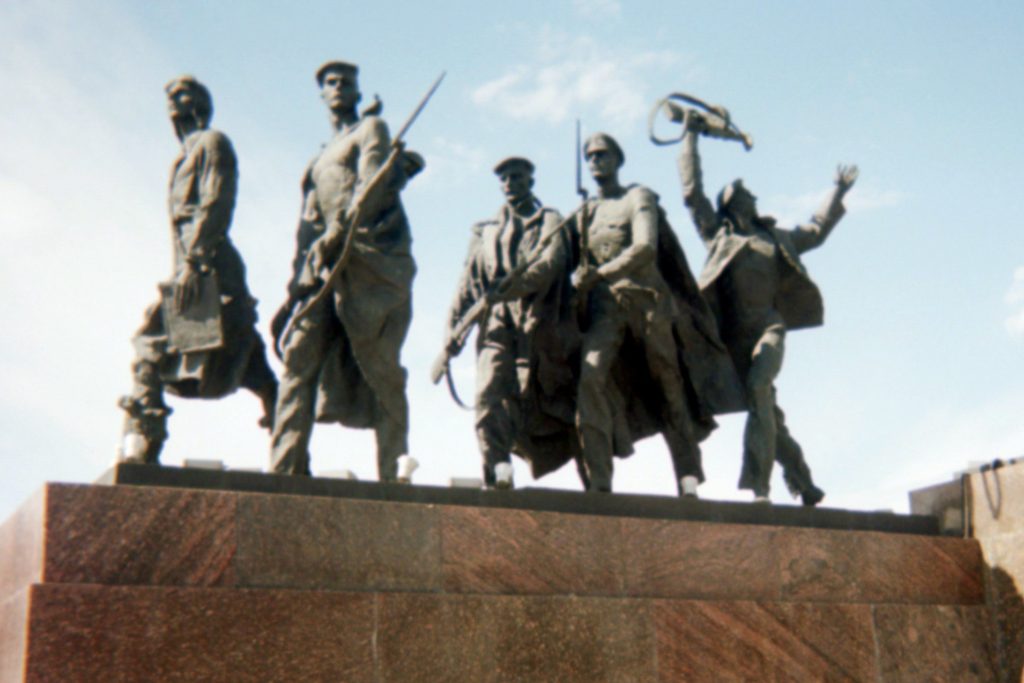
Inline image 3Inline image 4

And what did Napoleon and Hitler get for their hubris? Russians galloping into Paris and rolling tanks into Berlin, to paraphrase Dmitry Orlov.


But don’t let that dark humor fool you about Russians’ general attitude toward war. They hate war and have a visceral fear of it.  (Although, if backed against the wall, they will fight to the death for their home.  Picking a fight with these people is not recommended).  That is because they have not forgotten the terrible price they have paid.  The Soviets lost about 27 million people fighting off the Nazis – 17 million of them civilians – and one third of their country was destroyed in the process.  General Eisenhower wrote in his memoirs of what he saw when he went into the Soviet Union in 1945:


When we flew into Russia, in 1945, I did not see a house standing between the western borders of the country and the area around Moscow. Through this overrun region, Marshal Zhukov told me, so many numbers of women, children and old men had been killed that the Russian Government would never be able to estimate the total.

Although many Americans and Europeans have now bought into the America-centric rhetoric of the U.S. winning WWII in Europe, it was not controversial in the aftermath of WWII to acknowledge that the Soviet Union had, in fact, broken the Nazi Wehrmacht, likely saving many American lives by bearing the brunt of the fighting as one of FDR’s advisers had talked him into going into North Africa in late 1942, which significantly delayed the U.S. opening up a western front attack on Germany.


It’s a shame that the Cold War and Washington’s post-Cold War triumphalism have undermined our ability to acknowledge the sacrifices and achievements of the Soviet Union when we were allied against the Nazis.


But with or without the west’s approval, Russia solemnly commemorates Victory Day each year with elaborate parades in major cities, like Moscow and St. Petersburg.  The Russian president gives a speech before the Moscow parade and the parade is followed by the Immortal Regiment Rally in which Russians march through the streets carrying photos of family members who fought and/or died in the Great Patriotic War (WWII).


The nights leading up to Victory Day this year included light shows on a trio of large high-rise buildings near where we’ve been staying.  Alternating images of the St. George Ribbon (more below), the Red Star, and the years 1941 and 1945 and other related iconography were projected onto the buildings.


Part of the parade route included New Arbat which is the street our apartment is located on, so I headed outside about a half hour or so before the start time and braved the cold. I was able to find a good vantage point to watch and take pictures, having decided that I wouldn’t walk all the way over to Red Square, reasoning that it would be too crowded and I likely wouldn’t be able to get in for a good view.  I later learned my intuition was correct and that only people who have permission can actually get into the square on Victory Day – probably officials, foreign dignitaries and special guests.


More people came out to line the streets as the time drew near.  Lots of families, people with their phones out ready to snap pictures, and a smattering of individuals waving Russian flags thronged the edge of the modest barricades and tape that separated the spectators from the road.  In terms of security, the atmosphere was fairly low-key.  Police officers were stationed every 25-30 feet. At one point I spotted an officer on the roof of one of the buildings across the street surveying the scene.  When I looked up again a while later he was gone.


Many officers wore wind breakers and some had on rain coats.  I did not see any guns. There was no riot gear.


As people waited, earnest Russian music spilled out of loudspeakers.  Then the music stopped and a brief announcement was made.  A short motorcade of military officers in their crisp uniforms drove by about 5 minutes before the rest of the procession of tanks and other military vehicles began their ride down the street.  Some soldiers in the procession waved to the cheering crowds as they rode by, sometimes honking their horns.


I saw several people sporting the St. George’s ribbon, which is common on Victory Day (image below) as it’s a symbol of patriotism and solidarity.  The ribbon has its origins in the Czarist period as representing the highest military order. In recent years some nationalist groups have tried to co-opt the symbol or variations of it.


Inline image 2

The official transcript of Putin’s speech is available here.  It was fairly short, acknowledging the great sacrifices that made the defeat of Nazi Germany possible, and emphasizing that Russia will never be conquered and that international cooperation is the key to preventing any future world war.


The holiday celebrations concluded with a fireworks display at 10:00 pm, which I watched from our kitchen window as the balcony was too crowded with other residents from our floor of the building.  Fireworks could actually be seen in different parts of the city, but the largest display lit up over Red Square and the Kremlin.


According to a recent survey by the Levada Center, 76 percent of Russians planned on celebrating Victory Day this year.  Interest and participation was relatively equal among Russians, regardless of age, education or income level.


Lenin’s Tomb


I thought it would be an appropriate stop given that it’s the centennial of the Russian Revolution, but it just wasn’t meant to be for me to see the inside of Lenin’s Tomb.  It was not open at all on Tuesday due to the parade.


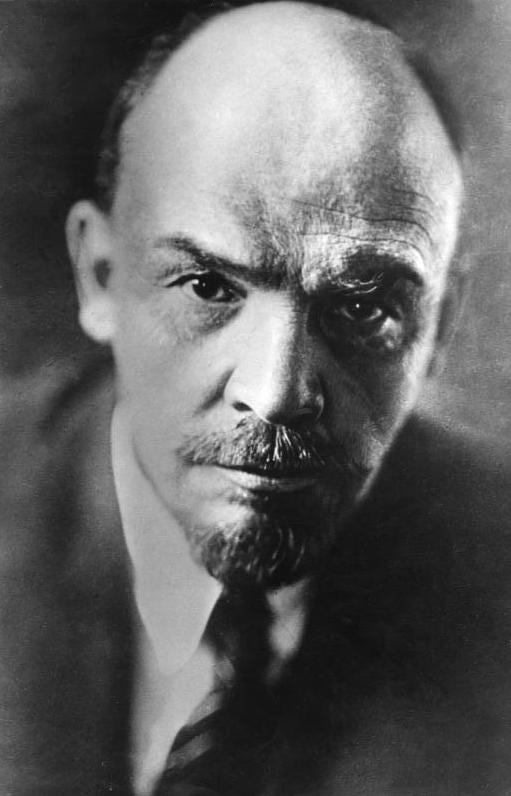
Below are a couple of photos of what Lenin in repose is supposed to look like.

Inline image 1

(For details on the process used to embalm Lenin, go here)


From what I can ascertain, admission into the tomb is free but it is a very solemn and formal atmosphere. There is no talking or picture-taking allowed.


Interestingly, over half of Russians polled now think that Lenin’s body should be laid to rest and no longer displayed in public, though they want the monument itself to remain in Red Square. However, the Putin government has been hesitant to remove the body, presumably to avoid offending any of the people who grew up in the Soviet era or giving the impression that an important part of Russian history is somehow being denied. There has also been some criticism about money from the Russian budget going to maintain the preservation of Lenin’s remains.


My next dispatch will cover my all-day guided tour of Moscow that will include visits to the Elbe Monument, the Gulag Museum and the Museum of Contemporary History, which has an exhibit on the Russian Revolution. And to top off the day, I’ll be taking a river boat ride.


*Note:  Photos I’ve taken on this trip will not be available until after I return and get them developed.

Greetings from Moscow

Inline image 6

Moscow River. Photo courtesy of 123RF.com. 

The first thing one sees to their right as they begin the descent down into Moscow’s largest airport is the sun glistening off the Moscow river surrounded by lots of greenery.  It gave me the pick-up I needed after an exhausting 24 hours of minimal sleep, being crammed on several airplanes and literally running from one end of an airport to another because one flight was almost 2 hours late and nearly made me miss a connecting flight.


We were blessed with sunny weather in the Russian capital, which was a welcome change from the rain and dreariness at both New York and Paris.


I had to snicker in the back seat of our cab as my travel companion this time, who had never been to Russia before, freaked at the high speeds and improvised lanes that one sees on some of the major roads in Moscow.  Our taxi driver, a young military veteran who works in the veterinary profession and drives for extra money on the weekends, kept getting an earful from my friend but took it in stride.


I did not smell the pungent odor of gasoline in the air this time so the city not only looks clean but smells clean – at least, the section we’ve been in.


Later in the evening I heard music at various times out in the distance from our apartment, alternating between classical piano and a lady’s voice singing.  I couldn’t pinpoint exactly where it was emanating from, but it was pleasant nonetheless.


On Sunday morning, just before 10:00 am, as I was sitting in the kitchen drinking my herbal tea, enjoying the breeze through the open window, I heard the lovely sound of church bells ringing followed by a beautiful piano sonata.


About a half hour later, I ventured out to the street where many spectators were standing along the sidewalk waiting for the procession to pass by in rehearsal for Tuesday’s Victory Day Parade.  Lots of families out with little ones in tow and babies being pushed in strollers.


I made my way down the street until I found a small grocery store where I could pick up some necessities.  Along the way I tried out my pathetically small Russian vocabulary on a couple of the city police officers who were providing security.  They politely acknowledged me but I noted their perplexed expressions as they’d just heard me speaking American English with my travel companion. Probably thinking “I thought you guys hated us.  WTF?”


The apartment where we are staying is not as close to Red Square as we were led to believe.  So I started out a little later on a long trek to the square to visit Lenin’s Tomb, which was closed the last time I was there.

Red Square. Squat building in distant center is Lenin’s Tomb. Photo by Natylie Baldwin, Oct. 2015

Walking along, this time solo, I was thinking about how I’m traipsing around in a country on the other side of the world where I don’t know much of the language, largely without an experienced guide this time.  I guess I’ve gotten more adventurous as I’ve gotten older – or maybe just stupid. Sometimes it’s hard to tell.


I start to smile at people around me to indicate friendliness and then I remember that Russians don’t really smile at strangers and will likely tag a smiling stranger as a foreigner or a crazy person as the old joke goes, so I keep my expressions of random good cheer to myself.


I wrote in one of my dispatches from my last visit – in Krasnodar – that there was piped in music throughout a pedestrian thoroughfare, including American and British popular music, interspersed with Russian music. Russians love music and are very fond of western music.  I had the same experience today.  In front of one set of shops, I heard piped in music – more specifically, it was a Muzak version of “Staying Alive” by the BeeGees

Pedestrian thoroughfare in Krasnodar. Photo by Natylie Baldwin, Oct. 2015

By the time I reached the front of Red Square, I realized it was barricaded off on the side I could see.  It looked as though there might be some other way in but it would require me to circumambulate and risk not being able to easily find my way back to our apartment.  So I decided to turn around and enjoy the walk back.

Entrance to Red Square, Moscow. Photo by Natylie Baldwin, Oct. 2015

I’ll have to wait until Tuesday after the parade to see Volodya in all his mummified glory.


My next dispatch will be in a few days and will cover the Victory Day celebrations and my guided tour.


It’s Time to Talk About the Media

MSNBC-PutinTrump-Power-Play--1491941048

(Putin/Trump Power Play.  Screenshot: MSNBC; https://theintercept.com/2017/04/12/msnbcs-rachel-maddow-sees-a-russia-connection-lurking-around-every-corner/)

With the CIA chief Michael Pompeo announcing last week that the agency is looking into bringing charges against Wikleaks founder Julian Assange and the publication of an expose at The Intercept quantifying just how much Rachel Maddow – who used to be a decent journalist – has now jumped the shark with respect to her obsession with hammering away on the Russia-Trump conspiracy – even though there is still no evidence of such 6 months after the election – it’s time to talk about the problem with the mainstream corporate media.

First of all, when it comes to Assange and Wikileaks, I’m amused at how people go from loving them to hating them and back depending on how they are perceived to be somehow helpful to Trump or not. Many liberals and lefties years ago were singing Wikleaks’ praises when it was exposing the crimes of the Bush administration.   Many of these same liberals turned on Assange/Wikileaks like a mad dog when they started exposing material that made Clinton look bad and was perceived to somehow be helping Trump.  Trump himself, and later Pompeo, praised Wikileaks when its published materials were perceived to be in their political interests.  Now Trump’s CIA has declared war on the organization for releasing a trove of CIA documents that reveal the extent of its’ ability to illegally spy on Americans and conduct cyber warfare in such a way as to make it look like it is originating from a foreign government (Russia or China) – i.e. false flag attacks that can lead to a dangerous escalation of tensions between nuclear-armed powers.

Of course, anyone who has done their homework on the history of the CIA’s machinations since the end of WWII will not be surprised at any of this, only the technology has changed and makes things even more dangerous.

It seems to me that if Assange and Wikileaks is able to piss off all sides, then that proves their independence which is something that real journalistic outlets are supposed to practice:  report and expose without fear or favor.

Here is what James Goodale, attorney who represented the New York Times in the case of the Pentagon Papers in 1971, had to say in his 2013 book, Fighting for the Press, about the implications of the U.S. government prosecuting Assange (thanks to Alex Emmons for drawing attention to this on his Twitter feed recently):

Assange sought out secret information by setting up a private website for the anonymous transmission of information to him.  Journalists asking sources to reveal secrets is the essence of journalism.  The only thing that has changed is that online chats and a digital submissions system have replaced meeting over a cup of coffee and a P.O. Box.  Charging Julian Assange with conspiracy to commit espionage could be more accurately characterized as charging him with a conspiracy to commit journalism.

While Assange’s role may seem to be passive compared with the image of hard-driving reporters of the past, journalism is quite different today.  News is gathered through the use of the Internet with reporters sitting at their desks.

This is in contrast to someone like Rachel Maddow – a sad figure because it is clear from her past journalism that she knows better.   Her reporting on the Flint water crisis and other issues showed that she had the skills and intelligence to be a great investigative journalist.   Now she has sunk to appearing as an obnoxious smirking sock puppet on behalf of the Hillary wing of the Democratic Party by using her MSNBC show as a platform from which to obsessively pontificate on innuendo about Russia and its alleged compromise of the Trump presidency.  It might be different if there was actually some substance to what she says and the nefarious connections she draws, but there isn’t and Aaron Mate at The Intercept has quantified just how much time she has spent beating the Russia drum:

The Intercept conducted a quantitative study of all 28 TRMS episodes in the six-week period between February 20 and March 31. Russia-focused segments accounted for 53 percent of these broadcasts.

That figure is conservative, excluding segments where Russia was discussed, but was not the overarching topic.

Maddow’s Russia coverage has dwarfed the time devoted to other top issues, including Trump’s escalating crackdown on undocumented immigrants (1.3 percent of coverage); Obamacare repeal (3.8 percent); the legal battle over Trump’s Muslim ban (5.6 percent), a surge of anti-GOP activism and town halls since Trump took office (5.8 percent), and Trump administration scandals and stumbles (11 percent).

People in Flint, Michigan still don’t have clean water, half of Americans are effectively poor, 1/3 of Millenials are living with their parents due to economic stress, even when they have an education, more oil and gas pipelines are failing and spilling fossil fuels into America’s waterways, and we’re still illegally involved in military interventions in at least 7 nations.   Trump not only has the lowest approval ratings of any US president this early into his term, but recent polls show that people think the Democratic Party is even more out of touch than Trump. Yet Maddow spends over half of her time flogging conspiracy theories about Russia:

Maddow has acknowledged that allegations of Trump-Russia collusion are unverified. But she has ignored claims that cast them in a more skeptical light. For instance, James Clapper, the former Director of National Intelligence, told NBC News on March 5 that U.S. intelligence has “no evidence” of collusion between Trump and Russia. On March 15, former CIA Director and Hillary Clinton surrogate Michael Morrell said “there is smoke, but there is no fire, at all.” Those statements have gone unmentioned.

Considering how much Maddow and other liberal pundits hate Trump – and there is plenty of reason to despise many of his policy positions – the anti-Trump rhetoric was finally muted when he had American missiles fired illegally into a sovereign nation earlier this month on the pretext of a chemical weapons attack in Idlib province blamed on Assad.  Adam Johnson at Fairness and Accuracy in Reporting (FAIR), a left-leaning media watchdog, counted how many editorials in major corporate media outlets criticized the airstrikes within days of the event:

Of the top 100 US newspapers, 47 ran editorials on President Donald Trump’s Syria airstrikes last week: 39 in favor, seven ambiguous and only one opposed to the military attack.

In other words, 83 percent of editorials on the Syria attack supported Trump’s bombing, 15 percent took an ambivalent position and 2 percent said the attack shouldn’t have happened. Polls showed the US public being much more split: Gallup (4/7–8/17) and ABC/Washington Post (4/7–9/17) each had 51 percent supporting the airstrikes and 40 percent opposed, while CBS (4/7–9/17) found 57 percent in favor and 36 percent opposed.

A list of the editorials with quotes showing support or opposition can be seen here. The list of the top 100 editorial boards in the country was taken from a 2016 Hill piece (10/5/16) on presidential election endorsements.

Eight out of the top ten newspapers by circulation backed the airstrikes; the Wall Street Journal (4/7/17), New York Times (4/7/17), USA Today (4/7/17), New York Daily News (4/8/17), Washington Post (4/7/17), New York Post (4/10/17), Chicago Sun-Times (4/7/17) and Denver Post (4/7/17) all supported the strikes with varying degrees of qualification and concern.

The San Jose Mercury News (4/7/17) and LA Times (4/8/17) were ambiguous, highlighting Trump’s past opposition to bombing Syria and insisting, in the Mercury News’ words, that he get “serious about setting policies and pursuing diplomacy.”

The one editorial that expressly opposed the attack, in the 15th-ranked Houston Chronicle (4/7/17), did so mainly on constitutional—not moral or geopolitical—grounds, writing, “As we said a year-and-a-half ago, the president cannot and should not use military force against Syria without a legislative framework.”

The Chronicle—like all of the editorials on the list—accepted the government of Bashar al-Assad’s guilt in the April 4 chemical attack on Khan Shaykhun, omitting qualifiers such as “alleged” or “accused.”

A consistent theme in the bulk of the editorials was that the airstrikes were necessary, but Trump needed a broader strategy as well as a constitutional or congressional “framework.” As FAIR (4/7/17) noted last week, the editorial and op-ed pages of top five newspapers in the country were uniformly in support of the airstrikes in the day after the attack, offering up 18 positive columns and zero critical.

Some spoke in emotional or visceral terms, most notably the New York Times (4/7/17), which insisted “it was hard not to feel some sense of emotional satisfaction” at the attack. “The US decision to launch cruise missiles at Syrian President Bashar Assad’s airfield felt good,“ the Denver Post (4/7/17) wrote.

This emotional satisfaction was presumably in response to Assad’s alleged atrocity of gassing civilians, including children.  These victims needed to be avenged and the moral balance restored, the thinking went.   However, as political comedian Jimmy Dore points out, terrorists (called rebels by western media outlets) lured and bombed up to 80 children in an atrocity last week in Syria.   Dore points out how the western media treats this intentional atrocity against children with far less outrage and no retaliatory moves being suggested for Washington to establish moral balance in the universe.   Any group or individual who intentionally targets children cannot be called a rebel but is more appropriately labeled a terrorist.  However,  Dore shows examples of western journalists refraining from using the term terrorist and insisting on referring to the perpetrators as “rebels.”    Furthermore, calls are made to wait for further investigation of the incident.

Why are these incidents treated so differently by the mainstream western press?   To watch the video, go here:

https://www.youtube.com/watch?v=4xIXiSq3K_c

There are explanations for why these incidents would be treated differently and they require an understanding of how the corporate MSM works in the U.S.   Below I reprint an article I wrote for OpEd News a while back on the topic:

American Propaganda and the Mass Media

By Natylie Baldwin

Edward Bernays and the Manipulation of the Public Mind


Edward Bernays was the nephew of pioneering Austrian psychiatrist Sigmund Freud.  His parents had settled in the U.S. and Bernays grew up American, but came to be deeply influenced by his uncle’s ideas about the unconscious, its role as the repository of repressed sexual and aggressive impulses and its potential use as a means of manipulating the masses.  Bernays was also influenced by social psychologist Wilfred Trotter’s theories on crowd psychology and the “herd instinct.”


During WWI, which threw Freud into a deep depression because he saw it as confirmation of his worst fears about human behavior, Bernays was working as a press agent and was asked to assist the war effort by participating in the American government’s committee on public information, known as the Creel Committee.  His great contribution was effectively promoting president Woodrow Wilson’s narrative of the war as a fight to spread democracy to Europe.  During the Paris Peace Conference, Bernays would see first-hand the success of his propaganda efforts as the Paris crowds greeted Wilson as “a liberator of the people.  The man who would create a new world in which the individual would be free.”


Inspired by the achievements of propaganda during wartime, Bernays, looking to make his fortune, set to work on turning Americans from citizens into passive consumers who would be controlled by channeling their unconscious desires into a constant quest for goods and services that they would associate with their deepest yearnings for beauty, freedom and fulfillment.  Bernays would come up with tactics to bombard the public with messages that would cement this objective.


One of his first successes involved helping the tobacco industry expand their market by breaking the taboo against women smoking in public.  After soliciting the advice of the top psychoanalyst in America who told him that cigarettes were a phallic symbol and represented male sexual power, he realized that if cigarettes could be associated with challenging men’s power, women would respond positively to smoking as it would be connected to the ideas of freedom and rebellion – two of the most common marketing concepts to this day.


At the annual Easter Day Parade in New York City, Bernays staged a memorable event in which a group of “rich debutantes” lit up cigarettes in theatrical fashion at Bernays’ pre-arranged signal.  He had tipped off the media that a group of “suffragettes” would be lighting up what they called “torches of freedom.”  As Bernays knew, who could argue against freedom in America?  By associating cigarettes with freedom to women, Bernays had helped the tobacco companies hit the jackpot.


Bernays and his insights soon became indispensable to corporate America, which was worried that consumer demand for their products would plateau as mass production had been mastered and people at the time tended to buy goods based on need and durability.  Only a small group of wealthy people could buy a significant number of luxury items.  Consequently, to continue growing their markets, they needed to “transform the way the majority of Americans thought about products” as Paul Mazen, a Leahman Brothers Wall Street banker said.  Mazen turned to Bernays for implementation of this transformation.


As Peter Solomon, investment banker for Leahman Brothers, said about Bernays in the documentary film Century of the Self:

“Prior to that time there was no American consumer, there was the American worker.  And there was the American owner.  And they manufactured and they saved and they ate what they had to and the people shopped for what they needed.  And while the very rich may have bought things they didn’t need, most people did not.  And Mazen envisioned a break with that where you would have things that you didn’t actually need, but you wanted as opposed to needed.”


As the New York banks financed the spread of chain department stores across the country to serve as oases of consumerism, Bernays came up with many methods of product promotion that would become pervasive later on, such as linking products with movie stars who were also his clients, adorning those same movie stars in clothes and accessories made by other corporate clients during public events, and prominently placing products in films.


He also paid psychologists to issue reports claiming that certain products and services were good for people’s well-being and celebrities to push the idea that clothes were not merely necessities but a means of self-expression.  This became known as the “third party technique” of conferring legitimacy by what appears to be a disinterested party or an authoritative source.


The dramatic growth in consumerism that Bernays actively facilitated contributed to the stock market boom.  After it crashed in 1929, however, challenges were presented to the idea that Americans were consumers rather than citizens as the consumer boom could no longer be sustained and Franklin Roosevelt’s administration actively lobbied against it as part of the New Deal program.   Supreme Court justice Felix Frankfurter in a letter to Roosevelt described Bernays and his PR colleagues as “professional poisoners of the public mind, exploiters of foolishness, fanaticism, and self-interest.”  Unlike Bernays, Roosevelt and his colleagues believed that people could be trusted to make rational decisions if their fears, desires and insecurities were not manipulated in other directions as reflected in Roosevelt’s famous admonition, “The only thing we have to fear is fear itself.”


Bernays eventually saw his ideas transferred into the realm of political philosophy as renowned political writer and repentant former socialist Walter Lippmann, who had served with Bernays on the Creel Commission, began to apply Freud’s ideas to a need to control the masses politically, viewing the Russian Revolution as an example of the dark forces of the rabble being unleashed.  Bernays was intrigued by Lippmann’s interpretation of his uncle’s ideas – contained in Freud’s books which Bernays professionally promoted in the U.S.  Lippmann had begun to openly question the feasibility of democracy:


The lesson is, I think, a fairly clear one.  In the absence of institutions and education by which the environment is so successfully reported that the realities of public life stand out sharply against self-centered opinion, the common interests very largely elude public opinion entirely, and can be managed only by a specialized class whose personal interests reach beyond the locality.


In his 1922 book, The Phantom Public, Lippmann stated plainly:  “The public must be put in its place [so that we may] live free of the trampling and the roar of a bewildered herd.”


In 1930’s Germany, the Nazis were also asserting that democracy was not feasible and Joseph Goebbels, who emerged as the Nazis’ pre-eminent propagandist, had taken note of Bernays methods of public manipulation based on Freudian theory as a way to channel the desires of the population in a particular direction favored by the leaders.  Goebbels reportedly admitted putting Bernays’ book Crystallizing Public Opinion to use in the regime’s genocidal campaign against the Jews in terms of creating a public environment of hatred and scapegoating.


Having honed his propaganda skills since WWI, Bernays would once again provide his services on behalf of the martial ambitions of the U.S. government.   He served as an advisor to Eisenhower and believed that the best way to deal with Americans’ fear of Communism and the nuclear arms race was to manipulate those fears to support America’s mobilization in the Cold War.


In 1954, Bernays assisted the CIA’s overthrow of Guatemala’s democratically elected leader, Jacobo Arbenz, a democratic socialist with no ties to the Soviet Union.   The CIA had a propaganda program in place called Operation Mockingbird, in which numerous journalists and editors – both paid and unpaid – published and broadcast stories sympathetic to the increasingly aggressive and unaccountable agency.  Led by Frank Wisner, Operation Mockingbird was also used to suppress reporting that would expose the agency’s nefarious covert activities or present them in a negative light.


Bernays’ role was to create a narrative that portrayed the coup as the popular overthrow of a Communist dictator and puppet of Moscow whose removal represented the spreading of democracy.  In reality, Arbenz’s ouster was to preserve the profits of United Fruit Company, a company that Bernays had worked for in a PR capacity since the 1940’s while the head of the CIA, Allen Dulles, had made investments in United Fruit in his earlier years as a lawyer at the Sullivan and Cromwell firm which served as United Fruit’s corporate counsel.


Bernays exploited the ignorance of most Americans in relation to foreign affairs as well as the Red Scare of the McCarthy era by planting false stories in American newspapers and magazines, providing phony “intelligence” sources to the media, and bringing members of the press on a carefully orchestrated “fact-finding” mission to Guatemala paid for by the United Fruit Company.


As PR Watch noted in a 2010 article, “Bernays’ carefully planned campaign successfully created an atmosphere of fear and suspicion in the U.S. about the Guatemalan government, compelling a U.S. intervention that advanced Chiquita’s [then known as the United Fruit Company] interests and was internationally condemned.”


Bernays biographer, Larry Tye, commented in Century of the Self:


“[Bernays] totally understood that the coup would happen when conditions in the public and the press allowed for a coup to happen and he created those conditions.  He was totally savvy in terms of just what he was helping create in terms of the overthrow.  But ultimately he was reshaping reality, and reshaping public opinion in a way that’s undemocratic and manipulative.”


Bernays’ propaganda narrative, combined with CIA director Allen Dulles’ ability to restrict the travel of independent journalists to Guatemala, ensured the success of the coup.  Arbenz’s overthrow led to a decades-long civil war that resulted in 200,000 dead and 100,000 disappeared.


Bernays rationalized his work at manipulating the masses – or “engineering consent” as he referred to it – as necessary to control what he saw as the dangerous and irrational forces that guided human behavior, particularly in large groups.  Bernays’ daughter, Ann, said the following about her father in Century of the Self:


“What my father understood about groups is that they are malleable.  And that you can tap into their deepest desires or fears and use that to your own purposes.  I don’t think he felt that all those publics [sic] out there had reliable judgment; that they may very easily vote for the wrong man or want the wrong thing.  So they had to be guided from above.”


Subsequent psychological studies as well as observation of humans throughout history demonstrate that they are indeed malleable and capable of a wide range of behaviors; but there is nothing indicating that humans are doomed to act like brutal mobs or genocidal maniacs unless they are led in that direction by powerful social forces.


Bernays’ work and the philosophy underpinning it have paved the way for the cynical use of grand ideas like freedom, democracy and human rights to sell mindless consumption, wars, coups, color revolutions (i.e. contrived regime changes under the pretense of spreading democracy or “western values”), and instability – all in the service of a small group of people who benefit.


The CIA, NED and Democracy Promotion


The CIA, in fact, engaged in numerous covert actions in the decades following WWII to effect what is now referred to as regime change – assassinations, coups, civil wars and destabilizations – throughout the third world as historian and former State Department official, William Blum, has documented in several books and essays, along with other researchers and CIA whistleblowers.   These actions involved killing, torture, destruction of infrastructure, delayed development, and impoverishment in the target countries.  In most cases, the victims were guilty only of supporting policies that were anathema to the American political class, such as socialism, economic populism and national sovereignty in terms of control of natural resources and financial assets.


Congressional hearings in the 1970’s, led by Frank Church, combined with a brief window of relative media openness, exposed some of this ugly program to the American people.  Rather than cease these kinds of actions, the American political establishment’s response to the negative publicity was to create a separate entity that would take over for many of these covert operations.  An entity that would obscure the nature of its activities under the guise of spreading democracy and would be funded by the U.S. Congress.  In 1983, the National Endowment for Democracy (NED) was born and Allen Weinstein, who helped write the legislation that brought it into existence, admitted in 1991, “A lot of what we do today was done covertly 25 years ago by the CIA.”

NED funds many innocuous sounding groups, both domestic and foreign.  One such domestic group is Freedom House.  While receiving the majority of its funding from NED, Freedom House presents itself as an objective nonprofit interested in freedom, democracy and human rights and publishes regular reports rating various countries on these supposed criteria.  However, upon closer examination, the ratings tend to reflect well on those countries aligned with U.S. economic and geopolitical interests and poorly on countries that are rivals.  Freedom House’s assessment of the American media’s coverage of the Tet offensive during the Vietnam War and its recent assessment of post-coup Ukraine are evidence of its lack of credibility in measuring a free and democratic media, among other issues

In the international arena, NED has funded numerous “opposition” and “democracy” groups in Russia (before being booted out by the government), Venezuela and pre-coup Ukraine.  These groups are not funded out of the goodness of the U.S. government’s heart to advance human rights and authentic democracy but to create tension that is to be ratcheted up in the hopes of culminating in a coup, civil war or other destabilization to remove or undermine governments that are viewed as a threat to the interests of the oligarchy that, according to a 2014 academic study, now officially governs the U.S.

For all of uncle Freud’s faults – such as his stultifying preoccupation with sex and violence – he never intended for his theories to be used in this fashion, serving as the basis for justifying a never ending sequence of actions that caused him so much worry for mankind:  war.  Freud, who did not like American culture, expressed disgust when Bernays encouraged him to write articles for clients in the popular media, which Freud perceived as a cheapening of his work.


Bernays, on the other hand, was a manipulative, arrogant and self-aggrandizing man who essentially believed that humans were too stupid and too dangerous to be trusted with the truth or self-governance.  He was an elitist who was right at home with the oligarchs and hawks of his day and their agenda of control, consumerism, militarism and ignorance.  What’s more, he was paid handsomely for his work, in both money and stature.


It should be noted, of course, that fear of the rabble was articulated centuries prior to Freud, Trotter and Bernays – although its underlying psychological dynamics may not have been clearly understood.  This included a segment of the founding fathers like Alexander Hamilton and John Jay whose ideas justified an effective rule by the elite.


Going back even further, David Hume made observations in the 17th century about the need to control the opinions of the masses to protect the rule of the few in light of the English political upheaval which saw demands for universal education, democratization of the law, and social protections.  Noam Chomsky has delineated the line of political thought stretching from Hume to John Locke to today:


“In the contemporary period, Hume’s insight has been revived and elaborated, but with a crucial innovation:  control of thought is more important for governments that are free and popular than for despotic and military states.  The logic is straightforward.  A despotic state can control its domestic enemy by force, but as the state loses this weapon, other devices are required to prevent the ignorant masses from interfering with public affairs, which are none of their business.  These prominent features of modern political and intellectual culture merit a closer look. (emphasis in original)”


French writer and political analyst, Jean Bricmont, expounded on the dynamics of this strategy of propaganda control in the seemingly free and open societies of today in his 2007 book Humanitarian Imperialism: Using Human Rights to Sell War:


“Today’s secular priesthood is made up of opinion makers, media stars of all kinds, and a considerable number of academics and journalists.  They largely monopolize public debate, channeling it in certain directions and setting the limits on what can be said, while giving the impression of a free exchange of ideas.  One of the most common ideological reinforcement mechanisms is to focus debate on the means employed to achieve the supposedly altruistic ends claimed by those in power, instead of asking whether the proclaimed aims are the real ones, or whether those pursuing them have the right to do so.”  (p. 32)


The Mass Media – Who’s Platform?


That secular priesthood with its opinion makers, academics and journalists must have an effective and pervasive platform through which to inculcate and constantly reinforce their message on behalf of the oligarchy that now effectively controls all substantive public policy in the U.S. while the populace is reduced to participating in dog and pony show elections at regular intervals.


Award winning journalists Robert Parry, Chris Hedges and Paul Craig Roberts have been marginalized by the corporate mass media after refusing to go along with the false narratives presented in connection with economic and foreign policy.  They each tell a similar story in terms of their exile after refusing to toe the line on U.S. support for violent militias and destabilization in Central America in the 1980’s, the run-up to the Iraq War in 2003 and the misrepresentation of economic conditions in the U.S..  Their experiences indicate there are three things that a journalist who wants to have a long-term and lucrative career will generally not report on:  1) stories that will offend the corporate media owners, 2) stories that will offend the corporate media advertisers, and 3) stories that will jeopardize their relationships with those in power.


Enabled by the 1996 Telecommunications Act, which saw a major deregulation of mergers in the media industry, 90% of what most people read, watch, or listen to in the U.S. comes from an entity that is owned by 1 of 6 corporate conglomerates:  Comcast, Disney Company, News Corporation, Time Warner, Viacom and CBS Corporation. Each of these six conglomerates, in turn, has financial relations through boards of directors who have ties to other corporate interests, namely the Military-Industrial Complex (MIC), Fossil Fuels, Banking, Big Ag, and Big Pharma. A few examples include:  Disney has relations with Boeing and City National Bank; NBC with Honeywell, Chase Manhattan, and New York Stock Exchange; Viacom with Honeywell, Bear Stearns, Chase Manhattan, Morgan Chase and Pfizer; CNN/Time with Chevron, Citigroup, and Pfizer; News Corporation with Phillip Morris, Rothschild Investments and New York Stock Exchange; New York Times Company with Alcoa, Bristol Myers Squibb, Carlyle Group, Chase Manhattan, Lehman Bros., and Texaco; Wall Street Journal with Clear Channel, Pfizer, Texaco and Shell Oil; Knight Ridder with Bank of America, Eli Lilly, GE, Raytheon and Phillips Petroleum.


The Mass Media – Mechanisms of Control


The experiences of journalists like Hedges, Perry and Roberts should come as no surprise according to the propaganda model outlined by analysts Noam Chomsky and Edward Herman in the seminal 1988 book Manufacturing Consent:  The Political Economy of the Mass Media.  Their model identifies five sets of filters that represent the methods by which a private and reputedly “free” media actually serve as the means by which the population is conditioned to believe what the elites who control American society want them to believe:  that America is governed by a fair, democratic and legitimate system, despite actual evidence to the contrary.  We will focus on the first three filters below.


The first filter, which we’ve already discussed, is the corporate ownership of the mass media.  The corporate boards hire and/or approve editors who will enforce acceptable narratives based on their interests.


A second filter of corporate control related to profit motive that is less obvious is the media’s reliance on advertising to make money rather than selling a quality news product.  Newspapers, magazines, broadcast and internet programming make most of their money from selling space to corporate advertisers, which consequently drives the motivation to produce content that will grab people’s attention in order to attract advertising dollars. Thus, the emphasis is on sensationalist stories focused on sex, violence and celebrities. According to the Pew Research Center’s Journalism & Media project, “69% of all domestic news revenue is derived from advertising.”


The third filter involves the reliance by journalists on representatives of the government and corporate elites as sources of inside information, along with “experts” who often represent elite interests in the tradition of those created by Edward Bernays.   As Chomsky and Herman state:


“The mass media are drawn into a symbiotic relationship with powerful sources of information by economic necessity and reciprocity of interest.  The media need a steady, reliable flow of the raw material of news.  They have daily news demands and imperative news schedules that they must meet.  They cannot afford to have reporters and cameras at all places where important stories may break.  Economics dictates that they concentrate their resources where significant news often occurs, where important rumors and leaks abound, and where regular press conferences are held.  The White House, the Pentagon, and the State Department, in Washington D.C., are central nodes of such news activity.  On a local basis, city hall and the police department are the subject of regular news beats for reporters.  Business corporations and trade groups are also regular and credible purveyors of stories deemed newsworthy.”    (pp. 18-19)


Government Elites


With respect to government and military elites, numerous “news” shows allow a bevy of retired military leaders – many of whom have financial relationships with defense contractors – to provide commentary and analysis in connection with foreign policy, commentary and analysis that inevitably rationalizes a military solution of some sort with most “debate” turning on just how much military power or which military tactics to use.  Very seldom are academics, activists or journalists allowed to air alternatives to militarist policy, despite the availability of people who could articulate the benefits of such policies while providing historical, cultural and geopolitical context that is often missing in a typical broadcast of shallow and self-serving sound bites.


Other pundits and journalists will sound articulate and provide a compelling narrative, but due to the fact that the average American doesn’t know much about countries like Vietnam in the 1960’s or today’s Iran, Iraq, Libya, Syria, and Russia, they won’t know enough to realize what they’re being told is false or seriously distorted.


One case in point is the Ukraine crisis which touched off a civil war in early 2014.  The American media narrative relied upon the repetition of two main ideas:  1) the portrayal of the color revolution instigated by the West – with Neo-Nazis as the muscle and an Association Agreement from the EU filled with empty promises as the catalyst – as aggression by Russia; and, 2) the demonization of Russian president Vladimir Putin, mostly based upon distortions, exaggerations, innuendo and outright falsehoods.  Victoria Nuland and her NED cronies, who helped shape the narrative in western Ukraine during the color revolution and have contributed to shaping it in the western media ever since, have taken Bernays’ playbook and refined it.


One of the mass media’s favorite authorities on the topic of Russia and Ukraine is Anne Applebaum.  By way of background, Applebaum is a widely published author and columnist, formerly with the Neocon think tank American Enterprise Institute, and has worked with NED – an organization she describes as “independent.”  She has also taken a position with the Legatum Institute in London where she churns out anti-Russia propaganda with her Neocon playmates Peter Pomerantsev and Michael Weiss.  Legatum was founded by Christopher Chandler, who made billions off of the corrupt voucher program in Russia during the Yeltsin years.  Applebaum is also the wife of Radoslaw Sikorski, who was the foreign minister of Poland until last year.  Sikorski gained notoriety when he told Politico reporter Ben Judah that he overheard a 2008 conversation between Putin and the Polish leader in which Putin suggested that Ukraine be divided up between Russia and Poland.  It didn’t take long for Sikorski’s story to fall apart and he was forced to publicly retract the allegation and apologize to the Polish government.

As Moscow based investigative journalist John Helmer has reported, there is controversy in Poland surrounding Applebaum’s income shooting up from $20,000 in 2011 to $565,000 in 2013 with no details provided as to where the surge in income came from and whether it was related to her husband’s political activities.  Helmer’s Polish sources express a suspicion that Applebaum is receiving money from revived US government programs that have as their objective the dissemination of anti-Russia material.  Helmer’s attempts to find out from Applebaum’s publishers and the Legatum Institute if the significant income increase was attributable to their compensation were stonewalled.


Notorious Russian oligarch Mikhail Khodorkovsky’s family nonprofit, Institute of Modern Russia, has admitted that it is working with Applebaum through the Legatum Institute on a “series of studies” on Applebaum’s persistent themes relating to Russia, including its “postmodern dictatorship.” The papers were used as the foundation for public panels, including one in Washington D.C. co-sponsored by NED.   Several scholars and writers who specialize in Russia and geopolitics have expressed concern about one of the papers that was hailed at these panels, “The Menace of Unreality,” which attempts to legitimize what amounts to censorship of any reporting or analysis of Russia and related issues that does not adhere to the narrative outlined by government officials and their mass media lapdogs.


Applebaum flogged the same anti-Russia and Putin demonization themes during the Munk debates in Canada in April of this year.  In arguing on behalf of the position that the West should continue to keep Russia in the naughty corner and eschew engagement, Applebaum turned reality on its head.  In regards to Putin’s relations with the West, notably the U.S., she claims that the West bent over backwards to welcome Putin and Russia into its paradise of peace, prosperity and democracy only to have Putin cheat, steal and aggress on his neighbors – accusations that take particular temerity given the enriching schemes by the Legatum Institute’s founder in the 1990’s, an era that Applebaum thinks was better for Russia.  The truth, as documented by Stephen F. Cohen (one of her opponents in the Munk debate), Jack Matlock, and Angus Roxburgh (among others) is that Putin made numerous attempts to have a mutually respectful and cooperative relationship with the U.S. and received little for his efforts except for several swift kicks to the shins in the form of NATO expansion, unilateral withdrawal from the Anti-Ballistic Missile Treaty, provocations on his borders and interference in Russia’s internal affairs on a level that would never be tolerated by the U.S.  Despite Applebaum’s gross distortions, her side swayed the audience and won the debate.


In addition to NED darlings like Applebaum, there is a possibility that the CIA has revived or never really shut down its Operation Mockingbird program.  A recent book by Dr. Udo Ulfkotte, the former editor of a major German newspaper, Frankfurter Allgemeine Zeitung, has stated that numerous journalists and editors in the German – as well as other European – mass media are on the payroll of the CIA.  He describes how he put his name to and published articles that were actually penned by the CIA, articles that pushed whatever militarist narrative the U.S. political elites and security apparatus wanted.  The book, Bought Journalists, has been a best-seller on Amazon but the mass media in both the US and Western Europe have dummied up instead of reporting on the book or its allegations.  One is left to look to the independent and non-western media to learn about its existence.


Corporate Elites


“Marketing is a battle of perception, not products.  The truth has no bearing on the issue.  The role of public relations is to deliver the exact same thing as advertising.”

-Jack Trout, advertising executive

In terms of the separate but often related interests of corporate elites, Investigative journalists John Stauber and Sheldon Rampton, in their book Trust Us, We’re Experts, discuss what could best be described as corporate prostitutes serving as experts and the methods they use in framing Americans’ understanding of a range of issues affecting their health, finances and public policy.


Corporations and the PR firms they hire make abundant use of the “third party technique” pioneered by Bernays. One of the most common tactics is the use of astroturf organizations that confuse the public with names that sound like they represent the public interest but are actually front groups for corporations.  These front organizations often do their work with the assistance of mass media outlets that disseminate their propaganda by citing their biased and bogus data, without always disclosing that corporations are really behind the groups.

One of the earliest examples of this type of entity was the Air Hygiene Foundation (later known as the Industrial Hygiene Foundation and then the Industrial Health Foundation).  The foundation was initiated in 1935 by Andrew and Richard Mellon in the aftermath of the Hawk’s Nest scandal to counter the exposure of the deadly effects of silicosis on the health of workers and the potential for financial accountability in the form of lawsuits and regulatory changes.  Leading scientists and public officials were recruited as members and trustees of the foundation and were quoted in trade publications and the media, lending a veneer of legitimacy to their agenda.

The Hawk’s Nest scandal saw the death of up to 2,000 poor black workers from silicosis through the reckless working conditions of Union Carbide in a West Virginia project involving the digging of a tunnel through a mountain that was almost pure silica.  The negligence was compounded by the company doctors’ refusal to disclose what ailment the workers had contracted after the development of symptoms.  The dangers were well known to the company as engineers and managers regularly took precautions while in the tunnels, such as wearing masks or respirators.

During Roosevelt’s administration, the court system had finally begun to shift away from its early bias by which employees were rarely able to effectively hold their employers legally accountable, even for the most egregious abuses.  The industry begrudgingly began to limit some of the worst abuses.  As Stauber and Sheldon state:

“With the Air Hygiene Foundation, industry had found an effective propaganda formula:  a combination of partial reforms with reassuring “scientific” rhetoric, under the aegis of an organization with a benevolent, independent-sounding name….By 1940, the AHF had 225 member companies, representing such major polluters of the day  as American Smelting and Refining, Johns-Manville, United Steel Company, Union Carbide, and PPG Industries….In 1941, it changed its name to the Industrial Hygiene Foundation, broadening its agenda beyond dust-related diseases to encompass other industrial health issues.  By the 1970’s, it had more than 400 corporate sponsors, including Gulf Oil, Ford Motor Company, General Motors, Standard Oil of New Jersey, Kawecki Berylco Industries, British Beryllium, Consolidated Coal, Boeing, General Electric, General Mills, Goodyear, Western Electric, Owens-Corning Fiberglass, Mobil Oil and Dow Chemical.” (p. 79)

Similar campaigns were run by industry with regard to asbestos and leaded gasoline and, more recently, with genetically modified foods and pesticides.  In each case, industry knew full well the serious dangers associated with their products and practices.

In addition to the use of astroturf groups, PR firms often provide a range of services with the goal of using various tools in the art of deception to protect and/or further the interests of their corporate clients.  These include advising clients how to evade substantive interaction with the public and questioning by journalists or activists, and how to mislead based on the avoidance of words that the public reacts unfavorably to – in other words, obfuscating to the point of rendering the truth irrelevant.  Some firms even conduct spying operations on genuine public interest groups and advocates with the goal of blackmailing them or attacking their credibility.

But one shouldn’t underestimate the mileage PR firms get out of more mundane methods, such as inundating media outlets with press releases that portray their corporate clients in the best possible light.  Instead of being treated with sufficient skepticism, corporate and PR press releases are often used as the basis of articles and reports as newsrooms cut back their staff and budget for investigative reporting.  As a 2014 survey by Business Wire revealed, the vast majority of journalists rely on press releases to provide them with breaking news (77%) and factual support for articles (70%).


There is even a term now for this kind of press release-based reporting, “churnalism.”  In fact, it was recognized as a serious enough problem by the Media Standards Trust to motivate the creation of a website, churnalism.com, which provides a “churn engine” that viewers can paste press releases into and find articles in the database that quote directly from or heavily rely upon “reproduced publicity material,” receiving a high score on the churnalism meter.


As Chomsky and Herman point out, all of this reliance upon elite sources and “experts” is cost-effective, not only in terms of newsrooms starved of staff and resources to perform due diligence and provide a truthful and balanced journalism, but also in terms of the media protecting themselves from powerful moneyed interests who can afford to punish media outlets through libel litigation or government agencies that can suspend licenses and permits for broadcasters to operate.  All of the aforementioned mechanisms contribute to perverting what journalistic “objectivity” means in practice.


Americans’ Growing Distrust of the Mass Media


Ironically, those bombarded constantly with propaganda, especially when it becomes more and more obvious as reflected in numerous reports over the past 18 months originating from official government sources that Russia had invaded Ukraine only to have the photographic evidence debunked within days or even hours, are bound to reach a point of distrust.  According to a September 2014 Gallup poll, Americans’ trust in the mass media is at an all time low of 40%.  Moreover, British studies requested by Sputnik News reveal that most westerners, including Americans, are suspicious of mass media’s coverage of the Ukraine war and would like to be provided with alternative media sources.  This probably explains why RT’s YouTube channel was leaving Al Jazeera, CNN, and BBC in the dust by 2012 and by the end of 2014 had been viewed over 2 billion times – triple that of CNN or Euronews, even though it has a smaller budget than the Western international media outlets, despite histrionic claims to the contrary.


This sentiment no doubt reaches beyond foreign policy as more Americans recognize that the narrative being pushed on them by the mass media doesn’t resemble what they see and experience on a daily basis:  increasing economic insecurity, a degraded environment, spending on more wars than they can keep up with, and the social and cultural decay that inevitably emerges with rule by a militarist oligarchy.

Experts: “In a nuclear war between the US and Russia, everybody in the world would die.”

Nuclear blast obliterates a city. There won’t be any time to react.


Due to the gravity of the issue and the corporate and alternative media’s general silence on it, I am re-posting this interview from the Greanville Post (reproduced from the original on the World Socialist Website) with two nuclear experts on the implications of the current geopolitical tensions and the consequences should a nuclear exchange occur between Washington and Moscow.

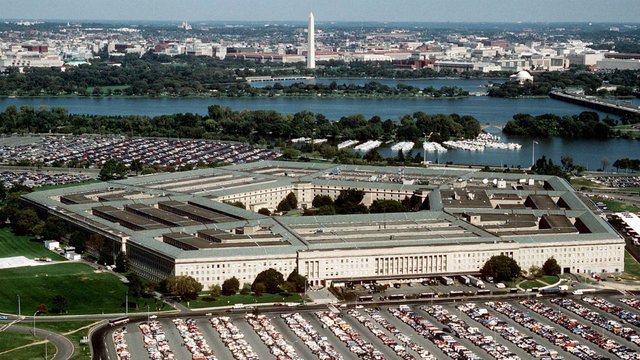
This is all the more relevant given the Pentagon’s testing of a more usable nuclear weapon last week as reported here

-Natylie

By Bryan Dyne and Barry Grey

World Socialist Website

Since the April 6 cruise missile strike by the Trump administration against a Syrian airbase, tensions between the United States and the European powers and Russia are at their highest level since the cold war. The rhetoric from the US and its allies has centered on defending the unprovoked attack while Russia has responded by increasing its military support for the regime of Bashar al-Assad.


The most recent escalation of these tensions is the dropping of a GBU-43/B Massive Ordnance Air Blast Bomb (MOAB) by the US military in Afghanistan. A MOAB is a 21,600 pound bomb, the most powerful non-nuclear weapon in the US military’s arsenal. It has never before been used in combat.

While the official target was an ISIS cave and tunnel complex in Nangarhar Province, the real aim was to demonstrate to Iran, Russia, Syria, North Korea, China and any other nation that gets in the way of American imperialism’s global interests that there are no limits to the violence the US military is prepared to unleash on those it considers its enemies.

What is striking about the media coverage of the increasingly acute geopolitical crisis is the lack of discussion–whether it be the New York Times, the Washington Post, Fox News, MSNBC or CNN–of the consequences of a nuclear exchange. The next step up from a MOAB is a low-yield tactical thermonuclear warhead, a weapon that is at least an order of magnitude more destructive. Yet no one in the corporate media has asked: What would happen if such weapons were used in Syria, Iran or North Korea, let alone Russia or China?

This raises two further questions: How close is the current situation to one in which there is a clash and military escalation between the US and Russia that leads to nuclear war? How many people would die in such a conflict?

To shed light on these question, the World Socialist Web Site spoke separately with two experts on the dangers of nuclear war, Steven Starr and Greg Mello.


Steven Starr is a senior scientist at Physicians for Social Responsibility and an associate with the Nuclear Age Peace Foundation. His articles on the environmental dangers of nuclear war have appeared in the Bulletin of Atomic Scientists and the publication of the Moscow Institute of Physics and Technology Center for Arms Control, Energy and Environmental Studies.

World Socialist Web Site: In your opinion, how real is the danger of a military conflict between the US and Russia over Syria or with China over North Korea?

Steven Starr: I think there is a very significant danger of that happening. The Russians are allied with [Syran President Bashar al-]Assad and have been beating ISIS. They’ve won back Aleppo and it’s made the US media and political establishment hysterical, because that’s not how they wanted the war to end. Trump campaigned for a detente with Russia, for a non-interventionist policy. When [Secretary of State Rex] Tillerson was in Turkey, he said that Assad could stay. But five days after that, the US launched cruise missiles at Syria.

As a result of the attack of 59 cruise missiles by the US on a Syrian airbase, we’ve basically destroyed relations with Russia. We’ve crossed the Rubicon. Russia has suspended the 2015 aviation safety memorandum that had provided 24/7 communication channels aimed at preventing dangerous encounters between US and Russian aircraft. This will give the Russians in Syria the right to decide whether to shoot or not to shoot at US planes. The Russians already own the Syrian airspace and they have stated that they are going to increase Syrian air defense capacity. What happens when US planes start getting shot down by the Russians?

WSWS: One thing worth contrasting is the completely dishonest and false reporting by the corporate media and the scale of the consequences of the policies being pursued. As bad as it is to pump out propaganda on behalf of the American political establishment, when you are pursuing a policy that will result in the destruction of the planet, it assumes a new dimension.

SS: From my perspective, the international “news” published by the papers of record has mostly become propaganda, especially after the events in Ukraine and Crimea in 2014. While you always expect bias in each country’s news reporting, Western media no longer seems constrained by the need to provide hard evidence to support their arguments and allegations. There has been no investigation about the chemical attack in Syria–Trump launched the missile strike before any investigation could be carried out.

The CIA is deeply involved in this process. There are only six megacorporations that control 90 percent of US and Western media, and they do not publish stories that are contrary to Washington’s official party line. Censorship by omission with no dissent permitted is the defining characteristic of what we hear today. The use of “official sources” without supporting factual evidence creates a false narrative that is used to support US military actions.

As a result, there has been a deafening silence in the media about what the consequences of what a war with Russia might mean. When have you heard mainstream media have any discussion about the consequences of a nuclear war with Russia?

WSWS: What would happen if there was another US attack on Syria, perhaps following another manufactured chemical weapons attack?

SS: The situation could escalate very quickly, especially since relations between the US and Moscow have deteriorated to their worst state in history. One report I’ve read is that there are plans to deploy 150,000 US troops to Syria. Given that there are Russian and Iranian troops in Syria (at the request of the Syrian government), it would be an incredibly stupid decision for the US to send large military forces to Syria. It would be very hard to avoid WWIII.

If the US and Russia get into a direct military conflict, eventually one side or the other will start to lose. They either then admit defeat or they escalate. And when that happens, the possibility of using nuclear weapons becomes higher. Once nukes start going off, escalation to full-scale nuclear war could happen very quickly.

WSWS: How catastrophic would that be?

SS: The US and Russia each have about 1,000 strategic nuclear weapons of at least 100 kilotons, all ready to launch within two to 15 minutes. Since it takes about nine minutes for a missile from a US submarine to hit Moscow, this means that the Russian government could retaliate. And these are only the missiles that are on a hair trigger alert.

The US and Russia have 3,500 deployed and operational strategic nuclear weapons (each with a minimum explosive power of 100,000 tons of TNT) that they can detonate within an hour. They have another 4,600 nuclear weapons in reserve, ready for use. There are about 300 cities in the US and about 200 cities in Russia with populations greater than 100,000 people. Given how many nuclear weapons there are, it’s a large chance that most large cities would be hit.

Probably 30 percent of US and Russian populations would be killed in the first hour. A few weeks after the attack, radioactive fallout would kill another 50 percent or more.

Nuclear winter, one of the long-term environmental consequences of nuclear war, would probably cause most people on the planet to die of starvation within a couple years of a large US-Russian nuclear war. The global stratospheric smoke layer produced by nuclear firestorms would block most sunlight from reaching the surface of earth, producing Ice Age weather conditions that would last for at least 10 years.

Another rarely discussed consequence of nuclear war is high altitude electromagnetic pulse, or EMP. A large nuclear weapon detonated at high altitude (100-200 miles high) will produce an enormous pulse of electrical energy, which will destroy electronic circuits in an area of tens of thousands of square miles below the blast. A single detonation over the US East Coast would destroy the grid and cause every nuclear power plant affected by EMP to melt down. Imagine 60 Fukushimas happening at the same time in the US.

Greg Mello is the secretary and executive director of the Los Alamos Study Group, an organization that has researched the dangers of nuclear war and advocated for disarmament since 1989. His research and analysis have been published in the New York Times, Washington Post, the Bulletin of Atomic Scientists and Issues in Science and Technology.

WSWS: What role have the Democrats played in the increased tensions between the US and Russia over Syria?

Gregg Mello: Even as recently as 2013, when there was a fake chemical weapon attack in Syria, I don’t think the Democrats were as “on board” with war as they are today. But now, as a result of the candidacy of Hillary Clinton, the Russia-baiting and the neo-McCarthyite hyperbole has really ratcheted up, marginalizing even those within the party who express any amount of skepticism about the official story, such as Congresswoman Tulsi Gabbard. And this is someone who went to Syria to find out what was really going on. She found that the majority of people in Syria want the US to stop funding the rebels and are happy with the Assad government’s efforts to oust Al Qaeda and ISIS. But she’s being silenced.

WSWS: Could you speak on some of the corporate interests involved in this?

GM: Fifty-nine cruise missiles cost a lot of money. Each missile used costs, I guess, between $1 and $1.6 million, so the strike as a whole cost between $60 to $100 million. That doesn’t include the cost of the deployment of the ships and the other elements that make up a strike. It’s probably twice as much, if you include those elements. In terms of the missiles, if they are replaced, that’s income for whatever company replaces them.

Companies also get free advertising from such a strike. I saw the clip from MSNBC’s Brian Williams, who praised the missiles using the Leonard Cohen line, “I’m guided by the beauty of our weapons.” That’s a priceless advertising clip, especially when the same images and videos of the missiles are on primetime news and across the Internet. I’m sure their stock values, literally and figuratively, went up.

But even this is peanuts compared to the really high dollar amounts that come from continued tensions with Russia and the US government’s need to dominate the world. We’re talking not about millions of dollars, but billions–really, trillions. To maintain the idea that we should be in every part of the world, the US spends on all components of national defense about $1 trillion a year. So it really adds up quickly.

And the US military just got an increase to its base budget that is comparable to Russia’s entire defense budget. In the US, we spend way more money on the military than all of our potential adversaries combined. That’s where the real money is.

We get NATO to buy the latest versions of military equipment, compatible with ours. All of those arms sales plus our own national purchases are worth trillions. That’s what this strike upholds. A military spending pattern on a colossal scale.

This goes along with the geopolitical questions you mentioned.

WSWS: Could elaborate on the geopolitical questions?

GM: Well, Trump has said that we won’t go into Syria, but there’s no consistent policy on this. Let’s assume there is another strike, will it involve Russia? Will it kill Russians? What will Putin or any other Russian leader feel he needs to do then?

Stephen Cohen, professor emeritus of Russian studies at Princeton and New York University, noted that Russian Prime Minister Dmitry Medvedev called American and Russian relations “ruined.” And Medvedev is not a hardliner against the West. For him to say that, you can only imagine what the generals and other hardliners are whispering in Putin’s other ear.

If we make another strike, either with a US airplane or a “coalition” airplane, it could easily be shot down by the high end anti-aircraft weapons that Syria and Russia have deployed. This would lead to an outcry from the US political establishment to do more, to double down on our mistake. All in all, it’s difficult to see how an air campaign could have a decisive effect on the war in Syria without creating an extreme risk of escalation between the US and Russia.

Geopolitically, the situation in Syria has gone so far towards Assad remaining in power and the terrorists being pushed out that a serious US attack on Syria would either fail, or else it would really damage Russian interests, humiliate Russia and kill her soldiers along with Assad’s, and therefore tilt the balance toward WWIII.

The idea that the poisonings in Khan Sheikhoun occurred because of chemical weapons or precursors released by a conventional munitions attack on an Al Qaeda weapons warehouse or workshop, which is the report of the Russian government, makes the most sense given everything we know. The notion that Assad or some rogue element in his army dropped chemical weapons on his own people, just when he is winning militarily and politically, is ridiculous.

Now we see that the US does not want the Organization for the Prohibition of Chemical Weapons involved in an investigation of the attack. Really?

The OPCW is the world’s policeman for chemical weapons, something the US helped create. They got the Nobel Peace Prize in 2013 for verifying that all of Syria’s chemical weapons had been destroyed. They destroyed them on a US ship. In this case and in every case, the OPCW would carefully study evidence gathered with chain of custody procedures at an accredited laboratory, all of which are essential when matters of war and peace are at stake. It’s the same way you’d collect evidence in a high-profile murder case.

This hasn’t happened for the most recent chemical weapon attack–and the US doesn’t want it to happen. Instead, the US has recently issued a statement of the “facts,” a piece of paper claiming to be from all 17 intelligence agencies, but without letterheads or signatures, which uses weasel words like “we have confidence.” There is no indication what agencies have signed off on this or what actual evidence has been collected. Moreover, an attack like this takes a few weeks to investigate, not a few days.

This all is happening because Syria is one of the more important crossroads between the hydrocarbons of the Middle East and European customers. If you’re going to get oil and natural gas from Qatar to Europe without going through Iran, you have to have pipelines that go through Syria. This is especially important if you don’t want Europe to be dependent on natural gas from Russia, if you want to prevent Germany and Russia and the rest of Asia from further integration economically. The US government does not want Europe dependent on hydrocarbons supplied by Russia or Iran. (Editor’s Note: And this is not just about denying the Russians some income through their hydrocarbons sales. It’s about weakening Russia strategically and economically, so that eventually the nation can be undermined from within and broken up into much smaller states controlled by US-designated puppet leaders.—PG)

So, really, Syria is a proxy war between the US and other regional powers–Iran, allied with Russia–for control over Europe’s gas and oil. In addition, Israel wants control of the Golan Heights in order to drill in that region.

It’s also worth considering that China’s oil production seems to have peaked. The world’s net exports of oil–that is, the oil that can be bought on the international market–are starting to very slowly decline.

Since a barrel of oil will produce more value in countries such as China and India because the workers are paid so much less, China can always outbid the US and Europe for oil. Given a free market, they will. Alongside this problem, the oil-producing countries are using more oil internally as their populations and economies grow, which will inevitably produce a crisis in the availability and affordability of oil. That crisis will be upon us in the 2020s and it implies the potential for great power conflicts over these resources.

You didn’t have this during the Cold War because the US and Russia each had enough resources, as did our allies. But now, the cheap oil is running out and there are no cheap replacements. The potential for conflict, including between nuclear-armed powers, is rising.

WSWS: How many people would die during the first day of such a war?

GM: To a first approximation, in a nuclear war between the US and Russia, everybody in the world would die. Some people in the southern hemisphere might survive, but probably not even them.

Even a couple of nuclear weapons could end the United States as a government and an economy. It wouldn’t take a great deal to destroy the “just in time” supply chains, the financial markets and the Internet. The whole system is very fragile, especially with respect to nuclear weapons. Even in a somewhat limited nuclear war, say a war where only ICBM silos and airfields were targeted, there would be so much fallout from the ICBM fields alone that much of the Midwest would be wiped out, including places like Chicago.

Then there is the problem of the nuclear power plants, which have stored within them and their spent fuel pools and storage areas truly vast amounts of radioactivity. If their electricity supply is interrupted, these plants are quite susceptible to fires and meltdowns, as we saw at Fukushima.

Keep in mind that nuclear war is not one or two Hiroshima-sized bombs. The imagination cannot encompass nuclear war. Nuclear war means nuclear winter. It means the collapse of very fragile electronic, financial, governmental, administrative systems that keep everyone alive. We’d be lucky to reboot in the early 19th century. And if enough weapons are detonated, the collapse of the Earth’s ozone layer would mean that every form of life that has eyes could be blinded. The combined effects of a US-Russian nuclear war would mean that pretty much every terrestrial mammal, and many plants, would become extinct. There would be a dramatic biological thinning.

I think many parts of the US military just don’t get it. I’ve talked to people on the National Security Council and they have the idea that Russia will back down. I begged them, about 18 months ago, to bring in some Cold War era veteran diplomats from the realist school, people like former ambassador to Russia Jack Matlock, who was appointed by Ronald Reagan, to try and convince them that Russia won’t just do what we want, that they have their own legitimate interests that we would do well to understand and take into consideration.

WSWS: What are your thoughts on how to deal with the problem of nuclear war?

GM: I would say that the effort to decrease inequality in the world is at the core of dealing with the threat of nuclear war.* We have to get the military-industrial-financial complex off people’s backs. If you have so much power concentrated in so few hands, and have such high levels of inequality, the people in power are blinded by their position. They are insulated from society’s problems. So gross inequality–economic and especially political–leads to sort of political stupidity. It could lead to annihilation. The ignorant masses are not the problem. It’s the ignorance and hubris at the top. It always is.

[All emphasis in original – NB]

Experts Weigh in on Syria CW Attack; Swedish Human Rights Group Debunks White Helmets Video; “Mother of All Bombs” Dropped in Afghanistan; Russia & China Dispatch Ships to Shadow USS Carl Vinson Near N. Korea

(Photograph of men in Khan Sheikdoun in Syria, allegedly inside a crater where a sarin-gas bomb landed.)

Now that there has been time to analyze Washington’s purported “evidence” for its contention that the Syrian government (i.e. Assad) was responsible for a recent chemical weapons attack in Khan Sheikdoun, for which Washington fired 59 sexualized Tomahawk missiles at the airbase in retaliation, experts are pointing out serious problems that indicate more deception to justify illegal military action in a Middle Eastern country.  As Robert Parry points out, we’ve been down this road before with the chemical weapons attack in Ghouta in 2013 that Washington and its stenographers in the corporate media told us, with righteous certainty, was committed by Assad:

One smug CNN commentator pontificated, “we all know what happened in 2013,” a reference to the enduring conventional wisdom that an Aug. 21, 2013 sarin attack outside Damascus was carried out by the Assad government and that President Obama then failed to enforce his “red line” against chemical weapons use. This beloved groupthink survives even though evidence later showed the operation was carried out by rebels, most likely by Al Qaeda’s Nusra Front with help from Turkish intelligence, as investigative journalist Seymour Hersh reported and brave Turkish officials later confirmed.

But Official Washington’s resistance to reality was perhaps best demonstrated one year ago when The Atlantic’s Jeffrey Goldberg published a detailed article about Obama’s foreign policy that repeated the groupthink about Obama shrinking from his “red line” but included the disclosure that Director of National Intelligence James Clapper had informed the President that U.S. intelligence lacked any “slam dunk” evidence that Assad’s military was guilty.

One might normally think that such a warning from DNI Clapper would have spared Obama from the media’s judgment that he had chickened out, especially given the later evidence pointing the finger of blame at the rebels. After all, why should Obama have attacked the Syrian military and killed large numbers of soldiers and possibly civilians in retaliation for a crime that they had nothing to do with – and indeed an offense for which the Assad government was being framed? But Official Washington’s propaganda bubble is impervious to inconvenient reality.

The first expert debunking Washington’s claims is MIT professor Theodore Postol, reprising his role as debunker from 2013.   More from Parry on what Postol has had to say on Washington’s claims of Assad being definitively the perpetrator of chemical weapons attacks in Syria:

With the U.S. intelligence community effectively silenced by the fact that the President has already acted, Theodore Postol, a technology and national security expert at Massachusetts Institute of Technology, undertook his own review of the supposed evidence cited by Trump’s White House to issue a four-page “intelligence assessment” on April 11 asserting with “high confidence” that Assad’s military delivered a bomb filled with sarin on the town of Khan Sheikdoun on the morning of April 4.

Postol, whose analytical work helped debunk Official Washington’s groupthink regarding the 2013 sarin attack outside Damascus, expressed new shock at the shoddiness of the latest White House report (or WHR). Postol produced “a quick turnaround assessment” of the April 11 report that night and went into greater detail in an addendum on April 13, writing:

“This addendum provides data that unambiguously shows that the assumption in the WHR that there was no tampering with the alleged site of the sarin release is not correct. This egregious error raises questions about every other claim in the WHR. … The implication of this observation is clear – the WHR was not reviewed and released by any competent intelligence expert unless they were motivated by factors other than concerns about the accuracy of the report.

“The WHR also makes claims about ‘communications intercepts’ which supposedly provide high confidence that the Syrian government was the source of the attack. There is no reason to believe that the veracity of this claim is any different from the now verified false claim that there was unambiguous evidence of a sarin release at the cited crater. … The evidence that unambiguously shows that the assumption that the sarin release crater was tampered with is contained in six photographs at the end of this document.”

Postol notes that one key photo “shows a man standing in the alleged sarin-release crater. He is wearing a honeycomb facemask that is designed to filter small particles from the air. Other apparel on him is an open necked cloth shirt and what appear to be medical exam gloves. Two other men are standing in front of him (on the left in the photograph) also wearing honeycomb facemask’s and medical exam gloves. [see photo at top of this blog post – Natylie]

“If there were any sarin present at this location when this photograph was taken everybody in the photograph would have received a lethal or debilitating dose of sarin. The fact that these people were dressed so inadequately either suggests a complete ignorance of the basic measures needed to protect an individual from sarin poisoning, or that they knew that the site was not seriously contaminated.

“This is the crater that is the centerpiece evidence provided in the WHR for a sarin attack delivered by a Syrian aircraft.”

No ‘Competent’ Analyst

After reviewing other discrepancies in photos of the crater, Postol wrote: “It is hard for me to believe that anybody competent could have been involved in producing the WHR report and the implications of such an obviously predetermined result strongly suggests that this report was not motivated by a serious analysis of any kind.

(Another photo of the crater containing the alleged canister that supposedly disbursed sarin in Khan Sheikdoun, Syria, on April 4, 2017.)

More directly, Postol told RT the following on April 12th:

“Any competent analyst would have had questions about whether the debris in the crater was staged or real,” he wrote. “No competent analyst would miss the fact that the alleged sarin canister was forcefully crushed from above, rather than exploded by a munition within it.”

Instead, “the most plausible conclusion is that the sarin was dispensed by an improvised dispersal device made from a 122mm section of rocket tube filled with sarin and capped on both sides.”

Similar debunking comes from Scott Ritter.  You may remember him from right before the Iraq war.  He was an official weapons inspector who had been to Iraq prior to the U.S. invasion in March of 2003 and stated that there was no evidence that Hussein had weapons of mass destruction.  As time wore on, his claims were vindicated.   He published a lengthy and detailed analysis in Truthout in which he states:

The Trump administration has yet to provide specifics of the intelligence it relied on to support the allegations levied against Syria. The Pentagon eventually produced what it claimed to be a radar track of a Syrian aircraft, believed to be an SU-22 fighter bomber, that took off from Shayrat airbase and was over Khan Shaykhun at the time of the alleged chemical attack. This radar track was produced in conjunction with what McMaster called “our friends and partners and allies around the world”, but most likely derived from a NATO AWACS reconnaissance aircraft flying over Turkey at the time. According to other U.S. military sources, the same system used to track the SU-22 aircraft also detected the release of weapons, and the impact of these weapons on the ground, using infrared (IR) sensors that detected the heat signatures associated with both events.

According to McMaster, the intelligence linking this documented airstrike to the chemical incident in Khan Shaykhun was drawn exclusively from images released by rebel-affiliated media activists, including the “White Helmets,” and from media reports about observed symptoms by medical personnel who claimed contact with the victims. At this point, there is no evidence the U.S. intelligence community used any independent information to corroborate the reports out of Syria. Instead, a combination of images and alleged eyewitness accounts from persons under the exclusive control of Tahrir al-Sham and medical evaluation of persons presented to medical authorities by Tahrir al-Sham “confirmed” the use of a nerve agent.

Curiously, McMaster also alluded to the existence of unspecified intelligence information that allowed the U.S. to designate specific areas within the Shayrat air base that were used to store the sarin nerve agent, noting that these areas were deliberately not targeted to avoid an inadvertent release of chemical agents and harm to nearby civilian communities.

As presented to the public, the intelligence McMaster cited is woefully inadequate for making a case that Syria used chemical weapons against Khan Shaykhun. Indeed, the evidence seems to corroborate Syrian and Russian claims that the SU-22 aircraft used against Khan Shaykhun employed conventional weapons, and not the chemical weapons the rebels claimed.

The critical evidence is the IR signatures detected by the U.S. and linked to weapons release over Khan Shaykhun, and to weapons impact on the ground. Rebel sources make specific reference to four “rockets” being fired by the Syrian aircraft. These same sources speak of three explosions, and one “dud-like” noise indicative of a warhead failing to detonate. Video provided by the rebels shows four distinct weapons impacts for these munitions in Khan Shaykhun—three showing signatures associated with high explosive events and one consistent with white smoke.

The use of rockets by the Syrian SU-22 is consistent with the IR sensor readouts relied upon by the U.S.—only the ignition of a rocket motor would provide the kind of weapons-release signature the U.S. claims it observed. There would be zero IR signature associated with the release of a gravity bomb, whether or not it carried a high explosive or chemical warhead. Moreover, a chemical warhead, by design, would not produce an IR signature upon impact. The weapon would either fracture on impact, spreading the agent contained through inertia, or use a small burster charge inside the weapon to split the casing and disperse the agent above ground for maximum effect. In short, it is physically impossible for a chemical weapon to produce the impact IR signatures detected by the U.S. and linked to the Khan Shaykhun attack.

The Syrians have a history of employing air-to-ground rockets against rebel targets from their SU-22 aircraft. Photographs and images from Shayrat clearly show the presence of smaller S-8 rockets, with 3.9 kilogram high explosive warheads, and larger S-24 rockets, with 123 kilogram high explosive warheads. The S-8 rocket also uses a smoke warhead for target designation purposes. The IR data collected by the U.S., when combined with the rebel eyewitness statements and video, provides unequivocal corroboration of the Syrian government’s claim that it employed conventional weapons against Khan Shaykhun.

The video evidence of high-order detonation by at least three of the rocket impacts is proof positive of a high-explosive payload. The white smoke observed in the third impact event is consistent with what one would see from a smoke warhead used to designate the target for attack, a common air-to-ground tactic familiar to any pilot who has used unguided munitions in combat. (I qualified as an aerial observer in U.S. Marine Corps OV-10 and A-4 aircraft, and employed these very tactics when marking targets for aircraft dropping conventional gravity bombs.)

The high velocity associated with these rockets—more than 600 meters per second—and their small warhead size makes them ill-suited for chemical weapons deployment. There is no evidence that either the S-8 or S-24 rockets have ever been fitted with a chemical warhead. For the U.S. case to hold any water, Syria would have had to undertake a covert weapons development program that designed, developed and produced a new class of chemical warhead possessing zero military value (the small amount of agent able to be carried, combined with the high impact speeds, makes no military sense).

In addition, the images and first-person narrative relied on by the U.S. to sustain its conclusion that sarin was used against Khan Shaykhun directly contradicts the conclusion reached. Victims speak of a “yellow-blue” smoke, and a pungent odor. Sarin is a colorless, odorless liquid. Furthermore, the handling of victims by rescuers, dramatically captured on video by the “White Helmets,” shows personnel without any protective equipment interacting with contaminated individuals. Again, I have received specialized, live-agent training at the U.S. Army facility at Fort McClellan, Ala., where hazardous materials technicians are trained to rescue persons exposed to sarin nerve agent. Any rescuer who handled contaminated persons in the manner shown on the “White Helmet” video would themselves become victims. In other words, the video images relied upon by the Trump administration is actually contraindicative of the presence of sarin nerve agent at Khan Shaykhun.

Any intelligence analyst worthy of the title, drawing on the information cited by McMaster, would have reached similar conclusions—that conventional, high-explosive, air-to-ground rockets were used by the Syrian SU-22 aircraft against Khan Shaykhun, and that there was a low probability that sarin was used on victims from the town. (It should be noted that the images of victims were taken at the “White Helmets” base, after they had been transported there, and not from the alleged site of the chemical attack.)

There is no disputing that a chemical event occurred that resulted in victims, many of them children, being treated at the “White Helmets” base. The evidence used by the U.S. to underpin its assertion that the deaths and injuries were the result of a chemical weapon containing sarin nerve agent employed by a Syrian SU-22 originating from Shayrat, however, does not sustain this allegation. It directly contradicts it.

Russia and Syria have claimed that the Syrian air strike, ostensibly against a weapons storage facility, caused chemical agents in possession of the rebels to leak, and that it was these agents that caused the casualties in Khan Shaykhun. Russia has provided the OPCW with evidence that rebels affiliated with Tahrir al-Sham had operated a chemical weapons manufacturing facility in Eastern Aleppo that produced a chlorine-white phosphorus agent that was used to fill mortar rounds and land mines. To date, the OPCW has not provided an evaluation of this evidence. When Tahrir al-Sham evacuated Eastern Aleppo in late 2016, many of its fighters, including those who had been involved in the chemical weapons manufacturing facility uncovered by the Russians, moved to Idlib province, where Khan Shaykhun is located.

In a similar vein, award-winning investigative journalist Gareth Porter, who specializes in coverage of Iran and Syria, reported that a former U.S. official who had knowledge of the situation had also suggested that Russia’s explanation was credible for what actually happened at Khan Shaykhun.  This is in addition to an “internal administration paper” that had circulated in Washington about the incident – a copy of which Porter had obtained:

The Trump administration officials dismissed the Russian claim that the Syrian airstrike had targeted a munitions warehouse controlled by Islamic extremists as an afterthought to cover up the Syrian government’s culpability for the chemical attack. Moreover, the Trump officials claimed that US intelligence had located the site where the Syrian regime had dropped the chemical weapon.

However, two new revelations contradict the Trump administration’s line on the April 4 attack. A former US official knowledgeable about the episode told Truthout that the Russians had actually informed their US counterparts in Syria of the Syrian military’s plan to strike the warehouse in Khan Sheikhoun 24 hours before the strike. And a leading analyst on military technology, Dr. Theodore Postol of MIT, has concluded that the alleged device for a sarin attack could not have been delivered from the air but only from the ground, meaning that the chemical attack may not have been the result of the Syrian airstrike.

The Trump administration is pushing the accusation that the Assad regime was the force that carried out the highly lethal chemical attack on April 4 very hard, perhaps not so much to justify the already politically popular US strike against the Shayrat airbase on April 6, but rather to buttress a new hardline policy against the Syrian regime.

The two unnamed senior Trump officials who briefed journalists Tuesday sought to discredit the Russian claim that the Syrian airstrike had hit a warehouse in Khan Sheikhoun that was believed to hold weapons including toxic chemicals. One of the two unnamed officials said that a Syrian military source had “told Russian state media on April 4 that regime forces had not carried out any strike in Khan Sheikhoun, which contradicted Russia’s claim directly.”

This Trump administration official appeared to be suggesting that there was no evidence that a weapons storage site had been hit by a Syrian airstrike. But an internal administration paper on the issue now circulating in Washington, a copy of which Truthout obtained, clearly refers to “a regime airstrike on a terrorist ammunition dump in the eastern suburbs of Khan Sheikhoun.”

More importantly, the US military allegedly knew in advance that the strike was coming: Russian military officers informed their American counterparts of the Syrian military’s plan to strike the warehouse in Khan Sheikhoun city 24 hours before the planned airstrike, according to the former US official who spoke with Truthout. The official is in direct contact with a US military intelligence officer with access to information about the US-Russian communications. The military intelligence officer reported to his associate that the Russians provided the information about the strike to the Americans through the normal US-Russian Syria deconfliction telephone line, which was established after the Russian intervention in 2015 to prevent any accidental clash between the two powers. The officer said that Russia communicated to the US the fact that the Syrians believed that the warehouse held toxic chemicals.

That information was considered so politically sensitive that after its initial dissemination, it was available only to a few officials, the US military intelligence officer told his associate.

Despite the US denial of the Russian account of a Syrian strike on a warehouse in the city, an eyewitness account appears to confirm it. A 14-year-old resident told The New York Times she was walking only a few dozen yards away from a one-story building when she saw a plane drop a bomb on it.  The eyewitness reported the explosion created a “mushroom cloud” that stung her eyes.

She added that she then hurried back home and watched as people began to arrive to help others in the neighborhood and were stricken by the toxic chemical in the air.

As for the video and testimonial evidence coming from the White Helmets – among other terrorist-controlled sources – the White Helmets has been debunked by numerous sources such as Max Blumenthal at Alternet and on-the-ground independent journalist Vanessa Beeley.  But there has been another source of discrediting recently as the organization, Swedish Doctors for Human Rights, has published their analysis of videos posted by White Helmets purporting to show medical treatment of victims of an alleged gas attack in Syria in 2015:

Summary. This article reports updated findings I obtained in a further examination of videos published by the White Helmets, and which aimed to represent consequences of an alleged gas attack in Sarmine in March 2015 [See my first report of March 6, 2017]. [1] The videos depict a medical rescuing scenario focused on ‘lifesaving’ procedures on children.

The new findings, which have also been confirmed in second-opinions issued by MD specialists and members of Swedish Doctors for Human Rights (SWEDHR) on March 12, 2017, a) demonstrate that the main highlighted ‘life-saving‘ procedure on the infant shown in the second video of the sequence was faked. Namely, no substance (e.g. adrenaline) was injected into the child while the ‘medic’ or doctor introduced the syringe-needle in a simulated intracardiac-injection manoeuvre [See video below with the findings’ synopsis]; b) may bring support to the hypothesis mentioned by doctors in the previous report, referring that the child in question, “if not already dead, might have died because the injection procedure”.

The three children subjected to ‘life-saving’ procedures in the second video were eventually dead, and the cause of death –that according to the White helmets video would be attributed to chlorine gas– has been disputed by other medical opinions independently of the assessments by the Swedish doctors mentioned in the SWEDHR reports. For instance, in the opinion of a UK doctor, the health-status in reference to the above mentioned child could be instead attributed to drug overdose, likely opiates.

The findings in these reports raise serious questions about the ethical integrity of the organization White Helmets, on the anti-medical procedures they advertise in its videos, and the war-criminal behaviour represented by the misuse of dead children with propaganda aims.

A frame by frame analysis is provided at the original link here

Warning:  disturbing images

***********************************************

It was reported by all major media outlets that on April 13th, the U.S. dropped 22,000 pound bomb, known as the “mother of all bombs” on a tunnel system believed to be occupied by ISIS fighters in Afghanistan.  According to the Washington Post:

U.S. forces in Afghanistan dropped a 22,000-pound bomb on Islamic State forces in eastern Afghanistan Thursday, the Pentagon announced, using the largest non-nuclear bomb ever used in combat.

Gen. John W. Nicholson, the commander of U.S. forces in Afghanistan, said the bomb was “the right munition” to use against the Islamic State because of the group’s use of roadside bombs, bunkers and tunnels.

The bomb, known as the GBU-43, is one of the largest airdropped munitions in the U.S. military’s inventory and was almost used during the opening salvos of the Iraq War in 2003. By comparison, U.S. aircraft commonly drop bombs that weigh between 250 to 2,000 pounds.

I think it’s an insult to nickname the bomb “The Mother of All Bombs.” This morning, as I was speaking to one of the Afghan Peace Volunteers, Ali, he said, “Would any mother do that? Would any mother do that to Mother Earth? Or would any mother do this to any children?” The effect is what the U.S. military or what militaries across the world want to inflict upon ordinary citizens, which is fear, panic, hunger, anger. And I think that’s what they will get.

Looking at the figures from Global Terrorism Index, Americans and people from all over the world should ask why, like Wazhmah had indicated earlier. The Global Terrorism Index indicates that whatever bombs that the Americans have dropped in Afghanistan or anywhere else in the world has resulted in terrorism increasing, not decreasing. So why? Why drop it? Why drop this “Mother of All Bombs”? It’s such an insult to all of us.

A staff writer for Yes! Magazine asked his contacts who are in or know the area to provide feedback:

Nangarhar is a rugged, mostly rural region that shares a border with Pakistan. Many families were split when the border was drawn by the British in 1896. Residents mostly belong to the Pashtun ethnic group, and many are poppy farmers, surviving on small plots of mountain land. War has been constant for more than four decades.

“The way I see it, violence does not get fixed with more violence,” Akseer said. “I am thinking about my young cousins who looked up at the sky and saw the lights, the smoke, and felt the tremor of the bomb. I wonder what impact it will have on their mental well being.”

Akseer knows firsthand what it’s like to grow up with memories of war. She experienced the Soviet invasion of Afghanistan as a child. “Decades later, I still have memories that I wish I did not have,” she said.

After the initial shock of the United States’ decision to escalate the war in Afghanistan by dropping the largest bomb short of nuclear weapons, some analysts concluded that the real purpose of the attack was to send a message to world leaders about U.S. military might. For those who live in the region, however, the bombing has immediate consequences. It adds to the trauma of decades of living with war—and threatens increasing violence and instability.

The massive size of the bomb have some pundits thinking the attack was showmanship.

The massive size of the bomb has some pundits thinking the attack was showmanship, a message perhaps to North Korea, Russia, or China. “Most generally, use of a bomb of this size now is probably a broad warning to others to avoid brinksmanship with the United States,” Rebecca Zimmerman, a policy researcher at RAND, told WIRED magazine.

Adding evidence to that argument is the relatively small scale of the local branch of ISIS—known there as the Islamic State Khorosan Province, or ISKP. Andrea Chiovenda, an anthropologist with Harvard Medical School who conducted his research not far from the bomb site, said that ISKP has only a few hundred fighters, most of them foreign. Even so, he said, these fighters have brutalized the local population. “You might tell me you want to cut it [the branch] down when it’s still young,” Chiovenda said. “But there’s plenty of evidence that it’s not gaining traction among the people.”

Chiovenda said regardless of whether the bomb made sense from a military perspective, his concern is the well-being of local people.

When he spoke with contacts who live about 10 miles away from the blast site on Thursday, they contradicted statements by the Afghan government that residents were warned to leave the area. Instead, they said they spotted soldiers leaving the region and asked them what was going on. The soldiers told them a bombing was coming. That’s when they too left.

“[They] managed to know about it in a very random way,” Chiovenda said.

Some residents initially thought the blast was a nuclear weapon and were concerned about exposure to radiation, said Melissa Kerr Chiovenda, a research fellow at Harvard Medical School who studies collective trauma in Afghanistan.

Andrea Chiovenda added that the video of the blast released by the Department of Defense shows that the bomb hit cultivated fields and terraces—and what looks like a cluster of buildings. However, district governor Ismail Shinwari has denied the existence of civilian property near the blast site.

“The likelihood is that those people who lost their fields have nothing else,” he said. “Arable land is very scarce. … Let’s hope it’s less devastating than it looks.”

Some researchers worry about other forms of damage, as well.

The cost of the bomb is already infuriating some local people.

“The scale of the explosive ordnance being used in this raid will not be lost on local Pashtun tribesmen, for whom the USA’s unmatched technological military is sometimes compared to that of an alien force appropriating the powers of god,” said Benjamin Walter, an Australian political scientist who’s worked with Afghan expatriates living in India. “Bombing strikes like this one will most likely be used by ISKP for propaganda purposes, to increase their recruitment and to delegitimize other insurgent factions like the Taliban.”

Walter is skeptical that bombs can solve Afghanistan’s problems. “The best way to stem the rise of [ISKP] and its ideology there would be to broker a peace agreement between the Afghan government and the Afghan Taliban,” he says.

But support from the national government would likely surprise most residents of southeastern Afghanistan. “This is a tribal and impoverished area,” said Pat Omidian, an anthropologist based in Pakistan who’s spent time in the area. “They welcome and care for guests in a way that the West cannot imagine,” she added. Yet most live their entire lives without ever seeing a doctor. Maternal and infant mortality rates are high.

And, as Melissa Kerr Chiovenda points out, nearly everyone suffers from longstanding trauma. “They say they almost don’t notice the sounds of the explosions and fighting anymore,” she says. “But they seem to sometimes break down at times when things just get to be too much.”

*************************************************************

It is being reported by the Japanese press that the USS Carl Vinson, sent to the vicinity of North Korea by Washington, has some company:  China and Russia have decided to send their own ships to shadow the US aircraft carrier:

China and Russia have dispatched intelligence-gathering vessels from their navies to chase the USS Carl Vinson nuclear-powered aircraft carrier, which is heading toward waters near the Korean Peninsula, multiple sources of the Japanese government revealed to The Yomiuri Shimbun.

It appears that both countries aim to probe the movements of the United States, which is showing a stance of not excluding military action against North Korea. The Self-Defense Forces are strengthening warning and surveillance activities in the waters and airspace around the area, according to the sources.