Category Archives: Uncategorized
Website Updated and More Secure

Dear readers,
I just wanted to send a quick note to let you all know that I have implemented updates to my website, including updated security features. Visitors to the site should no longer encounter security warnings as it now has the https protocol. Thank you.
Natylie
Gav Don: Nursery School Bombing Photographs Look Like a False Flag Attack – by Ukraine
By Gav Don, Intellinews, 2/21/22
Gav Don trained as an officer in the Royal Navy and has a degree in international law. He grew a global energy intelligence business over 25 years and now specialises in geopolitical analysis, focusing on the interactions between politics, law, energy and armed force.
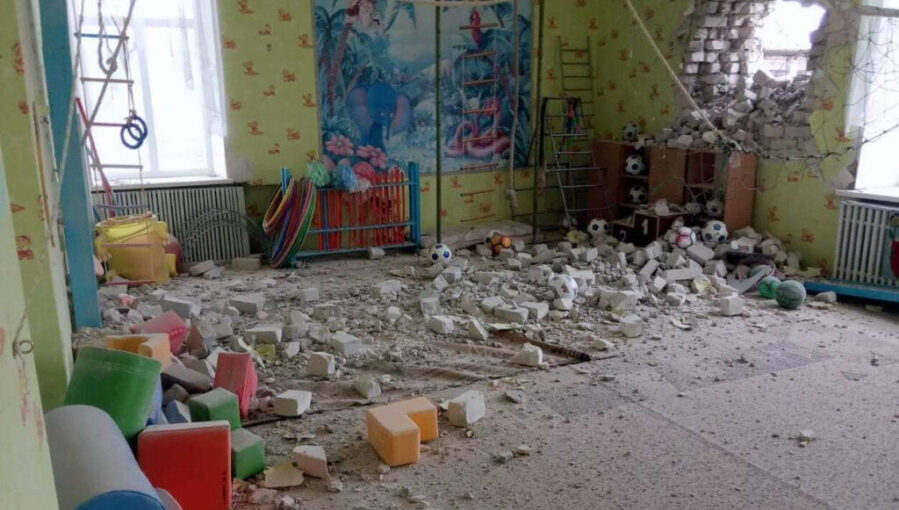
Ukrainian authorities over the weekend claimed that Russian forces had attacked a nursery school 14 km north-east of the centre of Luhansk. The claim was supported by two photographs of damage to the school, showing a purported shell hole in the ground floor wall. Western news channels immediately picked up the claim, describing it as a Russian provocation designed to justify a forthcoming Russian response. UK open source channel Bellingcat added to the news flow with an analysis which was intended to corroborate the trajectory and source of the shell.
Close examination of the photographs of the damage quickly reveals the Ukrainian government claim and the Bellingcat analysis to be comprehensively false.
Starting inside the damaged nursery room, the photograph shows a hole roughly one metre across. Bricks from the wall are heaped from the foot of the wall to three metres into the room. Below the hole stands a wooden cupboard containing footballs. The cupboard remains standing, and a handful of footballs rests both in the cupboard and at the edge of the rubble pile.
Apart from the rubble, the room has suffered no damage. There are no signs of a high explosive detonation of any kind. The wall coverings are undamaged. A quantity of brick rubble rests precariously on the lower ledge of the hole, where even a very small impact shock would dislodge it. The window one metre from the centre of the hole is undamaged. This was clearly not a high-energy event. The internal walls are not deformed outwards in any way by blast, and there is no evidence of any heat or fire damage.
These features show clearly that there was no explosion inside the room. It is possible that an incoming shell might fail to detonate, for one of several reasons. However, the location of the footballs on the shelves of the cupboard below the hole suggests that there was no impact shock, and the photograph does not show an undetonated shell or mortar round. A high-speed shell striking a building usually punches a small entry hole, not much larger than its own diameter, not a one metre rubble hole.
In contrast, the damage shown is completely consistent with damage to the wall inflicted from outside, by a standard road-worker’s tractor-mounted pneumatic drill. When a drill is applied to a brick wall as it penetrates and moves a brick, the moving brick will carry adjacent bricks with it, forming exactly the shallow V-shaped hole the photograph displays. A drill-attack also leaves a quantity of rubble on the bottom edge of the hole (unless someone takes the trouble to remove it, which clearly did not happen here). Here rubble appears to have been moved by hand from near the hole a little further into the room, to simulate the effects of shock, and footballs placed on top of the rubble pile.
Moving to the outside photograph of the building, approximately three metres square of the render has been removed. Looking at the lower part of the render, there are clear signs that it has been pulled away from the building, as the edges of the damage area face outwards. The same outward trending damage is visible to the left of the neat square one-metre hole in the wall below. The render appears to have been pulled or grabbed to remove it, in an uneven fashion, as the damage on one side is 1.5 metres higher than the damage on the other.
On the ground at the foot of the wall the removed render and insulation has been scattered up to ten metres laterally, at 90 degrees from the hole, and there is an area at the foot of the wall with less rubbish scatter – probably the area where the excavator was placed.
If a high explosive detonation had occurred outside the wall (as it would on impact with a graze fuze) the wall would have deformed inwards, all adjacent glass would have shattered, there would be clear marks of fire and shrapnel spatter on the wall exterior, and rubble would be scattered uniformly in an arc of roughly 45 degrees away from the wall, as well as large quantities of rubble accompanied by fire and shock damage inside.
Taking this evidence as a whole, it is unarguable that the building was not attacked by a shell.
Ukrainian reports claim that the attack happened while the nursery was occupied by children and teachers, who were in another room. However, the photograph of the interior shows clearly that outside the room it is dark. There is no time stamp on the photograph, but it is likely that this photograph was the first to be taken, and was taken very shortly after the damage was inflicted, at night, when the building was unoccupied.
The nursery is located four kilometres north-east of the Contact Line, in Ukrainian-held territory. The evidence as presented strongly suggests that Ukrainian forces damaged the nursery with an excavator, probably equipped with a pneumatic drill attachment, and then released the photographs in an attempt to make a case that Russian forces had carried out an attack on an occupied children’s nursery.
That trope has been enthusiastically taken up by European and US media. Prime Minister Boris Johnson went so far as to describe it as a false flag attack designed to justify a Russian assault. He omitted, however, to clarify how an attack on a nursery in Ukraine-held territory would either motivate or justify a move by Moscow, or to explain how an attack on a Ukrainian asset on Ukrainian territory could be a false flag move by anyone other than Kyiv.
Events over the past two days within the Donetsk and Luhansk Republics are somewhat shrouded in the fog of near-war. It seems reasonably clear that the two leaders of the Republics have ordered some sort of mass evacuation of civilians from the republics to Russia, and in this context the number 700,000 has been repeated in multiple media channels. That number coincides with the number of people in the Republics who have received Russian passports. The total population of the Republics is somewhere in the region of 3.5mn.
However, bne Intellinews sources inside the republics do not corroborate a movement of this number of people. One source cited the movement of 25,000 people across the Russian border on Friday. There is a clear ambiguity as to whether the Republics have ordered women and children to leave, or have simply advised them to do so, and as to whether large numbers of people are actually evacuating.
bne Intellinews sources on the ground report that Ukrainian forces on the contact line have shelled civilian targets regularly for “years”, at intervals ranging from days to months. The rate of fire has certainly escalated. OSCE Monitoring recorded 1,413 shell and mortar detonations within the Republics on Friday, including rounds from 122-mm mortars banned under the Minsk ceasefire.
One resident of a western suburb of Donetsk (actually an ethnic west Ukrainian living in the Republic) stated that 10 shells had landed around her settlement 600 metres from the Contact Line, and that the shelling was the worst she had experienced since 2015. The truth probably lies somewhere in the middle of two extremes – there is more shelling than there has been recently, but not as much as “constant”, and not aimed directly at homes or other buildings.
Shelling appears to have been “harassing” rather than aimed. Republic authorities on Saturday stated that no-one had been killed in the republics by shelling. They also claimed to have details of plans for a Ukrainian invasion of the republics, but it seems unlikely that, if they did, they would disclose that fact.
Ukrainian sources cite a smaller number of similar artillery and mortar detonations on Ukrainian territory. Sources do not report which side fired first.
With these events tension between Russia and the Western allies has reached a new and uncomfortably high level. Mainstream media have drawn a (fatuous) connection between the nursery attack and Russian plans to invade Ukraine. The connective tissue between the two appears weak at best, but both US and UK authorities are continuing to forewarn of a major attack based on (unrevealed) intelligence. There is as yet no evidence that Russian Federation troops are located in the republics, but there is clear evidence that the republics have initiated a call-up of reservists….
Read full article here.
Putin Announces Recognition of Independent DPR and LPR, Orders Military to Prepare for Peacekeeping Presence, Foreign Ministry to Formally Establish Ties; West Reacts
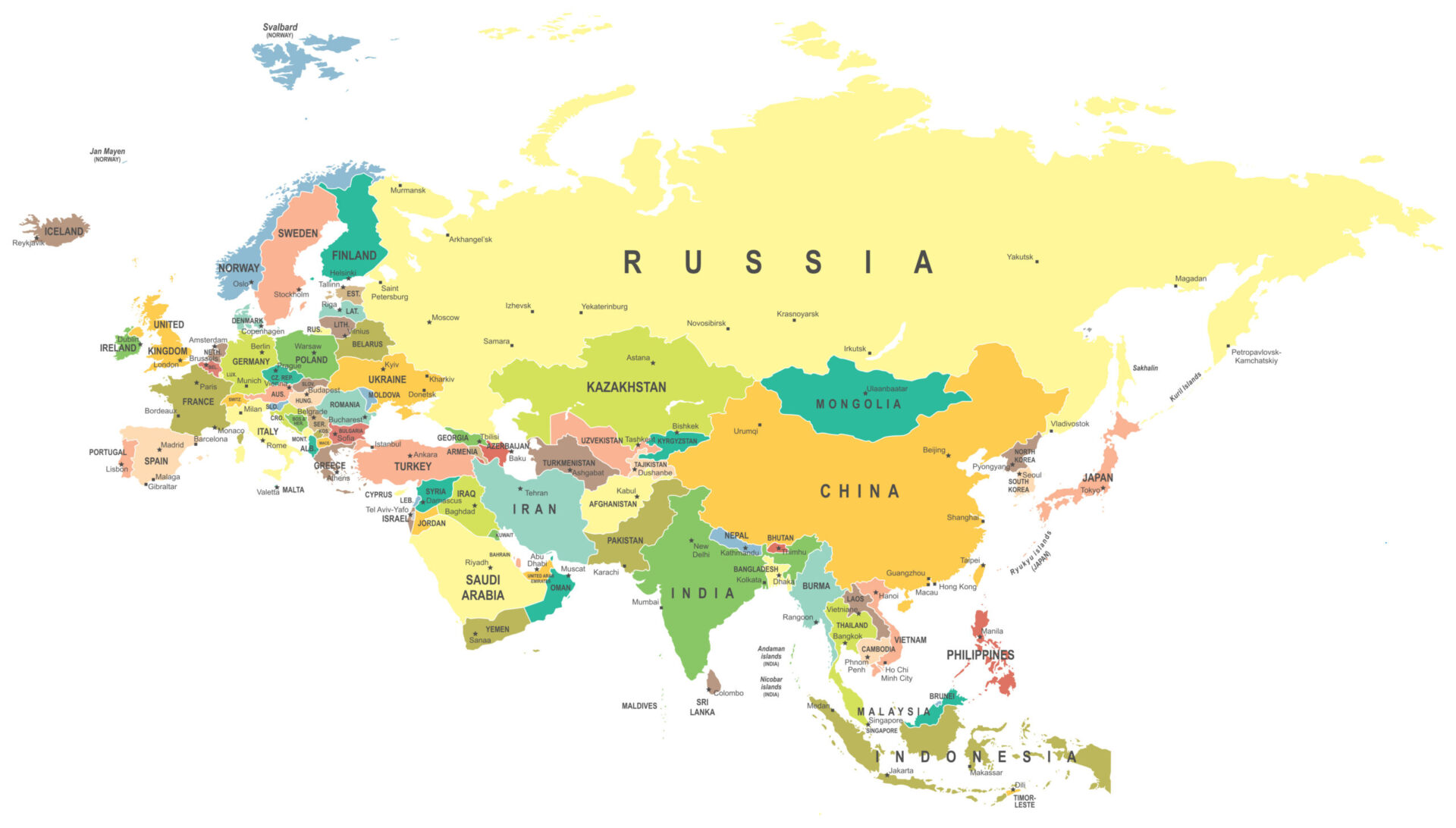
At the end of a special televised announcement on the evening of February 21 (Russia time), Russian President Vladimir Putin announced that Russia would formally recognize the DPR and LPR rebel states of East Ukraine as independent. He further instructed the foreign ministry to establish formal ties with the republics and for the Russian military to prepare to send a peacekeeping force to the republics. This all occurred after a meeting of Russia’s Security Council, which recommended the action.
As Paul Robinson commented right after the speech, Putin seemed frustrated that it had come to this. I agree that this was not the option that Putin wanted for the Donbas. For over six years, Russia has been pushing for the implementation of the Minsk Agreements that would have resolved the civil war by having the Kiev government grant autonomy to the Donbas. The agreement was signed by France and Germany as well as Ukraine and Russia. However, it has been clear that the Kiev government is politically unwilling to implement the agreement as written. This is largely due to the fact that any leader of Ukraine, even if he wanted to, cannot implement the agreement due to the outsized influence of the ultranationalist forces who have demonstrated their willingness to use violence to block any moves that are perceived as concessions to the Donbas residents or Russia.
It has also been clear, especially after the recent failed Normandy meeting, that Kiev will not budge on its recalcitrance regarding the Minsk Agreement and, more importantly, France and Germany are not willing to push Kiev to honor it, though they are co-signers. Washington is also not willing to do this, though it could. Apparently Moscow feels it waited long enough to realize that the Minsk Agreement is a dead end. From Moscow’s perspective, it is clear that if Kiev is unwilling to implement Minsk then the only other way of trying to head off a nasty escalation of the war in Donbas – which has lasted for eight years, has already killed thousands and in which violence has escalated in recent weeks – is for Kiev to let them go because they don’t accept them anyway. To facilitate this, Russia has recognized their independence and is taking the additional aforementioned steps in effort to protect them from any more aggression from Kiev. According to Russian media reports, it is estimated that between 100,000 and 150,000 Ukrainian troops are amassed near Donbas since December.
Another reason Russia did not want to take this option is that the Russian leadership knows perfectly well that this move will trigger the sanctions that Washington has clearly been itching to let loose. White House spokesperson Jen Psaki has already stated that economic sanctions will be taken up against any person or entity seeking to do business with the LPR and DPR. An NPR reporter has stated publicly that, on a call with reporters today, the Biden White House said it “will likely deploy sanctions against Russia tomorrow, responding to today’s “recognition gambit…” There are (as yet) unconfirmed reports that Europe will wait to see what Russia does next before implementing sanctions.
Meanwhile, the Foreign Minister of Ukraine, Dmytro Kuleba, has stated that Ukraine has requested an emergency meeting of the UN Security Council regarding Russia’s move. The OSCE has condemned Russia’s actions in a joint statement by the OSCE Chairman-in-Office and Foreign Minister of Poland, Zbigniew Rau, OSCE Secretary General Helga Maria Schmid, OSCE Parliamentary Assembly President Cederfelt and OSCE Parliamentary Assembly Secretary General Montella:
“This step is a breach of international law and fundamental OSCE principles and runs counter to the Minsk agreements.
As all OSCE participating States, Russia has undertaken commitments to respect the sovereignty and territorial integrity of others. We call on Russia to immediately rescind this decision.
The recognition will only fuel further tensions and will separate the populations living in these regions from the rest of their country, Ukraine.”
Below is some of the reaction in Donetsk to the news: