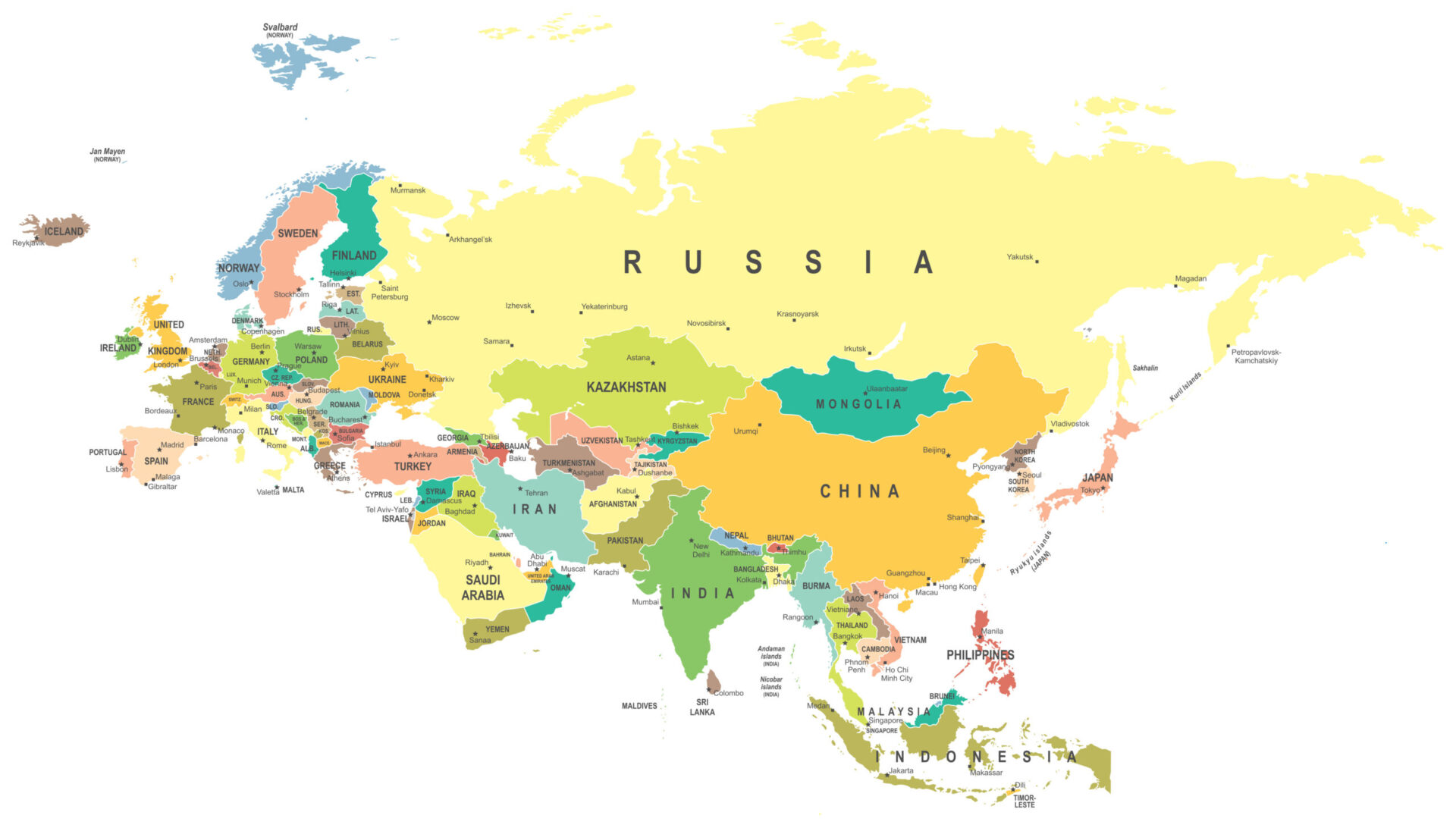
The White House is said to be considering the deployment of military advisers and new weaponry to Ukraine in a move that would probably cross President Putin’s “red lines”.
Air defence systems, such as stinger missiles, as well as Mi-17 helicopters, Javelin anti-tank missiles and mortars are among the military equipment being discussed, CNN reported, citing sources close to the Biden administration.
The Mi-17 is a Russian-made helicopter that the US initially purchased to give to the Afghan army before the Taliban’s takeover in August. The Pentagon is now considering handing them to Ukraine instead.
The United States has provided Kiev with $60 million in military aid since Russia annexed Crimea from Ukraine in 2014, including Javelin anti-tank missiles.
There are believed to be serious concerns within the administration, however, that Russia would view a new supply of lethal aid to Ukraine as a serious escalation.
The discussions come after Brigadier Genera Kyrylo Budanov, the head of Ukraine’s defence intelligence agency, warned that Moscow could launch an invasion as early as January.
“We need more [military assistance]. No countries except Ukraine have an open war with Russia,” Budanov told The Military Times website this week. “That’s why we’re sure the US should give us everything we didn’t get before. And right now. It’s the right time for this. Because after, it could be very late.”
Budanov also confirmed for the first time that Ukraine had fired Javelin missiles at Russian-backed forces in the Donbas region, where the Ukrainian army is trying to claw back control of two self-proclaimed republics. Ukraine was barred from bringing the weapons to the front line until last year when Washington gave it permission to use them defensively in the Donbas.
When the Berlin Wall came down, many triumphantly declared that the West had won the Cold War and that its values would soon become universally accepted, pushing out the old systems that had dominated Eastern Europe for decades.
However, more than thirty years on and it is clear that Russians are in no hurry to emulate the liberal systems of countries like the US. One poll, released last month, revealed that nearly half of Russians say they don’t hold democratic values. Many Western pundits would quickly blame this on President Vladimir Putin, who they accuse of crushing their hopes for the country after the fall of communism, transforming it into a hybrid capitalist state. But why are so many Russians skeptical of the West’s promises in the first place?
There was indeed a honeymoon period immediately following the end of the Cold War when a huge majority of Russians viewed the US and its institutions favorably, and were open to the kind of democracy being touted from abroad. It’s not well understood how Russians ended up becoming disillusioned to the point where many of them now refer to democracy as “sh*tocracy.” The answer to the question requires one to take an unflinching look at the Russian experience of the 1990’s.
Jack Matlock, the US ambassador to Russia during the Bush administration, explained that after the collapse of the Soviet Union in 1991, the country was wracked by “runaway inflation that destroyed all savings, even worse shortages of essential goods than existed under communism, a sudden rise in crime and a government that, for several years was unable to pay even [its] miserable pensions on time. Conditions resembled anarchy much more than life in a modern democracy.”
This characterization is supported by many Russians as well as Americans who had on the ground experience in the country during the Yeltsin era, undercutting the sepia-tinged narrative put forward by many current western media commentators of a Russia that was a scrappy little democracy enjoying the miracles of the free market during the Yeltsin years, only to be destroyed by Putin.
Sharon Tennison, founder of Center for Citizen Initiatives who has been conducting citizen diplomacy between the US and Russia, as well as supporting community and business projects in the country since 1983, recalled in a series of interviews with me what she saw occurring on her regular trips to Russia during the Yeltsin era. According to Tennison, it was anything but democratic:
“[I remember] a frigid night I came up from the metro to see a line of three or four tiny grannies, wrinkled faces, worn coats and scarves, each holding up a packet of cigarettes for sale….Ordinary people planted food on the sides of roads and lots … young oligarchs drove $100,000 vintage cars in the two capital cities, where elderly people were living in parks, and millions had died from hunger due to loss of their rubles in state banks.”
In an audacious attack on free speech, journalists and writers based in the United States have now been banned by the U.S. federal authorities from publishing articles with Strategic Culture Foundation. We interview one of those authors affected by the ban, New York City-based journalist Daniel Lazare who shares his thoughts on the profound implications for free speech, independent journalism and political dissent.
Lazare is one of several U.S.-based writers who formerly published regular columns with Strategic Culture Foundation. Our online journal greatly appreciated their intelligent insights and analysis of U.S. and international politics. Sadly, we will no longer be able to publish their columns because of the threat levied on them by the U.S. federal authorities who accuse SCF of being an influence operation directed by the Kremlin. The allegations and threats are baseless and draconian.
If U.S.-based writers defy the ban, they have been threatened with astronomical financial penalties of over $300,000. The prohibition has only emerged in recent weeks. It follows earlier moves by the U.S. State Department and the Treasury Department accusing SCF of being an agent of Russian foreign intelligence. No evidence has been presented by the U.S. authorities to support their provocative claims. The Editorial Board of SCF categorically dismisses the allegations. In a statement, the editors said: “We reject all such claims by the U.S. authorities that the journal is an alleged Russian intelligence operation. We have no connection with the Russian government. We provide an independent forum for international writers to debate and freely critique major topical issues of world importance.”
Strategic Culture Foundation’s editorial production is based in Russia and the journal has been publishing articles by international authors for over a decade. The online journal has gained respect and readership primarily in North America for its critical and diverse coverage of geopolitics. It seems that the official move to ban SCF by the U.S. government is really aimed at shutting down independent journalism and critical thinking under the cynical guise of combating a “foreign enemy”. This has baleful echoes with the Red Scare Cold War years in the U.S.
By banning American voices from the journal, Washington is attempting to bolster its smear against SCF as being a sinister intelligence agency. But the real objective is to criminalize critical journalism and indeed any form of critical dissent. Arguably, the draconian attack by the U.S. authorities has to be seen in the wider context of persecuting Julian Assange and other whistleblowers who have exposed Washington’s crimes and corruption.
Daniel Lazare is a veteran newspaper journalist who specializes in U.S. constitutional law and rights. He formerly worked for Consortium News and Strategic Culture Foundation among other outlets. The New York City-based writer now publishes a regular column for The Weekly Worker, the paper of the Communist Party of Great Britain.
Read the full article that includes interview with Lazare here.
On October 18th, Russia announced it would formally suspend its mission with the NATO alliance, including ending official communication. This is a significant event but not totally shocking to anyone who has been paying attention to post-Soviet Russian relations with NATO. It’s important to look at what led up to Russia deciding it had enough and that it was no longer worth having an official relationship with the western military alliance as there is a lengthy historical context to the breakdown.
NATO had just expelled eight Russian diplomats for espionage activities but provided no public evidence or details on these serious allegations. But this was just the immediate event that provided the proverbial straw that broke the camel’s back.
Post-Cold War Triumphalism
The problem started with the triumphalist attitude that eventually prevailed in Washington after the end of the Cold War. President Ronald Reagan intentionally took the approach during negotiations with Soviet leader Mikhail Gorbachev that ended the Cold War that doing so would be in the interests of both countries. It was characterized at the time as a negotiated settlement that benefited all parties involved and not a defeat. Reagan’s successor George H.W. Bush adopted the same attitude until it was time to campaign for his reelection, during which he bragged that the U.S. had won the Cold War.
In the 1990’s, the Clinton administration, encouraged by foreign policy hawks, greedy defense contractors and domestic reelection politics, expanded NATO to former Warsaw Pact countries Poland, Hungary and the Czech Republic. This was a violation of verbal assurances given by U.S. Secretary of State James Baker, along with other western government officials, during 1991 negotiations with Gorbachev that NATO would not expand “one inch eastward.” This assurance was made in order to get Gorbachev to accept a unified Germany in NATO given the deep historical memory of the Germans having invaded Russia twice in the 20th century, the second time resulting in 27 million deaths and destruction of a third of the Soviet Union. But NATO didn’t stop there and expanded by seven more countries, right up to Russia’s border, by 2004.
It’s also worth mentioning that the NATO-Russia relationship as it was formulated in 2002 in the form of the NATO-Russia Council was never intended to be a vehicle that would allow Russia to be treated as a respected peer. Instead it was largely a pretense as admitted by those who came up with the idea, which included then British Prime Minister Tony Blair. As one of Blair’s aides later stated, “even if they [Russia] weren’t really a superpower anymore, you had to pretend they were.” Russia had a permanent ambassador to NATO and could theoretically participate in NATO discussions, but Moscow complained for years that they were often excluded from informal discussions prior to official meetings and would consequently face a coordinated bloc.
That same year, under George W. Bush, the U.S. unilaterally withdrew from the Antiballistic Missile Treaty – a move Russia viewed as a threat to strategic nuclear stability and a desire by the U.S. to pursue a first strike advantage. Likewise, the U.S. unilaterally withdrew from the Intermediate Range Nuclear Forces (INF) Treaty in 2018, a decision made by president Donald Trump whom we were supposed to believe was a Russian puppet. Problems with the INF Treaty had, however, been building for some time and it wasn’t just accusations of Moscow violating the treaty with a certain type of cruise missile. Starting in 2009, the Obama administration approved the installation of a missile defense system in Romania and then Poland that was a violation of the INF Treaty and was a serious concern to Russia.
In 2014, Washington played a key role in the Ukraine coup when then-Assistant Secretary of State for European and Eurasian Affairs Victoria Nuland was caught on a phone call with the U.S. ambassador to Ukraine discussing how to facilitate the removal of the corrupt but democratically elected government of Viktor Yanukovich and install their favored candidate as Prime Minister, Arseniy Yatsenyuk. It’s very interesting that their desired turn of events actually came to pass. This was clearly either a provocation or represented profound ignorance of the region by the U.S. State Department. The latter is a very generous interpretation given the fact that Nuland – a Neoconservative ideologue – was taking the lead on Ukraine.
Washington and NATO Double Down
In the aftermath of Russia’s severing of ties, the U.S. and NATO have doubled down on provocative activities rather than used the rupture as an opportunity for self-examination or an attempt to come up with fresh ideas to slow the spiraling relationship between major nuclear powers. Within the same week, U.S. Defense Secretary Lloyd Austin told audiences on his whirlwind trip to Georgia, Ukraine and Romania that the Black Sea was a U.S./NATO military interest. The U.S. subsequently sent two warships into the Black Sea early this month and members of Congress are now urging the Biden administration to ramp up military support to the area. Austin also stated that Russia should have nothing to say about whether Ukraine joins NATO or not. Within days of Austin’s trip, a conference of NATO defense ministers in Brussels revealed a new “master plan to contain Russia.”
As I have argued before, it would not be in Russia’s interests to attack the Baltic countries and it would not pass any remotely rational cost-benefit analysis. Moreover, military action by Russia in the post-Soviet era has been reactive in nature rather than aggressive. Its action in Georgia in 2008 was a response to a military attack by Tbilisi on Russian troops in South Ossetia according to the 2009 EU Fact Finding Mission report, and the annexation of Crimea was a unique situation that resulted from Moscow’s genuine perception of a serious national security threat. NATO officials even admit that they do not think any attack is planned by Moscow on its neighbors. As Reuters has reported: “Officials stress that they do not believe any Russian attack is imminent.”
But this didn’t stop the German defense minister from pouring fuel on the fire by stating in an interview around the same time that NATO should make clear that it is willing to use military force, including nuclear weapons, to deter Russia from attacking not just members of the alliance but partners. Needless to say, this was viewed as very disturbing by Moscow.
It would appear that from Russia’s perspective there has been little to no benefit from the arrangement it had been working under with NATO for the past two decades. The U.S., which effectively controls NATO, still seems to be suffering from its bout of post- Cold War triumphalism and continues to think that it can treat Russia as a bugaboo to justify bloated military budgets and as a whipping boy diversion from its domestic political problems. At the same time, U.S./NATO not only expects Russia to act as though it has no national security interests of its own to protect but is also obligated to provide diplomatic cooperation with the west when convenient, such as with Afghanistan and negotiations on the Iran nuclear deal. It’s no surprise that Russia finally felt it was time to put its foot down.
…Between independence in 1991 and the revolution in 2014, Ukraine was evenly balanced between supporters of an ethnic version of Ukrainian identity in the country’s western and central regions, and supporters of a civic version (with a strong guaranteed role for the Russian language and culture) in the east and south. The events of 2014, and the conflict with Russia that followed, have led to a situation in which ethnic nationalists (with Western backing) dominate national politics in Kiev. However, their program remains highly unpopular in the Russian-speaking areas and is overwhelmingly rejected in the Donbas.
To bring about a peace settlement, it is necessary to eliminate or discount the factors that brought about a failure of the Minsk II agreement. Chief among these is Ukraine’s refusal to guarantee permanent full autonomy for the Donbas. The main reason for this refusal, apart from a general commitment to retain centralized power in Kiev, has been the belief that permanent autonomy for the Donbas would prevent Ukraine from joining NATO and the European Union, as the region could use its constitutional position within Ukraine to block membership. The official US commitment to eventual Ukrainian NATO membership—however empty in real terms—has in turn inhibited the United States from playing a positive role in resolving the conflict.
These Ukrainian and American arguments are, however, a classic case of circular reasoning: So long as Ukraine is involved in a territorial conflict, it will never be invited to join NATO and the EU. Nor should it be. Even if a US administration were prepared to take such a risk, Germany and France would certainly veto it. And there is no way to solve this conflict on Ukrainian terms without victory in a war against Russia, which is impossible. Realistically speaking, Minsk II’s basic terms—an end to the war and autonomy for the Donbas within Ukraine—are the best deal that Ukraine is ever going to get.
If the United States drops the hopeless goal of NATO membership for Ukraine, it will be in a position to pressure the Ukrainian government and parliament to agree to a “Minsk III” by the credible threat of a withdrawal of US aid and political support. And if Moscow were to reject or sabotage this agreement, or permit the Donbas separatists to do so, then all existing Western sanctions against Russia related to the Donbas and Crimean disputes should not only remain in place but be greatly intensified.
The United States ought to promote the following main terms for a settlement:
§ A Ukrainian constitutional amendment establishing the Donbas region as an autonomous republic within Ukraine (including those parts of the Donetsk and Luhansk provinces currently controlled by Ukraine); and
§ A constitution for the Donbas Autonomous Republic (including its constitutional relationship with Ukrainian national institutions in Kiev) to be submitted to the people of Donetsk and Luhansk in a referendum supervised and monitored by the UN and the Organization for Security and Cooperation in Europe.
If a majority of voters in the Donbas oppose the constitutional amendment, then they will have chosen to remain within Ukraine under its present unitary constitution. But in the likely event of approval in the referendum, the amendment would then be submitted to the Ukrainian parliament. If the parliament rejected it, a new internationally supervised referendum would be held giving the people of the region a straight choice between rejoining a unitary Ukraine and becoming independent, with a future option to join the Russian Federation.
It should be noted, however, that annexation is not Russia’s preferred option for the future of the region. Moscow could have annexed the Donbas (as it did Crimea) at any time during the past seven years but has refrained from doing so. Moscow is determined to defend the Donbas against any attempt at Ukrainian reconquest; but for good political and strategic reasons, it would much prefer that the Donbas remain a pro-Russian autonomous part of Ukraine. However, if Ukraine launches a new war, annexation will certainly follow, leading to a new crisis in Russia’s relations with the West.
In order to secure the establishment and maintenance of autonomy, the referendum on autonomy and the establishment of a regional government under the Ukrainian constitution must come before Ukraine takes control of the border with Russia. The police and courts in the Donbas Autonomous Republic would come under the regional government. Military security would be provided by a UN peacekeeping force drawn from neutral countries outside Europe and established as part of a Security Council resolution in support of the peace settlement. US and NATO forces would not be included, nor would Russian forces or those of countries allied to Russia. This peacekeeping force would also supervise and certify the disarmament of the existing separatist armed forces, the withdrawal of all Russian forces, and the withdrawal of the Ukrainian armed forces from their present positions in Donetsk and Luhansk.
The United States, of course, has a federal system, as do Canada, Australia, Germany, Italy, Switzerland, Belgium, India, and South Africa. There can thus be no objection from democratic principle to a federal system for Ukraine, or to special autonomy for the Donbas. Given the vast differences in language and culture between different parts of Ukraine, a federal constitution would seem the best political system for the country as a whole. Failing that, “asymmetric federations,” in which certain regions enjoy special status or one autonomous region exists in an otherwise unitary state, are also an accepted part of certain democracies…